
一公分厚的石英石台面,1.5厘米石英石台面
For decades, the mark of a “luxury” kitchen was measured in mass. We were told that thickness equaled quality—that the heavy, three-centimeter granite slab or the chunky, double-layered mitered edge was the ultimate symbol of a high-end home. It was an era of visual weight, where countertops felt like ancient monoliths dropped into our living spaces. But as we move deeper into an age of architectural precision and refined minimalism, the design world is undergoing a radical “slimming down.” Enter the 1cm quartz countertop: a sleek, gravity-defying marvel that is quietly dismantling the old tropes of interior design.
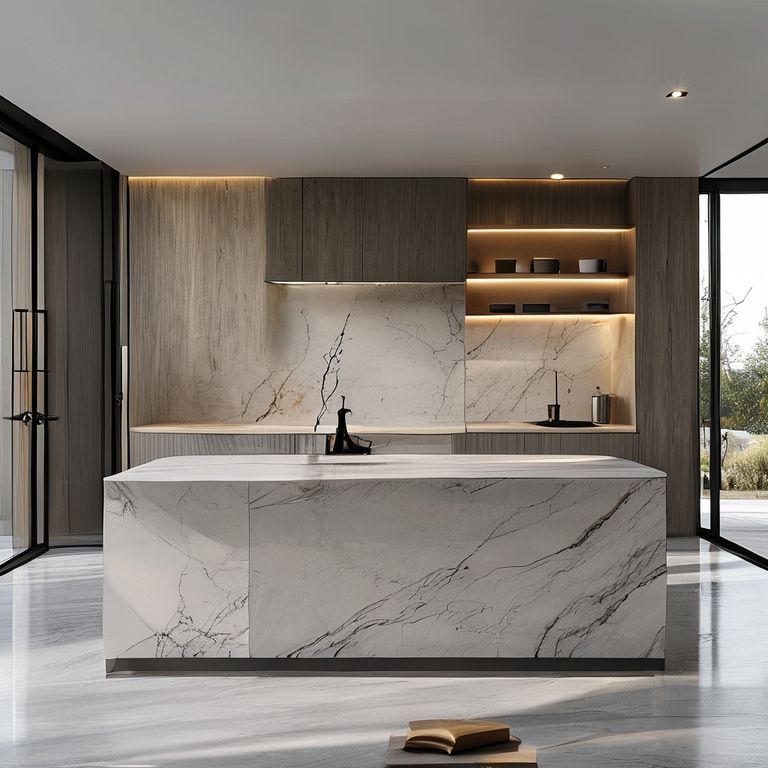
The 1cm quartz countertop isn’t just a thinner piece of stone; it is a statement of intent. It represents a shift away from the “bigger is better” mentality toward a philosophy of “smarter and sleeker.” When you walk into a kitchen featuring a 1cm surface, the first thing you notice is the airiness. The heavy visual “clutter” of a thick slab is gone, replaced by a razor-sharp line that seems to float atop the cabinetry. It creates a silhouette that is more akin to high-end tech or fine jewelry than a piece of construction material. This is the “Quiet Luxury” movement translated into stone.
Why is this happening now? The answer lies in the intersection of aesthetics and engineering. In the past, a natural stone cut to a one-centimeter thickness would have been dangerously brittle. Granite or marble, with their natural fissures and unpredictable grain, would snap under the pressure of daily life if cut so thin. However, quartz is an engineered masterpiece. By vacuum-compressing crushed natural quartz with high-performance resins, manufacturers have created a material that is significantly denser and more flexible than its natural counterparts. This engineering allows us to shave off the bulk without sacrificing the soul of the stone. A 1cm quartz slab possesses the structural integrity of a much thicker natural stone, but with a profile that feels light, modern, and incredibly sophisticated.
From a designer’s perspective, the 1cm thickness opens up a playground of possibilities that were previously impossible. Think about the “floating” kitchen island. When you pair a 1cm quartz top with a recessed cabinet base or a cantilevered breakfast bar, the effect is magical. The countertop looks like a thin sheet of paper hovering in space. This creates a sense of flow in open-concept homes, where the kitchen needs to blend seamlessly into the dining and living areas rather than dominating them with heavy, blocky textures.
Moreover, the 1cm profile allows for a more integrated look. We are seeing a massive trend in “wraparound” designs, where the 1cm quartz doesn’t just sit on top of the cabinets—it becomes the cabinets. Designers are using these ultra-thin slabs to clad drawer fronts and side panels, creating a monolithic look where the entire island appears to be carved from a single block of stone. Because the material is only 10mm thick, the weight is manageable, and the tolerances are tight enough to allow for precise joinery. You get the look of a solid stone block without the astronomical weight and structural reinforcement that a 3cm slab would require.
But it’s not just about the kitchen island. The 1cm revolution is taking over the “backsplash-to-countertop” transition. Traditionally, a thick countertop meeting a backsplash created a heavy right angle that trapped dirt and broke the visual plane. With 1cm quartz, the transition is subtle, almost invisible. You can run the same thin material from the horizontal surface straight up the wall, creating a continuous “skin” for the room. This creates a cohesive, gallery-like feel that makes even small kitchens feel expansive and curated.
There is also a tactile pleasure to the 1cm edge. When you run your hand along a 10mm quartz surface, it feels different than the rounded, bulky edges of the past. It feels sharp (metaphorically, of course), intentional, and incredibly precise. It speaks to a homeowner who values detail over decoration. It’s for the person who chooses a mechanical watch over a chunky digital one, or a slim-cut Italian suit over a boxy off-the-rack version. It is about the elegance of the profile.
As we look at the evolution of urban living, where space is at a premium and every millimeter counts, the 1cm quartz countertop is more than just a trend—it is a logical progression. It respects the architecture of the modern home by providing a surface that is tough enough to handle a professional chef’s demands while remaining delicate enough to satisfy the most discerning minimalist eye. It is the perfect marriage of brawn and beauty, proving that true strength doesn’t need to be bulky.
While the aesthetic allure of the 1cm quartz countertop is often what first captures the imagination, the practical and technical advantages are what truly solidify its place as a design staple. In the world of home renovation, we often have to choose between “pretty” and “practical.” The 1cm quartz surface is one of those rare instances where you don’t have to compromise.
Let’s talk about the logistics of a renovation. One of the most overlooked benefits of the 1cm profile is weight reduction. A standard 3cm quartz slab is incredibly heavy, often requiring specialized teams, reinforced cabinetry, and sometimes even structural floor bracing in older homes. By switching to 1cm, you are effectively reducing the load on your cabinetry by two-thirds. This doesn’t just make installation faster and safer; it extends the life of your kitchen cabinets. Hinges, drawer slides, and carcasses are under significantly less stress, meaning your kitchen stays “level” and functional for much longer.
Furthermore, the 1cm thickness is a dream for modern installation techniques. Because the material is thinner, it is easier to cut and maneuver on-site for those tricky custom corners or integrated appliance cutouts. This precision allows for “flush-mount” installations that were previously a nightmare to execute. Imagine a high-end induction cooktop or a stainless steel sink that sits perfectly flush with the stone, with no lip or ridge to catch crumbs. The 1cm thickness makes this seamless integration look effortless, contributing to that “ultra-clean” look that defines contemporary luxury.
Environmental impact is another area where the 1cm quartz countertop shines. In an era where we are all becoming more conscious of our carbon footprint, the math is simple: using less material is better for the planet. A 1cm slab requires fewer raw materials to produce and, perhaps more importantly, is significantly more efficient to transport. You can fit three times as many 1cm slabs in a shipping container compared to 3cm slabs. This reduces the fuel consumption and emissions associated with bringing these beautiful surfaces from the factory to your home. Choosing 1cm is a subtle way to lean into sustainable luxury without sacrificing an ounce of style.
But does thin mean fragile? This is the most common question skeptics ask. The answer is a resounding no. Quartz is one of the hardest minerals on Earth, and the manufacturing process creates a non-porous surface that is highly resistant to scratches, stains, and heat. Because the resin-to-stone ratio is optimized in these high-end thin slabs, they possess a surprising amount of flexural strength. While you shouldn’t be jumping on your countertops, a 1cm quartz surface is more than capable of handling the heavy pots, accidental spills, and high-heat environment of a busy family kitchen. It is a workhorse dressed in a cocktail gown.
The versatility of the 1cm thickness also extends far beyond the kitchen. We are seeing a massive surge in its use for bathroom vanities, where the thin profile complements the sleek, spa-like vibes of modern wet rooms. But designers are going even further. 1cm quartz is being used to create custom furniture—think coffee table tops, dining tables, and even wall-mounted shelving. Because it is so thin, it can be used as wall cladding in showers or as a fireplace surround, providing the look of massive stone slabs without the weight or the thickness that would eat into your floor space.
In the realm of color and texture, the 1cm format allows the stone’s personality to pop. Whether it’s a matte “concrete” look for an industrial loft or a polished “Calacatta” vein for a classic penthouse, the thinness of the slab makes the pattern feel more like a piece of art than a building material. It’s as if you’ve taken the most beautiful parts of the earth and refined them down to their purest, most elegant essence.
Ultimately, choosing a 1cm quartz countertop is about future-proofing your home. Design trends come and go, but the movement toward sleek, integrated, and efficient spaces is only accelerating. The “chunky” look of the early 2000s is already starting to look dated, but a 10mm edge is timeless. It is architectural. It is precise. It reflects a level of sophistication that suggests the homeowner is ahead of the curve, valuing engineering and understated elegance over raw mass.
In conclusion, the 1cm quartz countertop is the ultimate “soft power” of interior design. It doesn’t shout for attention with its size; it earns it through its sophistication. It offers a cleaner line, a lighter footprint, and a more versatile application than almost any other surface on the market. Whether you are a minimalist at heart or just someone who appreciates the finer details of modern engineering, the 1cm revolution is here to stay. It’s time to stop thinking about how thick your stone is and start thinking about how much better your life looks when things are a little more refined. Thin is, quite literally, in.









