
When you walk into a kitchen that feels effortlessly chic, or a bathroom that radiates a spa-like tranquility, your eyes usually land first on the surfaces. The countertops, the backsplashes, and the integrated sinks define the visual weight of a room. For decades, natural marble was the undisputed king of luxury, but let’s be honest: marble is high-maintenance. It stains if you look at it wrong and chips if you’re too enthusiastic with a cast-iron skillet. This reality has birthed a new era of engineering, leading us to a fascinating showdown between two modern titans: Acrylic Artificial Marble and Nano Stone (often called Nano Glass or Crystallized Glass).
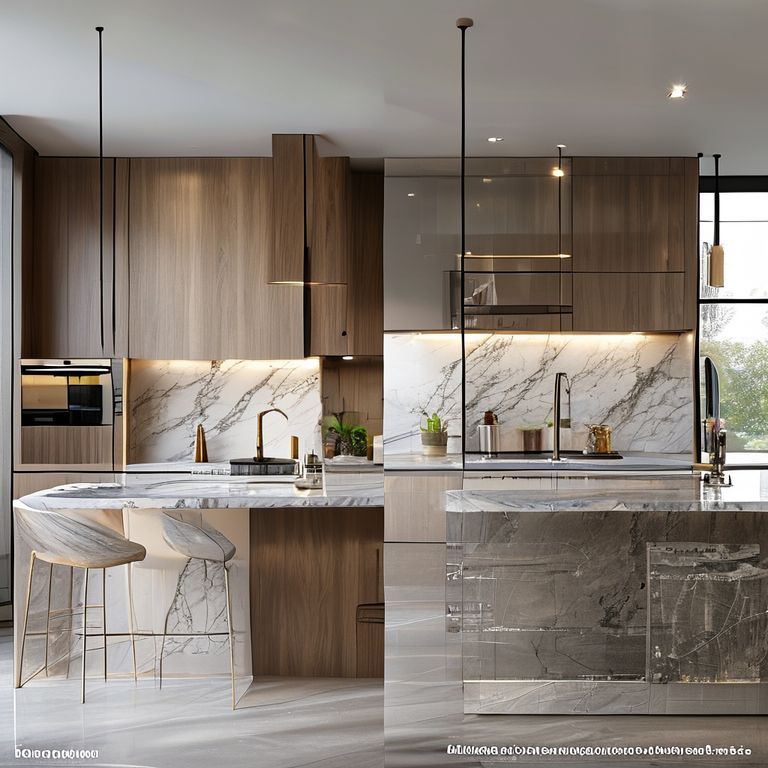
Choosing between these two isn’t just a matter of flipping a coin. It’s about understanding the soul of your home. Are you a minimalist who wants surgical precision and high-gloss brilliance? Or are you a creative who values flowing curves and a surface that feels warm to the touch? To make the right call, we need to peel back the layers of what these materials actually are.
Let’s start with the veteran in the room: Acrylic Artificial Marble. Often referred to in the industry as “Solid Surface,” this material is a sophisticated blend of acrylic resins, polyester, and natural minerals. But don’t let the word “artificial” fool you. High-quality acrylic marble—specifically “pure acrylic”—is a premium product used in everything from luxury hotels to avant-garde furniture design.
The magic of acrylic lies in its versatility. Imagine a kitchen island that doesn’t just have a countertop but flows seamlessly into a waterfall edge, with a sink that is chemically bonded to the surface so there isn’t a single crack or crevice for mold to hide. This is the “seamless” advantage. Because acrylic can be inconspicuous-jointed, designers can create massive, monolithic structures that look like they were carved from a single, giant block of stone. If you despise the sight of grout lines or silicone beads, acrylic is your best friend.
Beyond the visuals, there is the tactile experience. Acrylic is “warm.” Unlike natural stone or tile, which can feel icy on a winter morning, acrylic stays relatively close to room temperature. It has a soft, matte, or satin finish that feels luxurious under your fingertips. For many, this “softness” is the ultimate comfort factor in a home.
However, the softness isn’t just a feeling—it’s a physical trait. Acrylic is softer than stone. This means it can scratch. If you slide a heavy ceramic pot across it, you might see a faint mark. But here is the kicker: acrylic is entirely renewable. Because the color and pattern go all the way through the material, a professional (or even a dedicated DIY-er with the right sanding pads) can buff out scratches, stains, or even minor burns. You can essentially “reset” your countertop to its original glory after five years of heavy use. This repairability is a feature that almost no other material can claim.
Then there is the color palette. Because it’s an engineered product, the consistency is flawless. If you fall in love with a specific shade of “Calacatta White” in a showroom, the slab that arrives at your house will look exactly like that. There are no “natural surprises” or ugly veins that you didn’t bargain for. From translucent whites that can be backlit for a dramatic glowing effect to deep, moody charcoals, the design flexibility is staggering.
But as impressive as acrylic is, it faces stiff competition from the “New Guard”: Nano Stone. If acrylic is the artistic, flexible chameleon, Nano Stone is the indestructible warrior.
Nano Stone, or Nano Crystallized Glass, is a different beast altogether. It is manufactured by melting a mixture of silica and other minerals at extreme temperatures, then allowing them to crystallize. The result is a material that is effectively a hybrid between glass and stone, but with a density that leaves both in the dust.
The most striking thing about Nano Stone is its purity. When you look at a slab of pure white Nano Glass, it is arguably the whitest material on the planet. There is no grain, no pores, and no imperfections. It reflects light with a crystalline brilliance that makes even the finest polished marble look a bit dull by comparison. For a ultra-modern, “clinical” chic, or a high-end laboratory aesthetic, Nano Stone is unparalleled.
But beauty is only skin deep; the real story of Nano Stone is its resilience. While acrylic is non-porous, Nano Stone is obsessively non-porous. Its water absorption rate is practically zero. This means that red wine, turmeric, coffee, or even permanent markers don’t stand a chance. It is also incredibly hard. You would struggle to scratch this surface with a kitchen knife. For the homeowner who wants a “fit and forget” solution—a surface that will look exactly the same in twenty years without ever needing a bottle of polish—Nano Stone makes a compelling case.
However, every material has its trade-offs. While Nano Stone wins on hardness and heat resistance (it can handle a hot pan much better than acrylic can), it lacks the “seamless” joinery of its rival. You will see the seams, however fine they may be. It’s also much more difficult to work with. Cutting and installing Nano Stone requires specialized diamond tools and a very skilled hand, as the material is prone to chipping if the fabricator isn’t careful.
So, we find ourselves at a crossroads. One material offers warmth, repairability, and seamless flow. The other offers indestructible brilliance, heat resistance, and a level of hygiene that is second to none. In the second part of this exploration, we will dive deeper into the cost-benefit analysis, the environmental impact, and the specific rooms where one material clearly outshines the other.
As we move deeper into the comparison, it’s time to talk about the practicalities that define daily life. We’ve established that Acrylic Artificial Marble is the king of customization and Nano Stone is the titan of durability. But how do these traits translate when life actually happens? When the kids spill grape juice, or when you’re rushing to plate a dinner party?
Let’s talk about heat. This is often the dealbreaker for many. Acrylic is a resin-based product. While modern acrylics are quite heat-resistant, they are not heat-proof. If you take a boiling pot of pasta off the stove and set it directly on an acrylic surface, you risk a permanent heat ring or even a crack. You have to live the “trivet life.” For some, this is a small price to pay for the beauty of the material. For others, it’s a constant source of anxiety.
Nano Stone, on the other hand, laughed at the heat. Since it is born in a furnace at temperatures exceeding 1,500 degrees Celsius, a hot pan isn’t going to faze it. You can move from the stove to the counter without a second thought. This makes Nano Stone an incredibly functional choice for “hardworking” kitchens where utility is prioritized over the “soft touch.”
Then there is the “chip” factor. This is where the physics gets interesting. Acrylic is somewhat flexible; it can absorb an impact. If you drop a heavy glass bottle on it, the bottle might break, but the counter will likely survive with maybe a small dent that can be sanded out. Nano Stone is extremely hard, and with extreme hardness comes brittleness. If you hit the edge of a Nano Stone counter with enough force, it can chip. And unlike acrylic, you can’t just sand a chip away. Repairing Nano Stone involves resin fillers that rarely look perfectly invisible. It’s the classic trade-off: a surface that is harder to scratch is often easier to shatter.
Now, let’s consider the environment of the bathroom. This is where Acrylic Artificial Marble often takes the trophy. In a bathroom, you want surfaces that feel “clean” but not “cold.” You also want integrated sinks and sloped shower floors. Because acrylic is thermoformable—meaning it can be heated and bent into shapes—it allows for beautiful, organic curves. You can have a vanity where the countertop, the backsplash, and the sink are all one continuous, flowing piece of material. No seams mean no place for soap scum or mildew to build up. It is the ultimate hygienic solution for a wet environment.
Nano Stone is also hygienic because it’s non-porous, but it’s “stiff.” You won’t be getting any custom-curved sinks out of a slab of Nano Glass. It’s a material of straight lines and sharp angles. If your bathroom design is all about architectural precision and high-gloss white minimalism, Nano Stone will give you a look that feels like a futuristic sanctuary. But if you want a space that feels soft and inviting, acrylic is the superior choice.
What about the “Nano” aspect? The term “Nano” has become a bit of a buzzword in the industry, and it’s worth clarifying what you’re paying for. True Nano Stone is a solid-core material. It’s not a coating; the entire slab is made of this dense, crystallized glass. This is why it maintains its luster forever. It doesn’t need to be sealed, ever. Most natural stones need to be re-sealed every year or two to stay stain-resistant. With Nano Stone, that chore is deleted from your calendar forever.
Cost is, of course, the elephant in the room. Generally speaking, high-end “Pure Acrylic” and “Nano Stone” are both premium products that sit in a similar price bracket, often more expensive than mid-range granite or quartz. However, the installation of Nano Stone can often be more expensive because it is so difficult to cut and polish. The labor costs for a Nano Stone project can quickly escalate if you have a complex kitchen layout. Acrylic, while still requiring professional installation for those invisible seams, is generally more “fabricator-friendly.”
From an environmental perspective, both materials have their pros and cons. Acrylic is made from resins, which are petroleum-derived, but its extreme longevity and 100% repairability mean it doesn’t end up in a landfill just because it got a scratch. You can keep an acrylic counter looking new for thirty years. Nano Stone is made from abundant minerals and is essentially a specialized form of glass. It is chemically inert and doesn’t outgas. Both are “green” in the sense that they are durable alternatives to the ecologically destructive quarrying of rare natural marbles.
So, which is better? The answer depends on your personality as much as your floor plan.
Choose Acrylic Artificial Marble if you are a “Visual Poet.” If you want your kitchen island to look like a piece of seamless sculpture. If you love the idea that you can “refurbish” your counters every few years to keep them looking brand new. If you have a bathroom project where you want integrated, easy-to-clean sinks. If you value a surface that feels warm and gentle to the touch. It is the material of comfort, flexibility, and artistic expression.
Choose Nano Stone if you are a “Functional Perfectionist.” If you want a kitchen that looks like a high-end art gallery—pristine, brilliant, and white. If you want the peace of mind that comes with a surface that won’t stain, won’t burn, and won’t scratch under normal use. If you prefer the cold, hard, crystalline feel of glass and stone over the “plastic” warmth of resins. It is the material of permanence, strength, and uncompromising brilliance.
Ultimately, the “better” material is the one that aligns with how you move through your space. If you’re a high-energy cook who throws pans around, Nano Stone’s toughness will be a godsend. If you’re an aesthetic-focused homeowner who wants a custom, seamless look that can be repaired if an accident happens, Acrylic is your winner. Both represent the pinnacle of modern material science, offering a level of performance that nature’s own marble simply can’t match. Whether you choose the soft, seamless flow of acrylic or the indestructible luster of nano, you’re investing in a surface that will define your home for decades to come.









