
Imagine walking into your kitchen at 7:00 AM. The sunlight filters through the window, catching the edge of your countertop. There’s a certain gleam, a depth to the surface that feels both ancient and futuristic. For years, the debate over kitchen surfaces was a binary choice: the cold, high-maintenance luxury of natural marble or the budget-friendly but uninspired laminate. But then, the world of interior design shifted. Artificial stone entered the chat, and quite frankly, it hasn’t stopped talking since. If you’ve been scrolling through social media, staring at “picture appreciation” posts of sleek, minimalist kitchens or watching “reveal videos” where a dull kitchen is transformed into a sanctuary of stone, you’ve likely asked yourself: Is artificial stone actually good, or is it just great marketing?
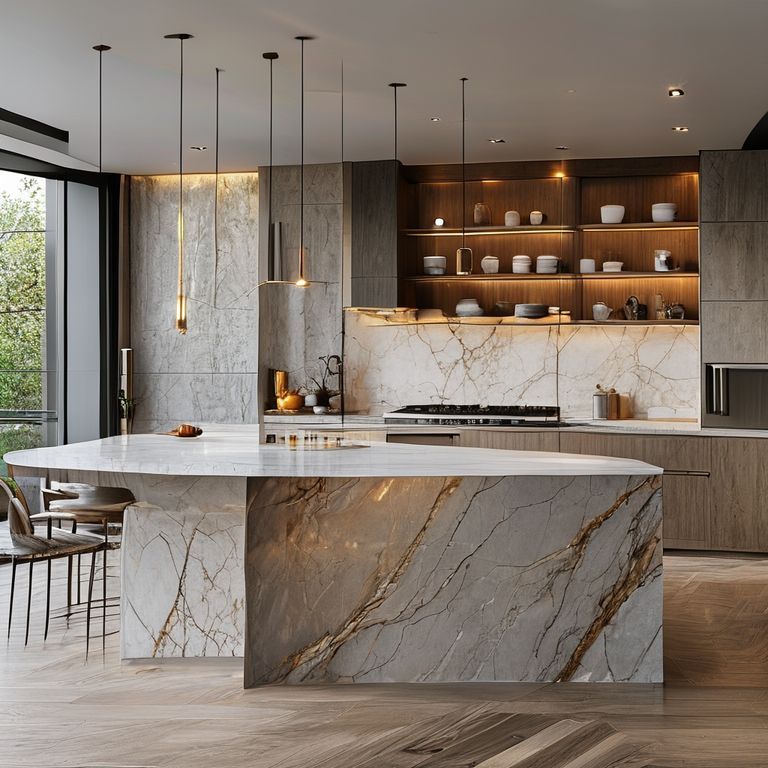
To understand the appeal, we first need to strip away the technical jargon. When we talk about artificial stone—often referred to as engineered stone or quartz—we aren’t talking about a cheap plastic imitation. We are talking about a sophisticated blend of approximately 90% to 94% crushed natural quartz combined with high-quality resins and pigments. This mixture is vibrate-compressed under vacuum into dense, non-porous slabs. The result? A material that possesses the soul of a mountain but the brain of a scientist. It is designed to solve every single problem that natural stone presents while looking arguably better in many modern contexts.
Let’s talk about the visual journey. The “pictures” you see online of artificial stone aren’t just about showing off a clean counter; they are about showcasing the incredible versatility of human engineering. Unlike a slab of granite, which is subject to the whims of nature—meaning you might end up with a weird yellow spot in the middle of your otherwise grey island—artificial stone offers “controlled beauty.” Do you want a surface that looks exactly like Carrara marble, with those delicate, wispy grey veins, but without the terrifying reality of red wine stains? Artificial stone does that. Do you want a matte, concrete-look finish for an industrial loft vibe that won’t crack or dust? Artificial stone does that too. It provides a level of aesthetic consistency that allows designers and homeowners to plan their color palettes with surgical precision.
But the “goodness” of a countertop isn’t just skin deep. The real magic happens when life gets messy. Natural stones like marble and granite are porous; they are essentially petrified sponges. If you leave a slice of lemon or a puddle of balsamic vinegar on them for too long, the acid eats into the surface, leaving a permanent “etch” or stain. Artificial stone, being non-porous, is the ultimate shield. It shrugs off coffee spills, beet juice, and oil as if they were nothing. This non-porous nature also means it’s incredibly hygienic. In an era where we are more conscious than ever about the cleanliness of our food preparation surfaces, having a material that doesn’t harbor bacteria or mold in microscopic pores is a massive win.
Furthermore, there is the “seamless” factor. When you watch those high-end kitchen videos, notice how the transitions look. Solid surface artificial stones (a slightly different category often used for integrated sinks) can be joined with a special adhesive that makes seams virtually invisible. You can have a ten-foot island that looks like it was carved from a single, gargantuan block of stone. This creates a flow in the kitchen that feels expensive, intentional, and incredibly sophisticated. It’s not just a place to chop onions; it’s a piece of furniture, a focal point that anchors the entire room.
Many people wonder about the “feel” of the material. There’s a common misconception that artificial stone feels “fake” or “plastic-y.” In reality, because it is composed mostly of natural minerals, it retains that cold-to-the-touch, heavy, substantial feel that people love about stone. It has the heft. It has the clink of a coffee mug against a hard surface. It feels permanent. When you run your hand across a high-quality quartz countertop, you’re feeling the density of the material, a density that translates directly to its daily performance. It’s a material built for the rigors of a busy household, where kids might drop heavy pots or where a home chef might be working with high-intensity ingredients.
In the grand scheme of a renovation, the countertop is the most “hardworking” element. You don’t walk on your cabinets, and you don’t chop vegetables on your backsplash. The countertop is the stage where the drama of daily life unfolds. Choosing artificial stone is an admission that while we love the idea of natural history, we prefer the reliability of modern innovation. It’s about taking the best parts of the earth and refining them into something that actually works for us, rather than us working for it.
Continuing our deep dive into the world of artificial stone, let’s address the elephant in the room: durability and “the real world.” We’ve all seen the beautiful “picture appreciation” shots of kitchens that look like they’ve never seen a stray crumb. But what happens after the camera stops rolling? The true test of whether artificial stone is “good” lies in its long-term resilience. While it is incredibly tough, it isn’t indestructible—nothing is. However, it comes pretty close to being the superhero of the kitchen.
One of the standout features often highlighted in “how-to” videos and professional reviews is its scratch resistance. Because quartz is one of the hardest minerals on earth (ranking a 7 on the Mohs scale), an engineered quartz countertop is extremely difficult to scratch with standard kitchen knives. While we’d always suggest using a cutting board to protect your knives, the stone itself is remarkably forgiving. You won’t find those annoying little “spiderweb” scratches that plague softer materials over time. It maintains its factory polish or matte finish for years, even in high-traffic households.
Then there is the matter of heat. This is where you need to be a bit more “in the know.” Because artificial stone uses resins as a binder, it is less heat-resistant than natural granite. In those “kitchen fail” videos, you might see someone place a red-hot cast iron skillet directly onto a quartz surface, resulting in a permanent scorch mark or a crack. While it can handle moderate heat, it’s best to treat it with a bit of respect. Using a trivet isn’t a chore; it’s just part of the deal for having a surface that never needs to be sealed. Unlike marble, which requires a professional sealant every six to twelve months to prevent it from turning into a stained mess, artificial stone is “set it and forget it.” You buy it once, you install it, and you never have to think about maintenance again, other than a quick wipe with a damp cloth.
Let’s talk about the “Video Appreciation” aspect—the reveal. Why do these videos get millions of views? Because artificial stone allows for design risks that natural stone doesn’t. You can find slabs with bold, dramatic veining in electric blues or deep golds, or you can find pure, “bleached-bone” whites that are impossible to find in nature without imperfections. This allows you to create a “wow” factor that is tailored to your specific personality. It’s the difference between buying a suit off the rack and having one bespoke-tailored to your measurements. Artificial stone is the bespoke suit of the kitchen world.
From a value perspective, many homeowners ask if the investment is worth it. While the initial cost of high-quality artificial stone can be comparable to (or sometimes higher than) mid-range granite, the long-term value is undeniable. When you go to sell your home, “quartz countertops” is a major selling point in real estate listings. It signals to a potential buyer that the kitchen is modern, low-maintenance, and stylish. It removes the “fear factor” for the next owner. They see a beautiful surface and think, “I can live here without worrying about ruinous stains.”
Moreover, the environmental side of the conversation is evolving. Many manufacturers are now using recycled glass and mirrors in their artificial stone mixes, and the fabrication processes are becoming more water-efficient. Because it’s a manufactured product, there is also less waste; slabs are made to specific sizes, and the “drops” or offcuts can often be repurposed more easily than irregular natural stone fragments.
When you look at the “picture appreciation” of a finished project, look closely at the edges. One of the coolest things about artificial stone is the variety of edge profiles available. Because the material is consistent throughout, you can have a “waterfall” edge where the stone flows off the side of the cabinet all the way to the floor. This creates a stunning, architectural look that is very popular in contemporary “video reveals.” It turns a functional island into a piece of sculpture.
So, is artificial stone good? If you value a kitchen that stays looking brand new with minimal effort, if you love the idea of a “perfect” aesthetic without natural flaws, and if you want a surface that can handle the chaos of a real, lived-in home, then the answer is a resounding yes. It bridges the gap between the dream of a luxury lifestyle and the reality of a busy schedule. It’s not just a “fake stone”; it’s an upgraded version of what nature started. It’s the result of human creativity meeting natural beauty, resulting in a surface that is as practical as it is breathtaking. Whether you’re watching a high-speed renovation video or browsing through a gallery of minimalist lofts, the presence of artificial stone is a testament to the fact that we don’t have to choose between beauty and brains. We can have both.









