
There is a specific kind of magic that happens when you walk into a kitchen that feels effortlessly balanced. It isn’t just about the color of the cabinets or the shine of the faucet; it’s about the proportions. For decades, the gold standard for luxury kitchen surfaces was thickness—chunky, heavy slabs of granite or marble that signaled weight and permanence. But as our design sensibilities have shifted toward the sleek, the minimalist, and the architectural, a new question has begun to surface among homeowners and designers alike: “Is there an 1.8cm quartz countertop, and is it the right choice for me?”

The short answer is a resounding yes. While the market has traditionally been dominated by 2cm and 3cm slabs, the 1.8cm quartz profile has emerged as a sophisticated middle ground that offers a unique blend of European elegance and modern engineering. To understand why this specific thickness is gaining traction, we first have to look at the evolution of quartz itself. Quartz isn’t a slab of rock pulled directly from a quarry; it’s an engineered marvel, a symphony of crushed natural stone—usually around 90% to 94%—bound together by high-quality polymer resins and pigments. Because it is manufactured, we have the luxury of precision. We can control the density, the pattern, and yes, the thickness, down to the millimeter.
Choosing a 1.8cm thickness isn’t about cutting corners; it’s about a specific aesthetic philosophy. In the world of high-end interior design, there is a growing movement toward “thin-profile” surfaces. Think of the ultra-slim laptops we carry or the bezel-less screens we watch; that same desire for streamlined efficiency has migrated to our countertops. An 1.8cm quartz slab provides a leaner, more agile look that works beautifully in contemporary, Scandinavian, or industrial-style kitchens. It allows the cabinetry to take center stage, providing a clean “cap” to the kitchen island rather than a heavy, overbearing lid.
But aesthetics are only half the story. The technical allure of 1.8cm quartz lies in its versatility. One of the most common misconceptions is that a thinner slab is inherently “weak.” In the case of quartz, this couldn’t be further from the truth. Because of the resin-binding process, quartz is incredibly dense and flexural. It doesn’t have the natural fissures or hidden fault lines that you might find in a 2cm slab of Carrara marble or granite. This inherent strength means that a 1.8cm quartz surface can handle the daily rigors of a busy kitchen—the dropped cast-iron pans, the spilled red wine, the frantic meal prep—with the same resilience as its thicker counterparts, provided it is supported correctly.
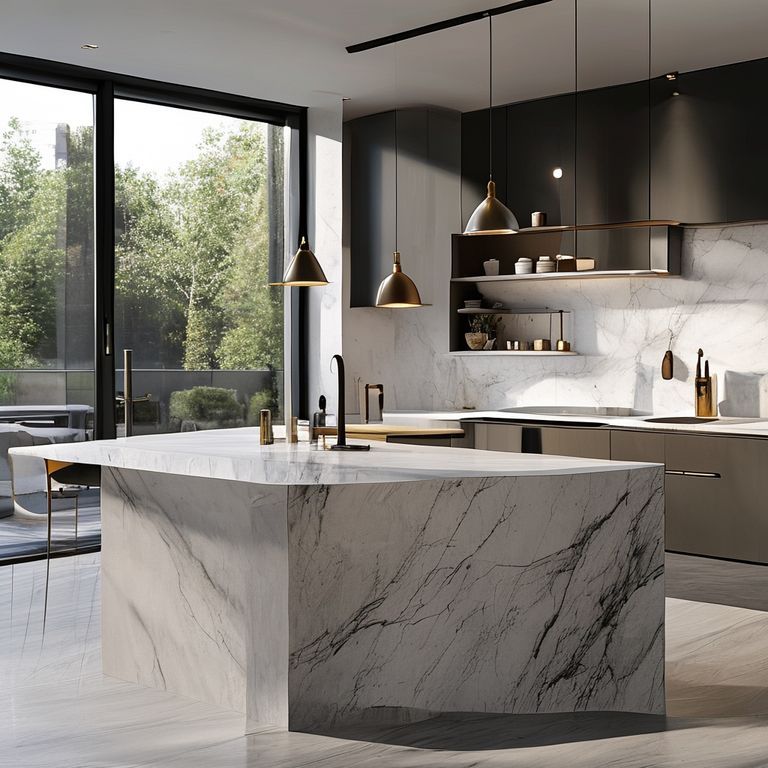
Moreover, the 1.8cm thickness is a dream for creative applications that go beyond the standard countertop. Architects are increasingly using this profile for full-height backsplashes. When you use the same 1.8cm material for both the counter and the wall, you create a seamless, monolithic look that is visually stunning. A 3cm slab is often too heavy and cumbersome for vertical installation, requiring intense structural reinforcement. The 1.8cm slab, however, hits that “Goldilocks” zone—it’s thick enough to feel substantial and high-end, but light enough to be mounted vertically without the logistical nightmares of heavier stone.
When we talk about the availability of 1.8cm quartz, it’s worth noting that it often appears in international markets more frequently than in traditional North American warehouses. In many parts of Asia and Europe, the 1.8cm to 2cm range is actually the standard. If you are scouring the market for this specific size, you are likely looking for a look that feels more “bespoke.” It’s the choice of someone who has moved past the “bigger is better” mindset and has entered the realm of “refined is better.”
As we dive deeper into the world of stone fabrication, we realize that the 1.8cm quartz slab also serves as a fantastic foundation for “mitred edges.” This is a secret weapon in the fabricator’s arsenal. If you love the look of a massive 6cm or 10cm thick island but don’t want the weight or the cost of a solid block of stone, a 1.8cm slab can be cut at an angle and joined perfectly to another piece, creating the illusion of a heavy, thick slab. Because 1.8cm is slightly lighter than the 2cm standard, the fabrication process can sometimes be more precise, leading to tighter, nearly invisible seams. It is this flexibility—the ability to be both whisper-thin or deceptively thick—that makes the 1.8cm quartz such a fascinating topic for anyone standing on the precipice of a kitchen remodel.
While the visual appeal of 1.8cm quartz is undeniable, making the transition from a standard thickness to a slimmer profile requires a bit of practical strategy. If you’ve decided that the sleek, 1.8cm look is the one for your home, the next step is understanding the logistical dance of installation. Unlike a 3cm slab, which is often sturdy enough to sit directly on your cabinets with minimal fuss, a 1.8cm or 2cm slab usually benefits from a sub-top—typically a layer of high-quality plywood. This sub-top provides the necessary rigidity and ensures that the stone remains perfectly level over the years.
Some might wonder, “If I have to add plywood underneath, doesn’t that negate the thin look?” Not at all. A skilled fabricator will use a decorative edge—either a simple eased edge or a mitred drop—to hide the plywood entirely. This gives you the best of both worlds: the structural integrity of a reinforced base and the razor-sharp aesthetic of a modern stone surface. This setup also makes it much easier to install under-mount sinks, as the plywood provides an extra layer of security for the heavy hardware required to keep your sink in place when it’s full of water and dishes.
Let’s talk about the “weighty” issue of cost. There is a common assumption in the renovation world that less material equals a lower price tag. While it’s true that a 1.8cm slab uses less raw quartz than a 3cm slab, the pricing isn’t always a straight line down. Shipping costs can be lower because more slabs can fit into a single container, but the “savings” are often offset by the level of craftsmanship required. Cutting and handling a thinner slab requires a delicate touch and high-end machinery to prevent snapping during the fabrication process. When you buy 1.8cm quartz, you aren’t just paying for the stone; you’re paying for the precision of the cut and the expertise of the installer who knows exactly how to handle a more refined profile.
Furthermore, 1.8cm quartz opens up a world of possibilities for bathroom vanities and furniture. A 3cm slab on a small bathroom vanity can often look clunky, like a heavy hat on a small head. The 1.8cm profile, however, maintains a sense of grace. It’s also an excellent choice for custom-made dining tables or coffee tables. By using the same material across different surfaces in your home, you create a design “red thread” that ties the entire interior together. Imagine a kitchen island in 1.8cm quartz, mirrored by a matching coffee table in the living room and a sleek vanity in the powder room. This level of continuity is what separates a standard renovation from a professionally designed home.
Environmental impact is another lens through which we can view the 1.8cm choice. In an era where we are increasingly conscious of our footprint, using thinner slabs is a more efficient use of natural resources. It requires less energy to transport and less raw material to produce. While quartz is a man-made product, the movement toward thinner slabs reflects a broader trend in sustainable design: doing more with less. By choosing a 1.8cm profile, you are participating in a shift toward a more resource-efficient way of building, without sacrificing an ounce of luxury or durability.
Of course, the journey to finding the perfect 1.8cm slab involves talking to the right suppliers. Not every local stone yard will carry 1.8cm as a stock item. You may need to look toward boutique distributors or international manufacturers who specialize in high-concept surfaces. When you find the right supplier, ask to see the slab in person. The tactile experience of quartz—its coolness, its smoothness, and the way light plays off its surface—is something a photo can never fully capture. Look at the edges. Feel the thickness. Imagine how your hand will rest on that surface every morning as you make your coffee.
In the end, choosing 1.8cm quartz is a statement of confidence. It says that you don’t need the loudest, heaviest material in the room to make an impact. It’s a choice for the homeowner who appreciates the nuances of design—the person who knows that sometimes, the most powerful statement is the one made with clean lines and subtle proportions. Whether you’re aiming for a ultra-modern “waterfall” island where the stone flows down to the floor, or a quiet, understated countertop that lets your backsplash tile shine, the 1.8cm quartz slab is a versatile, durable, and deeply stylish contender.
As you move forward with your project, don’t be afraid to challenge the status quo. If a contractor tells you that 3cm is the only way to go because “that’s how we’ve always done it,” take that as an invitation to explore the alternatives. The world of interior design is moving toward personalization and precision. The 1.8cm quartz countertop isn’t just a piece of stone; it’s a reflection of a modern lifestyle that values both form and function in equal measure. So, go ahead—lean into the slim profile, embrace the elegance of the 1.8cm edge, and create a space that feels uniquely, unapologetically yours.









