
part 1: The Weight of Elegance – Redefining the Modern Surface
For decades, the philosophy of interior design leaned toward the minimalist and the discreet. We saw a long era of ultra-thin surfaces, where countertops seemed to float almost invisibly atop cabinetry. But as with all things in the world of high-end aesthetics, the pendulum has swung back with a vengeance. Today, the conversation has shifted from “barely there” to “impossible to ignore.” Enter the era of the architectural monolith—specifically, the rise of the 15cm and 20cm quartz stone profile.
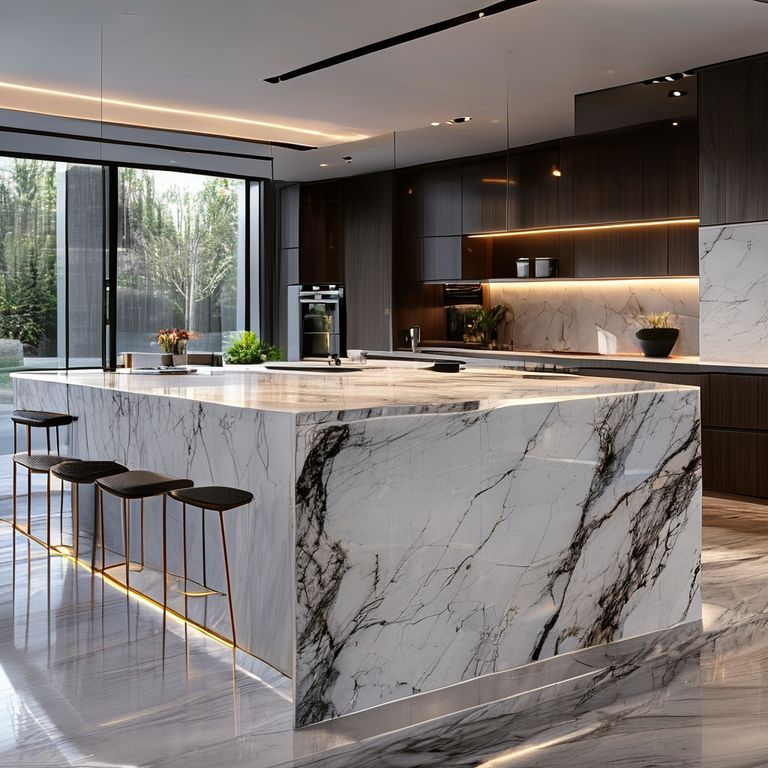
When we talk about quartz stone in these specific dimensions, we aren’t just talking about a utility surface for chopping vegetables or resting a morning espresso. We are talking about a structural statement. A 15cm or 20cm edge profile—achieved through the master craftsmanship of mitered joints—transforms a standard kitchen island or bathroom vanity into a piece of permanent furniture, a block of stone that feels as though it was hewn directly from a quarry and dropped into the heart of the home.
The Visual Impact of the 15cm Profile The 15cm (approximately 6-inch) quartz profile is often referred to by designers as the “Golden Mean” of modern stone work. It is thick enough to command immediate attention, yet streamlined enough to maintain a sense of contemporary grace. In a medium-to-large kitchen, a 15cm edge provides a sense of grounding. It bridges the gap between the traditional 2cm slab and the more experimental, heavy-duty architectural builds.
Choosing a 15cm quartz finish allows for a beautiful play of light. Because quartz is engineered with high-quality resins and natural crushed stone, it possesses a depth that natural marble sometimes lacks in consistency. When you extend that surface down a 15cm apron, you provide more “canvas” for the veining to flow. Whether it’s a Calacatta-inspired quartz with bold, sweeping grey veins or a concrete-look quartz with subtle industrial grit, the 15cm drop allows the pattern to wrap around the edge, creating a seamless, “waterfall” effect that draws the eye downward, emphasizing the height and volume of the cabinetry.
Engineering the Illusion It is important to understand that a 15cm or 20cm “thick” countertop is rarely a solid, 150lb-per-square-foot slab of stone. To achieve this look without collapsing the floor joists of a luxury penthouse, fabricators use the mitered edge technique. This involves cutting the top slab and the side apron at 45-degree angles and joining them with high-strength, color-matched epoxy.
The result is a hollow “box” of stone that looks like a solid, heavy block. This is where the quality of the quartz stone really shines. Because quartz is incredibly dense and uniform, these mitered edges can be polished to a point where the seam is virtually invisible to the naked eye. This “monolithic” look is the hallmark of premium 21st-century design. It suggests a sense of permanence and unshakeable quality.
Why Quartz? The Material of Choice While granite and marble have their charms, they are temperamental. Marble stains at the mere suggestion of red wine, and granite can feel visually “busy.” Quartz, however, offers the perfect middle ground for the 15cm and 20cm trend. It is non-porous, meaning it doesn’t require the constant sealing that natural stone demands. In a kitchen where the countertop is a massive, 15cm-thick focal point, you want it to look pristine. You don’t want a giant, permanent ring from a lemon slice or a coffee cup marring your investment.
Furthermore, the structural integrity of quartz allows for these oversized 15cm and 20cm miters to remain stable over time. It doesn’t have the natural fissures or “weak spots” that can cause a 20cm apron to crack or chip. It is a material built for the rigors of a high-traffic home, masquerading as a piece of fine art.
The 20cm Statement: The Titan of the Kitchen If 15cm is the “Golden Mean,” then the 20cm (approximately 8-inch) profile is the “Titan.” This is a choice for those who want their home to feel like a high-end gallery or a luxury boutique hotel. A 20cm quartz edge is a bold architectural move. It creates a “chunky” aesthetic that feels incredibly expensive and curated.
When you move into the 20cm territory, you are no longer just designing a kitchen; you are creating a destination. A 20cm-thick island becomes the anchor of the entire open-plan living space. It defines the zones of the house. It says that this is a place of substance. Designers often use the 20cm profile in minimalist environments where the “less is more” philosophy applies to furniture, but the “more is more” philosophy applies to materials. By having one massive, 20cm quartz element, you can afford to have very simple cabinetry and lighting, because the stone does all the heavy lifting.
part 2: Mastery of Space and Light – The Lifestyle of High-Profile Quartz
Continuing from the structural beauty of the 15cm profile, we must look at how the 20cm quartz stone application changes the very psychology of a room. When an interior designer specifies a 20cm edge, they are playing with proportions in a way that challenges our standard perception of domestic space. In a world of “disposable” furniture and flat-pack convenience, a 20cm quartz surface represents the antithesis of the ephemeral. It is an investment in the “Long Now.”
The Tactile Experience There is something undeniably satisfying about running your hand over a 20cm mitered edge. The coolness of the quartz, combined with the sheer verticality of the stone, provides a tactile experience that thin surfaces simply cannot replicate. It feels “solid” in a way that changes how you interact with your home. You don’t just “use” a 20cm countertop; you inhabit the space around it.
For those who love to entertain, the 20cm profile serves an almost communal purpose. It is the perfect height for guests to lean against during a cocktail party, feeling the sturdiness of the stone beneath them. It turns the kitchen island into a “social altar.” Because quartz is available in a variety of finishes—from high-gloss polished to “leathered” or matte—the 15cm and 20cm profiles can be tailored to the specific vibe of the home. A matte 20cm edge in a charcoal grey quartz evokes a sense of “raw luxury,” reminiscent of high-end Belgian design or a mountainside retreat.
Lighting the Monolith One of the most overlooked benefits of the 15cm and 20cm quartz trend is the opportunity for creative lighting. With a 20cm apron, you have ample space to incorporate “recessed toe kicks” or “floating” effects. Designers often install LED strip lighting underneath the 15cm or 20cm overhang.
Because the stone edge is so deep, the light has a significant surface to wash over, creating a soft, ambient glow that makes the massive stone block appear to hover off the floor. This juxtaposition—the “weight” of the 20cm stone versus the “lightness” of the illumination—is a classic trick used in luxury hotel lobbies to create a sense of wonder. In a residential setting, it transforms the kitchen at night into a glowing sculpture.
Beyond the Kitchen: 15cm and 20cm in the Bath While the kitchen is the natural habitat for these bold stone choices, the bathroom is where the 15cm quartz profile is currently seeing a massive surge in popularity. The “floating vanity” has become the standard for modern luxury bathrooms. By using a 15cm quartz profile for a wall-mounted vanity, you create a sleek, spa-like atmosphere.
A 15cm quartz vanity allows for “integrated sinks,” where the sink itself is fabricated out of the same quartz material. This creates a seamless transition from the countertop into the basin. When paired with a 15cm or 20cm mitered edge, the vanity looks like a solid block of stone floating against the tile. It hides all the plumbing and the underside of the sink while providing a clean, masculine, and organized look. It’s a way to bring the “boutique spa” experience into the daily ritual of getting ready.
Color Trends for Thick Profiles When choosing colors for 15cm and 20cm profiles, the trend is currently leaning toward “Quiet Luxury.” Think soft whites with subtle, feather-like veining, or deep, earthy tones like olive green, terracotta, or midnight blue quartz. Because the 20cm edge is so prominent, you want a color that has “movement” but isn’t overwhelming.
A stark white quartz with a 20cm edge can sometimes feel too “clinical” if not handled correctly. However, a “warm” white with gold or tan veining (imitating Calacatta Gold or Paonazzo marble) looks breathtaking in a 20cm thickness. The “thickness” gives the gold veins more room to breathe and travel, making the stone look more natural and less like a repeating pattern.
The Investment Value Ultimately, choosing a 15cm or 20cm quartz profile is about value—both aesthetic and financial. In the real estate market, certain upgrades signal “high-end” more effectively than others. A kitchen featuring a 20cm mitered quartz island is an immediate indicator of a “no-expense-spared” renovation. It is a detail that lingers in the minds of guests and potential buyers alike.
More importantly, it is an investment in durability. Because quartz is so resistant to chips and scratches, those sharp, clean 15cm mitered lines will stay sharp for decades. Unlike wood or laminate, which show their age at the corners and edges, a well-maintained quartz edge remains a timeless architectural feature.
Conclusion: The Bold Choice Whether you opt for the balanced elegance of the 15cm quartz profile or the uncompromising grandeur of the 20cm quartz stone edge, you are making a decision to prioritize substance. You are moving away from the “thin and fragile” and embracing the “bold and permanent.”
In the landscape of modern interior design, where everything is becoming increasingly digital and ephemeral, there is a profound joy in the physical. A 20cm quartz surface is a celebration of the physical world. It is a reminder that the spaces we inhabit should be as strong, as beautiful, and as enduring as the lives we lead within them. It isn’t just a countertop; it’s a monument to the art of living well.









