
When you walk into a high-end showroom, the lighting hits the countertops just right, and you find yourself running your hand along a surface that feels incredibly smooth, almost like silk. You ask the designer, “What is this?” and they might give you one of two answers: “It’s a premium Acrylic solid surface,” or “It’s an Artificial Stone.” At first glance, you might think they are talking about the same thing. In the world of interior design and material science, these terms are often tossed around interchangeably, leading to a massive amount of confusion for homeowners and contractors alike. But are their pros and cons really the same? If you were to watch a side-by-side video demonstration of their performance under pressure, would you see a difference? The short answer is a resounding yes.
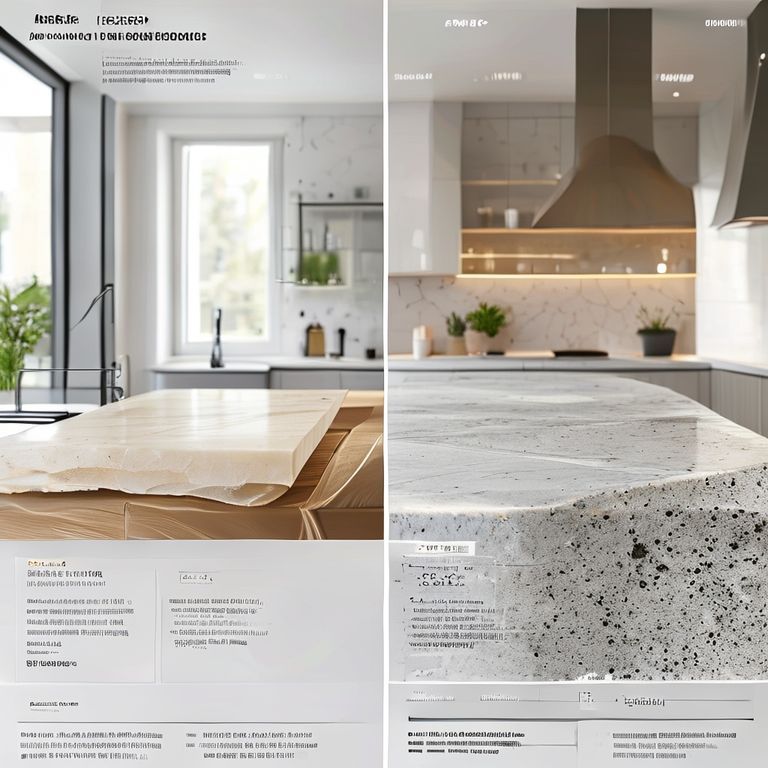
To understand the nuances, we first have to strip back the marketing jargon. “Artificial Stone” is actually a broad umbrella term. It’s the “Grandmother” category that includes everything from quartz and sintered stone to polyester-based solid surfaces and, yes, acrylics. However, when people in the industry talk about the “Acrylic vs. Artificial Stone” debate, they are usually comparing 100% Pure Acrylic (PMMA) to Unsaturated Polyester (UPR) Artificial Stone. Imagine a video where we zoom in with a microscope: on one side, you have the flexible, durable molecules of acrylic, and on the other, the more rigid, slightly more brittle structure of polyester resin mixed with fillers.
Let’s talk about the visual and tactile “Pros” of Acrylic first. If you’ve ever seen a “video tour” of a futuristic hotel lobby or a sleek, curved kitchen island that seems to have no beginning and no end, you’re almost certainly looking at Acrylic. Its biggest superpower is thermoformability. You can heat it up, bend it into a literal circle, or create organic, flowing waves that no natural stone could ever achieve. In an image-focused world like Instagram or Pinterest, Acrylic is the king of “The Seamless Look.” When two pieces of Acrylic are joined, a special chemical adhesive melts the edges together. Once sanded down, the seam becomes invisible to the naked eye. If you’re a minimalist who hates grout lines or visible joins where bacteria can hide, Acrylic is your best friend.
On the other hand, the “General Artificial Stone” (the polyester-based variety) often gets a bad rap for being the “budget” version, but it has its own set of characteristics. It is generally harder and more rigid than Acrylic. This means it feels a bit more like “real” stone under your knuckles. However, that rigidity is a double-edged sword. While it’s tough, it lacks the “give” that Acrylic has. In a video comparison of a heavy pot being dropped on both surfaces, the Artificial Stone might be more prone to a “star crack”—a series of tiny fractures radiating from the impact point—whereas the Acrylic might just take a small dent that can be easily buffed out.
One of the most significant differences lies in color stability and translucency. In high-quality images of back-lit bars or glowing bathroom vanities, you are seeing Acrylic’s ability to interact with light. Pure Acrylic has a wonderful translucency that gives it a “depth” of color. Polyester-based artificial stones tend to look a bit more “flat” or plastic-like when viewed up close. Furthermore, if you’ve ever seen a white countertop that has turned a sickly shade of yellow over five years, you’re likely looking at a low-grade artificial stone. High-quality Acrylic is famously resistant to UV yellowing. This is why it’s the preferred choice for dental clinics and laboratories where hygiene and a “forever-clean” look are non-negotiable.
However, it’s not all sunshine and rainbows for Acrylic. Let’s look at the “Cons” that a transparent video review would highlight. The most obvious one is heat resistance. If you take a searing hot cast-iron skillet straight from the stove and set it on a 100% Acrylic surface, you’re going to have a bad time. It can scorch or even slightly deform. While most Artificial Stones aren’t exactly “fireproof,” the polyester/mineral blends often have a slightly higher threshold for heat before they show distress.
Another point of contention is scratching. Because Acrylic is slightly “softer” (which is why it’s so easy to bend and shape), it can pick up fine scratches from sliding a ceramic plate across it. If you’re watching a high-definition video of a well-used kitchen, you might see a “patina” of micro-scratches on an Acrylic surface. The silver lining? Acrylic is “homogenous.” This means the color goes all the way through. You can literally take a piece of fine sandpaper and a polishing pad and erase those scratches yourself. You can’t really do that with many other “Artificial Stones” without ruining the factory finish.
So, are the pros and cons the same? Absolutely not. Choosing between them is like choosing between a high-performance sports car (Acrylic) and a reliable, sturdy SUV (Standard Artificial Stone). One offers unparalleled beauty, flexibility, and a “magic” seamless finish but requires a bit of care regarding heat. The other offers a more rigid, traditional feel at a lower price point but lacks the “wow factor” and the long-term repairability of its more sophisticated cousin.
Continuing our deep dive into this material showdown, we need to address the “Environmental and Longevity” factor. In many video tutorials about home maintenance, you’ll see experts emphasizing the “Life Cycle Cost” of a material. This is where the distinction between Acrylic and Artificial Stone becomes even more pronounced. When we look at images of countertops after ten years of use, the “Pure Acrylic” surfaces almost always look newer. Why? Because they are non-porous to an extreme degree. While some artificial stones (especially those with higher polyester content and lower-quality fillers) can develop microscopic “pits” over time that trap coffee, wine, or beet juice stains, 100% Acrylic remains a fortress.
If you were to watch a “stain test” video—letting red wine sit on both surfaces for 24 hours—you would see that on the Acrylic surface, the wine simply wipes away with a damp cloth. On a lower-end Artificial Stone, you might see a faint ghost of a stain that requires heavy chemical cleaners to remove. This “cleanability” is why Acrylic is the gold standard for hospitals. It’s not just about looking good; it’s about the fact that mold, mildew, and staph bacteria have nowhere to latch onto.
Now, let’s talk about the “Visual Vocabulary” of these materials. If you are browsing a gallery of “Modern Luxury” images, you’ll notice that Acrylic allows for integrated sinks. This is a game-changer for kitchen aesthetics. You can have a countertop that flows seamlessly into the sink bowl with no rim, no silicone seal, and no place for “gunk” to collect. Most standard Artificial Stones cannot do this because they can’t be chemically welded in the same way. You’re usually stuck with an under-mount or over-mount sink, which introduces a seam—and as any homeowner knows, the seam around the sink is the first place to get gross.
But let’s play devil’s advocate for a moment. Why would anyone choose a general Artificial Stone if Acrylic sounds so superior? The answer usually comes down to Budget and Hardness. If you are flipping a house or working on a tight renovation budget, the cost difference is significant. Acrylic is expensive to produce. The raw PMMA resin is a high-commodity item. Polyester-based stone is much cheaper. If you’re the type of cook who is “rough” in the kitchen—someone who wants to chop vegetables directly on the counter (please don’t do this on any surface, but we know it happens!) or someone who doesn’t want to worry about a hot lid—then the harder, more “stone-like” Artificial Stone might feel like a safer bet.
There is also the “Texture” element. In high-resolution photos, you can see that Artificial Stone often incorporates larger chunks of aggregate—bits of glass, mirror, or large stone chips—giving it a “salt and pepper” look or a “crushed ice” aesthetic that mimics granite or quartz. Pure Acrylic tends to have much finer particulates. It looks more like a solid, creamy color or a very fine, elegant mist. If you want that “chunky” natural stone look, Artificial Stone (specifically Quartz, which is a type of artificial stone) wins every time.
However, we must address the “Repair Video” scenario again. This is where the “Cons” of Artificial Stone really hurt. If you chip the edge of a polyester-based countertop, the repair is almost always visible. It’s like patching a hole in a pair of jeans; you can see the thread. If you chip an Acrylic countertop, a skilled fabricator can take a small scrap piece of the original material, “melt” it into the chip, sand it down, and it disappears completely. This “infinite renewability” is the ultimate “Pro” for Acrylic. It is quite literally a “forever” surface if you treat it with a modicum of respect.
To summarize the “Are they the same?” question for your decision-making process:
Aesthetics: Acrylic is for the “seamless, curved, glowing” look. Artificial Stone is for the “hard, granular, traditional” look. Durability: Acrylic is “softer” but repairable and stain-proof. Artificial Stone is “harder” but more prone to permanent cracking and staining. Hygiene: Acrylic is the undisputed champion of “zero-pore” living. Price: Artificial Stone is your budget-friendly workhorse. Acrylic is your luxury investment.
When you are watching those “Product Comparison” videos, pay close attention to the labeling. Many unscrupulous sellers will call a product “Acrylic” when it only contains 5% or 10% acrylic resin mixed with polyester (this is called “Modified Acrylic”). It won’t perform like the real deal. It won’t bend as well, and it will yellow over time. You want the “Pure Acrylic” (100% PMMA) if you want the benefits we’ve discussed here.
In the end, whether you choose the sleek, futuristic versatility of Acrylic or the rugged, cost-effective rigidity of Artificial Stone, the “pros and cons” are distinct branches of the same family tree. They aren’t the same, and understanding that difference is the key to a renovation that doesn’t just look good in a photo on day one, but still looks spectacular in a video tour ten years down the line. Choose with your lifestyle in mind—if you value the art of the “invisible” and the “seamless,” the Acrylic path is calling your name.









