
The Surface Revolution: Why Your Choice Matters
When you’re standing in the middle of a kitchen showroom or scrolling through endless Pinterest boards, the sheer variety of countertop materials can feel overwhelming. You see sleek, seamless curves and vibrant, stone-like textures, but beneath the surface, a battle is brewing between two heavyweights: Acrylic and Artificial Stone.
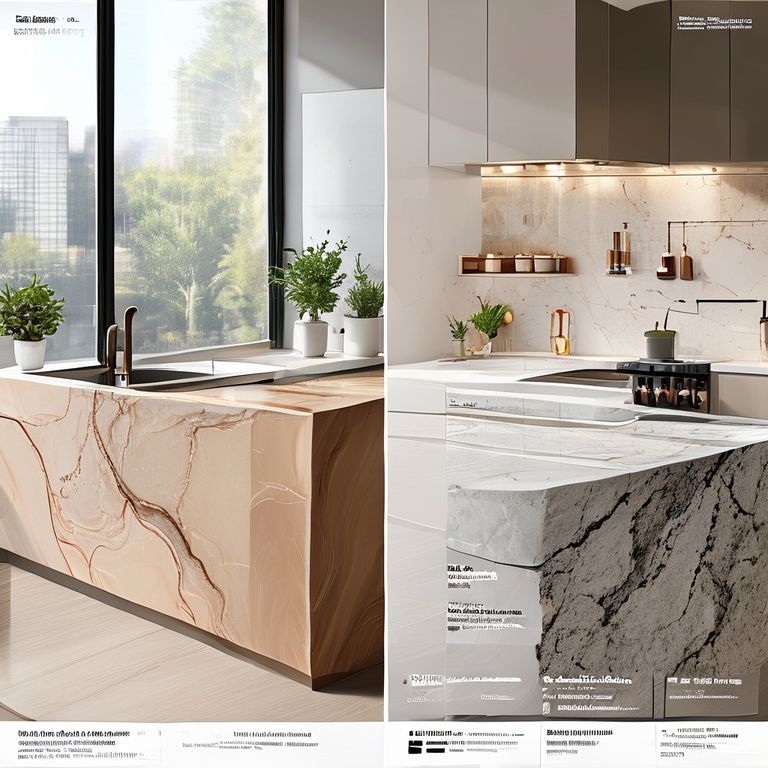
The prompt “亚克力与人造石优缺点区别在哪里呢图片” (Where are the pros and cons and differences between acrylic and artificial stone?) isn’t just a search query; it’s a cry for help from homeowners who want a balance between high-end aesthetics and everyday practicality. Choosing the right material isn’t just about what looks good in a professional photograph; it’s about what looks good after five years of morning coffees, spilled red wine, and the chaotic energy of a busy household.
In this first part, we’re going to peel back the layers of these materials. We’ll look at what they actually are, how they feel under your fingertips, and why one might be a “sculptor’s dream” while the other is a “budget-friendly powerhouse.”
Understanding the DNA: What Are We Dealing With?
To understand the difference, we first have to clear up some terminology. “Artificial Stone” is often used as a broad umbrella term that can include everything from quartz (engineered stone) to polyester-based solid surfaces. However, in the context of high-end interior design, we are usually comparing Pure Acrylic Solid Surface (often called “Acrylic”) against Composite Artificial Stone (usually a mix of polyester resins and minerals).
Acrylic (The Premium Contender): Imagine a material that can be melted and molded like high-tech clay. Pure acrylic is made from methyl methacrylate (MMA) and aluminum trihydrate (ATH), plus some pigments. It is the gold standard for high-traffic, luxury environments. Because it is thermoplastic, it can be “thermoformed”—meaning it can be heated and bent into incredible, flowing shapes that no natural stone could ever achieve.
Artificial Stone (The Versatile All-Rounder): Standard artificial stone often uses unsaturated polyester resin as the binder. It’s essentially a “cocktail” of crushed stone, minerals, and resin. While it shares many visual similarities with acrylic, its chemical makeup makes it stiffer and less forgiving. It’s the “sturdy cousin” in the family—reliable and cost-effective, but lacking the high-tech flexibility of its acrylic relative.
The Visual Appeal: A Feast for the Eyes
If we were looking at high-resolution images right now, the first thing you’d notice is the seamlessness.
1. The Magic of Invisible Joins This is where Acrylic truly wins the beauty pageant. When two pieces of acrylic are joined, a special adhesive is used that chemically bonds them together. After a bit of professional sanding, the seam completely disappears. You can have a 20-foot kitchen island that looks like it was carved from a single, continuous block of material. In “pictures” of high-end minimalist kitchens, this is usually the secret ingredient.
Artificial stone can be joined closely, but because it isn’t as chemically reactive as pure acrylic, the seams are often slightly more visible over time. If you’re a perfectionist who hates seeing lines, acrylic is your soulmate.
2. Color Depth and Translucency Acrylic has a unique relationship with light. Some high-end acrylics are slightly translucent, allowing designers to install LED backlighting behind them. Imagine a bathroom vanity that glows softly from within or a bar top that illuminates your cocktails. Artificial stone, being denser and more mineral-heavy, tends to be opaque. It excels at mimicking the “solid” look of granite or marble but rarely offers that ethereal, glowing quality.
Performance Under Pressure: Durability and Feel
When you touch these materials, you’ll notice a temperature difference. Acrylic feels “warm.” It’s a poor conductor of heat, so it stays close to room temperature. Artificial stone, due to its higher mineral content, feels cooler to the touch—more like natural marble.
But how do they handle the “daily grind”?
Impact Resistance: Acrylic is surprisingly resilient. It’s not “hard” in the way glass is; it’s “tough.” If you drop a heavy pot, acrylic is more likely to absorb the energy. Artificial stone, being more rigid and brittle, is slightly more prone to cracking or chipping under extreme impact. Stain Resistance: Both materials are non-porous. This is their biggest selling point over natural stones like marble or granite. Neither will soak up beet juice or vinegar. However, the resin quality in pure acrylic is generally higher, making it even more resistant to the yellowing that can plague cheaper artificial stones over decades of UV exposure.
The Architect’s Secret: Customization
If your home design involves “impossible” shapes—perhaps a sink that flows directly out of the countertop without a single edge, or a curved wall feature—Acrylic is the only way to go. Its ability to be thermoformed means it can follow the contours of your imagination.
Artificial stone is more “linear.” It’s perfect for traditional slabs, straight edges, and standard rectangular islands. It’s the workhorse of the suburban kitchen, providing a clean, professional look without the “designer” price tag that comes with complex acrylic fabrication.
As we wrap up this first look at the fundamentals, it’s clear that while they look similar in a photograph, Acrylic and Artificial Stone offer very different “vibes” and structural possibilities. In Part 2, we’ll get into the nitty-gritty: the heat tests, the scratch repairs, the price tags, and the ultimate verdict on which one you should actually buy.
The Nitty-Gritty: Maintenance, Mishaps, and Longevity
In Part 1, we established that Acrylic is the “flexible artist” and Artificial Stone is the “sturdy workhorse.” But life isn’t a gallery; it’s a kitchen where things get dropped, burned, and scratched. This is where the true distinction between these two materials reveals itself. When people ask, “What are the pros and cons?” they are usually asking: “How hard is it to keep this looking like the day it was installed?”
The Superpower of Acrylic: Infinite Renewability
Here is the single most important thing to know about pure Acrylic: It is renewable.
Because the color and pattern go all the way through the material (solid surface), any damage is usually superficial. If you accidentally scratch your acrylic countertop with a knife, or if a guest leaves a cigarette burn on the edge, you don’t need to replace the whole thing. A professional can simply sand down the damaged area and buff it back to its original luster.
In “before and after” pictures of acrylic restoration, the results are nothing short of miraculous. You can take a 10-year-old, battered countertop, give it a professional “reface,” and it will look brand new.
Artificial Stone, particularly those with a higher polyester content or thinner veneers, is much harder to repair. Once it chips or sustains deep heat damage, the repair “patch” is often visible. It lacks that “magical healing” property that makes acrylic a favorite for high-traffic commercial spaces like airports and hospitals.
The Achilles’ Heel: Heat Resistance
Let’s be honest—neither of these materials loves a hot frying pan. However, there is a slight edge for Artificial Stone here.
Artificial Stone can generally handle slightly higher temperatures because of its mineral fillers. It is less likely to deform immediately upon contact with a warm pot. Acrylic, being a thermoplastic, will soften if it gets too hot. If you take a boiling pot of pasta and set it directly on an acrylic surface, you might leave a permanent ring or a “melt” mark.
Pro Tip: Regardless of which one you choose, always use a trivet. In the battle of Man vs. Material, the stovetop always wins.
Hygiene and Health: The Non-Porous Advantage
If you are a “clean freak,” you will love both of these materials. Unlike natural granite, which has microscopic pores that can harbor bacteria and mold, both Acrylic and Artificial Stone are completely non-porous.
This is why you see “pictures” of acrylic used in dental clinics and laboratories. It’s incredibly easy to disinfect. Because there are no seams (in the case of acrylic), there are no “cracks” for crumbs and grime to hide in. It is, quite literally, one of the most hygienic surfaces you can put in a home.
The Budget Reality: What Does Your Wallet Say?
This is usually the deciding factor for most homeowners.
Artificial Stone (Composite/Polyester): This is your budget-friendly option. It gives you the “look” of a solid surface and the benefits of being non-porous at a fraction of the cost. If you are flipping a house or working on a tight renovation budget, artificial stone provides excellent “bang for your buck.” Pure Acrylic: Be prepared to pay a premium. The raw materials (MMA) are more expensive, and the fabrication process (seamless joining and sanding) requires a higher level of craftsmanship. However, you should view this as a long-term investment. Because it can be repaired and polished indefinitely, it may actually be cheaper over a 20-year lifespan than a material you have to replace if it gets cracked.
Environmental Impact and Sustainability
In today’s world, we have to look at the footprint of our homes. Acrylic is often favored by eco-conscious designers because of its longevity. A surface that lasts 30 years because it can be repaired is inherently more sustainable than a “throwaway” surface. Furthermore, many top-tier acrylic brands are now incorporating recycled content into their slabs.
Artificial stone varies wildly. Lower-end versions can sometimes emit higher levels of VOCs (volatile organic compounds) during the first few weeks after installation. If you go the artificial stone route, ensure you are buying from a reputable manufacturer with “Green Guard” certification.
The Final Verdict: Which One Should You Choose?
So, “where are the differences?” It boils down to your lifestyle and your aesthetic priorities.
Choose Acrylic if:
You want the “Invisible” Look: You love the idea of a seamless, monolithic island or a sink that flows directly out of the counter. You are a Perfectionist: You want the ability to buff out scratches and keep the surface looking brand new for decades. You want Softness: You prefer a surface that feels warm to the touch and has a “soft” matte or semi-gloss finish. You have a Custom Design: You need curves, waves, or integrated lighting.
Choose Artificial Stone if:
You are Budget-Conscious: You want the benefits of a solid surface without the premium price tag of pure acrylic. You prefer a “Stone” Feel: You like the cool-to-the-touch, rigid feel of a more mineral-heavy material. It’s a Low-Impact Area: You’re outfitting a laundry room, a rental property, or a guest bathroom where “the look” matters more than “infinite repairability.”
Closing Thoughts
When you look at the “pictures” of these materials, they both look stunning. They both offer a clean, modern aesthetic that natural stone sometimes struggles to match in terms of consistency. The real difference isn’t found in a photo; it’s found in the years of use that follow.
Acrylic is an investment in craftsmanship and durability, offering a level of “eternal youth” for your kitchen. Artificial stone is a practical, stylish, and economical solution for the modern home. Whichever path you choose, you’re stepping away from the maintenance headaches of natural stone and into a world of engineered perfection. Happy renovating









