
亚克力与人造石优缺点对比,亚克力人造石材
part 1:
The kitchen is no longer just a utility room; it is the heartbeat of the modern home. It is where morning rituals begin over a steaming cup of coffee and where late-night conversations unfold over a shared bottle of wine. Because this space carries so much emotional and functional weight, every choice you make during a renovation—from the cabinetry to the lighting—feels monumental. However, nothing defines the “vibe” and the longevity of a kitchen quite like the countertop. It is the literal stage upon which your culinary life plays out. When you step into the world of premium surfaces, two heavyweights inevitably dominate the conversation: Acrylic Solid Surface and Artificial Stone (predominantly Quartz).
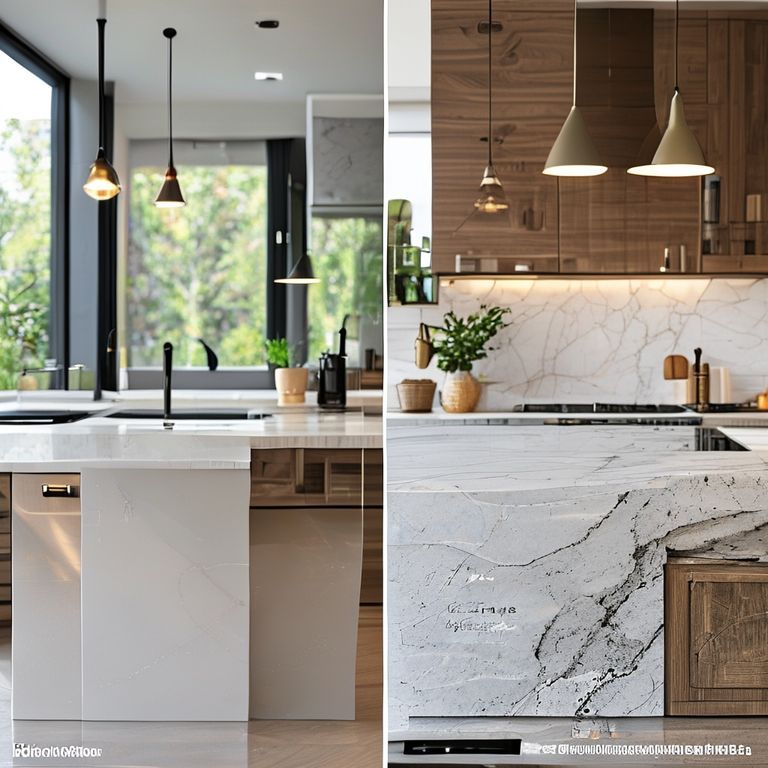
Choosing between these two isn’t just a matter of picking a color or a price point; it’s about choosing a philosophy of living. Do you value the fluid, futuristic seamlessness of a material that can be molded into any shape imaginable? Or do you crave the cold, commanding presence of a stone that feels like it was forged in the heart of a mountain? To make the right call, we have to look beyond the surface level and understand the DNA of these materials.
Let’s start with the “Artist” of the group: Acrylic Solid Surface. Often recognized by brand names like Corian, this material is a sophisticated blend of acrylic resins, pigments, and natural minerals. Its greatest claim to fame—the feature that makes interior designers swoon—is its seamlessness. In a world full of cracks and joins, Acrylic offers a continuous, monolithic flow. When two pieces of Acrylic are joined, the fabricator uses a special bonding agent that chemically melts the pieces together. Once sanded down, the seam vanishes entirely. You can have a twenty-foot kitchen island that looks like it was carved from a single, gargantuan block of silk.
This “seamlessness” isn’t just an aesthetic flex; it’s a hygienic revolution. Without seams or pores, there is nowhere for bacteria, mold, or last night’s red wine spill to hide. It’s a favorite in high-end medical facilities and luxury boutiques for this very reason. But the real magic of Acrylic lies in its “thermoforming” capabilities. When heated, Acrylic becomes pliable, allowing it to be bent into soft curves, organic waves, or even integrated sinks that flow directly out of the countertop. If your design language is “soft minimalism” or “futuristic chic,” Acrylic is your best friend. It feels warmer to the touch than stone, lending a certain tactile softness to the room that makes a house feel like a home rather than a showroom.
However, even the most beautiful artist has their vulnerabilities. Acrylic is softer than stone. If you’re the type of cook who moves with a certain chaotic energy—tossing knives onto the counter or sliding heavy cast-iron pans around—Acrylic will show the battle scars. It scratches. It can also be sensitive to extreme heat. Placing a boiling pot directly onto an Acrylic surface is a recipe for a permanent “heat ring.” While this sounds daunting, Acrylic has a secret weapon: it is completely renewable. Because the color and pattern go all the way through the material, a professional can sand away scratches or even “patch” a scorched section so perfectly that you’d never know it happened. It is a material that ages with you, capable of being refreshed to its original glory after a decade of use.
Then, we have the “Titan”: Artificial Stone, specifically Quartz. If Acrylic is the artist, Quartz is the structural engineer. Engineered stone is composed of roughly 90-93% crushed natural quartz crystals bound together by polyester resins and pigments. It was designed specifically to bridge the gap between the staggering beauty of natural marble and the industrial-strength needs of a busy household.
The immediate appeal of Artificial Stone is its sheer, unyielding toughness. It is one of the hardest materials on earth. On the Mohs scale, quartz sits comfortably near the top, meaning it is incredibly difficult to scratch or chip. For a high-traffic family kitchen where kids are doing homework, groceries are being dragged across the surface, and meal prep is a constant whirlwind, Quartz offers a “set it and forget it” peace of mind. It doesn’t require the periodic sealing that natural granite or marble does, and it is significantly more heat-resistant than its acrylic counterpart.
Visually, Artificial Stone has undergone a transformation in recent years. In the past, it looked somewhat “plastic” and repetitive. Today, thanks to advanced manufacturing, it can mimic the deep veining of Calacatta marble or the moody, speckled texture of volcanic rock with startling accuracy. It carries a certain “heft.” When you lean against a Quartz countertop, it feels cold, solid, and expensive. It provides that classic, high-end architectural feel that many homeowners equate with luxury.
But, every Titan has a weakness. The very hardness that makes Quartz so durable also makes it rigid. Unlike Acrylic, you cannot “bend” Quartz. Your edges will be sharp or beveled, but never organically curved in a 3D sense. Furthermore, seams are unavoidable. While a skilled installer can make quartz seams very discreet, they will always be there, especially if the stone has a complex veining pattern that needs to be matched.
part 2:
As we move deeper into the comparison, we have to talk about the “Day-to-Day” experience. Living with a material is very different from looking at a sample in a showroom. This is where the subtle nuances of Acrylic and Artificial Stone really start to dictate your lifestyle.
Let’s talk about the “Touch Factor.” This is an often-overlooked element of interior design. Acrylic Solid Surface has a thermal conductivity that is much lower than stone. This means it doesn’t “suck” the heat out of your skin. In the winter, an Acrylic countertop feels room-temperature and inviting. If you like to lean on your counters while chatting or if your kitchen island doubles as a workspace, that warmth is a luxury you’ll appreciate every single day. On the other hand, Artificial Stone is a heat sink. It’s always cool. In a hot climate, this can be a refreshing relief. For a pastry chef, a cold Quartz surface is actually a functional tool, helping to keep butter-heavy doughs from melting during the rolling process. It’s these small, sensory details that define which material “fits” your soul.
Maintenance is another arena where these two battle for supremacy. If you are someone who suffers from “stain anxiety,” Artificial Stone is likely your sanctuary. Its non-porous nature means that even the most aggressive liquids—turmeric, red wine, beet juice—usually wipe away with a damp cloth and a bit of mild soap. You don’t have to worry about the surface absorbing oils or harboring deep-set stains.
Acrylic is also non-porous and stain-resistant, but because it is softer, the “sheen” can change over time. If you scrub one spot too hard with an abrasive sponge, you might end up with a dull patch. However, this leads us back to the greatest advantage of Acrylic: its “Phoenix-like” ability to be reborn. If you’ve lived in your home for ten years and the Acrylic counters look a bit tired, a professional sanding and polishing session can make them look 100% brand new. You can’t really do that with Quartz. If you manage to chip a Quartz edge (which is difficult, but possible if you hit it with a heavy pot), the repair is much more difficult to hide. You’re essentially gluing a piece back in or filling it with epoxy, and the scar will likely remain visible to the trained eye.
From a design flexibility standpoint, Acrylic is the undisputed champion of the “Avant-Garde.” Because it can be joined invisibly, it allows for “coved” backsplashes. This is where the countertop curves upward to become the backsplash in one smooth, continuous arc. There is no 90-degree corner for grease and grime to collect in. It’s a clean-freak’s dream. You can also integrate wireless charging pads beneath the surface of an Acrylic counter, or even carve translucent patterns into the back of it and install LED lights to create a glowing “light-box” effect for a home bar.
Artificial Stone, however, wins on the “Value Perception” front. In the current real estate market, “Quartz Countertops” is a powerful keyword that drives up property value. It conveys a sense of permanence and “standard” luxury that almost every buyer recognizes and respects. While high-quality Acrylic can be just as expensive (if not more, due to the labor-intensive fabrication), Quartz has a broader appeal because it mimics the look of natural stone, which has been the benchmark of wealth for centuries.
So, how do you decide? It comes down to a few “vibe checks.”
Choose Acrylic if you are a fan of modern, sleek, or organic design. If you want a kitchen that looks like a seamless piece of sculpture, or if you are sensitive to the “coldness” of stone, Acrylic is your match. It’s for the homeowner who doesn’t mind a little bit of maintenance in exchange for a surface that can be perfectly restored and offers unparalleled hygienic benefits. It’s for the person who wants their kitchen to feel like a soft, welcoming sanctuary.
Choose Artificial Stone (Quartz) if you want a “Workhorse” that looks like a “Showhorse.” If you want the maximum possible resistance to scratches and heat, and you love the classic, heavy feel of stone, Quartz is the way to go. It’s for the busy family where the kitchen is a high-impact zone and you need a material that can take a beating and still look impeccable for the dinner party guests later that evening. It’s for the person who wants to invest in a material that is universally loved and virtually indestructible.
Ultimately, both materials represent the pinnacle of modern material science. We have moved far beyond the days of cheap laminates and porous, high-maintenance woods. Whether you choose the seamless, warm, and artistic embrace of Acrylic or the rugged, cool, and timeless strength of Artificial Stone, you are choosing a surface that will be the backdrop to a thousand meals and a million memories.
When you stand in your finished kitchen for the first time, running your hand across your new countertop, the “best” material won’t be the one with the highest technical specs—it will be the one that makes you feel most at home in your space. So, take a sample of each, bring them into your home’s natural light, and see which one speaks to you. The surface of your life is waiting.









