
For decades, the pursuit of the perfect interior has been a quest for the perfect surface. We have looked to the earth, quarrying massive slabs of granite and marble, chasing the cold, heavy elegance of natural stone. But as our design sensibilities have evolved toward the fluid, the hygienic, and the hyper-customized, natural stone has often hit a metaphorical wall. It is heavy, it is porous, and most frustratingly for architects, it is stubborn. Enter the era of acrylic artificial marble—often referred to in industry circles as “solid surface.” This isn’t just a backup plan for those who can’t afford Carrara; it is a sophisticated engineering marvel that has redefined what a “luxury surface” actually means in the 21st century.
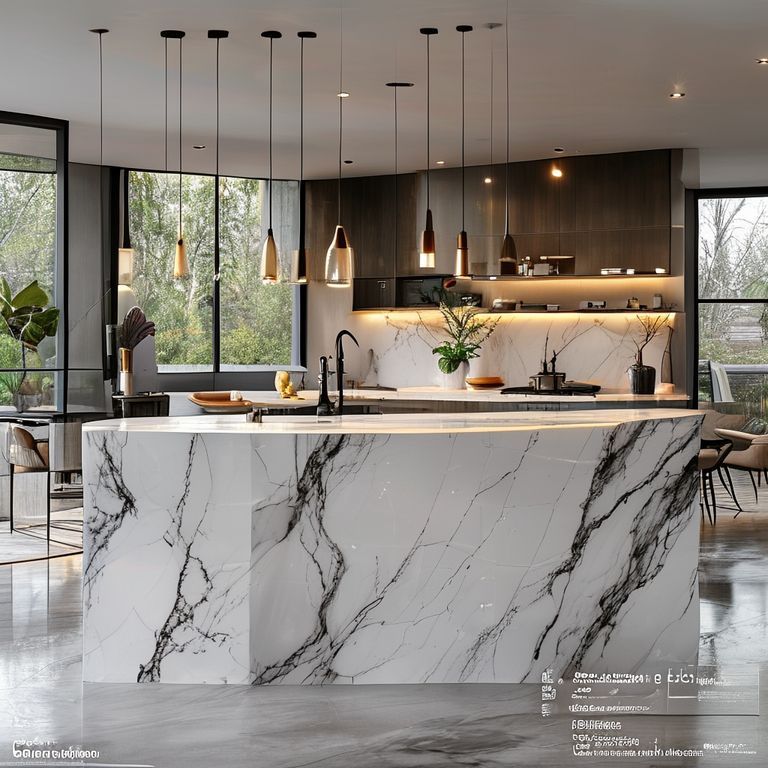
To understand why acrylic artificial marble has captured the imagination of high-end designers from Milan to Manhattan, one must first understand its soul. Unlike cheaper polyester-based composites that can feel brittle or look “plasticky,” high-quality acrylic marble is a blend of methyl methacrylate (MMA) and aluminum trihydrate (ATH), enriched with delicate pigments. The result is a material that possesses the visual depth of stone but the warmth and malleability of a modern polymer. When you run your hand across a premium acrylic surface, it doesn’t have that biting chill of granite. Instead, it feels silky, inviting, and remarkably substantial.
The most intoxicating “pro” of acrylic artificial marble—the one that leaves architects breathless—is its seamlessness. In the world of natural stone or quartz, a large L-shaped kitchen island or a long commercial bar will always have visible seams. These lines are the “scars” of the installation process. Acrylic marble, however, uses a specialized chemical bonding agent that melts the pieces together at a molecular level. Once sanded and polished, the joint disappears entirely. You are left with a singular, monolithic block of “stone” that appears to have been carved from one giant, impossible piece of earth. This allows for integrated sinks that flow directly out of the countertop without a single crevice for grime to hide in, and “waterfall” edges that look like a continuous liquid pour.
Beyond the visual magic, there is the undeniable triumph of hygiene. We live in an age where the “health” of our homes is under the microscope. Natural stones like marble are surprisingly delicate; they are filled with microscopic pores that can swallow red wine, oils, and bacteria, leading to permanent staining or hidden colonies of germs. Acrylic artificial marble is entirely non-porous. It is a fortress against liquids. Nothing penetrates the surface. This makes it the gold standard not just for the kitchens of enthusiastic home cooks, but for sterile environments like hospitals and laboratories. You don’t need to worry about sealing it every six months or panicking when a lemon is cut directly on the counter. It is a surface that serves you, rather than demanding you serve it.
Furthermore, the aesthetic palette of acrylic marble is limited only by human imagination. While natural stone is restricted to what the earth provides, acrylic marble can be engineered to perfection. Want a pristine, surgical white that never yellows? Done. Want a deep, midnight black with translucent particles that catch the light like a galaxy? Possible. Because the color and pattern run through the entire thickness of the material, it has a three-dimensional quality that mimics the “movement” of natural veins while maintaining a consistency that makes it easy to plan large-scale projects. It offers the “curated” look that modern minimalism demands—a perfect balance between organic chaos and industrial precision.
Part of the allure also lies in its “translucency.” High-grade acrylic marble can be manufactured to allow light to pass through it. This has opened up a whole new world of “glow-from-within” design. Imagine a bathroom vanity or a commercial reception desk that looks like solid stone by day, but when backlit at night, reveals a soft, ethereal luminescence. This is a feat no natural granite could ever hope to achieve without being sliced so thin it becomes structurally useless. Acrylic marble maintains its strength while playing with light in a way that feels almost supernatural. It is this combination of structural integrity and poetic beauty that makes it more than just a “synthetic” material; it is a medium for art.
However, no material is without its temperament, and to truly appreciate acrylic artificial marble, one must understand its vulnerabilities as well as its strengths. If natural stone is the “grumpy elder” of the surface world—hard but brittle—acrylic marble is the “sophisticated youth”—flexible but sensitive to heat. The primary “con” that every homeowner must respect is its thermal limit. Because it is a resin-based product, it cannot handle a scorching pot straight from the stove. Placing a 400-degree cast-iron skillet directly onto an acrylic surface can cause “thermal shock,” leading to cracks or even slight melting of the resin. It requires the use of trivets or integrated heat rods. In a world of “indestructible” marketing, this is the reality check: it is a high-performance material that requires a modicum of common sense.
Then there is the matter of “character marks.” Acrylic marble is softer than quartz or granite. If you slide a heavy ceramic pot across it with a rough bottom, you might see a faint scratch. In a dark, high-gloss finish, these micro-scratches can become visible over time under certain lighting. However—and this is a massive “however”—this weakness leads to one of the material’s greatest strengths: its renewability. If you scratch a piece of natural marble or chip a piece of quartz, you are looking at a very expensive, often impossible repair. If you scratch an acrylic surface, a professional (or even a skilled DIYer with the right pads) can simply sand it out. Within minutes, the surface is restored to its original factory finish. It is perhaps the only luxury surface that can be “reborn” a decade after installation. You aren’t just buying a countertop; you’re buying a surface that can be polished back to day-one perfection indefinitely.
This leads us to the fascinating world of “thermoforming.” This is the “secret weapon” of acrylic marble that leaves other materials in the dust. When heated to a specific temperature, acrylic artificial marble becomes as pliable as leather. It can be bent, twisted, and molded into organic, curvaceous shapes. This is why you see it used in futuristic hotel lobbies with undulating benches, or in ultra-modern bathrooms where the wall transitions into the bathtub in one smooth, sweeping curve. For those who find the sharp angles of traditional stone too “aggressive,” acrylic marble offers a softer, more human-centric geometry. It allows the home to feel “sculpted” rather than “assembled.”
From a cost perspective, acrylic artificial marble occupies a unique middle ground. While it is generally more expensive than laminate or entry-level granite, it is often more accessible than high-end exotic quartz or rare natural marbles. However, the “value” isn’t just in the sticker price; it’s in the installation and longevity. Because it is lighter than stone, it doesn’t require the same heavy-duty cabinet reinforcement. Because it is repairable, its lifespan is theoretically infinite. You aren’t just paying for the material; you are paying for the peace of mind that a wine spill won’t be a disaster and a scratch won’t be a permanent scar.
When choosing acrylic marble, the “quality” of the brand matters immensely. The market is flooded with “modified acrylics” which mix acrylic with polyester to lower the price. These hybrids often lack the depth of color and the extreme repairability of 100% pure acrylic. If you want the true “luxury” experience—the one that feels like silk and stands the test of time—investing in premium, pure acrylic brands is the only way to go. These top-tier materials offer better UV resistance (meaning they won’t fade in a sun-drenched kitchen) and a more refined finish that resists the “plastic” look that plagues cheaper alternatives.
In the final analysis, acrylic artificial marble is a choice for the visionary. It is for the person who values the “unbroken line” and the “soft touch.” It is for the cook who wants a laboratory-clean environment without the coldness of stainless steel. It is for the designer who wants to bend the rules of physics and create shapes that nature didn’t intend. Yes, you have to remember to use a trivet, and yes, you might need to give it a light polish every few years to keep it looking brand new. But in exchange, you get a surface that is truly “seamless”—both in its physical form and in the way it integrates into a modern, beautiful life. It is the bridge between the raw beauty of the earth and the limitless potential of human engineering. Whether it’s a glowing bar top or a monolithic kitchen island, acrylic marble doesn’t just sit in a room; it transforms it.









