
亚克力人造大理石的坏处,亚克力人造大理石的坏处和好处
The modern kitchen has become a theater of aesthetics, a place where the lines between high-art and high-function blur into a seamless blend of finishes and textures. At the heart of this revolution is acrylic artificial marble—often referred to in the industry as “solid surface.” It is the darling of architects who crave those impossible, gravity-defying curves and the envy of homeowners who want a countertop that looks like a single, unbroken sheet of snow-white stone. On the surface, it is the perfect material: non-porous, repairable, and visually stunning. But beneath that silky, matte-finish exterior lies a collection of compromises that many sales brochures conveniently omit. If you are currently seduced by the siren song of acrylic marble, it is time to pull back the curtain and look at the “bad” side of this synthetic beauty.
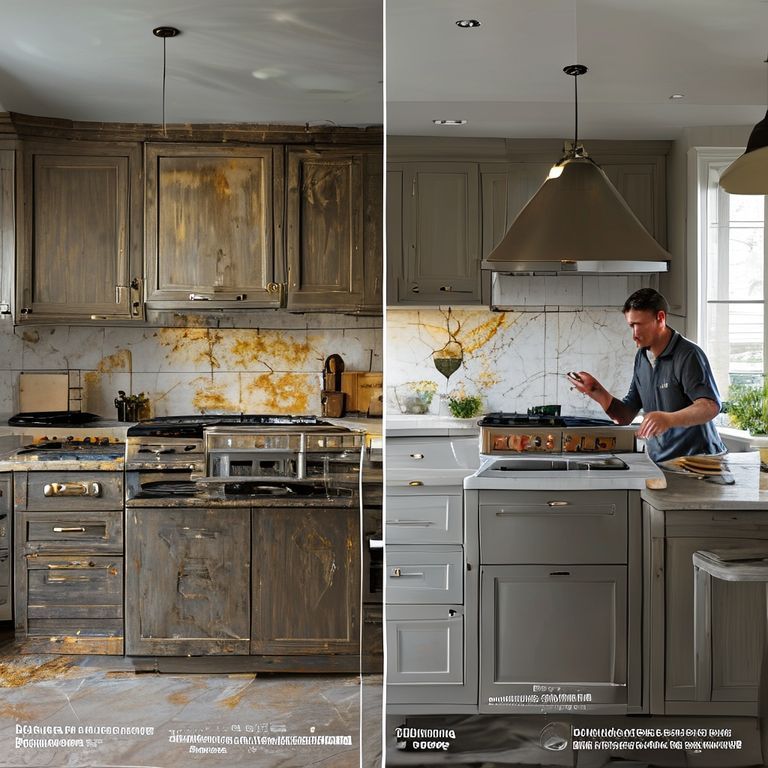
The primary allure of acrylic artificial marble is its composition. It’s a sophisticated cocktail of acrylic resins (the “plastic” part) and natural minerals (the “marble” part). This blend allows it to be thermoformed—bent and shaped with heat—which is why you see it in those futuristic, curvy island units. However, this very superpower is also its greatest weakness. The fundamental disadvantage of acrylic marble, and the one that catches most homeowners off guard, is its precarious relationship with heat.
Unlike its natural counterparts—granite or quartzite—which were forged in the literal fires of the earth’s crust, acrylic marble is a creature of the laboratory. It has a relatively low thermal ceiling. While a granite slab can shrug off a hot pot straight from the stove, acrylic marble will suffer a “thermal shock.” Placing a boiling pan on an acrylic surface is akin to placing a hot iron on a polyester shirt. At best, you’ll get a stubborn yellow ring; at worst, the resin will actually melt or crack. This isn’t just a minor inconvenience; it changes the way you behave in your own kitchen. You become a slave to trivets and heat pads, constantly terrified that a moments’ forgetfulness will leave a permanent scar on your five-figure investment. In a high-traffic, “real” kitchen where things are moving fast, this fragility is a significant drawback.
Furthermore, we must talk about the “Softness Factor.” There is a pervasive myth that because acrylic marble is “solid,” it is as hard as stone. This is demonstrably false. On the Mohs scale of mineral hardness, acrylic sits far below natural stone and even further below engineered quartz. This means it is incredibly susceptible to scratches. Your everyday kitchen activities—sliding a ceramic mug across the counter, a stray slip of a bread knife, or even the abrasive bottom of a heavy grocery bag—can leave micro-scratches.
Over time, these tiny abrasions accumulate. On a dark-colored acrylic marble surface, this results in a “whitening” effect or a hazy patina that robs the material of its original luster. While the industry likes to point out that these scratches can be “sanded out” by a professional, ask yourself: do you really want a countertop that requires periodic sanding like a piece of wooden furniture? The maintenance loop for acrylic marble is much tighter than people realize. It’s a material that demands a level of gentleness that many modern families simply cannot provide.
Then there is the issue of the “Plastic Aesthetic.” While high-end acrylic marble can look remarkably like the real thing from five feet away, the illusion often shatters upon contact. Natural stone has a thermal mass that makes it feel cold to the touch—a tactile sensation that signals luxury and permanence. Acrylic, being largely resin, feels warm. To many, it feels “plastic-y” or “synthetic.” If you are designing a space that aims for organic, raw luxury, the tactile feedback of acrylic can feel cheap, regardless of how much you paid for it. It lacks the crystalline depth of real marble or the rugged soul of granite. It is a manufactured perfection, and sometimes, that perfection feels sterile and lifeless.
Beyond the physical attributes, there is the installation reality. One of the “pros” of acrylic is the seamless joinery. Using a color-matched adhesive, installers can make seams virtually disappear. However, the disadvantage is that this “seamlessness” is only as good as the adhesive and the skill of the craftsman. If the house settles or if the cabinetry underneath shifts slightly, those rigid, chemically bonded seams are prone to cracking. Unlike a silicone joint in a granite top that has a tiny bit of flex, an acrylic seam is brittle. Once it pops, it’s not just a matter of re-caulking; it’s a specialized repair job that involves grinding, re-gluing, and re-polishing. It’s a high-maintenance relationship masquerading as a low-maintenance one.
Continuing our descent into the realities of acrylic artificial marble, we encounter a hurdle that often frustrates the clean-freaks among us: chemical sensitivity. We live in an era of heavy-duty disinfectants and specialized cleaning agents, but acrylic marble is a bit of a wallflower when it comes to harsh chemistry. Because it is a resin-based product, it reacts poorly to many common household substances. Nail polish remover (acetone), paint thinners, and even some aggressive oven cleaners can “etch” the surface of the acrylic, causing permanent dull spots or even “melting” the top layer of the finish.
Even something as seemingly innocent as a high-concentration bleach or certain citrus-based cleaners can, over time, degrade the resin’s bond with the mineral fillers. This leads to a loss of color vibrancy or a patchy, uneven sheen. In a bathroom setting, where hair dyes, perfumes, and skin toners are frequently used, an acrylic marble vanity can quickly become a minefield of potential stains and chemical burns. You find yourself reading the fine print on every bottle of cleaner, wondering if your attempt to sanitize your home will inadvertently ruin your countertops.
Furthermore, let’s address the environmental and health considerations—topics that are increasingly important to the modern consumer. Acrylic artificial marble is, at its core, a petroleum-based product. The production of the resins involves complex chemical processes that aren’t exactly “green.” While natural stone is quarried (which has its own environmental impact), it is an inert, earth-born material. Acrylic marble, when cut or sanded during installation or repair, releases a fine white dust consisting of plastic particles and aluminum trihydrate. If the fabrication shop doesn’t have top-tier ventilation, this is a significant respiratory hazard for workers. For the homeowner, there is also the “off-gassing” factor. While most high-quality solid surfaces are Greenguard certified, they are still synthetic materials that can emit Volatile Organic Compounds (VOCs) into the home environment, especially when they are new. For those striving for a non-toxic, “all-natural” home, acrylic marble is a hard pill to swallow.
Then comes the “Price-to-Longevity” paradox. Acrylic artificial marble is not cheap. In many markets, high-end brands like Corian or Hi-Macs cost as much as, or more than, mid-range granite or engineered quartz. When you pay a premium price, you generally expect premium durability. Yet, as we’ve established, acrylic is softer, less heat-resistant, and more chemically sensitive than quartz. You are essentially paying for the look and the flexibility of the material, not its ruggedness. In ten years, a quartz countertop will likely look exactly as it did on day one with zero maintenance. An acrylic marble countertop, unless treated with the utmost reverence, will likely show a decade’s worth of “life”—scratches, dull spots, and perhaps a few thermal scars.
The resale value of a home is also an area where acrylic can bite back. While it was the height of fashion in the 90s and early 2000s, many modern buyers are savvy. They recognize the difference between “real stone” and “solid surface.” In a luxury real estate market, seeing acrylic marble in a kitchen can sometimes be a red flag for buyers who equate it with “fancy plastic.” They want the cold touch of Carrara or the indestructible nature of Quartz. Acrylic can sometimes feel like a dated choice, a remnant of a time when we valued “space-age” synthetics over the enduring beauty of the earth.
Finally, we must consider the limitations in color and depth. While manufacturers have made incredible strides in mimicking the veining of natural marble, it still lacks the three-dimensional “chatoyancy” of the real thing. Natural stone has layers; light penetrates the surface and reflects back from different depths, giving it a soul. Acrylic marble, because the mineral fillers are suspended in an opaque or semi-opaque resin, often looks “printed” or “flat” upon close inspection. The patterns repeat, and the veining lacks the chaotic, organic flow of a stone that took millions of years to form.
Is acrylic artificial marble a total disaster? No. It has its niche—integrated sinks, commercial spaces with curved reception desks, and medical environments where its non-porous nature is a hygienic gold standard. But for the homeowner who cooks, who entertains, and who wants an investment that stands the test of time and heat, the disadvantages are impossible to ignore. It is a material that requires you to adapt your lifestyle to its limitations, rather than a material that adapts to your life. Before you fall for that seamless, milky glow, ask yourself: are you prepared to live in a world where a hot cup of tea or a dropped knife is a potential disaster? If the answer is no, then the “mirage” of acrylic marble might be a beauty you’re better off admiring from a distance.









