
人工制作石头图案图片大全,人工造石头
There is something deeply primal about our connection to stone. It is the literal foundation of our world, a symbol of permanence in a fleeting reality. For millennia, humans have quarried the earth to find that perfect slab of granite or the most translucent piece of marble. But we have reached a fascinating crossroads in the 21st century. No longer are we solely beholden to the whims of tectonic shifts and volcanic cooling. Today, we are the architects of geology. The “Complete Collection of Man-Made Stone Patterns” isn’t just a catalog of building materials; it is a testament to human ingenuity—a marriage of chemistry, art, and architectural ambition.
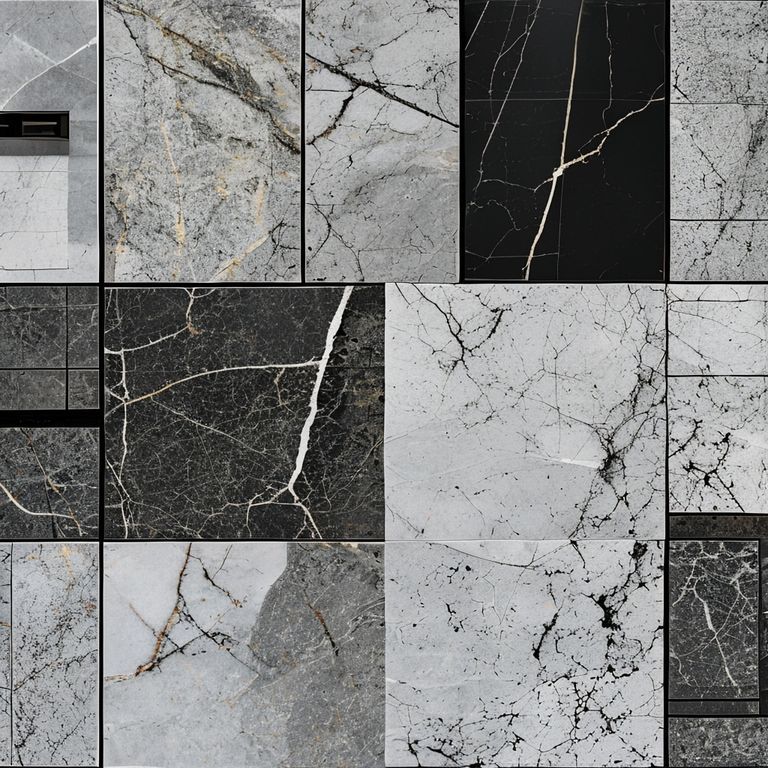
When we talk about artificial stone patterns, we aren’t talking about “fake” or “cheap” imitations. We are talking about a sophisticated evolution. Natural stone is beautiful, yes, but it is also heavy, porous, and often fragile. Man-made stone—whether it be engineered quartz, porcelain slabs, or high-definition resin composites—offers a canvas where nature’s flaws are edited out and its best features are amplified. Imagine a piece of marble with the deep, dramatic veining of an Italian quarry, but with a surface that is impervious to wine stains and scratches. That is the magic of the man-made.
The journey into this gallery starts with the classics: the Marbles. In the world of artificial patterns, we see a reimagining of Carrara and Calacatta that would make Michelangelo do a double-take. Designers use liquid-injection technologies to create “vein-matching” patterns that flow seamlessly across an entire kitchen island or bathroom wall. In nature, finding two slabs that mirror each other perfectly is like finding a needle in a haystack. In the realm of man-made patterns, we can create a “book-matched” effect that looks like a Rorschach test of elegance, where the grey and gold veins dance across the surface in perfect symmetry.
But the appeal doesn’t stop at marble. One of the most vibrant sections of our collection focuses on Terrazzo. Once considered a humble flooring solution for mid-century Mediterranean schools and hospitals, Terrazzo has undergone a high-fashion rebirth. The man-made version allows for an explosion of creativity. Since these patterns are essentially a mosaic of chips (glass, quartz, granite) suspended in a resin or cement binder, the color palettes are infinite. You can have a “stone” that features blush pink chips embedded in a forest green base, or translucent glass shards that catch the light like a handful of diamonds scattered on a sidewalk. It is a playful, tactile pattern that proves stone doesn’t always have to be “cold” or “serious.”
As we move deeper into the collection, we encounter the industrial-chic aesthetics of Concrete and Slate mimics. There is a raw, brutalist beauty in the pattern of weathered cement. However, real concrete is prone to cracking and requires constant sealing. Man-made stone patterns capture the subtle color gradients, the “air bubble” textures, and the matte finish of industrial concrete without any of the structural headaches. These patterns bring an urban, loft-like soul to any space. They whisper of art galleries in Soho and renovated warehouses in Berlin. They are for the minimalist who finds beauty in the “unfinished.”
The technical artistry behind these patterns is staggering. To create a truly convincing stone pattern, one must understand the “soul” of the rock. It’s not just about drawing lines on a surface. It’s about depth. The best man-made stones use multi-layered printing and 3D-texturing to ensure that the pattern isn’t just skin-deep. If you run your fingers over a high-quality artificial slate pattern, you will feel the ridges and the “cleavage” of the stone. You will see how the light hits the micro-craters, creating shadows that give the surface a three-dimensional life. This is where art meets physics.
Furthermore, the “Man-Made Stone Patterns” theme addresses a growing desire for sustainability. Extracting natural stone is an invasive process. By turning to engineered alternatives—many of which use recycled glass and stone dust—we are essentially “upcycling” the earth. We are taking the leftovers of the quarry and compressing them into something even stronger and more versatile. It is a cycle of renewal that feels right for the modern era. When you look at an artificial stone pattern, you are looking at a curated vision of the Earth’s history, refined for the modern home.
In the next section, we will explore the more avant-garde applications of these patterns—the “Fantasy Stones” that don’t exist in nature, and how these textures are being used to transform outdoor landscapes and high-tech interiors. The world of stone is no longer set in… well, stone. It is fluid, creative, and limited only by our imagination.
As we venture further into the “Complete Collection of Man-Made Stone Patterns,” we move away from the mimicry of the natural world and into the realm of the impossible. This is where the term “artificial” becomes a badge of honor. In the traditional world of geology, you are limited by what the earth provides. In the world of man-made patterns, you are limited only by your dreams. We call this the “Fantasy Stone” movement—patterns that look like they were quarried from another planet.
Imagine a stone pattern that combines the deep, celestial blues of Lapis Lazuli with the metallic, geometric shimmer of Pyrite, but on a scale large enough to cover a skyscraper’s lobby. In nature, such a find would be a geological anomaly worth millions. In the lab, artists can weave these textures together, creating “Liquid Gold” marble or “Midnight Nebula” quartz. These patterns often incorporate bioluminescent pigments or metallic flakes that react to the lighting of the room. During the day, the stone looks like a sophisticated grey granite; at night, under UV or dim LED lights, it glows with a soft, ethereal pulse. This isn’t just a building material; it’s an interactive installation.
One of the most exciting frontiers for these man-made patterns is the outdoor landscape. Traditional garden paths and exterior walls are often limited by the local climate. Soft stones crumble in the frost; dark stones crack in the heat. However, the artificial patterns designed for the outdoors are built like tanks. We are seeing a rise in “Artificial Rock-Scaping.” These are large-scale patterns used for pool surrounds, waterfalls, and cliff-faces. Through a process of GFRC (Glass Fiber Reinforced Concrete) and hand-painting, craftsmen can recreate the look of ancient, moss-covered limestone or sun-drenched desert sandstone.
The detail is so precise that you can see the “fossils” embedded in the surface. These man-made fossil patterns are a favorite among designers who want to add a sense of history to a brand-new build. By “planting” artificial ammonites and fern imprints into the stone texture, they create an instant narrative. It gives the space a soul, a feeling that it has been there for eons, even if it was installed last Tuesday. It is “instant heritage,” a clever trick of the eye that brings a profound sense of peace and stability to a garden.
Interior designers are also using these patterns to solve the problem of “clunky” transitions. In the past, if you wanted a stone wall and a stone floor, you had to deal with a heavy grout line and a jarring change in texture. With modern man-made slabs, we are seeing the rise of the “Monolithic Look.” A single pattern can wrap from the floor, up the side of a bathtub, and onto the walls, creating a seamless cocoon of stone. This is particularly effective with “Travertine” patterns. The soft, linear holes and beige tones of Travertine are beautiful but notoriously difficult to maintain in a wet environment. The man-made version gives you that spa-like, ancient Roman aesthetic with zero maintenance. It turns a bathroom into a sanctuary of stillness.
But let’s talk about the “Human Touch.” Many of these patterns are now being designed by famous architects and artists rather than just geological engineers. We are seeing “Signature Collections” where the stone pattern is treated like a textile or a wallpaper design. Some patterns incorporate subtle geometric overlaps—a whisper of a honeycomb grid hidden within a marble vein, or a gradient that shifts from the texture of rough-hewn stone at the base of a wall to a polished, glass-like finish at the top. This “gradient stone” is something nature simply cannot do, and it is a powerful tool for manipulating the perception of space and height in a room.
The “Artificial Stone Pattern” movement also intersects with the DIY and Maker culture. With the advent of high-quality epoxy resins and stone-dust molds, hobbyists are now creating their own “stone” art at home. You can find thousands of tutorials online for creating “Geode Art”—slices of man-made stone that look like giant, glittery agates. This democratization of stone design means that the “Complete Collection” is growing every single day. Every person who pours a resin countertop or stamps a concrete walkway adds a new page to this digital encyclopedia of textures.
As we look toward the future, the integration of technology and stone patterns will only deepen. We are already seeing the development of “Smart Stones”—surfaces that have haptic feedback or integrated touch-controls hidden beneath a man-made granite pattern. Imagine tapping your kitchen counter—which looks like a rugged piece of volcanic rock—to turn on the lights or check a recipe. The pattern remains undisturbed, a perfect mask for the technology beneath.
The “Complete Collection of Man-Made Stone Patterns” is more than just a list of products. It is a reflection of our desire to take the chaos of nature and refine it into something that fits our lives perfectly. It is about beauty without the burden of fragility. It is about the freedom to choose any color, any texture, and any scale. Whether it’s a sleek, futuristic quartz or a rugged, “prehistoric” garden wall, man-made stone allows us to live in a world that is literally carved from our own imagination. It is the ultimate expression of human craft—turning the common dust of the earth into the extraordinary textures of our future.









