
If you’ve ever walked into a high-end penthouse in Shanghai, a minimalist villa in the hills of Tuscany, or a sleek corporate headquarters in Manhattan, you’ve likely stood upon or touched a miracle of modern engineering without even knowing its name. In the world of design, there is a phrase that often lingers on the lips of architects and interior curators: “人工石” (pronounced Rén Gōng Shí). To the uninitiated, these three characters simply translate to “Artificial Stone.” But to those who understand the poetry of materials, it represents something far more profound. It is the bridge between the raw, untamed power of the earth and the meticulous, visionary hand of human innovation.

To “read” the characters—Rén (Human), Gōng (Work/Craft), Shí (Stone)—is to read the history of our desire to perfect nature. For centuries, we were at the mercy of the quarry. If you wanted the snowy veins of Statuario marble, you had to hope the mountain would yield it. You dealt with the fragility, the staining, and the inherent imperfections of a rock that took millions of years to form but could be ruined by a single glass of red wine. “人工石” changed the narrative. It asks the question: What happens when we take the finest minerals the earth provides and reorganize them with the benefit of 21st-century alchemy?
The allure of Rén Gōng Shí begins with its visual deception. In the early days, “man-made” was a synonym for “imitation.” It was the substitute, the second-best choice for those who couldn’t afford the “real thing.” But look at the landscape of 2024. The tables have turned. Today, the most prestigious designers often specify artificial stone—specifically quartz and sintered stone—not because it is cheaper, but because it is superior. When you look at a slab of high-grade artificial stone, you aren’t just looking at a pattern; you are looking at a controlled masterpiece. The veins flow with a rhythmic grace that natural stone rarely achieves. The colors are consistent, allowing for “book-matching” on a scale that makes a kitchen island look like a monolithic sculpture rather than a series of joined pieces.
But why the obsession with how we “read” this word? Because in Mandarin, “人工” (Rén Gōng) carries a weight of craftsmanship that the English word “artificial” sometimes lacks. In English, “artificial” can sound cold, plastic, or fake. In the context of Rén Gōng Shí, it implies Artistry. It suggests that a human hand has guided the pressure, the heat, and the composition to create a surface that is harder than granite, non-porous, and breathtakingly beautiful. It is the “Stone of the Human Spirit.”
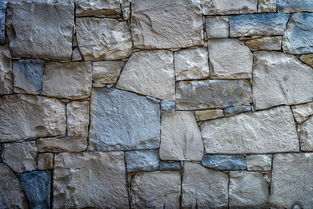
When you invite this material into your home, you aren’t just installing a countertop; you are curating an environment. Imagine a bathroom clad in large-format Rén Gōng Shí that mimics the deep, moody greys of a storm-tossed sea, yet feels warm to the touch and remains impervious to the steam and oils of a daily spa routine. This is the practical magic of the material. It offers the soul of the mountain without the mountain’s temperamental nature.
The rise of this material also speaks to a global shift in consciousness. We are becoming more protective of our natural landscapes. The heavy quarrying of rare marbles is an invasive process. Rén Gōng Shí, however, often utilizes recycled stone aggregates and sustainable resins, allowing us to achieve the “Luxury Look” while treading more lightly on the planet. It is a choice that reflects an intellectual approach to beauty—one that values both the aesthetic result and the ethical journey of the material.
As we delve deeper into the technicalities, we realize that “reading” Rén Gōng Shí is also about understanding the “Sintering” process—a high-tech evolution where minerals are subjected to immense pressure and heat (over 1200°C), essentially mimicking the metamorphic processes of the earth’s crust in a matter of hours. The result is a slab that is virtually indestructible. You can chop vegetables directly on it; you can set a hot pan down without a trivet; you can spill lemon juice or vinegar without fear of etching. This is the liberation of the modern homeowner. No longer are we slaves to the maintenance of our surfaces. We are free to live on them, work on them, and celebrate on them.
In the next part of our exploration, we will look at how Rén Gōng Shí is redefining the “Quiet Luxury” trend and why the “read” of these characters is becoming the universal language of high-end property development. From the texture under your fingertips to the way it reflects the morning light, the story of artificial stone is just beginning.
Continuing our journey into the soul of “人工石” (Rén Gōng Shí), we move from the philosophical to the experiential. If the first part of the story was about the “Why,” this second part is about the “How”—how this material is transforming the very air we breathe within our interior spaces. In the modern design lexicon, luxury is no longer defined by how much something costs, but by how it makes you feel. And Rén Gōng Shí is a master of atmosphere.
One of the most captivating trends in contemporary architecture is the “Seamless Transition.” Designers are moving away from the cluttered look of small tiles and grout lines, opting instead for the expansive, uninterrupted planes that only artificial stone can provide. When you use Rén Gōng Shí for flooring, wall cladding, and furniture all in the same space, the room begins to feel less like a box and more like a sanctuary carved out of a single block of ethereal matter. The “read” of the stone becomes a visual symphony of continuity.
Let’s talk about the “Feel.” If you run your hand across a slab of premium sintered stone or high-grade quartz, you’ll notice a variety of finishes that natural stone often struggles to maintain over time. There is the “Polished” finish, which offers a mirror-like clarity that expands a room’s dimensions by bouncing light into every corner. Then there is the “Honed” or “Matte” finish—soft, velvety, and incredibly tactile. But perhaps the most exciting is the “Leathered” or “Textured” finish, which gives Rén Gōng Shí a topographical depth. It feels organic, ancient, and grounded, yet it possesses the hygiene and durability of a space-age material.
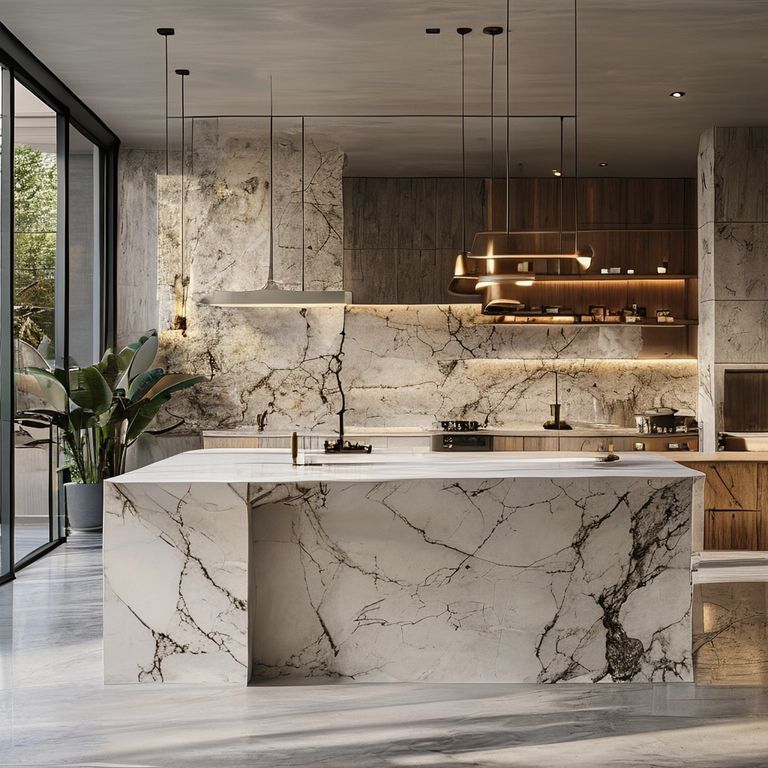
This versatility is why Rén Gōng Shí has become the darling of the “Quiet Luxury” movement. This aesthetic isn’t about shouting; it’s about a confident whisper. It’s about a kitchen where the cabinetry is hidden, and the central island—a massive, veined slab of artificial stone—stands as a piece of functional art. It’s about a bedroom where the headboard is a backlit panel of translucent Rén Gōng Shí, glowing with a soft, amber warmth that mimics the setting sun. Because these stones are engineered, we can control their translucency, their weight, and their thickness, opening up design possibilities that were once the stuff of science fiction.
Furthermore, the “read” of Rén Gōng Shí is increasingly becoming a global standard for health-conscious living. In an era where we are more aware of the porosity of our surfaces, the non-porous nature of engineered stone is a game-changer. It doesn’t harbor bacteria, mold, or mildew. It doesn’t require toxic sealants. For a family kitchen or a high-traffic bathroom, it provides a level of “invisible safety” that is priceless. You aren’t just choosing a color; you are choosing a lifestyle that prioritizes well-being without sacrificing an ounce of glamour.
As we look toward the future, the evolution of Rén Gōng Shí is heading toward even greater heights of customization. We are seeing the integration of technology directly into the stone. Imagine a countertop that can wirelessly charge your phone, or a dining table with integrated induction heating zones hidden beneath the surface of the “stone,” allowing you to keep your tea warm while you work. Because the material is consistent and stable, it can be precision-milled to accommodate these hidden luxuries.
The question of “人工石这个字读什么” (How do you read the characters for artificial stone?) ultimately finds its answer not in a dictionary, but in the way we perceive the world around us. To read it is to recognize that we are no longer passive observers of nature’s beauty. We are active participants in its refinement. We have moved past the era of “imitation” and entered the era of “optimization.”
For the homeowner embarking on a renovation, or the architect sketching the next iconic skyline, Rén Gōng Shí represents a canvas of infinite potential. It is the material that says you value durability as much as beauty, and intelligence as much as tradition. It is a testament to the fact that when human ingenuity meets the foundational elements of the earth, the result is nothing short of spectacular.
In conclusion, next time you encounter a surface that leaves you breathless with its perfect veins and its cool, solid presence, don’t ask if it’s “real” or “fake.” Instead, appreciate it for what it truly is: a masterwork of Rén Gōng Shí. It is the stone of today, engineered for tomorrow, and designed to last a lifetime. Whether it’s the centerpiece of your home or the foundation of your workspace, this “Human-Crafted Stone” is a celebration of what we can achieve when we stop trying to replace nature and start trying to honor it through innovation. That is the true “reading” of the word, and it is a story that is being written in beautiful spaces all across the globe.









