
When you walk into a high-end gallery, a boutique hotel, or a kitchen that feels like it belongs on the cover of an architectural digest, there is a specific tactile sensation that often greets you. It is smooth, warmer than marble to the touch, and possesses a subtle, inner luminosity that seems to glow from within. More often than not, you are looking at acrylic artificial stone.
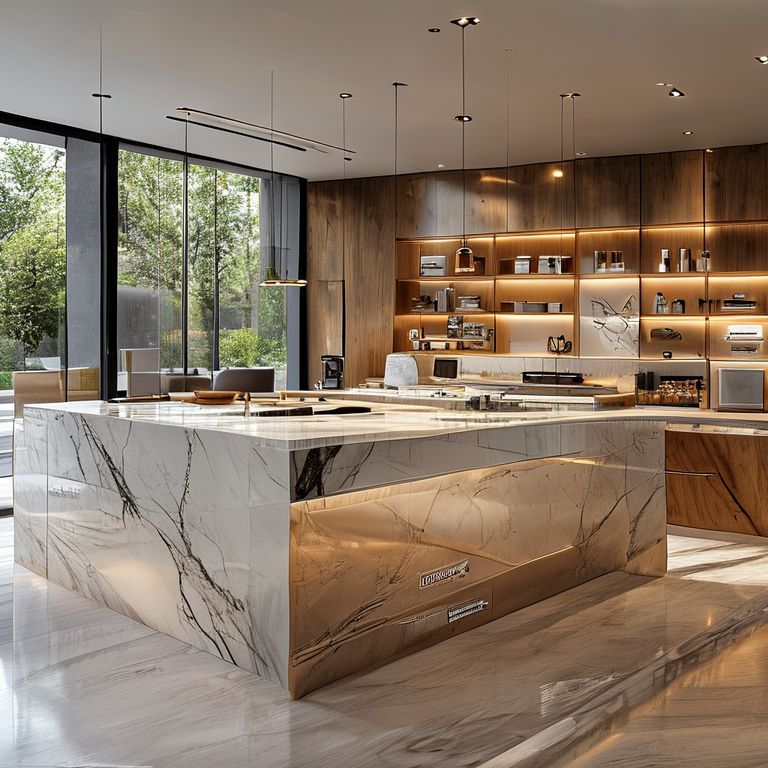
For many homeowners, interior designers, and commercial developers, the initial attraction to this material is purely visual. It offers a seamlessness that natural stone simply cannot match. But the conversation quickly turns from aesthetics to the practicalities of the “人造亚克力石价格”—the price of acrylic artificial stone. Understanding this price is not merely about looking at a quote; it is about understanding the alchemy of science, design, and craftsmanship that goes into every square meter.
To understand why the price of acrylic stone varies so dramatically, we first have to peel back the layers of what it actually is. In the industry, we generally distinguish between two main categories: 100% pure acrylic and modified acrylic. If you are looking for the pinnacle of performance, pure acrylic (often referred to as PMMA—Polymethyl Methacrylate) is the protagonist of your story. It is the material that allows for “thermoforming”—the ability to heat the stone and bend it into gravity-defying curves. When you see a reception desk that looks like a single, swirling ribbon of white silk, you are seeing pure acrylic. Naturally, this comes with a premium.
Modified acrylic, on the other hand, is a blend of acrylic and polyester resins. It provides much of the look and feel of the pure version but at a more accessible price point. It’s the “sensible sibling” that works beautifully for straight-run countertops where extreme bending isn’t required. When people ask about the price of acrylic artificial stone, the first question a supplier will ask is: “What do you intend to do with it?” The complexity of your design dictates the grade of the material, which in turn sets the baseline for the cost.
However, the resin is only part of the equation. The “stone” part of the name comes from Alumina Trihydrate (ATH). This is a fine white powder that acts as the filler. High-quality ATH provides the stone with its fire-retardant properties and its chemical resistance. In cheaper, low-cost alternatives, manufacturers might swap ATH for calcium carbonate (essentially chalk). While this significantly lowers the “人造亚克力石价格” in the short term, it results in a product that is brittle, prone to yellowing, and easily stained. Choosing the right price point is, therefore, an exercise in risk management. Are you paying for a surface that will look pristine in a decade, or one that will show its age before the first year is out?
Then, there is the question of thickness. Standard thicknesses usually range from 6mm to 12mm, with 12mm being the industry standard for horizontal surfaces like kitchen counters. A 6mm sheet is excellent for wall cladding or vertical accents, and its lower price reflects the reduced material usage. Yet, savvy designers often use these thinner sheets strategically to create the illusion of massive, heavy stone blocks by mitering the edges, effectively playing with the budget to achieve a high-luxury look.
We must also talk about the “Visual Premium.” In the world of acrylic stone, not all colors are created equal. Solid whites and off-whites are generally the most affordable. They are the classics, the versatile foundations of modern minimalism. However, once you move into the realm of complex patterns—surfaces infused with translucent chips, pearlescent pigments, or veins that mimic the erratic beauty of Calacatta marble—the price climbs. These patterns require more sophisticated manufacturing processes and higher-quality pigments that resist UV fading.
Ultimately, when you are navigating the market for acrylic artificial stone, you aren’t just buying a commodity. You are buying the result of high-pressure casting and vacuum curing. You are buying a non-porous surface that denies entry to bacteria and mold, a feature that is becoming increasingly non-negotiable in a post-pandemic world. The price you pay is a reflection of this peace of mind. As we move into the second part of this exploration, we will dive deeper into the “hidden” costs—the fabrication, the brand influence, and the long-term ROI that turns a high upfront cost into a brilliant financial decision.
Continuing our journey into the economics of elegance, we must address the elephant in the showroom: the “Hidden Costs” of fabrication and installation. When you see a price per square foot or meter for acrylic artificial stone, it rarely tells the whole story. Unlike a piece of furniture that arrives at your door ready to use, acrylic stone is a raw material that requires the hands of a master craftsman to truly sing.
Fabrication is where the magic—and a significant portion of the cost—happens. One of the most sought-after features of acrylic stone is the “seamless joint.” When two pieces are joined with a color-matched adhesive, the seam becomes chemically bonded and virtually invisible. Achieving this requires precision machinery and a high level of skill. If you have a complex kitchen layout with multiple angles, or a bathroom vanity with an integrated “seamless” sink (where the basin and the counter appear to be one continuous piece), the labor cost will rise. However, this is precisely where the value lies. A seamless surface isn’t just beautiful; it’s incredibly hygienic because there are no cracks or crevices for dirt or water to hide. In the long run, the slightly higher “人造亚克力石价格” for professional fabrication pays for itself in reduced cleaning time and the prevention of water damage.
Then, there is the brand factor. In the global market, there are legendary names that have become synonymous with solid surfaces. Buying from an established brand offers a certain “insurance policy”—a guaranteed consistency in color and a robust warranty. However, the rise of high-quality “Challenger Brands,” particularly from manufacturing hubs that have perfected the PMMA process, has shifted the landscape. These manufacturers often offer the same chemical composition and aesthetic range as the big names but at a significantly more competitive price. For the smart buyer, the goal is to look past the logo and scrutinize the technical data sheets. Is it 100% acrylic? Does it have the necessary fire safety certifications? If the specs match, the “lesser-known” brand might be the smartest way to maximize your budget.
We should also consider the “Life Cycle Cost.” This is perhaps the most overlooked aspect of the price of acrylic artificial stone. Natural stone, while beautiful, is temperamental. It needs periodic sealing, it can chip, and if it stains, that stain might be permanent. Acrylic stone is remarkably forgiving. Because the color and pattern run all the way through the material, it is “renewable.” A scratch can be sanded out. A stubborn burn mark from a stray cigarette or a hot pan can often be buffed away by a professional, returning the surface to its original glory. When you factor in the lack of maintenance costs over 15 or 20 years, the “人造亚克力石价格” starts to look like one of the most cost-effective investments you can make in a property.
For those working on large-scale commercial projects, the price dynamic changes again. Bulk ordering allows for “Project Pricing,” where the economy of scale brings the unit cost down. Architects often work directly with manufacturers to create custom colors that align with a corporate brand identity. This level of customization is unique to acrylic stone. Try asking a quarry to grow a marble slab in a specific shade of “Corporate Blue,” and you’ll be met with silence. With acrylic, it’s a standard request.
So, how do you navigate the quote? First, be clear about your application. If it’s for a high-traffic area like a restaurant counter, don’t skimp on the thickness or the resin quality. Second, ask about the finish. A high-gloss finish looks stunning but requires more labor to achieve and shows scratches more easily than a matte or satin finish. Third, consider the edge profile. A simple square edge is cost-effective, while a complex “waterfall” edge adds drama and cost in equal measure.
In conclusion, the price of acrylic artificial stone is a spectrum, not a fixed point. It is a dialogue between your vision and the material’s capabilities. Whether you are choosing a budget-friendly modified acrylic for a laundry room or a high-performance pure acrylic for a sculptural staircase, the “value” is found in the intersection of durability, hygiene, and timeless beauty. It is an investment in a surface that doesn’t just sit in a room, but actively enhances the way you live and work within it. When you look at your final quote, don’t just see a number—see the years of seamless, worry-free elegance that it represents. In the world of interior design, that is the ultimate luxury.









