
For millennia, humanity has been obsessed with the stoic, silent beauty of stone. We have carved our history into granite, built our sanctuaries from marble, and paved our paths with basalt. There is something primal about the weight and texture of rock—it feels like a physical manifestation of time itself. However, as we move deeper into the 21st century, the relationship between human creativity and the raw materials of the earth has undergone a radical transformation. The era of the “Man-Made Art Stone” (人造工艺品石头) has arrived, not merely as a substitute for nature, but as a sophisticated evolution that surpasses the limitations of the quarry.
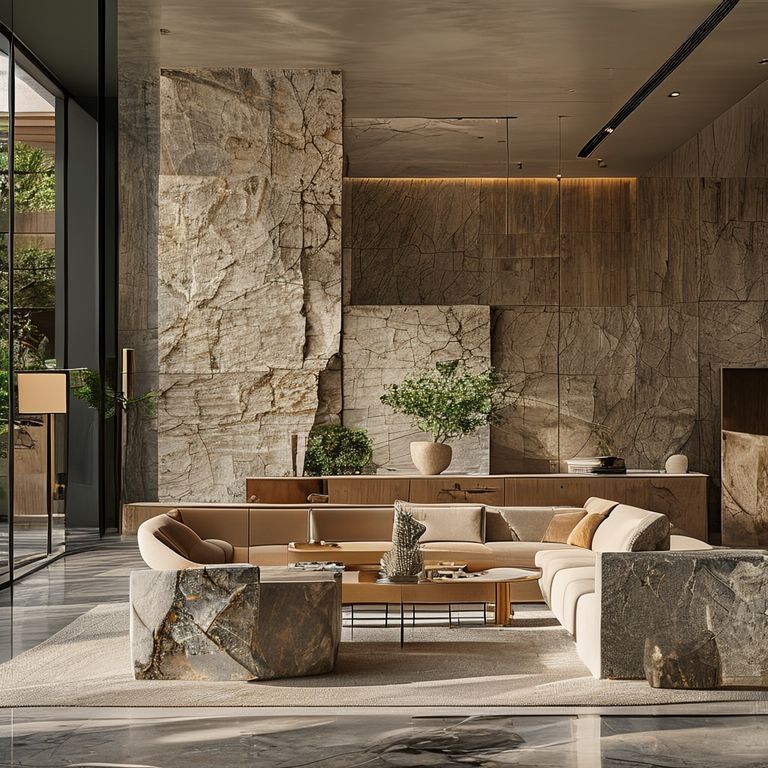
This is the alchemy of the modern age. We are no longer beholden to the whims of tectonic pressure and geological luck. Instead, we have learned to replicate the most exquisite patterns of the earth while stripping away the flaws, the fragility, and the ecological cost of traditional mining. To speak of man-made craft stone today is to speak of a high-tech marriage between crushed natural minerals and advanced polymer resins, a process that results in a material that is, in many ways, more “perfect” than the mountain itself.
When you walk into a space clad in premium artificial stone, the first thing that strikes you is the visual rhythm. In natural marble, a vein might suddenly break or a pocket of mud might dull the brilliance of a slab. Man-made art stones are different. They are composed by “conductors” of design who understand how to guide the eye across a surface. The striations are intentional; the color palettes are curated to evoke specific emotions—from the brooding, slate-grey shadows of a stormy Atlantic coast to the ethereal, milky translucence of a cloud-shrouded peak in the Himalayas. This is stone as a medium of art, where the “canvas” is engineered for maximum impact.
The technical superiority of these materials is where the true brilliance lies. Traditional natural stone is notoriously temperamental. It is porous, prone to staining, and can crack under thermal stress. Anyone who has ever spilled red wine on a Carrara marble countertop knows the silent panic that follows. Man-made craft stones have solved this ancient grievance. Through a process of vacuum vibration and high-pressure compaction, these stones are rendered virtually non-porous. They repel liquids, resist bacteria, and stand firm against the scratches of daily life. They offer the cool-to-the-touch sensation of a river rock with the resilience of a diamond. This durability doesn’t just mean a longer-lasting product; it means a legacy. It means that the beauty you choose today will remain unblemished for the generations that follow.
Furthermore, there is a profound philosophical shift occurring in the way we view “authenticity.” For a long time, the word “artificial” carried a stigma, a suggestion of the “fake.” But in the hands of master artisans, man-made stone has reclaimed its dignity. It is a testament to human capability. If nature provides the alphabet, man-made art stone is the poetry. It takes the raw elements of quartz, granite, and silica and reorganizes them into a narrative of symmetry and strength. Designers are no longer limited by what they can find in a pit in Italy or Brazil; they are limited only by their imagination. They can request stones with embedded metallic flecks that catch the morning light, or slabs with a depth of translucency that allows for backlighting, turning a wall into a glowing lantern of mineral beauty.
The environmental narrative is perhaps the most compelling chapter of this story. The traditional stone industry is one of extraction and depletion. Every ton of natural marble represents a scar on a mountain. Man-made craft stones, conversely, often utilize recycled stone fragments and waste materials from other industrial processes. They represent a circular economy where beauty is built from what was once overlooked. By choosing engineered stone, we are not just choosing a product; we are choosing a future where luxury does not have to come at the expense of the landscape. We are learning to build our cathedrals without tearing down the earth.
As we move into the second half of this exploration, we must look at how these stones transform the very air of a room. They are not just surfaces; they are the anchors of our domestic and public lives. The man-made stone is the silent partner in our modern architectural renaissance, providing the foundation for a new aesthetic that is as durable as it is breathtaking.
Continuing our journey into the soul of man-made art stones, we find ourselves at the intersection of psychology and space. The environments we inhabit have a profound impact on our mental state. A room filled with the warm, honeyed tones of engineered travertine or the sharp, crisp lines of high-density quartz communicates a sense of order and permanence. In an increasingly digital and ephemeral world, we crave the tactile. We want to run our hands over a surface and feel the solidity of something real. Man-made stones provide this grounding presence, but with a level of customization that natural stone simply cannot match.
The versatility of these stones allows them to transcend the kitchen and the bathroom. We are seeing a revolution in furniture design—monolithic coffee tables, sculptural desks, and minimalist shelving units that appear to have been carved from a single block of celestial rock. Because man-made stone can be molded and joined with nearly invisible seams, it allows for seamless architectural flows. Imagine a staircase that appears to pour out of the wall like liquid silk, or a fireplace surround that spans twenty feet without a single distracting joint. This is the “soft” side of stone—the ability to be fluid, graceful, and expansive.
Interior designers are increasingly using these materials to create “feature moments.” In a world of mass-produced finishes, the unique graining of a high-end craft stone feels like a bespoke signature. You can choose a stone that mimics the look of a petrified forest or one that looks like a slice of the midnight sky, complete with constellations of shimmering minerals. This level of control means that the stone becomes part of the storytelling of the home. It isn’t just a floor or a wall; it is a conversation piece. It reflects the owner’s taste, their worldliness, and their appreciation for the marriage of technology and nature.
Moreover, the “man-made” aspect allows for a consistency that is vital for large-scale commercial projects. When an architect is designing a grand hotel lobby or a corporate headquarters, they need a material that can cover thousands of square feet while maintaining a cohesive look. Natural stone is too erratic for such precision; one slab may look like a masterpiece while the next is dull and mismatched. Man-made art stones offer “industrialized beauty”—the ability to scale a high-end aesthetic without losing the soul of the design. This reliability has made it the gold standard for the world’s most ambitious building projects, from the soaring towers of Dubai to the minimalist boutiques of Paris.
The maintenance aspect, while seemingly mundane, is actually a pillar of the luxury experience. True luxury is the luxury of time and the lack of worry. When you don’t have to spend your life sealing, polishing, and fretting over your stone surfaces, you are free to simply enjoy them. Man-made stones are designed for the modern lifestyle—low-maintenance, high-impact. They are resistant to the acids in lemons, the oils in skin, and the harshness of cleaners. They are, in every sense, “living stones” that are built to survive the chaos of a lived-in home while looking like they belong in a gallery.
Looking toward the future, the evolution of man-made art stones is moving toward even greater integration. We are seeing stones that can conduct heat for underfloor warming, stones with integrated wireless charging capabilities hidden beneath the surface, and even “smart stones” that can sense touch to control lighting. The boundary between the material and the digital is blurring. The stone of the future will not just be a static object; it will be an active participant in our environment. It will be the “skin” of our smart homes, as beautiful as an ancient ruin but as intelligent as a supercomputer.
Ultimately, the rise of man-made craft stone is a celebration of human potential. It shows that we are capable of taking the best of what the earth has given us and refining it into something even more resilient, more sustainable, and more beautiful. It is an invitation to look at our surroundings through a new lens—one where “man-made” is a badge of honor, representing a commitment to craftsmanship and a deep respect for the aesthetic power of the mineral kingdom.
Whether it is the centerpiece of a minimalist loft or the quiet elegance of a corporate boardroom, man-made art stone stands as a monument to our time. It is where the deep history of the earth meets the bright future of human design. It is not just stone; it is an idea made solid. It is the realization that we don’t just have to live in the world nature gave us—we have the power to carve a more beautiful one for ourselves. In every slab of this engineered wonder, there is a story of a mountain saved, a design perfected, and a space transformed into a sanctuary. This is the true art of the stone.









