
When you walk into a kitchen that feels truly “expensive,” it isn’t usually the appliances or the cabinetry that catch your eye first. It is the sweep of the countertop—that monolithic expanse of material that anchors the room. For decades, the gold standard was natural stone. We were told that only marble or granite could convey true luxury. But a quiet revolution has taken place in the world of interior design. Artificial stone, once viewed as a mere substitute, has ascended to become the preferred choice for the world’s most visionary architects and homeowners. If you are searching for “artificial stone countertop beautiful pictures” (人造石做台面怎么样好看图片), you aren’t just looking for a surface; you are looking for the soul of your home.
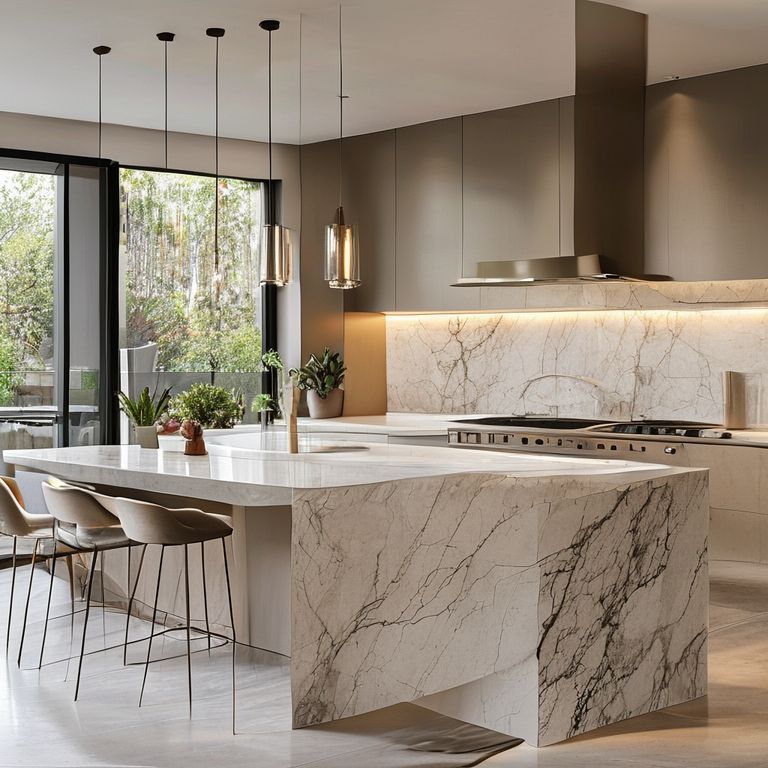
The term “artificial stone” is a broad umbrella, covering everything from engineered quartz to acrylic solid surfaces and sintered stone. To understand why these materials are dominating the aesthetic landscape, we have to look at the intersection of technology and art. Unlike natural stone, which is limited by the whims of geology, artificial stone is a curated experience. It allows for a level of intentionality in design that nature—as beautiful as it is—simply cannot provide. When you choose an engineered surface, you are choosing a vision of perfection.
One of the most compelling aesthetic arguments for artificial stone is its consistency. If you’ve ever tried to source a large slab of Calacatta marble for a waterfall island, you know the frustration of “the flaw.” A giant grey smudge or a sudden rust-colored vein can ruin the visual flow of a minimalist kitchen. Artificial stone eliminates this gamble. Through advanced manufacturing, designers can now create “book-matched” slabs that feature symmetrical veining, creating a kaleidoscopic effect that is breathtakingly beautiful. These surfaces offer the ethereal, high-contrast drama of the world’s rarest marbles but with a choreographed precision that makes a space feel harmonized rather than chaotic.
Beyond mimicking nature, artificial stone has carved out its own unique visual language. Consider the “industrial chic” trend. Achieving a perfectly uniform, matte concrete look with real cement is a nightmare of cracking and staining. However, artificial stone can replicate the brutalist elegance of poured concrete with a velvety, “suede” finish that feels warm to the touch and remains pristine for a lifetime. It captures the essence of the material without the structural or maintenance liabilities. This versatility extends to color palettes that don’t exist in the wild. From pure, snowy whites that would be impossible to find in granite, to deep, midnight obsidians infused with subtle metallic flecks, the color spectrum of artificial stone is limited only by the imagination.
Then, there is the magic of the “seamless” look. This is where acrylic-based solid surfaces truly shine. In a high-end contemporary kitchen, the presence of visible joints and seams is often seen as a design failure. Artificial stone can be chemically bonded and sanded so that the transition from a horizontal countertop to a vertical backsplash—or even into an integrated sink—is entirely invisible. This creates a fluid, sculptural appearance. Imagine a kitchen island that looks as if it were carved from a single, continuous block of white silk. This “monolithic” aesthetic is one of the most sought-after looks in modern luxury design, and it is a feat that natural stone simply cannot replicate.
The way artificial stone interacts with light is another secret to its beauty. Many engineered stones incorporate translucent resins or crushed glass. When placed under pendant lighting or near large windows, these surfaces exhibit a “depth” that is mesmerizing. They don’t just reflect light; they seem to absorb and glow with it. This luminosity can make a small, dark kitchen feel airy and expansive. Whether you prefer a high-gloss finish that acts like a mirror, reflecting the view outside, or a honed matte finish that absorbs light for a moody, sophisticated vibe, artificial stone provides the flexibility to control the “temperature” of your room’s atmosphere.
In the quest for the perfect aesthetic, we must also talk about the “Waterfall Edge.” This design choice—where the countertop continues over the side of the cabinetry all the way to the floor—has become the hallmark of the modern luxury kitchen. Artificial stone is the ideal candidate for this because of its structural integrity. It allows for crisp, 45-degree mitered edges that look sharp and architectural. When you see pictures of these stunning, continuous stone wraps, you are seeing the pinnacle of what artificial stone can achieve. It transforms a piece of furniture (the cabinet) into a piece of architecture.
Ultimately, the beauty of artificial stone lies in its ability to be whatever you need it to be. It is a chameleon. It can be the quiet, neutral backdrop to a vibrant, eclectic kitchen, or it can be the “hero” of the room—a bold, veined masterpiece that demands attention. As we move into the second part of this exploration, we will look at how this beauty is preserved through its incredible durability, and how to choose the right “look” to match your specific lifestyle and design philosophy.
Continuing our journey into the world of artificial stone, it becomes clear that its beauty is not just skin deep. In the world of interior design, there is a saying: “Nothing is beautiful if it doesn’t last.” This is the ultimate triumph of artificial stone over its natural counterparts. When you look at those “beautiful pictures” of pristine white marble kitchens in magazines, what you don’t see is the anxiety of the homeowner standing over them with a glass of red wine or a lemon wedge. Artificial stone removes that tension, allowing the beauty of the space to be lived in, rather than just looked at.
The resilience of engineered quartz and sintered stone is a key component of their aesthetic value. Because these materials are non-porous, they do not absorb liquids. This means that the “newness” of the countertop—that crisp, vibrant color you fell in love with—is locked in. Natural stone, over time, can develop a “patina,” which is a polite way of saying it gets stained, scratched, and dull. While some people enjoy the aged look, most modern homeowners want their investment to look as perfect ten years from now as it did on the day of installation. The inherent durability of artificial stone ensures that its visual impact never fades. It is a permanent beauty.
Furthermore, the rise of “Sintered Stone” (a high-end subset of artificial stone) has pushed the boundaries of what is possible in outdoor and indoor-outdoor living. If you are designing an outdoor kitchen or a sun-drenched breakfast nook, natural stones and cheaper plastics will fade or crack under UV exposure. Sintered artificial stones are virtually indestructible and UV-stable. This allows for a seamless visual transition from your indoor kitchen to your outdoor patio, using the same material for both. This continuity creates a sense of “infinite space,” a luxury design trick that makes a home feel much larger and more cohesive.
Let’s talk about the “Tactile Beauty” of these surfaces. Design is as much about touch as it is about sight. Modern manufacturing has moved beyond the “plastic” feel of early laminates. Today’s artificial stones offer a variety of textures: “Leathered” finishes that have a slight, organic ripple; “Honed” finishes that feel like soft skin; and “Polished” finishes that feel as smooth as ice. When you run your hand across a high-quality artificial stone countertop, there is a sense of density and cool-to-the-touch solidity that screams quality. It feels expensive. It feels permanent.
When choosing a look for your own home, it helps to categorize the current trends in artificial stone aesthetics. First, there is the “Organic Modernist.” This look favors artificial stones with soft, flowing veins in earthy tones—greys, taupes, and warm whites. Paired with light wood cabinetry and brass hardware, this creates a sanctuary-like feel. Second, there is the “High-Contrast Dramatist.” This involves using dark, moody artificial stones with bold, lightning-bolt veining. This is a statement choice, often used on a large central island to create a focal point that looks like a piece of abstract art. Third, there is the “Ultra-Minimalist.” This look utilizes pure, solid-colored surfaces—usually in stark white or deep grey—to create a space that feels clinical, clean, and futuristic.
The sustainability of artificial stone is also becoming a major factor in its aesthetic appeal. Today’s “conscious luxury” consumer finds beauty in ethical choices. Many artificial stone manufacturers now use recycled glass, mirrors, and stone scraps in their slabs, and the resins used are increasingly bio-based. Knowing that your stunning countertop didn’t require the scarring of a mountain or a massive carbon footprint adds a layer of “intellectual beauty” to the material. It represents the best of human ingenuity—taking the raw materials of the earth and refining them into something better, stronger, and more beautiful.
For those concerned about the “artificial” label, it’s worth noting that high-end quartz is typically 90-93% natural mineral. It is, quite literally, “stone made better.” By removing the air pockets and imperfections found in nature, we are left with a material that is denser and more vibrant. This allows for thinner profiles—a huge trend in European kitchen design. While natural stone often needs to be thick to avoid breaking, artificial stone can be crafted into incredibly slim 12mm or 20mm slabs. This “slimline” look is the height of sophistication, giving the countertop a floating, weightless appearance that fits perfectly in a modern, high-tech home.
Maintenance also plays a role in the long-term aesthetic. Artificial stone doesn’t require the messy, periodic sealing that granite and marble demand. You don’t need special “stone soaps.” A simple wipe with a damp cloth is usually enough to restore its luster. This ease of care means your kitchen always looks “guest-ready.” There is a profound beauty in a home that is effortlessly clean.
In conclusion, if you are looking at pictures of artificial stone countertops and wondering if they can truly live up to the majesty of natural stone, the answer is a resounding yes—and in many ways, they surpass it. They offer a marriage of form and function that was once thought impossible. They provide the designer with a perfect canvas, the homeowner with peace of mind, and the space with an undeniable sense of luxury. Whether you are drawn to the dramatic veining of a faux-Calacatta or the understated elegance of a matte grey slab, artificial stone is the medium through which modern dreams are built. It isn’t just a countertop; it’s a testament to the fact that we can take the best parts of nature and, through a bit of modern alchemy, turn them into something truly extraordinary. Your kitchen is the heart of your home; give it a surface that is as resilient and beautiful as the memories you intend to make there.









