
When we walk into a contemporary kitchen or a high-end hotel lobby, our eyes are instinctively drawn to the sprawling, vein-rich surfaces that anchor the room. There is a weight to them, a coolness, and a visual depth that suggests they were pulled directly from the heart of a mountain. Yet, more often than not, what we are admiring is a triumph of human ingenuity rather than a raw geological accident. We are looking at artificial stone—a material that has quietly revolutionized the way we inhabit space. But what exactly is this “alchemy” made of? To understand artificial stone is to understand the perfect marriage between the raw beauty of the earth and the precision of modern chemistry.
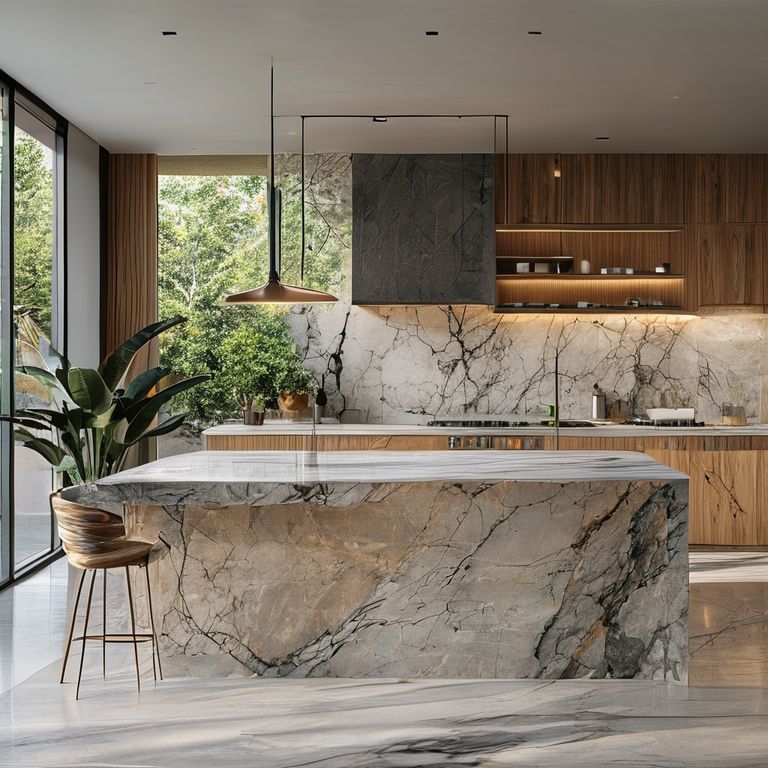
At its most fundamental level, artificial stone is a composite material. It isn’t a single “thing” but rather a sophisticated recipe. Imagine taking the best qualities of natural stone—its hardness, its texture, and its crystalline shimmer—and stripping away its flaws, such as porosity, fragility, and unpredictable color variations. This is the core philosophy behind the creation of artificial stone. While there are several varieties, the industry generally categorizes them into two heavyweights: Engineered Quartz and Solid Surface.
Engineered Quartz is perhaps the most recognizable face of the artificial stone family. If you were to peer into its DNA, you would find that it is surprisingly “natural.” Most high-quality quartz surfaces consist of roughly 90% to 93% crushed natural quartz—one of the hardest minerals on Earth. The remaining 7% to 10% is a proprietary blend of polyester resins, pigments, and occasionally decorative accents like recycled glass or metallic flecks. The magic happens during the manufacturing process, often referred to as the Bretonstone process. The mixture is subjected to intense vacuum vibration and massive pressure, followed by kiln-curing. This eliminates any air pockets, resulting in a slab that is denser and more durable than almost any natural stone. Unlike granite or marble, which are riddled with microscopic pores that can harbor bacteria or soak up red wine, engineered quartz is virtually impenetrable.
Then, we have the “Solid Surface” category, often associated with names like Corian. This material leans more heavily into the “human-made” side of the spectrum, offering a different kind of luxury. It is typically composed of a blend of acrylic or polyester resins combined with a filler called Alumina Trihydrate (ATH). ATH is a fine, white powder derived from bauxite ore, and it gives the material its stone-like weight and fire-retardant properties. The beauty of solid surface material lies in its fluidity. Because it is essentially a high-tech plastic composite, it can be thermoformed—heated and bent into incredible, seamless curves. In the hands of a skilled designer, a solid surface countertop can transition into a sink or climb up a wall without a single visible seam, creating a monolithic look that natural stone simply cannot replicate.
The rise of artificial stone isn’t just a matter of practicality; it is a response to the evolving aesthetics of the 21st century. In the past, man-made materials were often seen as “fakes” or cheap imitations. Today, the narrative has flipped. We live in an era where we demand performance. We want the ethereal white-and-grey veining of Calacatta marble, but we don’t want to live in fear of a lemon wedge ruining our investment. Artificial stone provides that “uncompromised beauty.” Through advanced inkjet printing and through-body veining technology, manufacturers can now mimic the most exotic stones found in the quarries of Italy or Brazil with startling accuracy.
Furthermore, the “materiality” of artificial stone allows for a level of consistency that nature cannot guarantee. If an architect is designing a massive commercial project, they need 500 slabs that look identical to maintain a cohesive vision. Natural stone, with its wild variations, makes this nearly impossible. Artificial stone, however, is a controlled medium. We can dictate the color, the grain, and the pattern, ensuring that the vision in the digital render is exactly what gets installed on-site.
But let’s go deeper than just the surface. Why do we feel a connection to these materials? It is because they still honor the mineral world. Even though they are engineered, they retain the thermal mass and the tactile feedback of the earth. When you run your hand across a polished quartz island, it feels substantial. It has a “soul” that is shaped by human intent. It represents our ability to take the raw, chaotic elements of nature and refine them into something that is not only beautiful but also enduring. It is a material designed for the way we live now: busy, messy, and deeply appreciative of high-level design. As we move into the second part of our exploration, we will delve into the performance advantages that make these materials the gold standard for interiors and look toward the future of sustainable surfacing.
Beyond the chemical formulas and the industrial presses lies the true reason artificial stone has conquered the world of interior design: its uncanny ability to solve problems that nature left behind. When we talk about the “performance” of a material, we are really talking about peace of mind. In the high-stakes environment of a kitchen, where heat, sharp blades, and acidic juices are daily occurrences, the material of your countertop shouldn’t be a source of anxiety. This is where artificial stone truly shines, offering a resilience that borders on the superhuman.
One of the most significant advantages of artificial stone—specifically engineered quartz and sintered stone—is its non-porous nature. In the world of stone, porosity is the enemy. Natural stones like marble are essentially sponges on a microscopic level. They require periodic sealing with chemical coatings to prevent staining and bacterial growth. Artificial stone eliminates this maintenance cycle entirely. Because the resins fill every microscopic void during the compression process, the finished slab is a solid, hygienic barrier. You can spill coffee, oil, or wine on it, and it will sit on the surface until you wipe it away. In a post-pandemic world where hygiene has become a top priority, the antimicrobial properties of these dense surfaces have moved from being a “nice-to-have” to an absolute necessity for both residential and healthcare environments.
But the appeal of artificial stone isn’t limited to its “toughness.” It is also a playground for the creative mind. Because it is a manufactured product, we can push the boundaries of what a surface can be. Consider the world of Sintered Stone—a cousin of quartz that uses extreme heat (mimicking the way the earth creates stone deep underground) to fuse minerals without the need for large amounts of resin. This process results in a material that is virtually fireproof and UV-resistant. This means the same “stone” look you have in your kitchen can be extended to your outdoor patio or used as cladding on the exterior of a skyscraper. The continuity of design—flowing from indoors to out—is a luxury that was once incredibly difficult and expensive to achieve with natural materials.
We also have to talk about the “invisible” benefits: sustainability and the circular economy. The stone industry has long been criticized for the waste generated in quarries. Artificial stone offers a more responsible path. Many manufacturers now use recycled content in their slabs—crushed mirrors, waste glass, and even reclaimed stone dust from natural quarries. By utilizing these “waste” products and binding them into a durable new form, we are reducing the demand for raw mining. Furthermore, because these materials are designed to last for decades without needing replacement, their lifecycle carbon footprint is often more favorable than cheaper, less durable alternatives that end up in landfills every ten years.
For the homeowner or the designer, the decision-making process usually comes down to “The Three Pillars”: Aesthetics, Utility, and Longevity. Artificial stone hits all three with precision. From a design perspective, the options are infinite. Do you want a matte, concrete-look surface for an industrial loft? A high-gloss, jet-black slab with gold veins for a glamorous master bath? Or perhaps a translucent solid surface that can be backlit to glow like an ethereal lantern? The versatility of “what it is made of” dictates “what it can become.”
Maintaining this material is a testament to its user-friendly design. While a natural granite countertop might require a specialized pH-neutral cleaner and a prayer, artificial stone is happy with a bit of soap and water. It is the “low-maintenance luxury” that modern life demands. We want our homes to look like a million dollars, but we want them to function with the ease of a well-oiled machine. Artificial stone is the engine that drives this reality.
As we look toward the future, the technology behind artificial stone is only getting more sophisticated. We are seeing the rise of “smart surfaces” where induction charging for phones or even cooktop elements are integrated directly into the stone itself. Because the material is engineered, we can embed technology within it in ways that would be impossible with a raw slab of rock. We are also seeing a shift toward bio-resins—using plant-based oils instead of petroleum-based resins to create even more eco-friendly composites.
In conclusion, when someone asks, “What is artificial stone made of?” the answer isn’t just “quartz and resin.” The answer is that it is made of our desire to improve upon nature. It is made of the minerals of the earth, the brilliance of chemical engineering, and the artistic vision of designers who refuse to be limited by the cracks and fissures of the natural world. It is a material that honors the past while being built for the future—a sophisticated, durable, and breathtakingly beautiful solution for the spaces we call home. Whether it’s the centerpiece of a gourmet kitchen or the sleek walls of a corporate headquarters, artificial stone stands as a monument to what happens when human creativity takes the best of the earth and makes it better.









