
人造石板材多少钱一个平方,人造石材价格多少一平方
The Alchemy of Modern Living: Why Artificial Stone Rules the Market
When you walk into a kitchen that feels “expensive,” your eyes almost always land on the surfaces first. There is a specific, cool-to-the-touch elegance that defines contemporary interior design, and more often than not, that elegance is delivered by artificial stone. Whether you are browsing through high-end showrooms or scrolling through Pinterest, the question inevitably arises: “How much does this actually cost per square meter?” (or, as the industry insiders put it, “人造石板材多少钱一个平方?”).

The answer, as with most things in the world of luxury construction, isn’t a single number on a price tag. It is a narrative of technology, aesthetics, and durability. To understand the price, we first have to understand the magic behind the material. Artificial stone isn’t just a “fake” version of marble; in many ways, it is an evolution. It’s a composite of natural minerals—mostly quartz—mixed with high-quality resins and pigments to create something that nature simply couldn’t: a surface that is non-porous, incredibly hard, and visually consistent.
The Spectrum of Pricing: From Functional to Formidable
If you are looking for a baseline, the market for artificial stone is vast. At the entry-level, you might find basic engineered quartz starting around $60 to $100 per square meter. These are your workhorse materials—solid colors, simple speckles, and reliable performance. They are perfect for rental properties or utility rooms where you need the durability of stone without the high-fashion price tag.
However, as you move into the mid-range—the sweet spot for most homeowners—prices typically shift into the $150 to $300 per square meter territory. This is where the artistry begins. In this bracket, you aren’t just buying a slab; you’re buying a design. Manufacturers at this level use advanced “inkjet” or vein-distribution technology to mimic the dramatic sweeps of Calacatta marble or the moody depths of soapstone. You get the look of a $5,000 Italian slab with the stain resistance of a modern polymer.
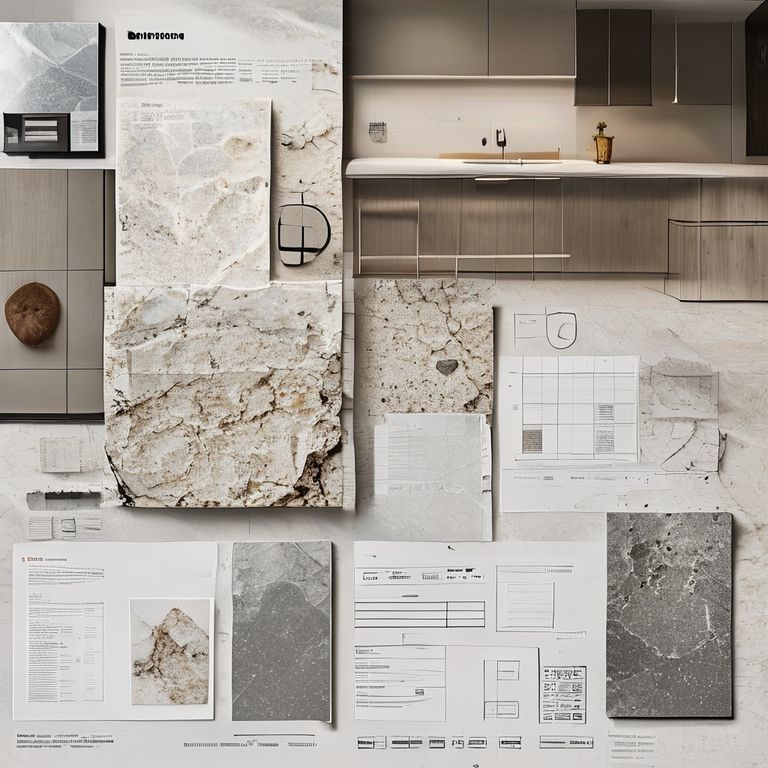
Why the jump in price? It’s often down to the “purity” of the mix. High-quality artificial stone usually contains about 90-93% natural quartz. Lower-priced versions might increase the resin content, which makes the stone easier to produce but more susceptible to scratches and heat damage. When you pay more per square meter, you are essentially paying for a higher concentration of stone and a more sophisticated manufacturing process.
The Brand Premium: Is Name Recognition Worth It?
Just like fashion, the world of artificial stone has its “Guccis” and “Pradas.” Brands like Caesarstone, Silestone, and Cosentino command a higher price point—often exceeding $400 or $500 per square meter—for several reasons. First is the warranty. A reputable brand often offers a 10-to-25-year guarantee against manufacturing defects, which is essentially insurance for your kitchen.
Second is innovation. These top-tier companies invest millions in R









