
人造石板材标准尺寸,人造石材的尺寸
The Canvas of Modernity: Why Dimensions Define the Dream
In the realm of contemporary interior design, the surface is more than just a functional layer; it is the stage upon which the drama of daily life unfolds. Whether it is a sprawling kitchen island that hosts Sunday brunches or a sleek, monolithic bathroom vanity, the material choice matters. However, long before a designer selects the perfect shade of “Midnight Vein” or “Carrara Cloud,” a more technical, yet equally vital, conversation must take place: the conversation about dimensions. Artificial stone—comprising quartz, solid surfaces, sintered stones, and engineered marbles—has revolutionized the construction world, not just through its durability, but through its standardized predictability. Understanding the standard sizes of artificial stone slabs is the difference between a seamless masterpiece and a project plagued by unsightly joints and wasteful offcuts.
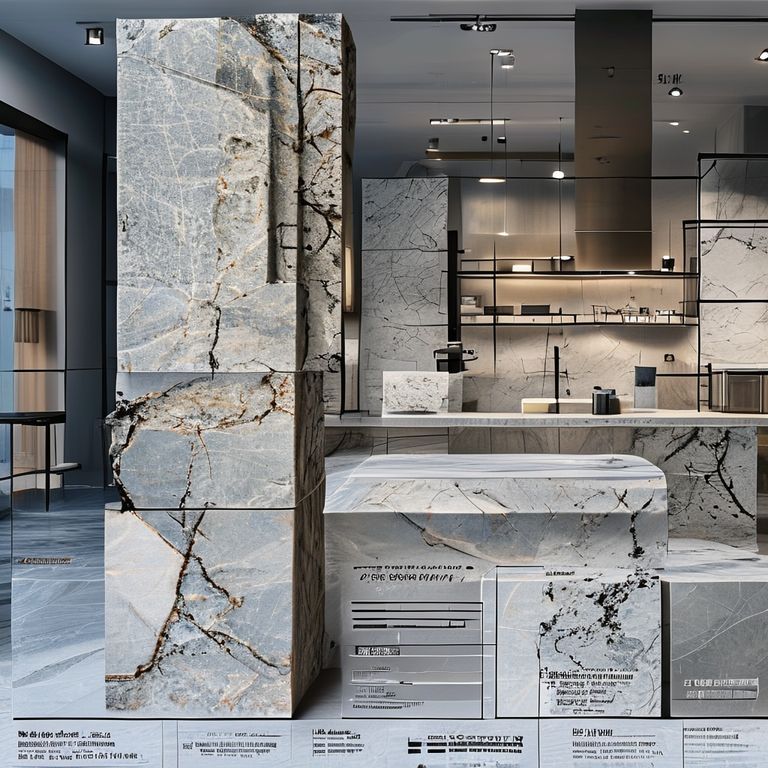
Artificial stone was born out of a desire to overcome the limitations of Mother Nature. Natural granite and marble are capricious; they come in irregular blocks, often riddled with structural fissures that dictate where you can and cannot cut. Artificial stone, by contrast, is an engineered marvel. It offers a “controlled canvas.” When we talk about “人造石板材标准尺寸” (Standard Sizes of Artificial Stone Slabs), we are talking about the industrial harmony that allows architects to plan with mathematical precision.
The Reign of Quartz: The Jumbo and the Super Jumbo
Quartz remains the titan of the artificial stone world. Because it is manufactured using the Bretonstone process—a combination of vacuum, vibration, and pressure—the sizes are limited primarily by the size of the pressing machinery and the logistics of transport. For decades, the industry standard for a quartz slab sat comfortably at approximately 3000mm x 1400mm (roughly 118 x 55 inches). This size was born out of a pragmatic balance: it was large enough to cover most standard kitchen counters without a seam, yet manageable enough for two or three installers to handle.
However, as the “Open Concept” home took over global architecture, the demands grew. Homeowners began dreaming of massive, singular islands that could seat six people without a single break in the pattern. Enter the “Jumbo” and “Super Jumbo” eras. Today, the most sought-after standard for high-end projects is 3200mm x 1600mm (126 x 63 inches). Some specialized manufacturers have even pushed the boundaries to 3500mm x 2000mm. These massive sheets allow for breathtaking continuity. Imagine a book-matched wall cladding in a luxury hotel lobby where the veins flow uninterrupted for over three meters; that is the power of the Jumbo slab.
Solid Surface: The Flexible Contender
While quartz mimics the rigidity of natural stone, solid surfaces (often known by brand names like Corian) offer a different kind of dimensional freedom. Standard sizes for solid surface sheets typically hover around 3660mm x 760mm (144 x 30 inches). Why the narrower width? Because solid surfaces are designed to be “inconspicuously joined.” Unlike quartz, where a seam is always a visible line (no matter how well-matched), solid surface pieces can be chemically bonded and sanded until the joint disappears entirely.
The Psychology of the Slab
Choosing a slab size isn’t just about math; it’s about the visual “quietness” of a space. Every time a slab ends and a new one begins, the eye catches a break. In minimalist design, these breaks are distractions. By understanding that artificial stone slabs come in these predictable 3-meter-plus lengths, designers can align the “breaks” with natural architectural features, such as the edge of a sink or a change in cabinetry level. The standard dimensions act as the grid upon which the designer paints. When you work within the standard, you work with the grain of the industry, ensuring that logistics, shipping, and installation move as smoothly as the polished surface of the stone itself.
The Third Dimension: Thickness and the Rise of Sintered Skins
If length and width provide the “canvas,” then thickness provides the “character.” When discussing “人造石板材标准尺寸,” we often overlook the verticality. In the past, stone was synonymous with weight. A standard 20mm or 30mm slab was the default. These thicknesses remain the gold standard for kitchen countertops, providing the structural integrity needed to overhang a breakfast bar or support a heavy cast-iron sink. A 20mm slab offers a sleek, modern profile, while a 30mm slab conveys a sense of traditional, monolithic luxury.
However, the industry has recently witnessed a seismic shift with the introduction of Sintered Stone (often marketed as Porcelain Slabs). These materials have rewritten the rulebook on dimensions. Sintered stone can be produced in staggering sizes—up to 3600mm x 1200mm—but at thicknesses that seem impossibly thin: 3mm, 6mm, and 12mm.
The Versatility of the Ultra-Thin
The 3mm and 6mm standard thicknesses have opened doors that were previously bolted shut for stone. Because these slabs are lightweight, they can be used as “skins” for cabinetry, interior doors, and even ceilings. Imagine a kitchen where the drawers are clad in the same stone as the countertop, creating a “block” effect that looks like a solid piece of excavated rock, yet opens with the touch of a finger. These standard dimensions allow stone to migrate from the floor and the counter onto the walls and the furniture, blurring the lines between masonry and carpentry.
For exterior cladding, the 6mm and 12mm standards are the heroes. Large-format slabs reduce the number of grout lines on a building’s facade, creating a monolithic aesthetic that resists the elements far better than traditional tiling. The standardization of these sizes means that mounting systems—the hidden clips and rails that hold the stone to the building—can also be standardized, making high-end architecture more accessible and safer.
Navigating the Procurement Maze: Logistics and Yield
Understanding the standard size is a powerful tool for cost optimization. In the stone industry, you usually buy the whole slab. If your kitchen layout requires a piece that is 1650mm wide, but the standard slab is 1600mm, you are forced to buy a second slab just to gain those extra 50 millimeters. This results in a massive jump in cost and a garage full of wasted stone.
Educated designers often “design to the slab.” By tweaking a kitchen island to be 1580mm wide instead of 1650mm, they ensure the entire project fits onto a single “Super Jumbo” sheet. This isn’t just about saving money; it’s about the elegance of efficiency. It’s about knowing the industrial limits and dancing right on the edge of them.
The Future: Customization Within the Standard
As we look toward the future of artificial stone, we see a trend toward “custom-standardization.” Manufacturers are beginning to offer more variety in their standard lineups to cater to different global markets. In European markets, where kitchens tend to be smaller and more compact, the 3000mm x 1400mm slab remains a staple. In the North American and Australian markets, where the “Mega-Island” is king, the 3200mm standard is becoming the baseline.
Furthermore, the “Terrazzo” revival has brought another dimension to the artificial stone market. Engineered terrazzo slabs typically follow the 2400mm x 1600mm or 3050mm x 1250mm standards. These sizes reflect the traditional Italian origins of the material while providing the modern consistency required for large-scale commercial flooring.
Final Thoughts: Measuring Excellence
The “人造石板材标准尺寸” is not a set of boring constraints; it is the framework for creativity. Whether you are a homeowner embarking on a renovation or an architect drafting a skyscraper, these dimensions are your best friends. They tell you how far you can push a cantilever, how many seams you will have to hide, and how to get the most beauty out of every square inch of material.
When you choose a slab of artificial stone, you aren’t just buying a piece of material; you are buying the result of decades of engineering refinement. You are buying a surface that has been optimized for the modern world—sized to fit through standard doors, cut by standard CNC machines, and polished to a standard of perfection that natural stone can rarely match. By mastering the geometry of the slab, you master the space itself. The next time you run your hand over a cool, seamless stone surface, remember the math behind the magic. It is the standard size that makes the extraordinary possible.









