
人造石板材生产设备,一条人造石板材生产线需要多少钱
The world of interior design and architectural marvels is undergoing a silent yet profound revolution. Gone are the days when we were entirely dependent on the whims of nature to provide us with the marble and granite necessary to adorn our homes and public spaces. While natural stone possesses a timeless charm, the modern era demands something more: consistency, durability, and a level of customization that Mother Nature simply cannot provide on a mass scale. Enter the sophisticated world of artificial stone slab production equipment—the industrial alchemy of the 21st century.
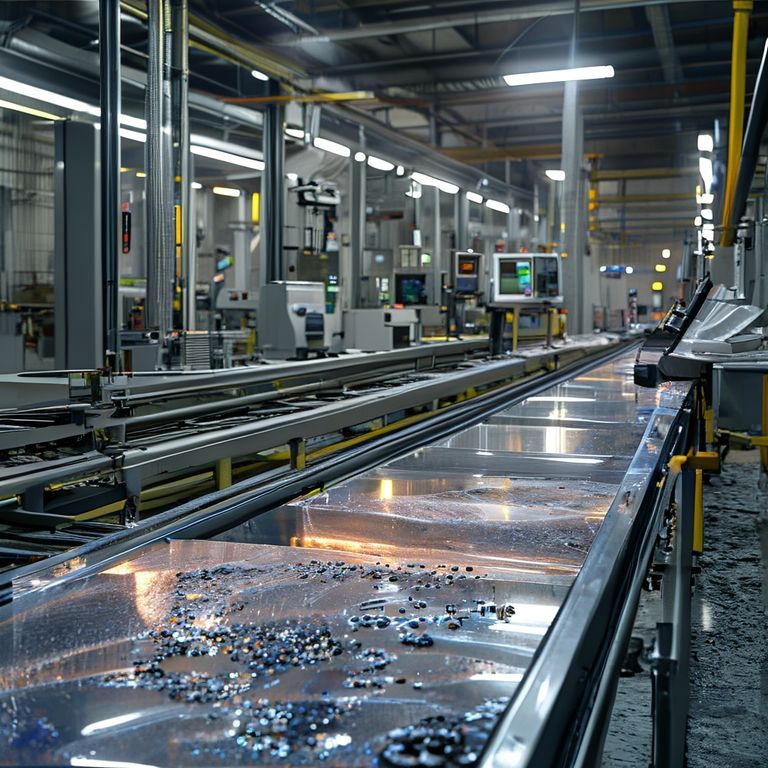
When we talk about artificial stone, we aren’t just talking about plastic imitations. We are talking about high-performance engineered quartz, inorganic terrazzo, and solid surfaces that often outperform their natural counterparts in every measurable metric. But how do these massive, flawless slabs come into existence? The answer lies in a complex, synchronized dance of machinery that transforms raw minerals and resins into the breathtaking surfaces that define modern luxury.
At the heart of any competitive manufacturing facility is a production line that functions like a well-oiled organism. The journey begins with the raw materials. Imagine massive silos filled with crushed quartz, marble chips, recycled glass, and high-quality bonding agents. The precision required at this stage is staggering. Modern artificial stone slab production equipment utilizes automated weighing and dosing systems that ensure the “recipe” is followed to the milligram. In the world of premium surfaces, a slight deviation in the ratio of aggregate to resin can mean the difference between a high-end slab and a piece of scrap.
The mixing stage is where the magic truly starts. This isn’t your neighborhood cement mixer; these are high-intensity, planetary mixing systems designed to coat every single grain of quartz or stone with a thin, even layer of resin and pigment. The goal is total homogeneity. If you’ve ever marveled at the consistent “veining” in a piece of engineered marble, you are witnessing the result of advanced distribution technology integrated directly into the production line. The equipment must be capable of introducing pigments in a way that mimics the chaotic beauty of natural geological processes while maintaining a level of repeatability that allows a designer to order a hundred identical slabs for a skyscraper project.
Once the mixture is perfected, it moves to the most critical phase: the vacuum vibro-compression. This is the “soul” of artificial stone production equipment. The mixture is spread into a mold, and then subjected to an intense combination of high-frequency vibration and massive hydraulic pressure, all within a vacuum chamber. Why a vacuum? Because even the tiniest microscopic air bubble can create a structural weakness or an aesthetic flaw. By removing the air and compressing the materials simultaneously, the machinery creates a slab that is incredibly dense, non-porous, and harder than most natural stones. This is the technology that makes quartz countertops resistant to red wine stains and lemon juice—the bane of traditional marble.
The engineering required to maintain this level of pressure across a slab that might be over three meters long is nothing short of extraordinary. The frames of these machines are built with massive amounts of reinforced steel to withstand hundreds of tons of force. Yet, despite this brute strength, the control systems are delicate, utilizing sensors that monitor every square centimeter of the slab to ensure uniform thickness and density.
After the slab is formed, it enters the curing kiln. This is where the chemical bond is finalized. The equipment must provide a controlled thermal environment where the temperature is raised and lowered with surgical precision. If the slab cools too quickly, it might warp or develop internal stresses that lead to cracking during the cutting phase. The curing ovens in a modern production line are often the longest section of the factory, representing a masterpiece of thermal engineering that ensures structural integrity.
As we look at the first half of this production cycle, it becomes clear that “artificial stone slab production equipment” is a modest name for what is essentially a high-tech laboratory on an industrial scale. It is a bridge between the raw resources of the earth and the refined demands of modern living. But the transformation from a raw, cured slab to the mirror-finished surface we see in a five-star hotel lobby involves another set of equally impressive machinery—a process of refining and polishing that we will explore in the next segment of this industrial journey.
Once the artificial stone slab emerges from the curing kiln, it is a solid, rugged block of engineered potential. It is strong, yes, but it lacks the luster and the tactile perfection required for high-end applications. This is where the second half of the artificial stone slab production equipment suite takes center stage: the finishing line. This is a sequence of calibration, polishing, and quality control that turns an industrial product into a work of art.
The first stop on the finishing line is the calibration machine. When a slab is cured, its surface is often slightly uneven. The calibration unit uses a series of high-speed diamond grinding heads to shave the slab down to a precise, uniform thickness. This is crucial for large-scale installations where multiple slabs must meet seamlessly. Imagine a kitchen island where one slab is two millimeters thicker than the next—it would be a disaster. The precision of modern calibration equipment ensures that the tolerance levels are kept within fractions of a millimeter, providing a perfectly flat canvas for the polishing heads.
Following calibration, the slab enters the multi-head linear polishing machine. This is perhaps the most visually impressive part of the production line. A series of polishing heads, each equipped with progressively finer abrasive pads, move across the slab in a synchronized pattern. It begins with coarse grits to remove the scratches from the calibration phase and ends with pads so fine they feel like silk. The result is a “deep” shine that seems to glow from within. High-quality artificial stone slab production equipment is designed to apply constant, even pressure across the entire surface, preventing the “cloudiness” that can plague lower-quality manufacturing processes.
However, the modern market demands more than just a high-gloss finish. Today’s consumers are looking for “honed,” “leathered,” or “brushed” textures. Versatile production equipment allows manufacturers to switch between different types of abrasive heads to create these varied tactile experiences. This flexibility is a key selling point for manufacturers; the ability to pivot from a glossy office lobby project to a matte, rustic residential project using the same basic machinery is what determines a factory’s profitability and market reach.
Beyond the aesthetics, there is the crucial element of “Green Manufacturing.” Modern artificial stone production equipment is increasingly focused on sustainability. Water is used in massive quantities during the grinding and polishing phases to keep the diamond heads cool and to suppress dust. In the past, this led to significant waste. Today, top-tier production lines are integrated with advanced water filtration and recycling systems. The “stone sludge” produced during grinding is captured, filtered, and often repurposed into other building materials, such as bricks or lower-grade tiles. This circular approach isn’t just a moral choice; it’s an economic necessity in an era of strict environmental regulations and rising resource costs.
Automation and the “Internet of Things” (IoT) have also found their way into the heart of the stone factory. Contemporary artificial stone slab production equipment is fitted with a nervous system of sensors and cameras. Artificial Intelligence (AI) can now scan a slab as it moves down the line, identifying microscopic fissures or pigment clumps that the human eye might miss. These slabs can be automatically flagged for secondary processing or discarded before they ever reach the customer, ensuring a near-zero defect rate. For the business owner, this means less waste and a sterling reputation in the marketplace.
As we reach the end of the line, the slabs are cut to size using bridge saws or waterjet cutters, often controlled by CNC (Computer Numerical Control) software. This allows for incredibly complex shapes and cutouts to be made with digital precision, ready for immediate installation. The slabs are then cleaned, treated with protective sealants (if necessary), and packaged for global distribution.
The investment in high-quality artificial stone slab production equipment is, at its core, an investment in the future of the built environment. As natural resources become more difficult to extract sustainably, the world will increasingly turn to engineered solutions. The companies that command the best technology—those that can produce slabs with the most realistic veining, the highest durability, and the smallest environmental footprint—will be the leaders of the construction industry.
In conclusion, the journey from raw quartz sand to a magnificent, polished slab is a testament to human ingenuity. The machinery involved is a blend of raw power and delicate intelligence. It takes the chaos of the earth and organizes it into something beautiful, functional, and enduring. Whether you are an investor looking to enter the manufacturing sector or a designer specifying materials for a landmark project, understanding the sheer technological prowess behind artificial stone slab production equipment reveals why these surfaces have become the gold standard of modern architecture. It is not just a machine; it is the engine of creativity, turning the dust of the earth into the foundations of our future.









