
When you step into a high-end penthouse or a sleek, contemporary hotel lobby, there is a silent element that dictates the rhythm of the room. It isn’t just the lighting or the furniture; it is the expansive, unbroken flow of the surfaces. This architectural magic is born from a deep understanding of artificial stone specifications. In the world of premium interior design, “size” is not just a measurement—it is a design language.
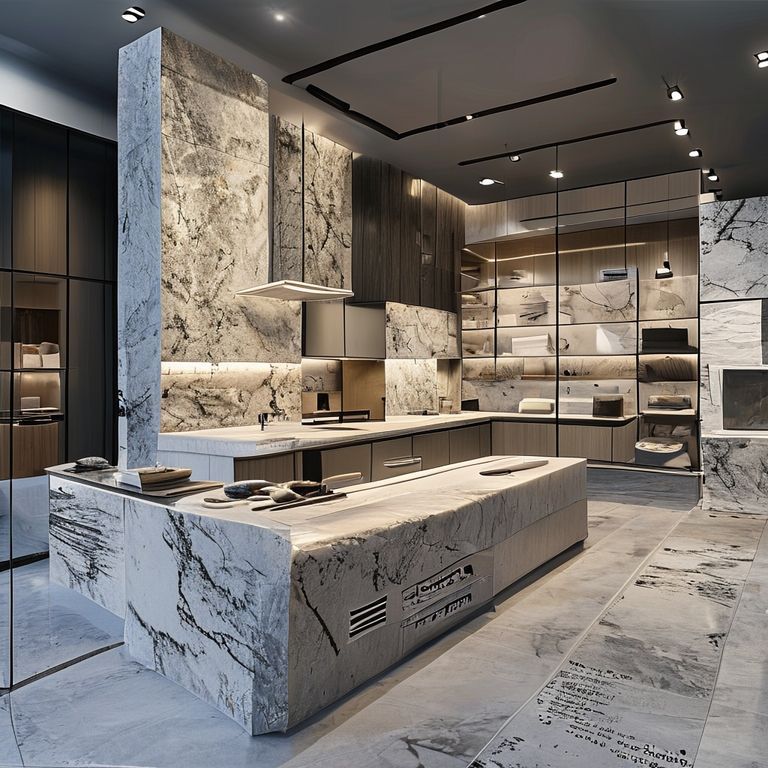
For decades, natural stone was the undisputed king of luxury, but it came with a catch: nature rarely provides perfectly uniform, massive blocks without internal fractures or unpredictable veining. Enter artificial stone—the engineered marvel that combines the raw beauty of minerals with the precision of modern manufacturing. Whether we are talking about quartz, sintered stone, or solid surfaces, the specifications of these slabs are the primary tools that allow architects to dream bigger.
The current industry darling is the “Jumbo Slab.” Typically measuring around 3200mm by 1600mm (approximately 126 by 63 inches), the jumbo slab has revolutionized the modern kitchen. If you’ve ever marveled at a massive kitchen island that looks like a single, monolithic block of marble with no visible seams, you are looking at the prowess of jumbo specifications. This size wasn’t chosen at random. It represents the sweet spot between maximizing surface area and maintaining structural integrity during transport and installation. By opting for these expansive dimensions, designers eliminate the “visual noise” of grout lines and joins, creating a sense of calm and continuity that smaller tiles simply cannot replicate.
However, the conversation about specifications isn’t limited to length and width. Thickness is where the true character of the stone is forged. In the realm of artificial stone, thickness is a spectrum of utility. The standard 20mm (3/4 inch) and 30mm (1 1/4 inch) slabs are the workhorses of the industry. A 20mm slab offers a lean, modern profile that works beautifully in contemporary apartments, while a 30mm slab provides that heavy, traditional “luxury” feel, often preferred for high-traffic countertops where a sense of permanence is required.
But the innovation doesn’t stop at the “standard.” The rise of ultra-thin specifications—ranging from 3mm to 12mm—has opened doors that were previously bolted shut. Imagine a slab of stone so thin and light that it can be used as skin for cabinetry, or even as a vertical wall cladding that doesn’t require massive structural reinforcement. These thinner specifications, particularly in sintered stone, allow for a “total look” where the floor, the walls, and even the cabinet doors are cloaked in the same sophisticated texture. It’s a level of coordination that was once a logistical nightmare but is now a standard offering for those who know how to play with the specs.
Choosing the right specification is a delicate dance between aesthetics and logistics. While a massive slab looks breathtaking, it requires a specialized team to move. Navigating a 3.2-meter slab through a standard elevator or up a narrow staircase is a feat of engineering in itself. This is why understanding “modular” specifications is also a key skill. Many manufacturers offer “half-slabs” or specific pre-cut dimensions (such as 1400mm x 3000mm) to accommodate urban living spaces where access is a constraint.
Furthermore, the “yield” of a slab is a critical consideration for any project budget. When a designer looks at a slab’s specifications, they aren’t just seeing a piece of stone; they are solving a puzzle. How many pieces can be cut from this 3200mm length? How much waste will be left? By aligning the project’s design with the stone’s native specifications, one can achieve a luxurious finish while minimizing environmental waste and cost. This strategic alignment is the hallmark of a professional who understands that beauty and efficiency are not mutually exclusive.
The world of artificial stone specifications is also evolving to meet the demands of “book-matching” and “end-matching.” This is where the patterns on the slabs are engineered to line up perfectly across multiple pieces. To achieve a flawless book-matched feature wall, the specifications must be exact, and the fabrication must be meticulous. This level of precision is only possible because artificial stone is a controlled medium. Unlike natural marble, where you might find a beautiful vein that abruptly ends, engineered stone specs allow for a choreographed dance of patterns across vast distances.
As we look at the evolution of these materials, it becomes clear that we are no longer limited by what we can dig out of the earth. We are limited only by the scale of our imagination and our mastery of the technical specifications at our disposal. In the following section, we will delve deeper into the bespoke world of customized dimensions and how the “perfect fit” can transform a functional space into a masterpiece of living art.
Beyond the standard dimensions that dominate the catalogs of global manufacturers lies the fascinating world of bespoke artificial stone specifications. While “off-the-rack” sizes like the 3200mm x 1600mm slab serve the majority of residential needs, the truly avant-garde projects often demand something more tailored. This is where the flexibility of artificial stone truly shines, offering a level of customization that natural stone simply cannot match.
In commercial architecture—think of grand hotel lobbies, expansive shopping mall floors, or corporate headquarters—standard sizes are often just the starting point. Manufacturers today are increasingly capable of producing “super-jumbo” slabs or custom-length panels that can reach up to 3600mm or more. These specialized specifications are designed for high-impact zones where a single seam could ruin the visual “wow” factor. When you walk across a vast, mirror-polished floor that seems to stretch into infinity, you are experiencing the result of precision-engineered large-format specifications.
However, the “perfect fit” isn’t always about going bigger. Sometimes, the most impressive specification is the one that is meticulously small. “Cut-to-size” (CTS) services are becoming the backbone of high-efficiency construction. Instead of receiving a massive slab that needs to be fabricated on-site—creating dust, noise, and potential for error—contractors can order stone specified to the exact millimeter of the project’s requirements. This precision allows for intricate edge profiles, pre-carved sink holes, and integrated wireless charging zones to be built directly into the stone’s specifications before it ever leaves the factory.
Let’s talk about the “vertical revolution.” For a long time, stone was relegated to the floor or the countertop because it was simply too heavy to go anywhere else. But with the advent of 6mm and 12mm specifications, artificial stone has taken to the walls. These dimensions are a game-changer for bathroom renovations. Imagine a shower enclosure with zero grout lines—just three massive, floor-to-ceiling panels of non-porous, mold-resistant stone. This is not just an aesthetic upgrade; it is a functional evolution. By specifying thin-format slabs, designers can create “wet rooms” that are as easy to clean as they are beautiful to look at.
The specification of the “edge” is another often-overlooked detail that defines the success of a project. When you specify a 20mm slab, you aren’t stuck with a 20mm visual profile. Through a process called “mitering,” fabricators can use the slab’s specifications to create the illusion of a much thicker, more massive block. A 20mm slab can be mitered to look like a 100mm-thick monolithic island. This clever use of specifications allows for a high-end look without the prohibitive weight and cost of a solid 100mm block. It’s about being smart with the material’s dimensions to achieve maximum visual impact.
In the realm of furniture design, artificial stone specifications are being used to create pieces that are both durable and ethereal. Coffee tables, dining tables, and even bookshelves are being crafted from 12mm sintered stone or quartz. The strength-to-weight ratio of these materials, when specified correctly, allows for sleek, cantilevered designs that would be impossible with traditional stone. Here, the specification is the enabler of form, allowing for slim, elegant lines that can still withstand the rigors of daily use.
We must also consider the “sensory specification.” While we often focus on the numbers—the length, the width, the thickness—the finish of the slab is a specification in itself. Whether it’s a high-gloss polished finish that reflects light and adds depth, or a “leathered” or “honed” matte finish that invites touch, the tactile specification of the surface changes how the dimensions are perceived. A matte finish can make a large slab feel more grounded and organic, while a polished finish can make a small space feel significantly larger through reflection.
The future of artificial stone specifications is trending toward even greater adaptability. We are seeing the rise of “smart surfaces” where technology is embedded within the stone’s layers. This requires even more precise specifications to accommodate sensors, heating elements, or induction hobs hidden beneath the surface. The slab is no longer just a passive piece of decor; it is becoming an active, functional component of the “smart home.”
Ultimately, the mastery of artificial stone specifications is about understanding the relationship between a material and the space it inhabits. It’s about knowing when to go big for drama and when to go thin for elegance. It’s about calculating the yield to respect both the budget and the planet. When you look at a slab of artificial stone, don’t just see a product; see a canvas of possibilities. Whether you are a homeowner looking to refresh a kitchen or an architect designing a landmark, the specifications are your secret weapon. They are the silent partners in your creative journey, ensuring that every edge is sharp, every seam is invisible, and every space is transformed into something extraordinary. The only question left is: how will you measure your next masterpiece?









