
The history of human civilization is, in many ways, a history of stone. From the monolithic wonders of the ancient world to the sleek, minimalist skyscrapers of the modern era, stone has always represented permanence, luxury, and strength. However, as we move further into the 21st century, the limitations of natural stone—its environmental cost, its inherent fragility, and its unpredictable patterns—have paved the way for a technological revolution. At the heart of this revolution lies a sophisticated category of industrial prowess: Artificial Stone Equipment. This isn’t just machinery; it is the alchemical engine that turns raw minerals and resins into the surfaces that define our living spaces.
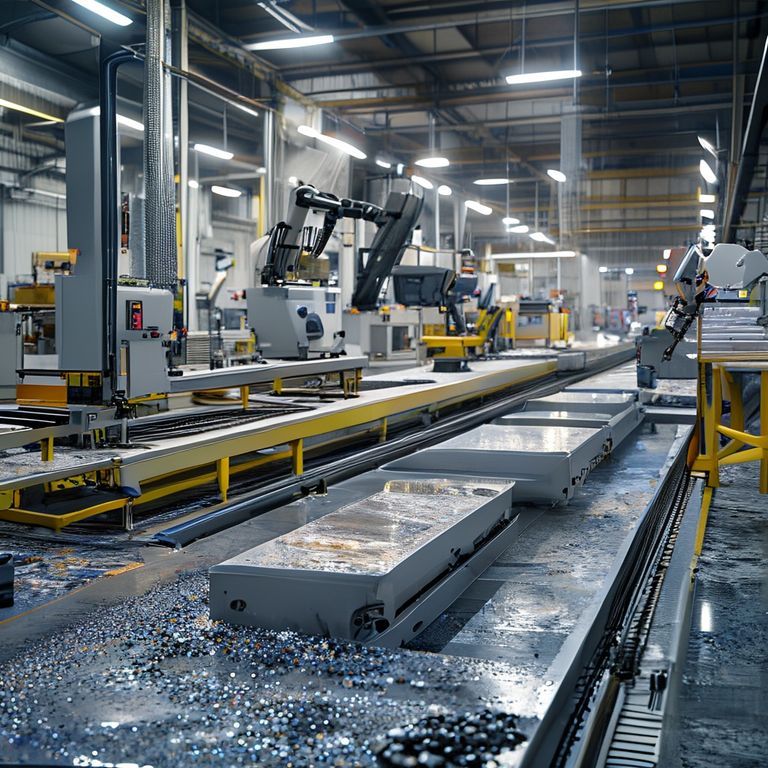
To understand the allure of artificial stone equipment, one must first appreciate the “Engineered Stone” phenomenon. Whether it is quartz, engineered marble, or the revitalized trend of terrazzo, these materials are not merely “fake” stone. They are enhanced stone. They are the result of a precise, high-pressure marriage between nature’s raw materials and human ingenuity. The equipment required to facilitate this marriage is some of the most specialized and impressive hardware in the manufacturing world today. Investing in a modern artificial stone production line is no longer just a business decision for factory owners; it is a move toward a future where the aesthetic beauty of the earth can be replicated and improved upon without the ecological devastation of excessive quarrying.
The journey of a slab begins with the raw material preparation system. Imagine a symphony of automated feeders, where crushed quartz or marble aggregates are measured with a level of precision that would make a laboratory chemist jealous. The equipment here must handle various grit sizes, from fine powders that provide a silky finish to large chips that create a bold, dramatic texture. This is where the “recipe” is brought to life. High-end artificial stone equipment utilizes advanced PLC (Programmable Logic Controller) systems to ensure that the ratio of stone to resin is kept within a razor-thin margin. Too much resin and the stone feels plastic; too little, and the slab becomes brittle. The equipment acts as the guardian of quality, ensuring that every batch is a perfect clone of the last, a feat that Mother Nature simply cannot achieve.
Once the mixture is homogenized, it enters the most critical phase of the process: the Vacuum Vibro-compression. This is the “soul” of artificial stone equipment. In this stage, the mixture is spread into a mold and subjected to a dual-force assault. First, a high-vacuum environment is created to extract every single air bubble from the mix. This is vital. In the world of high-end countertops and flooring, air is the enemy. It creates pores, and pores lead to stains and bacterial growth. Simultaneously, the equipment applies massive vibration and hundreds of tons of pressure. This “vibro-compression” forces the particles together so tightly that they interlock at a microscopic level. The result is a slab that is denser, harder, and more non-porous than almost any natural granite or marble found in a mountain.
For the investor or the factory developer, the appeal of this equipment lies in its scalability and versatility. Modern production lines are modular. You can start with a setup focused on “standard” quartz slabs for the booming residential market and gradually integrate specialized modules for “jumbo” slabs or book-matched patterns that mimic the most expensive Italian Calacatta marble. The sheer engineering of the pressing plates—often made of high-strength alloys to withstand the repetitive force—is a testament to the durability of the machinery. When you stand in a factory powered by top-tier artificial stone equipment, you aren’t just looking at a factory floor; you’re looking at a high-speed evolution of the earth’s geological processes, condensed from millions of years into a few minutes.
Furthermore, the aesthetic control offered by this equipment is unparalleled. In the past, “artificial” stone was often criticized for looking repetitive or “flat.” Today’s advanced equipment includes multi-colored injection systems and robotic veining arms that can dance across the slab, depositing pigments in organic, flowing patterns. This allows manufacturers to cater to the highest tier of interior design, where the demand for “unique” looks is paramount. The equipment has bridged the gap between industrial mass production and artisanal craftsmanship. You can now produce ten thousand slabs that all share the same structural integrity, yet each possesses a “personality” that makes it indistinguishable from natural stone to the untrained eye.
As we conclude this first look at the industry, it is clear that artificial stone equipment is the silent backbone of the modern construction boom. From the airports of Dubai to the luxury penthouses of Manhattan, the surfaces we touch and walk upon are increasingly the products of these high-tech production lines. But the story doesn’t end with a pressed slab. The refinement, the environmental ethics, and the global market dynamics are where the narrative truly expands.
Continuing from the physical formation of the slab, the second half of the artificial stone equipment ecosystem is where the “rough diamond” is polished into a masterpiece. Once the slab emerges from the press, it isn’t yet the glossy, reflective surface we see in high-end showrooms. It must pass through the curing kilns and then into the finishing line. The curing process is a delicate dance of thermodynamics. The equipment must maintain a precise temperature curve to ensure the resins polymerize evenly. If the heat is uneven, the slab might warp; if it’s too fast, the internal stresses could cause cracking months later. Modern artificial stone equipment uses energy-efficient, multi-tier kilns that maximize throughput while minimizing the carbon footprint—a critical selling point in today’s “Green Building” economy.
The finishing line is perhaps the most visually satisfying part of the entire operation. It consists of a series of calibrating and polishing heads, often twenty or more in a row, each using progressively finer diamond abrasives. The precision required here is staggering. We are talking about equipment that can take a massive, three-meter-long slab and ensure its thickness is consistent within a fraction of a millimeter across its entire surface. This level of calibration is what allows for the seamless “waterfall” edges in kitchen designs and the perfectly level floors in massive commercial malls. Without the high-torque, water-cooled spindles of a professional polishing line, the stone would never achieve that deep, mirror-like luster that defines luxury.
One cannot discuss artificial stone equipment without addressing the seismic shift toward sustainability. The “circular economy” is no longer a buzzword; it is a mandate. One of the most incredible capabilities of modern production lines is their ability to utilize recycled materials. High-tech equipment can now incorporate crushed glass, mirror fragments, and even waste from natural stone quarries into the mix. This turns what was once landfill-bound refuse into high-value architectural products. For the environmentally conscious developer, the equipment isn’t just a tool for profit; it’s a tool for waste reduction. The water used in the polishing and cutting phases is almost always recycled through integrated filtration and settlement systems, making the modern artificial stone factory a closed-loop marvel of industrial ecology.
Moreover, the “intelligence” of these machines has reached a fever pitch. We are now seeing the integration of AI and Big Data into the production line. Sensors throughout the equipment monitor everything from the moisture content of the quartz sand to the vibration frequency of the press. If a deviation is detected, the system can auto-correct in real-time, preventing the production of “seconds” or scrap. This “Industry 4.0” approach to stone manufacturing ensures a Return on Investment (ROI) that was unthinkable a decade ago. It reduces the reliance on manual labor, minimizes human error, and allows for 24/7 production cycles that can keep up with the frantic pace of global infrastructure projects.
The market for artificial stone is also expanding beyond the traditional kitchen and bathroom. With the right equipment, manufacturers can produce ultra-thin slabs for wall cladding and exterior facades, or thick, heavy-duty blocks for public urban furniture. The versatility of the machinery means that a factory can pivot its production based on market trends. If the trend shifts from “Sparkle Quartz” to “Industrial Concrete-look Terrazzo,” the equipment can be recalibrated with new recipes and molds in a matter of hours. This agility is the ultimate competitive advantage in a volatile global economy.
Choosing the right partner for artificial stone equipment is the final piece of the puzzle. It’s not just about buying a machine; it’s about acquiring a technological partnership. The best equipment providers offer more than just steel and circuits; they provide the “know-how”—the chemical formulations, the maintenance protocols, and the software updates that keep the line at peak performance. As the demand for engineered surfaces continues to skyrocket in emerging markets across Asia, the Middle East, and South America, the manufacturers who invest in high-caliber, automated equipment today will be the ones who define the skylines of tomorrow.
In summary, artificial stone equipment represents the perfect intersection of heavy industry and high art. It takes the raw, chaotic elements of the earth and organizes them into structures of geometric perfection and lasting beauty. For those in the construction, design, or manufacturing sectors, understanding this equipment is not just an academic exercise—it is a glimpse into the very fabric of the future built environment. We are no longer limited by what we can find in a quarry; we are only limited by the sophistication of our machinery and the reach of our imagination. The era of the “Man-Made Mountain” is here, and it is being built, one high-pressure slab at a time.









