
The kitchen has evolved. It’s no longer just a room where onions are chopped and water is boiled; it has transformed into the social nervous system of the modern home. Because of this high-status evolution, every choice we make during a renovation—from the brass finish on the faucets to the grain of the cabinetry—feels weighted with significance. Among these decisions, one question often stops homeowners in their tracks: “Is 1.5cm quartz enough for the countertop?”
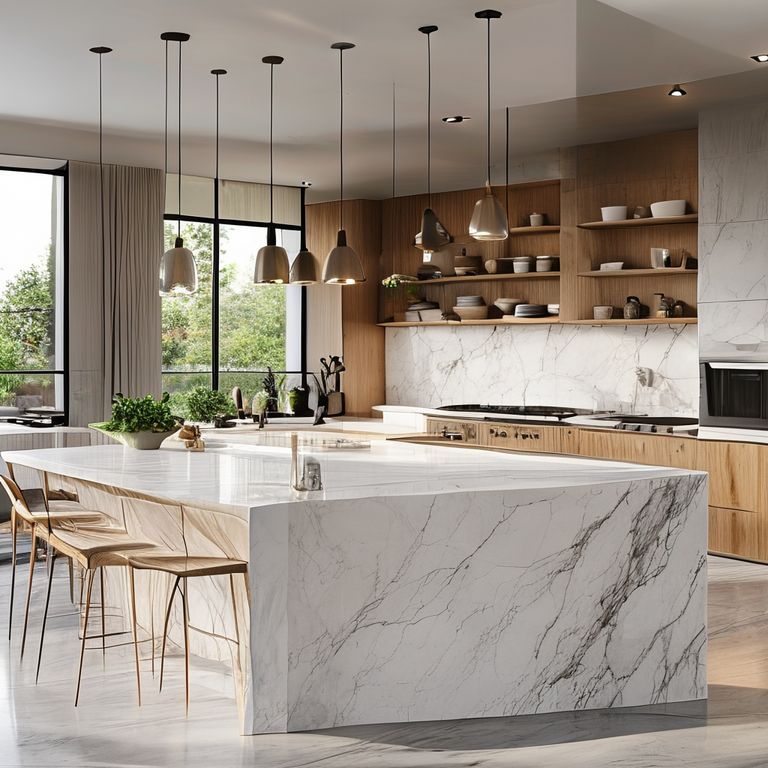
If you’ve been scrolling through Pinterest or architectural digests, you’ve likely noticed a shifting silhouette in high-end kitchen design. The bulky, three-centimeter slabs that once dominated the “luxury” category are facing stiff competition from a sleeker, more European-inspired aesthetic. This is where the 1.5cm (or 15mm) quartz slab enters the conversation. It’s the minimalist’s darling, offering a profile that feels architectural and light. But in the world of home improvement, beauty must always dance with utility. Can something so slender actually handle the chaos of a Sunday roast or the accidental drop of a heavy Le Creuset lid?
To answer whether 1.5cm is “enough,” we first have to understand what quartz actually is. Unlike granite or marble, which are hewn directly from the earth in unpredictable blocks, quartz is an engineered marvel. It’s a cocktail of roughly 90-93% crushed natural quartz crystals bound together by high-quality polyester resins and pigments. This engineering process makes it incredibly dense and non-porous. Because of this inherent structural integrity, a 1.5cm slab of quartz is significantly stronger and more resilient than a slab of natural stone of the same thickness. While a 1.5cm piece of marble might snap if you look at it too sternly during installation, quartz is built to endure.
One of the most compelling arguments for the 1.5cm choice is the “Modernist Lean.” In contemporary design, there is a distinct movement toward horizontal lines that feel effortless. A thinner countertop allows the cabinetry to take center stage, creating a look that is sophisticated and “designed” rather than just “built.” If you are aiming for a handle-less, ultra-modern kitchen with flat-panel doors, a 1.5cm quartz top acts as the perfect, understated crown. It doesn’t scream for attention; it whispers class.
However, the “is it enough” question usually stems from a fear of cracking or snapping. Let’s talk about the physics of the kitchen. Most of the stress placed on a countertop isn’t from the weight of the stone itself, but from the lack of support beneath it. This is the secret that many contractors won’t tell you right away: a 1.5cm slab is perfectly sufficient provided the cabinetry is level and high-quality. In many European markets, 1.2cm and 1.5cm are actually the standard. They don’t have kitchens falling apart every other week; they simply ensure the base units provide a solid, flat foundation.
There is also the matter of weight—a factor often overlooked until the delivery truck arrives. Quartz is heavy. Opting for 1.5cm over 3cm effectively halves the load on your flooring and your kitchen carcasses. If you are renovating an older home where the floor joists might be a bit tired, or if you’ve chosen delicate, bespoke cabinetry, reducing the stone’s weight can be a strategic move. It makes the installation process faster, safer, and often less expensive in terms of labor.
But let’s be real—budget is always a guest at the table. Generally speaking, 1.5cm slabs are more cost-effective than their 2cm or 3cm counterparts. If you’ve fallen in love with a premium, Calacatta-veined quartz that costs a fortune per square foot, dropping down to a 1.5cm thickness might be the very thing that brings that “dream stone” back into your “real-world budget.” It allows you to prioritize the aesthetic quality of the material without paying for the bulk you might not actually need.
Is 1.5cm enough? If you’re looking at it through the lens of modern material science and contemporary aesthetics, the answer is a resounding yes. But as with all things in design, the magic lies in the execution. How you edge it, how you support it, and how you integrate it into your daily flow will ultimately determine if this slim-profile wonder is the right fit for your culinary sanctuary.
Continuing our journey into the slim-profile kitchen, we have to address the “Visual Illusion” and the technical workarounds that make 1.5cm quartz a versatile chameleon. You might worry that 1.5cm looks “too thin” or “cheap” in a large, open-concept kitchen. This is a common concern, but it’s easily mitigated by one of the oldest tricks in the stonemason’s book: the mitered edge.
If you love the price point and weight of 1.5cm quartz but crave the chunky, authoritative look of a 4cm or even 6cm island, you can have both. By cutting the edges of the 1.5cm slab at a 45-degree angle and joining them with a vertical apron of the same stone, your fabricator can create the appearance of a massive, solid block of stone. This gives you the luxury aesthetic of a “heavy” countertop while maintaining the efficiency of the thinner slab. It’s the ultimate design hack—luxury on the outside, smart engineering on the inside.
However, if you decide to keep the 1.5cm profile exposed (the “pencil edge” or “flat polish”), you are embracing a specific vibe. This look works best when paired with high-end appliances and thoughtful lighting. When the countertop is thin, the details around it—the backsplash, the sink, the faucet—become more prominent. It creates an opportunity to play with contrast. Imagine a 1.5cm charcoal quartz top paired with a chunky, farmhouse-style apron sink. The juxtaposition of the slender stone and the heavy ceramic creates a visual tension that is incredibly high-end.
Now, let’s talk about the “lifestyle” aspect. How does 1.5cm quartz handle the reality of a busy family? People worry about heat and impact. Regarding heat, quartz is generally heat-resistant but not heat-proof. This applies whether the stone is 1.5cm or 3cm thick. The resin in the stone can discolor if a pan comes straight from the burner to the surface. So, regardless of thickness, you’ll still want to use trivets. In terms of impact—say, dropping a heavy cast-iron skillet—quartz is remarkably resilient. While a thicker stone technically has more mass to absorb shock, the difference in “chipping” resistance between 1.5cm and 3cm is negligible for standard household use. If you drop something heavy enough to crack 1.5cm quartz, chances are it would have damaged 3cm quartz too.
The real key to the “1.5cm lifestyle” is the installation of a “sub-top.” In many professional installations, a layer of high-quality marine plywood or a specialized cement board is placed over the cabinets before the 1.5cm quartz is laid down. This sub-top acts as a shock absorber and provides a perfectly level surface. It eliminates any “flex” in the stone, which is the primary cause of cracking. When supported correctly, 1.5cm quartz is essentially indestructible under normal kitchen conditions.
Another factor to consider is the “overhang.” If you’re planning a breakfast bar where people will sit and tuck their knees under the counter, the thickness matters for structural support. For a 1.5cm slab, you generally shouldn’t have an unsupported overhang of more than 15-20cm. If you want a deeper “floating” breakfast bar, you’ll simply need to incorporate discrete metal brackets or a hidden support frame. This is a small price to pay for the sleek, airy look that a thinner slab provides.
From a sustainability perspective, 1.5cm quartz is also a winner. It requires less raw material to produce and less fuel to transport. In an era where we are becoming increasingly conscious of our environmental footprint, choosing the “just right” amount of material rather than over-engineering for the sake of tradition is a forward-thinking move.
So, is 1.5cm quartz enough? It’s more than enough. It’s a sophisticated choice for the homeowner who understands that strength isn’t always about bulk. It’s for the person who values precision, who loves the “less is more” philosophy, and who wants to allocate their renovation budget toward things that truly matter—like high-end finishes or that integrated wine fridge they’ve been eyeing.
When you stand in your finished kitchen, running your hand over that cool, slender surface, you won’t be thinking about the millimeters you “missed out on.” You’ll be looking at how the light hits the polished edge, how much space you have, and how effortlessly the stone blends into the architecture of your home. The 1.5cm quartz countertop isn’t a compromise; it’s a design-forward statement that says you know exactly what you’re doing. It’s proof that in the modern kitchen, elegance and resilience are not measured by thickness, but by the quality of the vision behind them.









