
The kitchen is no longer just a utility room where meals are prepared in a hurried blur of steam and stainless steel. It has evolved into the gravitational center of the modern home—a sanctuary for morning espressos, a makeshift office for late-night emails, and the undisputed stage for social gatherings. When you stand in the middle of a renovation, every choice feels monumental, but few decisions carry as much weight—literally and figuratively—as the thickness of your countertops. Specifically, the debate between 1.5cm and 2.0cm quartz has become the focal point for homeowners looking to balance sleek aesthetics with long-term resilience.
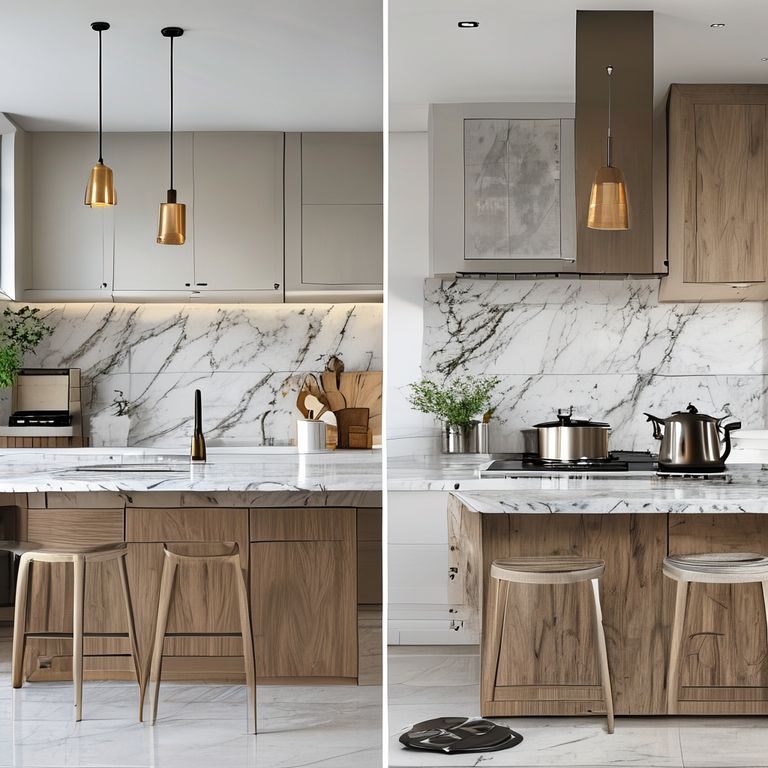
For decades, the “standard” was rarely questioned. You picked a color, you picked a stone, and you accepted whatever thickness the warehouse provided. But as design sensibilities have shifted toward high-contrast minimalism and industrial chic, the industry has branched out. Quartz, a powerhouse of engineering that blends crushed stone with high-performance resins, offers a versatility that natural marble or granite often struggles to match. Yet, the choice between 1.5cm and 2.0cm isn’t just a matter of “thin” or “thick.” It’s about the narrative you want your kitchen to tell.
Let’s look at the 1.5cm option through the lens of modern design. There is an undeniable elegance to a thinner profile. In the world of high-end European cabinetry—think those sleek, handle-less Italian kitchens—the 1.5cm slab is the darling of the industry. It creates a profile that is light, airy, and sophisticated. It doesn’t scream for attention; instead, it whispers. When paired with a waterfall edge that drops straight to the floor, a 1.5cm slab creates a seamless, monolithic look that feels more like a piece of contemporary art than a workspace. For those living in urban apartments or homes where space is at a premium, the thinner profile can actually make a kitchen feel larger, reducing the visual “bulk” that a thicker stone might impose on a small footprint.
However, choosing 1.5cm isn’t just about following a trend. It’s a conscious decision to embrace a specific kind of modernity. It’s for the person who values precision and a certain architectural lightness. But with that lightness comes a set of considerations that often go unmentioned in glossy brochures. While quartz is incredibly dense and hard, a thinner slab naturally has a different structural threshold than its thicker counterpart. Does this mean it’s “weak”? Not necessarily. Modern manufacturing has made 1.5cm quartz incredibly sturdy. However, the installation requires a level of expertise and a foundation of cabinetry that is perfectly level. Because there is less “meat” to the stone, any unevenness in the base cabinets puts more stress on the slab, making the precision of your contractor just as important as the stone itself.
On the other side of the ring stands the 2.0cm slab—the reigning champion of the North American market and the choice for those who want a kitchen that feels “solid.” There is a psychological comfort in thickness. When you lean against a 2.0cm countertop, there is a sense of permanence and unyielding strength. It feels like it could survive anything, from a heavy cast-iron skillet being dropped to a decade of holiday baking sessions. Visually, 2.0cm offers a classic profile. It provides enough “edge” to be noticed without being overbearing. It’s the Goldilocks zone of countertop design—not too thin to feel fragile, not so thick that it looks clunky.
The 2.0cm thickness also opens the door to more creative edge profiles. If you’re dreaming of an Ogee edge, a classic Bullnose, or a more intricate bevel, you simply need that extra half-centimeter of material to work with. Fabricators love 2.0cm quartz because it gives them more room to breathe. They can grind, polish, and shape the edges with a lower risk of chipping during the process. For a homeowner, this means your finished product is likely to have a more refined, polished look, especially around the sink cutouts where the edge of the stone is most visible.
But beyond the aesthetics and the “feel,” we have to talk about the reality of the material itself. Quartz is a composite. Its strength comes from the ratio of quartz crystals to resin. In a 2.0cm slab, that distribution is spread over a larger volume, providing a natural buffer against impact. If you have a busy household—think kids, dogs, and a constant stream of guests—the 2.0cm thickness offers a layer of “life insurance” for your kitchen. It’s less about whether the stone will break (quartz is notoriously hard to break) and more about how it absorbs the vibrations and chaos of a high-traffic home.
As we move into the finer details of cost and installation, the gap between 1.5cm and 2.0cm begins to narrow in some areas and widen in others. People often assume that 1.5cm is the “budget” choice because it uses less material. While the raw slab might be slightly cheaper, the labor involved in reinforcing the base and ensuring a perfect fit can sometimes close that price gap. Conversely, 2.0cm slabs are heavier, requiring more muscle to move and potentially more robust cabinetry to support them. The decision, therefore, isn’t just a line item on a budget; it’s a structural strategy.
Continuing from the structural nuances, the conversation around quartz thickness inevitably leads us to the “hidden” costs of fabrication and the long-term integrity of the installation. Many people overlook the fact that the countertop doesn’t sit in a vacuum; it’s part of a complex system involving cabinets, sinks, and appliances. When you choose a 1.5cm slab, you are often looking at a product that may require a plywood sub-top for added support, especially across long spans or over dishwashers where the stone isn’t directly resting on a cabinet frame. This sub-top is then hidden by a “mitered edge”—a technique where the fabricator cuts the edge at a 45-degree angle and joins it to a vertical strip of stone to make the countertop appear much thicker than it actually is.
This is where the 1.5cm choice gets interesting. If you want the “thick” look of 4cm or 6cm without the astronomical weight and cost of a solid slab, starting with a 1.5cm base is the most efficient way to get there. By mitering the edges, you can create a massive, chunky island that looks like a solid block of stone, while the interior remains hollow and supported by wood. However, this introduces more seams. A 2.0cm slab, by contrast, can often be installed without a sub-top in many regions, allowing the natural edge of the stone to be the finished edge. This results in a cleaner, more “honest” look where the thickness you see is exactly what you get.
Let’s dive into the heat and impact resistance. Quartz is famous for being scorched-resistant, but it’s not scorch-proof. The resin that binds the quartz can react to extreme heat. A 2.0cm slab has a greater thermal mass, meaning it can dissipate heat slightly more effectively than a 1.5cm slab. If you accidentally set a hot pot down for a split second, that extra 0.5cm of material provides a larger buffer before the heat reaches the bottom of the slab or the adhesive holding it to the cabinets. Similarly, when it comes to “point loading”—like someone standing on the counter to change a lightbulb (which you should never do, but people do)—the 2.0cm slab distributes that weight across a wider area, significantly reducing the risk of a stress crack.
From a resale perspective, the choice between 1.5cm and 2.0cm can be a subtle but real factor in home valuation. In the luxury market, buyers are increasingly educated. They notice the details. A 1.5cm countertop that has been expertly mitered to look like 5cm is a high-end design move that adds “wow” factor. However, a 1.5cm countertop with a simple, flat edge can sometimes be perceived as “builder grade” or an attempt to cut corners, even if the material itself is premium. On the other hand, 2.0cm is seen as the reliable, high-quality standard. It’s the “safe” bet that rarely devalues a home and appeals to the widest range of potential buyers.
We also have to consider the sink. The “undermount” sink is the gold standard for modern kitchens because it allows you to wipe crumbs directly into the basin. When you use a 1.5cm slab, the “reveal”—the exposed edge of the stone around the sink—is very thin. This can look incredibly sharp and modern, but it also means there is less surface area for the silicone adhesive to grip, and the edge is slightly more prone to chipping if a heavy pot bangs against it. With 2.0cm, the reveal is substantial and sturdy, providing a more robust interface between the stone and the stainless steel or cast iron of the sink.
So, how do you actually make the choice? It comes down to a lifestyle audit. If you are a culinary enthusiast who treats the kitchen like a laboratory—constantly moving heavy equipment, pounding dough, and hosting large dinner parties—the 2.0cm slab offers the peace of mind you need. It is the “workhorse” thickness. It forgives the occasional mishap and stands up to the rigors of a busy life with stoic grace. It’s for the person who wants to buy once and never think about it again.
If, however, your kitchen is a design statement—a place where aesthetics lead and the vibe is one of curated minimalism—the 1.5cm slab is your best friend. It allows for those razor-thin profiles that define contemporary “soft-minimalism.” It’s the choice for the trendsetter who wants their kitchen to feel like a boutique hotel or a high-end gallery. When executed with a mitered edge to create the illusion of a massive block, it becomes a centerpiece that guests will inevitably run their hands over.
Budget also plays a nuanced role. In some markets, 2.0cm is the standard, and 1.5cm might actually be a special order, making it more expensive despite using less material. In other markets, the 1.5cm is the entry-level price point. You must talk to local fabricators to understand the “installed price.” Sometimes, the extra labor to handle and reinforce a thinner slab makes the 2.0cm the more cost-effective option in the long run.
Ultimately, there is no wrong answer, only the right answer for your specific home. The 0.5cm difference might seem negligible on a ruler, but in the context of your daily life, it defines the tactile experience of your home. Whether you choose the lithe, modern 1.5cm or the substantial, classic 2.0cm, quartz remains one of the best investments you can make. It is a material that marries the beauty of the earth with the ingenuity of human engineering. Your countertop is the stage upon which your life unfolds—the place where birthdays are celebrated, morning coffees are shared, and memories are made. Choose the thickness that makes you feel most at home every time you walk into the room.









