
Imagine walking into your kitchen on a Sunday morning. The sunlight hits the surface of your countertop, and there it is—that perfect, glass-smooth finish that makes even a simple cup of coffee feel like a five-star experience. If you’ve been scrolling through Pinterest or architectural digests lately, you’ve probably noticed a shift. The chunky, three-centimeter granite slabs of the early 2000s are making way for something leaner, meaner, and infinitely more sophisticated: the 1.5cm quartz stone.
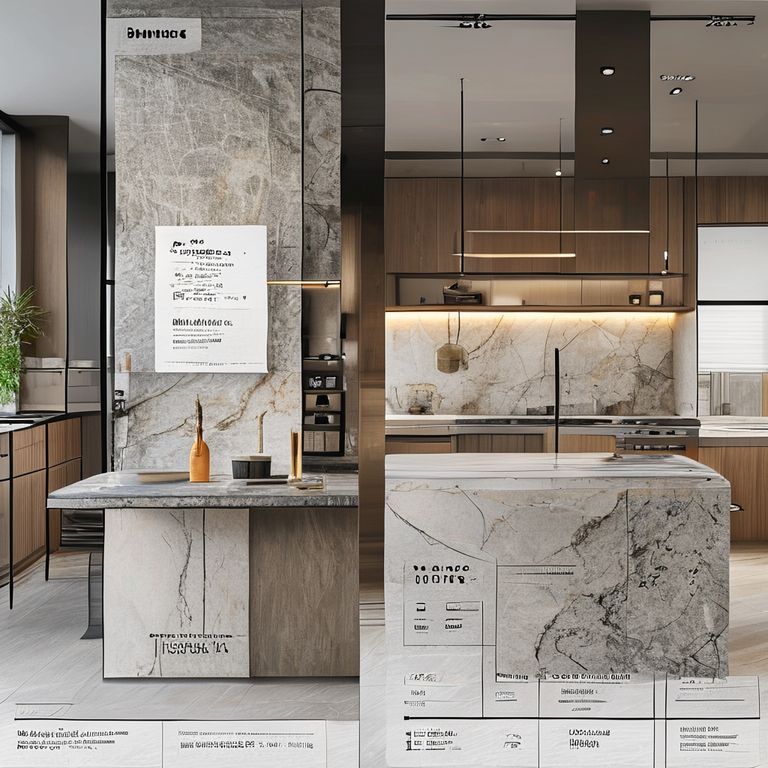
But as soon as you start planning, the big question hits you: “How much is 1.5cm quartz stone per meter?” It’s the question that dictates whether your dream kitchen stays a dream or becomes your daily reality. Let’s peel back the layers of the stone industry and look at what actually goes into that price tag, and why the 1.5cm (or 15mm) profile is currently the darling of modern interior design.
First, we need to talk about the “why” before the “how much.” Why are people moving toward the 1.5cm thickness? In the world of high-end design, minimalism is king. A 1.5cm slab offers a sleek, European-inspired aesthetic that feels lighter and more contemporary than the heavy-duty slabs of yesteryear. It allows for hidden supports, “floating” island looks, and seamless integrated backsplashes that don’t overwhelm the room. But don’t let the slim profile fool you; quartz is an engineered marvel. It’s composed of roughly 90% to 94% crushed natural quartz mixed with polymer resins and pigments. This results in a surface that is harder than granite and virtually non-porous.
Now, let’s talk numbers. When you ask about the price per meter for 1.5cm quartz, you’re usually looking at a range that can start as low as $60 (approx. 400-500 RMB) and climb all the way up to $400 or more for premium, designer-label slabs. If you’re looking at the Chinese market specifically—where much of the world’s high-quality quartz is manufactured—the “sweet spot” for a durable, mid-range 1.5cm stone often sits between 600 to 1,200 RMB per linear meter, including basic fabrication.
But wait, why is there such a massive gap between the low end and the high end? It comes down to the “Recipe.” Think of quartz like a gourmet cake. You can buy a grocery store cake for ten bucks, or a patisserie masterpiece for a hundred. Both are cakes, but the ingredients are worlds apart.
Low-cost quartz often cuts corners on the resin quality or the quartz-to-resin ratio. If there’s too much resin and not enough quartz, the stone becomes susceptible to scratches and “yellowing” over time when exposed to UV light. High-end 1.5cm quartz uses vacuum-vibration compression technology to ensure there isn’t a single air bubble in the slab. This density is what allows a 1.5cm slab to be just as strong, if not stronger, than a cheaper 3cm slab. When you pay more per meter, you aren’t just paying for a brand name; you’re paying for a surface that won’t crack when you accidentally drop a heavy cast-iron skillet on it.
Color and pattern also play a massive role in the per-meter pricing. A solid, “salt and pepper” grain is the most affordable because the manufacturing process is straightforward. However, if you want the “Calacatta Gold” look—with long, sweeping grey and gold veins that mimic natural marble—the price jumps. Achieving those patterns in a 1.5cm thickness requires sophisticated machinery and artisan-level pigment placement. Each meter of that stone is a work of art, and the price reflects the complexity of the “printing” or “veining” process within the stone itself.
Furthermore, we have to consider the “Linear Meter” vs. “Square Meter” confusion. In the stone industry, “per meter” often refers to a linear meter with a standard width (usually around 60cm for kitchen counters). If you have an extra-deep island, your supplier might switch to square-meter pricing. It’s a subtle distinction that can change your quote by hundreds of dollars, so always clarify which “meter” your contractor is talking about.
As we navigate the landscape of 1.5cm quartz, it’s also worth noting that the price isn’t just about the raw material. It’s about the journey that stone takes from a warehouse to your home. In the next section, we’ll dive into the “hidden costs”—the fabrication, the edging, and the installation—that turn a raw slab of 1.5cm quartz into the centerpiece of your home, and how you can navigate these costs without losing your mind (or your savings).
Continuing our deep dive into the world of 1.5cm quartz, let’s talk about the part of the invoice that often catches homeowners off guard: the “Labor and Craftsmanship” factor. When you see a price like “800 RMB per meter,” that usually isn’t just for the stone sitting in a warehouse. It includes the magic that happens in the fabrication shop.
Working with 1.5cm quartz requires a steady hand and high-tech equipment. Because it is slimmer than traditional slabs, the fabricator must be incredibly precise with the cuts. If they’re creating an undermount sink hole, the edges need to be polished to perfection because they are visible. If you want a “mitered edge”—where two pieces are cut at 45-degree angles and joined to make the 1.5cm slab look like a massive 6cm block—the labor cost per meter will rise significantly. This is the irony of the 1.5cm stone: its thinness is its beauty, but making it look effortless takes a lot of work.
One of the biggest advantages of the 1.5cm profile, which actually helps offset some of its costs, is weight. It is significantly lighter than 3cm stone. This means it’s easier to transport, easier to carry up a flight of stairs in an apartment complex, and puts less stress on your cabinetry. You don’t necessarily need to reinforce your base cabinets to hold the weight of 1.5cm quartz, which is a hidden saving that people often forget to calculate when comparing it to heavier natural stones.
But let’s get back to the “Price per Meter” breakdown. To get the best value, you need to look at the finish. Most quartz comes in a “Polished” finish, which is the standard. However, “Honed” (matte) or “Leathered” (textured) finishes are becoming incredibly popular for that organic, tactile feel. These specialized finishes often add a premium of 10% to 20% to the price per meter. Why? Because the stone has to undergo additional abrasive processes to achieve that specific sheen while maintaining its stain resistance.
If you’re hunting for a bargain, you might encounter “Jobsite Leftovers” or “Remnants.” Since 1.5cm quartz is so popular for bathroom vanities and side tables, fabricators often have smaller pieces left over from big kitchen projects. If your project is small—say, a 1.2-meter vanity—you can often snag a premium brand for a fraction of the usual per-meter price. It’s the ultimate “insider secret” for high-end design on a budget.
However, a word of caution: beware of the “too good to be true” prices. In the quartz industry, there’s a phenomenon known as “B-grade” slabs. These might have slight color inconsistencies, small clusters of pigment (ink spots), or tiny fissures. Some unscrupulous sellers will offer these at a low price per meter without telling you why. While a tiny spot might not bother you, it’s something you should know about before the stone is permanently glued to your cabinets. Always ask to see the specific slab you are buying, not just a small sample chip.
When you’re finally ready to pull the trigger, how do you ensure you’re getting a fair deal?
Get a “Fully Installed” Quote: Don’t just ask for the stone price. Ask for the price including measurement, delivery, cutting, sink hole fabrication, and installation. Check the Warranty: Premium quartz manufacturers often offer 10 to 25-year warranties. If a stone is “unbranded” and cheap, you’re on your own if it cracks three years down the line. The “Edge” of the Matter: A simple eased edge is usually included. A beveled or bullnose edge might cost an extra $10-$20 per meter. Decide if that aesthetic detail is worth the extra spend.
Ultimately, choosing 1.5cm quartz at the right price is about balancing your immediate budget with the long-term value of your home. Quartz is one of the few home improvements that consistently offers a high Return on Investment (ROI). It’s durable, it’s timeless, and it’s incredibly low-maintenance. You don’t need to seal it every year like granite or worry about lemon juice etching it like marble. You just wipe it down and go about your day.
So, how much is 1.5cm quartz stone per meter? It’s whatever you decide the “heart of your home” is worth. Whether you go for the budget-friendly 500 RMB local slab or the 2,000 RMB Italian-designed masterpiece, the 1.5cm thickness ensures your space will look modern, sharp, and intentional. It’s not just a countertop; it’s the stage where your life happens—the midnight snacks, the holiday dinners, and the quiet morning coffees. Invest in a stone that can handle the weight of those moments, even if the stone itself is elegantly thin.
By understanding the nuances of material quality, fabrication labor, and market trends, you’re no longer just a consumer; you’re an informed designer of your own life. Happy renovating









