
Standing in a stone gallery is a bit like visiting an art museum, except you’re allowed to touch the exhibits and, eventually, you’re expected to eat off them. Among the swirling patterns of Calacatta and the industrial grit of concrete-look slabs, you’ll encounter a choice that seems minor on paper but carries significant weight in your wallet: the thickness. Specifically, the battle between the sleek 1.5cm (15mm) and the robust 2.0cm (20mm) quartz slab. When you start asking about “石英石1.5和2.0价格” (Quartz stone 1.5 and 2.0 prices), you aren’t just talking about a five-millimeter difference; you’re talking about the structural soul of your kitchen and the long-term health of your bank account.

The initial allure of the 1.5cm slab is almost always the price tag. In the world of home renovation, where every faucet and floor tile seems to conspire to push you over budget, the 1.5cm quartz stone feels like a lucky break. On average, you can expect the raw material cost of 1.5cm quartz to be roughly 15% to 25% lower than its 2.0cm counterpart. For a sprawling kitchen island, that percentage translates into hundreds, perhaps thousands, of dollars. It’s the “budget-friendly” darling of modern apartments and minimalist designs. Because it’s thinner, it’s lighter, which occasionally leads to slightly lower shipping costs and easier handling for the crew.
But let’s talk about the “look.” Design trends are currently split into two camps. On one side, we have the ultra-thin, European aesthetic. Think high-end Italian kitchens where the countertops are almost razor-thin, giving the cabinetry a floating, weightless appearance. If this is your vibe, the 1.5cm slab isn’t a compromise; it’s a stylistic choice. It feels contemporary, agile, and sophisticated. However, there is a catch. In the North American and traditional Asian markets, “luxury” has historically been equated with heft. A 1.5cm slab on its own can sometimes look a bit “skinny” or unfinished if not handled correctly. To combat this, many fabricators use the 1.5cm slab and “build up” the edge with a mitered joint to make it look like a 4.0cm or even 6.0cm thick piece. This is where the price conversation gets interesting. While the slab itself is cheaper, the labor required to cut, join, and polish that mitered edge can eat up all the savings you made on the material.
Then we have the 2.0cm slab, the undisputed heavyweight champion of the industry. This is the “goldilocks” thickness. It’s thick enough to provide a sense of permanence and luxury without being so heavy that it requires reinforced cabinetry. When you look at the price of 2.0cm quartz, you are paying for more than just extra resin and crushed stone. You are paying for structural integrity. A 2.0cm slab has significantly higher flexural strength. It can handle the “oops” moments of life—the heavy cast-iron skillet dropped during a Sunday roast or the exuberant toddler climbing onto the counter to reach the cookie jar.
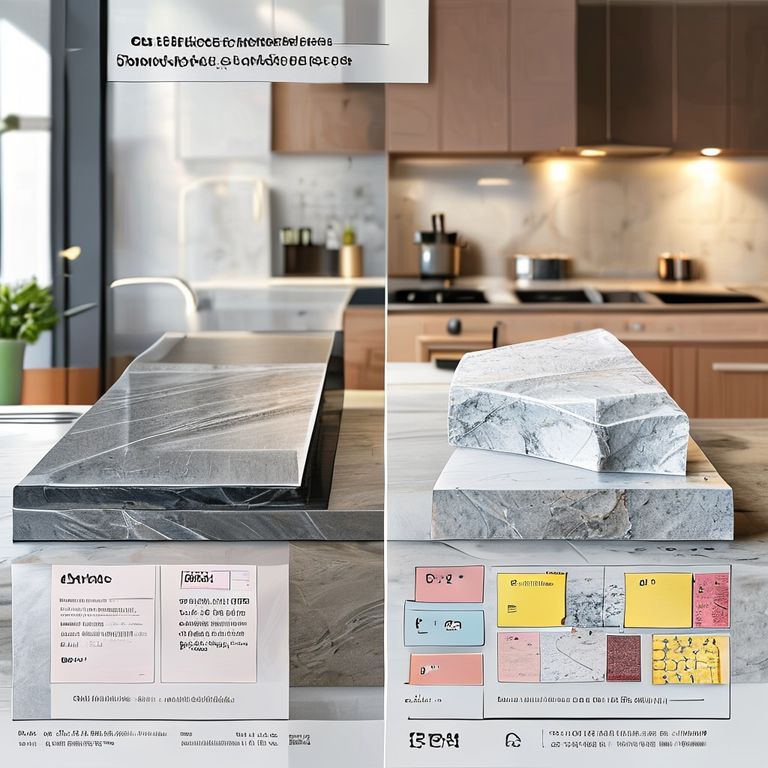
The pricing of 2.0cm quartz is generally seen as the “standard” or “baseline” in the luxury market. Most premium colors and intricate veining patterns are first released in 2.0cm and 3.0cm formats. If you have your heart set on a specific, high-end design that mimics rare marble, you might find that 1.5cm isn’t even an option. The manufacturers know that the people buying these premium looks want the premium feel to match. In terms of market value, a 2.0cm countertop is often a safer bet for resale. Homebuyers have a tactile reaction to countertops; when they see a 2.0cm edge, it signals “quality” and “durability” subconsciously.
So, why does the 1.5cm even exist if the 2.0cm is so dominant? Apart from the budget-conscious projects, 1.5cm is a dream for vertical applications. If you want your backsplash to match your countertop for that seamless “slab-up” look, using 1.5cm for the wall is a stroke of genius. It’s lighter, puts less stress on your wall studs, and since it won’t be bearing any weight or facing heavy impacts, its thinner profile is an advantage rather than a liability. It’s also the go-to choice for bathroom vanities where the scale of the room is smaller, and a 2.0cm slab might look disproportionately chunky.
As we move into the actual numbers, remember that the “price” isn’t a static figure. It’s a combination of the slab cost, the fabrication (cutting the holes for sinks and hobs), the edge detailing, and the installation. When comparing 1.5cm and 2.0cm, always ask for the “all-in” quote. You might be surprised to find that a 1.5cm slab with a complex mitered edge actually ends up costing more than a 2.0cm slab with a simple eased edge. It’s one of the great paradoxes of the stone industry: sometimes, paying for more material actually saves you money on labor.
Continuing our deep dive into the “石英石1.5和2.0价格” (Quartz stone 1.5 and 2.0 prices) mystery, we have to look at the “under the hood” factors that influence your final invoice. If Part 1 was about the aesthetics and the raw cost, Part 2 is about the hidden mechanics of value.
One of the biggest factors in the price difference is the “Safety Margin.” Fabricators love 2.0cm quartz. Why? Because it’s harder to break during transport and installation. A 1.5cm slab is more delicate; it can snap if handled poorly or if the cutouts for the sink are too large. Because of this risk, some fabricators actually bake a “risk premium” into the labor price for 1.5cm slabs. They know they have to be twice as careful, and if it breaks on the way to your house, they’re the ones out of a slab. When you opt for the 2.0cm thickness, you’re buying peace of mind for the installer, which often translates to a smoother, faster, and more reliable installation process.
Furthermore, let’s talk about the support system. A 1.5cm quartz countertop usually requires a full sub-top—a layer of plywood or high-density fiberboard placed over the cabinets to provide a flat, supportive base. Quartz is a brittle material; it doesn’t like to bend. Without that extra layer of wood, a 1.5cm slab is prone to cracking at the stress points. Adding a sub-top involves extra material and extra labor time. In contrast, 2.0cm quartz is often strong enough to be laid directly onto the cabinet frames (depending on the span and the specific cabinet design). When you add up the cost of the plywood, the screws, and the hour of labor to install that sub-top, the price gap between 1.5cm and 2.0cm begins to narrow even further.
Let’s get into the nitty-gritty of the numbers. While prices fluctuate based on the brand (think Caesarstone or Silestone versus local manufacturers), a general rule of thumb is that 1.5cm quartz might range from $40 to $75 per square foot installed, whereas 2.0cm quartz might sit between $55 and $100 per square foot. However, if you are looking at premium Chinese quartz exports—where many of these slabs originate—the 1.5cm vs 2.0cm price difference at the wholesale level might only be $5 to $10 per square meter. The massive jump you see in the retail quote is usually a reflection of the fabrication challenges and the market positioning of “luxury” thickness.
If you’re a savvy negotiator or a DIY-inclined homeowner, you can find the “sweet spot” by looking at the edge profile. If you choose a 2.0cm slab, you can go with a simple “Eased Edge” or “Pencil Edge.” It looks modern, clean, and requires the least amount of labor, keeping your total price down. If you choose a 1.5cm slab because you want to save money, stay away from the “Bullnose” or “Ogee” edges. These complex curves require more grinding and polishing, and on a thinner slab, they can look somewhat underwhelming.
We also have to consider the environment the stone will live in. Is this a rental property or your “forever home”? For a rental, 1.5cm is a perfectly logical choice. It looks great in photos, provides a durable surface for tenants, and keeps your initial investment low. Tenants are unlikely to notice or care about a 5mm difference in thickness. However, if this is the kitchen where you plan to roll out dough, host big dinner parties, and live for the next twenty years, the 2.0cm slab is a better investment in your own happiness. There is a psychological comfort in a thick countertop. It feels permanent. It feels like it could survive a small earthquake or a particularly rowdy New Year’s Eve party.
Then there’s the “Waterfall” island factor. Waterfall edges—where the quartz continues down the side of the cabinet to the floor—are the height of modern kitchen fashion. If you’re doing a waterfall, the 2.0cm slab is almost always the winner. The mitered joint where the top meets the side needs a certain amount of surface area to create a strong, invisible bond. A 2.0cm slab provides more “meat” for the epoxy to grab onto, ensuring that your waterfall doesn’t develop a hairline crack two years down the road.
To wrap this up, the “best” price isn’t the lowest number on the quote; it’s the number that gives you the best return on your lifestyle. If you are on a razor-thin budget and every dollar counts, the 1.5cm quartz is a fantastic material that outperforms laminate or wood any day of the week. Just be prepared for the extra support it might need. But, if you can stretch your budget by that extra 15-20%, the 2.0cm quartz slab is the industry standard for a reason. It offers the perfect blend of strength, aesthetic “weight,” and ease of installation.
When you sit down with your contractor to discuss “石英石1.5和2.0价格,” ask them this: “What is the total cost including the sub-top and the edge fabrication?” That question alone will reveal the true value. Usually, you’ll find that the 2.0cm slab is the smarter play. It’s the difference between a suit that fits “okay” and one that’s been tailored to your frame. Both will get you through the day, but one makes you feel like a million bucks every time you walk into the room. In the end, the kitchen is the heart of the home—don’t be afraid to give it a little extra muscle.









