
The world of interior design is often a playground of precise measurements and subtle nuances that, to the untrained eye, might seem inconsequential. However, for those standing in the middle of a kitchen remodel or a bathroom renovation, these numbers become the language of quality and longevity. Lately, a specific question has been circulating through design forums, stone yards, and contractor meetings: “Is 1.8cm quartz actually real?”

To understand the weight of this question, we have to look at the history of engineered stone. For decades, the industry standard for quartz countertops has fluctuated between 2cm (roughly 3/4 inch) and 3cm (roughly 1 1/4 inches). When a 1.8cm slab enters the conversation, it often triggers a wave of skepticism. Is it a shortcut? Is it a lower-quality imitation? Or is it a sophisticated evolution in stone engineering?
Let’s strip away the marketing jargon and look at the raw facts. Quartz, as we know it in the context of countertops, is an engineered product—a symphony of crushed natural quartz crystals, high-performance resins, and pigments. This mixture is vibrated, compressed under immense pressure, and heated to create a non-porous, incredibly hard surface. The “reality” of a 1.8cm slab isn’t determined by its thickness, but by its composition. A 1.8cm slab made with a 93% quartz-to-resin ratio is vastly superior to a 2cm slab that uses cheap fillers and excessive binders.
The emergence of the 1.8cm (or 18mm) specification is largely a response to the global logistics and the hyper-refined calibration of modern manufacturing. In many high-end factories, especially those serving international markets, precision is the ultimate goal. A 1.8cm slab is often the result of “net-zero” calibration, where the stone is polished to a highly specific tolerance. In the past, 2cm was the rough cut, but as technology improved, manufacturers realized they could achieve the same structural integrity with slightly less mass, provided the compaction technology was top-tier.
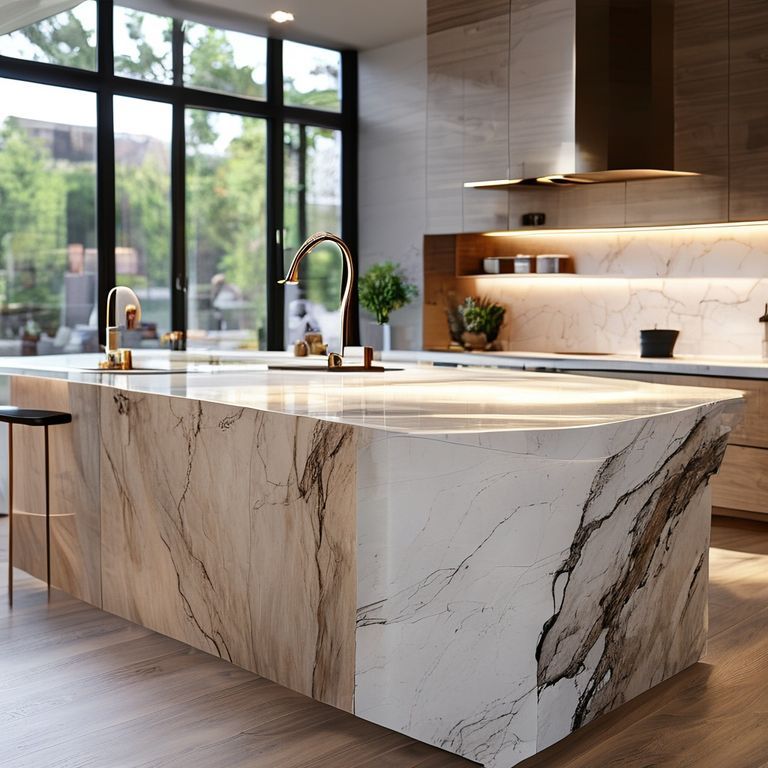
When people ask if 1.8cm quartz is “real,” they are usually asking two things: “Is it durable?” and “Am I being cheated?” To answer the latter, it’s a matter of transparency. If a supplier sells you 1.8cm stone under the guise of it being 2cm, that’s a transparency issue. But if the stone is marketed as 18mm, it is a legitimate product that meets specific design needs. In fact, in many European and Asian markets, the 1.8cm slab is the “golden ratio” for modern, minimalist aesthetics. It offers a sleeker profile that aligns perfectly with the “thin-countertop” trend currently dominating luxury penthouse designs.
The “realness” of the stone also boils down to the Mohs scale of mineral hardness. Genuine quartz should sit comfortably at a 7 on the Mohs scale. A 1.8cm slab that is manufactured correctly will still be harder than granite and nearly impossible to scratch with common kitchen knives. The thickness doesn’t change the mineral properties of the quartz itself. Think of it like a sheet of tempered glass; a slightly thinner sheet of high-quality tempered glass is often stronger than a thicker sheet of standard soda-lime glass. The engineering behind the slab is what dictates its “truth.”
From a manufacturing perspective, the move toward 1.8cm is also an exercise in efficiency. Shipping stone across oceans is an expensive and carbon-heavy endeavor. By refining the thickness to 1.8cm, manufacturers can reduce the weight of a shipping container significantly without sacrificing the surface area. This allows for more competitive pricing for the end consumer. If you can get a premium, high-density quartz slab at a 1.8cm thickness for a better price than a bulkier, less-refined 2cm slab, the 1.8cm option isn’t just “real”—it’s the smarter investment.
However, the skepticism remains because the market is flooded with “pre-fab” slabs that often cut corners. Some 1.8cm slabs found in big-box clearance sections might indeed be lower quality, but this is usually due to the resin quality and the pressure of the vacuum press, not the thickness itself. High-end 1.8cm quartz is often used in vertical applications, such as full-height backsplashes and wall cladding, where its slightly lighter weight makes installation safer and more manageable.
In the next section, we’ll dive deeper into the practical performance of 1.8cm quartz in a high-traffic kitchen, how it handles heat and impact, and how you can verify the quality of a slab before it ever reaches your home. We’ll also discuss the aesthetic “sweet spot” that 18mm provides for those looking to bridge the gap between traditional durability and modern elegance.
Continuing our deep dive into the 1.8cm quartz phenomenon, we must address the “elephant in the room”: performance. If you’re preparing a five-course meal or dealing with a busy household where heavy pots and pans are the norm, will that missing 2mm make a difference? The short answer is: in terms of daily utility, almost certainly not.
The structural integrity of a countertop relies heavily on the substrate—the cabinets and the plywood underlayment—rather than the thickness of the stone alone. A 1.8cm quartz slab, when properly supported, has a flexural strength that far exceeds natural marble or granite of the same thickness. Because quartz is a composite material, it lacks the natural fissures and cleavage planes found in quarried stone. This means it doesn’t crack as easily under tension. Whether your slab is 18mm or 20mm, the risk of a crack usually comes from improper leveling of the base cabinets, not the stone’s inability to hold its own weight.
One of the most attractive aspects of 1.8cm quartz is its versatility in edge detailing. For those who love the “chunky” look of a 4cm or 6cm countertop, 1.8cm slabs are actually a blessing. Fabricators often use a mitered edge to create the illusion of a massive, thick block of stone. A 1.8cm slab is easier to miter and join, resulting in cleaner, tighter seams that are almost invisible to the naked eye. On the flip side, if you are going for the “Euro-thin” look, 1.8cm is the perfect thickness to achieve a sharp, contemporary profile that makes the countertop look like it’s floating above the cabinetry.
Now, how do you verify if the 1.8cm quartz you’re looking at is high-quality? There are a few “field tests” that designers use. First is the “light test.” High-quality quartz is incredibly dense. If you hold a high-powered flashlight against the underside of the stone and the light bleeds through excessively, it may indicate a higher resin content or lower mineral density. A “real” 1.8cm slab should be almost entirely opaque unless it’s a specifically designed translucent variety. Second is the “scuff test.” Using a copper penny (which is softer than quartz), try to scratch the surface. The penny should leave a metal mark that can be wiped away, rather than a permanent groove in the stone.
The heat resistance of 1.8cm quartz is another area of concern for many. It’s a common misconception that thicker stone handles heat better. In reality, all quartz is heat-resistant but not heat-proof. The resin in the slab can discolor or “burn” if a scorching hot pan is placed directly on it. This is true for 3cm slabs just as much as 1.8cm slabs. The thermal mass of a 1.8cm slab is slightly lower, meaning it might heat up faster, but the safety protocol remains the same: always use a trivet.
Economically, choosing 1.8cm quartz can be a game-changer for large-scale projects. If you are outfitting an entire apartment complex or a massive kitchen with a double island, the cost savings on material and shipping can be reallocated into higher-end appliances or custom cabinetry. You aren’t losing “realness”; you are gaining budget flexibility. In the world of high-end fabrication, 1.8cm is frequently the choice for integrated sinks and custom-carved drainboards because it’s easier to manipulate with CNC machinery without losing structural stability.
When you’re at the showroom, don’t let a salesperson dismiss 1.8cm as “cheap.” Instead, ask about the brand and the manufacturing process. Is it Breton-pressed? Does it have a warranty? What is the quartz-to-resin ratio? These are the questions that define the value of the stone. A 1.8cm slab from a reputable manufacturer is a world apart from a 2cm slab from an unknown source.
The aesthetic appeal of 1.8cm also extends to the bathroom. In smaller spaces, a 3cm countertop can often feel overwhelming and “heavy,” making the room feel smaller. The 1.8cm profile provides a refined, delicate touch that allows the vanity design and the tile work to share the spotlight. It’s about balance.
In conclusion, “石英石1.8的是真的吗” is a question that leads us to a broader understanding of modern material science. Yes, it is very real. It is a legitimate, high-performance option that reflects the current state of stone technology. It offers a unique combination of strength, sleekness, and economic value. As long as you prioritize the quality of the engineering over the simple measurement of thickness, 1.8cm quartz can be the foundation of a stunning, durable, and highly functional home. It’s not about how much stone you have; it’s about how good that stone is. So, the next time you see that 1.8cm tag, look closer—you might just find the perfect fit for your vision.









