
1.5公分石英石容易坏吗为什么,石英石15公分 20公分
When you walk into a high-end kitchen showroom today, there is an undeniable trend leaning toward the “less is more” philosophy. The bulky, chunky granite slabs of the early 2000s—those heavy three-centimeter monoliths that looked like they could anchor a battleship—are slowly being replaced by something sleeker, sharper, and more refined. Enter the 1.5cm (15mm) quartz stone. It is the darling of minimalist architects and homeowners who want their kitchen to look like a page out of an Italian design magazine. But with this aesthetic shift comes a nagging, persistent anxiety: “Is it going to crack the moment I drop a heavy cast-iron skillet on it?”
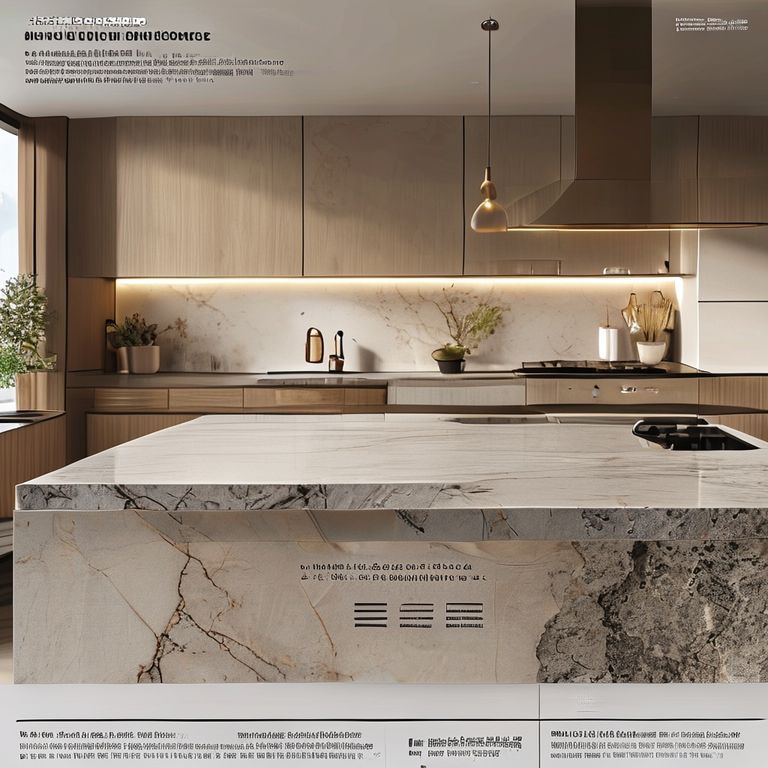
The question of whether 1.5cm quartz is “easy to break” isn’t a simple yes or no. It is a nuanced intersection of material science, installation artistry, and daily lifestyle habits. To understand if a 15mm slab is right for your home, we first have to strip away the marketing jargon and look at what quartz stone actually is. Unlike natural marble or granite, which are quarried in solid blocks, quartz is an engineered marvel. It’s a symphony of approximately 90% to 93% crushed natural quartz crystals bound together by high-quality polymer resins and pigments. This “industrial alchemy” creates a surface that is non-porous, incredibly hard, and remarkably flexible compared to natural stone.
Because of this resin binder, quartz has a tensile strength that natural stone lacks. This is exactly why designers started pushing the boundaries of thickness. In Europe, 1.2cm and 1.5cm surfaces have been the standard for years. The logic is simple: if the material is strong enough, why waste extra stone and add unnecessary weight to the cabinetry? However, as this trend migrated globally, it hit a wall of skepticism. In many regions, the 2cm or 3cm slab remains the “gold standard” for durability. When you go down to 1.5cm, you are essentially reducing the vertical mass of the stone by 25% to 50% compared to traditional choices. Does that mean it’s 50% more likely to break? Not necessarily, but it does mean the margin for error during installation and use becomes significantly slimmer.
The “Why” behind the breakage of 1.5cm quartz often has nothing to do with the stone itself and everything to do with the support system beneath it. Think of a 1.5cm slab like a high-performance glass pane. On its own, it’s remarkably tough. But if you suspend it over a gap and apply pressure to the center, physics will eventually win. The primary reason people experience “failure” with thinner quartz is inadequate sub-top support. In a standard kitchen setup, the stone sits atop the cabinetry. If the cabinets are not perfectly level, or if there are large spans of unsupported space—particularly around the “vulnerable zones” like the sink cutout or the cooktop—the stone is forced to bear a load it wasn’t designed for. A 3cm slab can sometimes mask a poorly leveled cabinet through its own sheer rigidity. A 1.5cm slab will not. It will flex, and if it flexes beyond the capability of the resin binders, it will snap.
Another factor to consider is the quality of the quartz itself. Not all 1.5cm slabs are created equal. The market is flooded with varying grades of engineered stone. High-end manufacturers use vacuum vibro-compression technology, which ensures that there are zero air pockets and that the resin is evenly distributed. These premium 1.5cm slabs are often tougher than poorly made 3cm slabs from “no-name” factories. If the ratio of resin to quartz is off, or if the curing process was rushed, the stone becomes brittle. In a 1.5cm format, there is simply no “buffer” for manufacturing defects. Every flaw is magnified.
So, is it “easy” to break? If you treat it like a chopping block and have a sub-par installation, then yes, it can be delicate. But if you view it as a sophisticated architectural component that requires precision, it’s a different story. The appeal of the 1.5cm profile is its ability to create a “floating” look, especially when paired with handle-less cabinetry and integrated appliances. It brings a level of sophistication that chunky stone simply cannot match. It’s the difference between a tailored Italian suit and a heavy winter coat. Both have their place, but one requires a bit more care to maintain its silhouette.
As we move into the practicalities of living with 15mm quartz, we have to talk about the “Impact Zone.” Most breaks don’t happen in the middle of a solid expanse; they happen at the edges and the cutouts. The corners of a 1.5cm slab are more susceptible to chipping if struck by a heavy object, simply because there is less mass to absorb the energy of the blow. This is why edge profiling becomes so critical. A sharp “eased” edge on a thin slab looks stunning, but it’s a magnet for chips. A slightly rounded “bullnose” or “pencil” edge can distribute the force of an impact more effectively, even on a slim profile.
Moving beyond the initial aesthetics and the basic physics of thickness, we must address the “Hidden Culprits” of quartz failure: thermal shock and structural tension. While quartz is heat-resistant, it is not heat-proof. The resin that holds the quartz together is a type of plastic, and plastics expand and contract when exposed to temperature extremes. In a thicker 3cm slab, the sheer volume of the stone acts as a heat sink, dissipating the thermal energy of a hot pot more slowly. In a 1.5cm slab, the temperature change happens rapidly through the entire thickness of the material. If you place a boiling pot directly onto a cold 1.5cm surface, the localized expansion can create a “spider crack” that radiates from the point of contact. This isn’t a “defect” of the stone; it’s a reality of the material’s thickness. Using a trivet isn’t just a suggestion for 1.5cm quartz—it’s a prerequisite for its survival.
Furthermore, we have to discuss the “Architecture of the Cutout.” The modern kitchen is full of holes—one for the undermount sink, one for the cooktop, perhaps one for a pop-up power outlet. Every hole you cut into a 1.5cm slab creates a potential weak point. The “bridges” of stone in front of and behind the sink are particularly vulnerable. If a person leans heavily on the front of the sink while washing dishes, they are putting immense pressure on a very narrow strip of 1.5cm stone. To prevent breakage here, professional installers often “reinforce” these thin slabs with steel or fiberglass rods embedded in the underside, or they ensure a solid plywood sub-base is used to provide a continuous plane of support. If your fabricator suggests a 1.5cm slab without mentioning a sub-top or reinforcement, that is a red flag.
The “Why” behind the 1.5cm trend also involves a shift in how we use our kitchens. We are moving away from the kitchen as a heavy-duty “workshop” and toward the kitchen as a “social hub.” If you are a professional baker who kneads heavy dough daily or someone who frequently processes large cuts of meat on the counter, the 1.5cm might feel like you’re walking on eggshells. However, for the modern urbanite whose kitchen activity involves light meal prep, entertaining, and a lot of “coffee and conversation,” the 15mm slab is more than adequate. It’s about matching the material to the lifestyle.
Let’s talk about the cost-benefit analysis. Often, homeowners choose 1.5cm quartz thinking it will be significantly cheaper. While the raw material cost is lower because there is less “stone” involved, the labor costs can sometimes be higher. Why? Because the 1.5cm slab is harder to transport and fabricate without breaking. It requires more delicate handling in the shop and more precision during the install. You might save a few hundred dollars on the slab only to spend it on the specialized labor required to ensure it doesn’t crack during the first month.
However, there is one area where 1.5cm quartz absolutely reigns supreme: vertical applications. Because it is lighter and thinner, it is the perfect choice for backsplashes that match the countertop. Using a 3cm slab as a backsplash is often too heavy and takes up too much depth, making the kitchen feel cramped. The 1.5cm version can be run all the way to the ceiling, creating a seamless, high-end “full slab” look that is breathtaking and entirely safe from the structural stresses that a countertop faces. It’s also an excellent choice for side panels (waterfall edges). While a 1.5cm waterfall edge requires an expert mitered joint to look right, the resulting “origami” look of thin stone folding toward the floor is one of the most striking visuals in modern interior design.
So, does 1.5cm quartz break easily? The honest answer is: it is more unforgiving than its thicker counterparts. It doesn’t tolerate “lazy” installation, it doesn’t tolerate unlevel cabinets, and it doesn’t tolerate being treated like a heavy-duty workbench. But “unforgiving” does not mean “fragile.” When sourced from a reputable brand and installed by a craftsman who understands the need for a rigid sub-base, 1.5cm quartz is a durable, long-lasting, and incredibly stylish choice.
To ensure your 1.5cm investment lasts a lifetime, follow a few non-negotiable rules. First, insist on a full-surface sub-top (usually 18mm plywood) to provide the “spine” the stone lacks. Second, avoid “drop-in” sinks in favor of undermount sinks that are supported by the cabinetry rather than hanging from the stone. Third, embrace the beauty of the material but respect its limits—use those trivets and cutting boards.
In the end, choosing 1.5cm quartz is a statement of confidence. It’s a choice for the homeowner who values clean lines, architectural precision, and a modern aesthetic over the “bomb-proof” bulk of traditional designs. It isn’t “bad” or “cheap”—it’s a specialized material for a specific design vision. If you’re willing to invest in the quality of the installation and treat the surface with a bit of respect, a 15mm quartz countertop won’t just survive; it will be the crowning jewel of your home, proving that strength doesn’t always have to come in a heavy package. Lean into the slim profile, find a master installer, and enjoy the sleek, sophisticated future of kitchen design.









