
The kitchen is no longer just a place where meals are prepared; it has evolved into the pulsating heart of the modern home. It’s the social hub, the makeshift office, the science laboratory for experimental weekend chefs, and the primary stage for late-night conversations. Because the kitchen occupies such a central role in our lives, the pressure to get the design “just right” is immense. Among the myriad of decisions—from cabinet colors to lighting fixtures—one question consistently keeps homeowners and renovators up at night: “Is a 1.5cm quartz countertop actually enough?”

For years, the industry standard leaned heavily toward the 2.0cm or even 3.0cm slab. These “chunky” profiles were seen as the gold standard of luxury and durability. If it was thick, it was perceived as unbreakable. However, as design sensibilities shift toward minimalism, European chic, and streamlined silhouettes, the 1.5cm quartz slab has emerged from the shadows. But does this slimmer profile sacrifice substance for style? Or is it the cleverest way to achieve a high-end look without the literal and figurative weight of a thicker stone?
To answer whether 1.5cm is “enough,” we first have to understand what quartz actually is. Unlike granite or marble, which are sliced directly from the earth and carry with them the inherent flaws and fissures of natural stone, quartz is an engineered marvel. It is a composite material made of roughly 90-95% crushed natural quartz crystals bound together by high-quality polymer resins. This manufacturing process creates a non-porous, incredibly dense, and flexible material. This is the crucial starting point for our thickness debate: because quartz is engineered, it possesses a structural tensile strength that natural stone simply cannot match. A 1.5cm slab of quartz is, in many ways, tougher than a 3cm slab of certain marbles.
The aesthetic argument for the 1.5cm profile is perhaps its strongest selling point. We are currently living in an era of “quiet luxury” and “refined minimalism.” The heavy, overhanging granite slabs of the early 2000s are increasingly viewed as dated—clunky relics of an era that valued mass over grace. A 1.5cm quartz countertop offers a sleek, razor-thin aesthetic that aligns perfectly with modern, handle-less cabinetry and open-concept living. It creates a sense of lightness in the kitchen. When you opt for a thinner profile, the countertop doesn’t dominate the room; instead, it complements the overall architecture, allowing the backsplash or the cabinetry texture to take center stage.
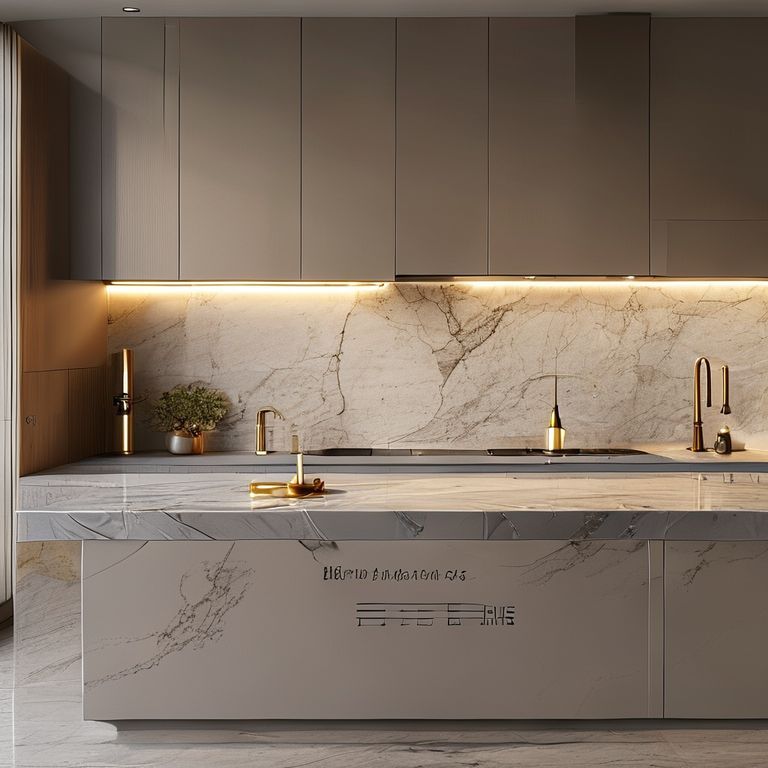
But aesthetics mean nothing if the surface cracks the moment you put down a heavy cast-iron skillet. This is where the physics of the 1.5cm slab comes into play. Is it enough to handle the daily rigors of a busy household? The short answer is yes, provided it is installed correctly. The 1.5cm thickness is remarkably resilient to impact. Because of the resin content, it has a degree of “flex” that natural stone lacks. While a 1.5cm piece of granite might snap under a specific point of pressure, quartz is much better at distributing that force.
Furthermore, we must consider the “Area of Use.” If you are designing a high-traffic kitchen where you expect to be slamming heavy pots or perhaps standing on the counters to reach high shelves (which we don’t recommend regardless of thickness!), you might feel a psychological comfort in a thicker slab. However, for 95% of standard residential activities—chopping vegetables, rolling dough, placing hot mugs (with a trivet, of course), and general meal prep—the 1.5cm slab is more than capable.
The shift toward 1.5cm is also a reflection of urban living. In modern apartments where space is at a premium, every millimeter counts. A thinner countertop can make a small kitchen feel significantly more spacious. It reduces the visual “weight” that can make a galley kitchen feel cramped. Designers are increasingly using 1.5cm quartz not just for the tops, but for the side panels in a “waterfall” edge design. In a waterfall configuration, the slim 1.5cm profile creates a sharp, geometric look that is breathtakingly modern, whereas a 3cm waterfall can sometimes look like a heavy block of stone dropped into the middle of the room.
However, the “is it enough” question isn’t just about the stone itself; it’s about the support system beneath it. A 1.5cm slab requires a flat, level, and sturdy cabinet base. In many professional installations, a sub-layer or a specific support frame is used to ensure that the pressure is evenly distributed. This is the “secret sauce” of the 1.5cm trend. When the foundation is solid, the thickness of the surface becomes less about structural necessity and more about personal stylistic choice.
As we move into Part 2, we will explore the practicalities of cost, the nuances of installation, and how the 1.5cm choice impacts your long-term home value. We’ll also look at the specific scenarios where you might actually want to go thicker, and how to make the final call for your specific lifestyle.
Continuing our deep dive into the 1.5cm quartz debate, we have to talk about the “M-word”: Money. In the world of home renovation, budget isn’t just a constraint; it’s a primary driver of creativity. One of the most attractive aspects of the 1.5cm quartz slab is the potential for cost savings, but perhaps not in the way you might think. While the raw material cost per square foot for a 1.5cm slab is generally lower than its 2.0cm or 3.0cm counterparts, the real savings often manifest in logistics and labor.
A 1.5cm slab is significantly lighter than a 3.0cm slab. This might seem like a minor detail, but it has a ripple effect throughout the entire renovation process. Lighter slabs are easier to transport, reducing the risk of breakage during transit. They require fewer people to carry and install, which can sometimes lower labor costs. Furthermore, the reduced weight puts significantly less stress on your kitchen cabinetry. If you are refurbishing an older home and keeping the original cabinets, a 3.0cm quartz or granite slab might actually be too heavy for the existing carcasses, requiring expensive structural reinforcement. A 1.5cm slab, however, sits comfortably on almost any standard cabinetry, making it the ideal choice for “refresh” projects where you aren’t replacing everything from the floor up.
But what about the “prestige” factor? There is a lingering sentiment that “thicker is more expensive,” and therefore, “thicker is better for resale value.” While this was true ten or fifteen years ago, the modern real estate market has shifted. Today’s buyers are looking for “turnkey” style and “Instagram-ready” aesthetics. A beautifully executed 1.5cm quartz countertop with a clean, mitered edge or a sleek, flat profile often reads as more “bespoke” and “designer” than a standard thick slab. It shows that the homeowner has an eye for contemporary trends rather than just picking the “heaviest” thing in the showroom. In that sense, 1.5cm is more than enough to maintain, or even boost, your home’s market appeal.
Let’s talk about “The Mitered Edge” trick. This is a crucial point for those who are still worried that 1.5cm looks “too thin.” If you love the look of a 5cm or even 10cm thick “mega-slab” but don’t want the weight or the cost, you can use 1.5cm quartz and have the edges mitered. This involves cutting the edges at a 45-degree angle and joining them to a vertical strip of the same stone. From the outside, the countertop looks like a massive, solid block of stone, but it’s actually a lightweight, hollow “box” made of 1.5cm quartz. This technique gives you the best of both worlds: the Herculean appearance of a thick slab with the practical benefits and lower material cost of the 1.5cm thickness.
Now, we must address the scenarios where 1.5cm might not be enough. It’s important to be realistic. If your kitchen design involves massive overhangs—for example, a breakfast bar that sticks out 12 inches or more without any support legs—a 1.5cm slab will require additional steel bracing underneath to prevent snapping if someone leans too hard on it. While a 3.0cm slab also needs support for large overhangs, it is naturally more rigid over short distances. If you are a fan of “undermount” sinks with very thin bridges of stone between the sink and the edge of the counter, the 1.5cm profile requires a very skilled fabricator to ensure those narrow points don’t become weak spots.
Furthermore, the edge profile options for 1.5cm are slightly more limited. You can’t really do a deep “Ogee” or a complex “Bullnose” on a 1.5cm slab because there simply isn’t enough vertical “meat” in the stone to carve those shapes. 1.5cm is essentially married to the “Eased” edge, the “Bevel,” or the “Mitered” edge. If your heart is set on a traditional, Victorian-style ornate edge, you will likely need to move up to a 3.0cm slab.
But for the vast majority of modern homeowners, these are small trade-offs. The reality is that quartz technology has advanced so much that 1.5cm is no longer the “budget” or “fragile” option. It is a legitimate architectural choice. It’s about the philosophy of “enoughness.” In an age of excess, there is something incredibly sophisticated about choosing exactly what is required and no more. A 1.5cm quartz countertop is a testament to the strength of modern engineering and the elegance of modern design.
When you’re standing in the showroom, don’t let a salesperson convince you that you need 3.0cm just because “that’s how it’s always been done.” Instead, run your hand over the 1.5cm samples. Look at how they catch the light. Imagine how they will look paired with a slim, high-end faucet and a seamless backsplash. Think about the thousands of dollars you might save on material and structural reinforcement—money that could be redirected into a better range, a designer refrigerator, or that wine cooler you’ve always wanted.
In conclusion, is 1.5cm thick quartz enough? It is more than enough. It is a durable, stylish, and intelligent choice for the contemporary home. It handles the heat of the kitchen, the weight of the chores, and the scrutiny of the most discerning guests. It proves that in the world of interior design, sometimes the most powerful statements are the ones that are made with the most refined and slender of profiles. Choose the 1.5cm quartz with confidence, knowing that you aren’t cutting corners—you’re just sharpening them.









