
The modern kitchen is no longer a mere utility room; it is the soul of the residence, a stage for culinary theater, and a sanctuary for family connection. In this space, every material choice resonates with the owner’s philosophy of life. Among the myriad options for surfacing, one specific specification has quietly ascended to the throne of modern design: the 15mm (1.5厚) quartz stone. It represents a rare “sweet spot” in material engineering—a thickness that provides the structural integrity of a mountain with the sleek, refined profile demanded by contemporary minimalism.
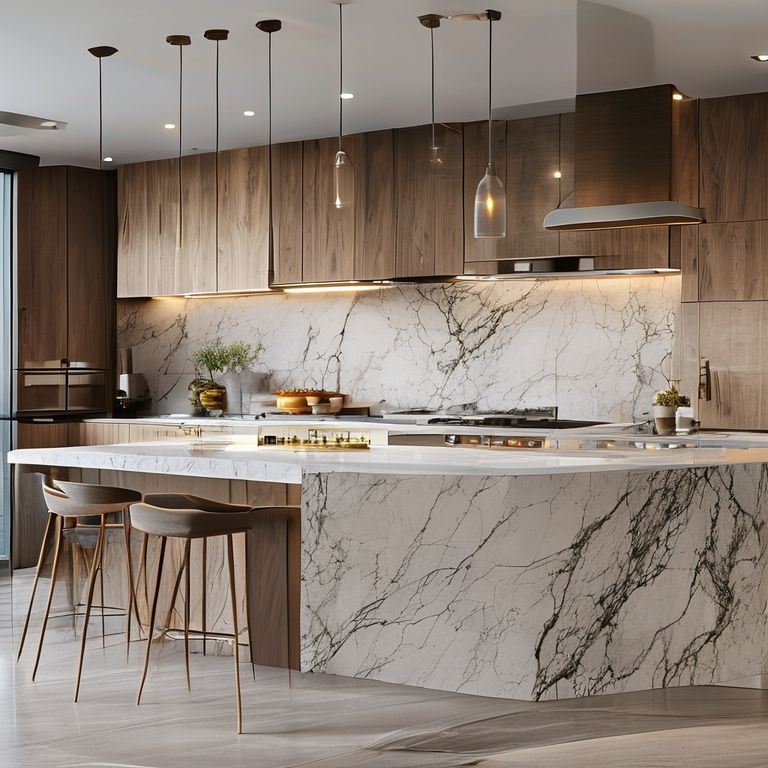
When we talk about quartz, we are talking about a triumph of human ingenuity over the unpredictability of nature. Natural marble is breathtaking but temperamental; it breathes, it stains, and it scars. Granite is rugged but often carries a visual weight that feels dated in a world trending toward “Quiet Luxury.” Enter the engineered 1.5cm quartz. By combining roughly 90-93% crushed natural quartz with high-performance polymer resins and pigments, manufacturers have created a surface that is practically non-porous and incredibly hard. But why specifically 15mm? Why has this measurement become the “Golden Mean” of the industry?
To understand the allure, one must first look at the evolution of cabinetry. The heavy, ornate woodwork of the early 2000s has given way to clean lines, handle-less doors, and floating silhouettes. A massive 30mm stone slab atop a slim, modern cabinet can often look disproportionate, like a heavyweight boxer trying to balance on a ballerina’s toes. The 1.5cm thickness offers a visual lightness that complements the “less is more” ethos. It allows the stone to look like a precise, intentional skin rather than a cumbersome block. This slimness does not imply fragility; on the contrary, the density of a high-quality 15mm quartz slab is such that it rivals and often surpasses the structural strength of thicker natural stones.
From a technical perspective, the “1.5厚” quartz is a marvel of the Mohs scale. With a hardness rating typically around 7, it laughs in the face of stainless steel knives and ceramic pots. In the high-pressure environment of a working kitchen, surfaces endure a relentless assault of acidic lemons, staining red wines, and high-temperature cookware. Because the 15mm quartz is vacuum-pressed during production, there are no microscopic voids for liquids to penetrate. This means the “1.5” isn’t just a measurement of depth; it’s a measurement of peace of mind. You aren’t just buying a countertop; you’re buying a surface that doesn’t demand you hover over it with a coaster and a specialized pH-balanced cleaner.
Furthermore, the manufacturing of 1.5cm quartz has reached a level of artistry that blurs the line between man-made and earth-born. The depth of color and the intricacy of the veining are no longer surface-level prints. In a premium 15mm slab, the “soul” of the stone runs through its entire thickness. This is particularly vital when it comes to edge profiling. Whether you opt for a classic eased edge, a shark-nose profile, or a mitered join that creates the illusion of a massive waterfall island, the 1.5cm thickness provides the perfect canvas. It is thin enough to be manipulated into complex shapes but substantial enough to hold a crisp, clean edge that defines the room’s geometry.
The weight factor is another unsung hero of the 15mm choice. Logistics and installation are often the “invisible” costs of home renovation. A 1.5cm slab is significantly easier to transport and maneuver through tight hallways and up high-rise elevators than its 3cm counterparts. This translates to a lower physical toll on installers and, frequently, a more precise fit. When a material is easier to handle, the craftsmanship of the final installation often improves. There is a certain confidence that comes with the 1.5cm slab—it feels robust yet agile, a perfect reflection of the fast-paced, high-standard lifestyle of the modern homeowner.
In the world of interior design, we often talk about the “tactile experience.” Run your hand across a 15mm quartz surface. It is cool to the touch, smooth, and possesses a subtle resonance that feels expensive. It doesn’t have the “clack” of thin porcelain or the dull thud of laminate. It feels like a solid, permanent fixture of the home. This thickness allows designers to play with the concept of continuity. Because it isn’t overly heavy, 1.5cm quartz is the ideal candidate for vertical applications—backsplashes that climb all the way to the ceiling, or integrated side panels that wrap a kitchen island in a seamless cocoon of stone. This creates a monolithic, architectural look that is the hallmark of high-end European design.
Transitioning from the technicalities of the kitchen into the broader reaches of the home, the 15mm quartz stone reveals its true identity: the ultimate chameleon of interior architecture. While the kitchen remains its primary kingdom, the “1.5厚” specification has found its way into bathrooms, living rooms, and even commercial spaces, proving that its thickness is not a limitation, but a gateway to creative freedom.
In the bathroom, the 1.5cm quartz slab is a game-changer for vanity tops. Traditional bathrooms often suffer from a clunky aesthetic, where the countertop feels disconnected from the cabinetry. The slim profile of a 15mm quartz top allows for a more integrated, furniture-like appearance. It pairs beautifully with under-mount sinks, creating a seamless transition from stone to porcelain that is as easy to clean as it is to look at. Moreover, the moisture-rich environment of a bathroom is where the non-porous nature of quartz truly shines. While natural stone might eventually succumb to water spots or mold in the crevices, the 15mm quartz remains pristine, resisting the humidity and chemicals found in soaps and cosmetics.
But why stop at horizontal surfaces? The design world is currently obsessed with the concept of “Material Continuity.” This is where the 15mm quartz becomes an artist’s tool. Because it is thinner and more manageable than traditional slabs, it is increasingly used as wall cladding. Imagine a living room feature wall, not made of wallpaper or paint, but of a single, continuous 1.5cm quartz slab with book-matched veining that mimics the grandeur of an ancient cave or a luxury hotel lobby. This is the power of the “1.5” thickness—it is light enough to be mounted vertically without the need for massive structural reinforcements, yet it carries the gravitas of solid stone.
As we look toward the future of sustainable and intelligent living, the 15mm quartz stone aligns perfectly with the shift toward efficiency. Every millimeter of thickness in a stone slab represents resources extracted, processed, and transported. By optimizing the thickness to 15mm, we are seeing a more conscious use of material without sacrificing the performance the end-user expects. It is a “leaner” luxury. It’s about having exactly what you need—no more, no less. This efficiency also extends to the home’s thermal mass. Quartz stone retains temperature beautifully; in the summer, it stays cool to the touch, and in a well-insulated home, it helps maintain a stable ambient temperature, contributing in a small but meaningful way to the home’s overall energy feel.
Then there is the psychological impact of the 15mm choice. We live in an era of “disposable” products, where things are designed to be replaced every few years. The “1.5厚” quartz stands in stark opposition to this trend. It is a “once-and-done” investment. When you choose a high-quality 15mm quartz, you are making a commitment to the next twenty years of your life. It is a material that will see children grow up, survive countless dinner parties, and remain as vibrant on the day you sell the house as it was on the day it was installed. There is a profound sense of satisfaction in choosing a material that doesn’t age, doesn’t fade, and doesn’t demand your constant attention.
The color palettes available in 1.5cm quartz are another reason for its dominance. Because it is an engineered product, the consistency of color is unparalleled. If you fall in love with a specific shade of “Calacatta Gold” or a “Concrete Grey,” you can be certain that the slab that arrives at your home will match the sample you saw in the showroom. This predictability is a luxury in itself. It allows homeowners and designers to plan their color schemes with surgical precision. The 15mm thickness acts as the perfect medium for these pigments, offering a depth of field that makes the stone look three-dimensional.
For the budget-conscious yet style-driven renovator, the 15mm quartz offers the best ROI (Return on Investment). It provides the high-end look of a designer home at a price point that is often more accessible than the 20mm or 30mm premium slabs. It allows the budget to be allocated elsewhere—perhaps into higher-end appliances or custom lighting—while still ensuring the most visible surface in the home looks like a million dollars. It’s the “smart luxury” move.
In conclusion, the 1.5mm (1.5厚) quartz stone is more than just a piece of construction material. It is a reflection of a modern aesthetic that values precision, durability, and understated elegance. It is the bridge between the raw power of nature and the refined needs of contemporary living. Whether it’s the centerpiece of a bustling kitchen, a sleek bathroom vanity, or a dramatic wall feature, this specific thickness offers a harmony of form and function that is hard to beat. It tells a story of a home built on quality, a space designed for living, and a choice made with both the heart and the head. When you touch a 15mm quartz surface, you aren’t just touching stone; you’re touching the future of interior design. It is substantial, it is beautiful, and it is, quite simply, the perfect thickness for the modern world.









