
The kitchen has long ceased to be a mere utility room. In the modern architectural lexicon, it is the heartbeat of the home, a theater of culinary art, and perhaps the most significant investment a homeowner makes in their property’s value. When you stand in a high-end showroom, your fingers grazing the cool, polished surface of a slab, you aren’t just looking at a workspace; you’re looking at a statement of intent. However, beneath the surface of colors, veining, and shimmer lies a technical debate that often catches renovators off guard: the choice between 1.5cm (15mm) and 2.0cm (20mm) quartz.

At first glance, five millimeters seems negligible—about the thickness of three stacked pennies. Yet, in the world of stone fabrication and interior aesthetics, that half-centimeter represents a crossroads of budget, structural integrity, and visual gravitas. The price gap between 1.5cm and 2.0cm quartz isn’t just about “more stone”; it’s about a ripple effect that touches everything from the way your cabinets are built to the way light hits the edge of your island.
To understand the price delta, we first have to look at the raw material. Quartz is an engineered stone, a sophisticated blend of crushed natural quartz crystals and polymer resins. Manufacturing a 2.0cm slab requires significantly more raw material—nearly 33% more mass—than its 1.5cm counterpart. This isn’t just a matter of “filling the mold” higher. Increasing the thickness requires more intensive vibration and compression during the Bretonstone process (the industry standard for high-quality quartz) to ensure there are no air pockets or structural weaknesses in the denser slab. From the factory floor, the 2.0cm slab already carries a premium price tag simply because it consumes more of the earth’s minerals and more of the manufacturer’s energy.
But the raw material is only the prologue. Shipping and logistics play a massive role in why you’ll see a price hike at the retail level. Stone is heavy. A standard 1.5cm slab is already a formidable piece of freight, but moving to 2.0cm increases the weight exponentially across a full crate or container. This affects shipping costs from the manufacturing hub to the local distributor, and eventually, the cost of the specialized A-frame trucks required to deliver the material to your doorstep. Every hand that touches a 2.0cm slab—from the crane operator at the port to the two installers carrying it into your kitchen—is dealing with a more demanding, more dangerous, and more labor-intensive product.
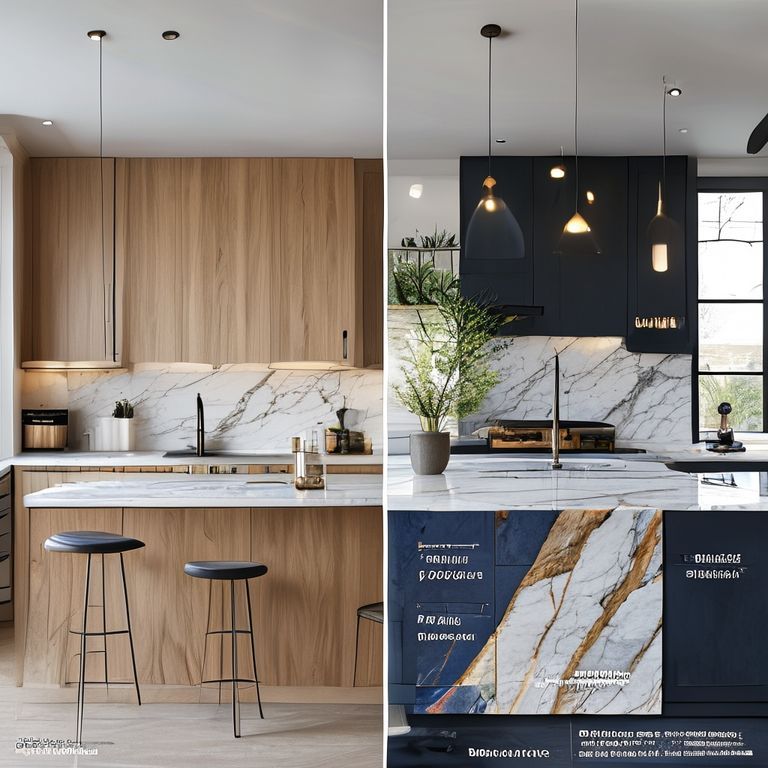
Then, there is the question of visual “heft.” In the world of high-end design, we often talk about “visual weight.” A 1.5cm countertop has a sleek, contemporary, almost minimalist profile. It’s the darling of the European “ultra-slim” trend, where cabinets look like they are topped with a delicate sheet of silk. However, to many North American and traditional homeowners, 1.5cm can feel “thin” or “budget.” The 2.0cm slab is the industry standard for a reason: it feels substantial. It feels like it could survive a century of heavy cast-iron pans and family gatherings. That feeling of permanence and luxury is a commodity in itself, and the market prices it accordingly.
When you ask a fabricator for a quote, the “price difference” you see isn’t a fixed percentage. It’s a reflection of the “Yield and Risk” factor. 2.0cm quartz is generally more forgiving during the cutting and polishing phase. While it is heavier to move, it is less prone to “snapping” during the delicate process of cutting out sink holes or cooktop notches compared to a thin 1.5cm slab that isn’t properly supported. Paradoxically, while the material for 2.0cm is more expensive, the labor for 1.5cm can sometimes spike if the homeowner demands complex edge profiles that require the thin stone to be “built up” or mitered to look thicker—a process we will explore in the second part of this deep dive.
Ultimately, the 1.5cm vs. 2.0cm debate is the first hurdle in your renovation journey. It sets the tone for your budget and your kitchen’s personality. Are you chasing the lean, avant-garde look of a Milanese loft, or are you looking for the solid, unshakable presence of a classic estate? The price difference is the entry fee for that choice. As we move forward, we will peel back the layers on the hidden costs of installation, the “mitered edge” illusion, and which thickness actually wins the long-term ROI battle.
Continuing our exploration into the financial and structural anatomy of quartz, we must look past the slab itself and into the workshop of the fabricator. This is where the price gap between 1.5cm and 2.0cm quartz truly reveals its complexity. One of the most common ways homeowners try to “cheat” the system is by purchasing a 1.5cm slab and asking for a “mitered drop edge.” This involves cutting the edges of the stone at a 45-degree angle and joining them to create the illusion of a massive, 4cm or 6cm thick block of stone.
Here is the irony: while the 1.5cm material is cheaper to buy, the labor involved in creating a perfect mitered edge is significantly higher. It requires an artisan’s touch to ensure the pattern (the veining) flows seamlessly over the edge. If you choose a 2.0cm slab, you often don’t feel the need to “bulk it up.” A simple eased edge on a 2.0cm stone looks professional and “finished” right out of the gate. Therefore, when calculating the price difference, you must ask yourself: am I paying for the stone, or am I paying for the craftsman’s time? Often, the total cost of a 1.5cm slab with complex edging ends up being nearly identical to a 2.0cm slab with a standard edge.
Structural support is another hidden line item in the budget. If you opt for the 2.0cm thickness, you are adding hundreds of pounds of additional weight to your cabinetry. Standard, high-quality cabinets can usually handle this without an issue, but if you are working with older “refaced” cabinets or DIY flat-packs, you might need to reinforce the carcasses. On the flip side, 1.5cm quartz, despite being lighter, is more brittle. It lacks the flexural strength of the thicker slab. If your floor isn’t perfectly level or if your cabinets have a slight dip, a 1.5cm slab is more likely to develop stress cracks over time near the sink or corners. The 2.0cm slab offers a “buffer” of strength that acts as insurance against the imperfections of your home’s architecture.
We also have to discuss the “Overhang Factor.” If your kitchen design includes a breakfast bar or an island where people will tuck their stools, the thickness of the stone dictates how much “unsupported” reach you can have. With 1.5cm quartz, you almost always need to install unsightly metal brackets or a plywood sub-top to prevent the stone from snapping if someone leans too heavily on the edge. With 2.0cm quartz, you can often achieve a 10-to-12-inch overhang without additional bracing (depending on the specific brand’s guidelines). The cost of those hidden steel supports and the labor to install them often erases any savings you found by choosing the thinner 1.5cm material.
From a resale perspective, the “perceived value” of 2.0cm quartz is disproportionately higher than its actual cost increase. When a potential buyer walks into a kitchen, they don’t bring a caliper to measure the stone. However, they do register the “thunk” of a coffee mug hitting the counter and the visual depth of the edge. In many premium markets, 2.0cm is considered the “baseline” for a luxury renovation. Choosing 1.5cm to save $500 or $1,000 on a $50,000 kitchen renovation can sometimes be a case of being “penny wise and pound foolish.” The 2.0cm thickness signals quality and durability to future buyers, often returning its initial cost several times over in home equity.
So, where does that leave you, the discerning homeowner? The 1.5cm slab is a fantastic tool for specific applications. It’s perfect for bathroom vanities where weight is a concern, for vertical wall cladding (like a full-height backsplash), or for that ultra-modern, slim-line aesthetic in a low-traffic kitchen. It’s a design choice, not just a budget choice.
However, if your kitchen is the “command center” of a busy household—if it’s where homework is done, where heavy groceries are dropped, and where the Sunday roast is prepared—the 2.0cm quartz is almost always the superior investment. The price gap, when amortized over the twenty or thirty years you will use that kitchen, becomes negligible. You aren’t just paying for 5mm of extra stone; you are paying for the peace of mind that your countertop can handle the weight of your life.
In the end, the “best” price is the one that prevents you from having to do the job twice. By understanding that the gap between 1.5cm and 2.0cm involves raw material, shipping, fabrication labor, and structural support, you can make a decision that isn’t based on a sticker price, but on the long-term harmony of your home. Choose the 1.5cm for its sleek, modern poetry; choose the 2.0cm for its timeless, sturdy prose. Both have their place in the sun, provided you know exactly what you’re paying for.









