
The kitchen is the undisputed heart of the home, a sanctuary of sizzle and scent where memories are baked into the very walls. But let’s be honest: it’s also a battlefield. Between the morning espresso splashes, the midday turmeric spills, and the evening’s red wine rings, your countertops endure a marathon of potential disasters every single day. When you’re standing in a showroom, surrounded by shimmering slabs of stone, the choice often boils down to a technicality that seems minor but changes everything: thickness. Specifically, the battle between the 1.5cm and the 2.0cm quartz slab.

The question most homeowners whisper to themselves while eyeing a beautiful white calacatta pattern is simple: “Which one is actually easier to wipe clean?” It’s a question of “wipe-ability.” You want a surface that looks like a million bucks but requires about five seconds of effort to maintain. To understand which thickness wins the “easy-to-clean” trophy, we have to look past the surface and into the soul of the stone itself.
Quartz is a man-made marvel, a composite of crushed natural quartz held together by polymer resins. In the industry, 1.5cm and 2.0cm are the standard bearers. On the surface, you might think thickness has nothing to do with how a sponge glides across the top. After all, if the polish is the same, shouldn’t the cleaning experience be identical? Not quite. The thickness of a slab is often a silent indicator of its structural integrity and the manufacturing process it underwent.
When we talk about 1.5cm quartz, we are looking at a lean, modern, and often more affordable option. It’s the sleek choice for those who want a minimalist aesthetic or are perhaps working with a tighter budget. However, because it is thinner, it relies heavily on the substrate—the cabinets and the plywood underlay—to provide its strength. From a cleaning perspective, the “wiping” issue often arises not from the resin itself, but from the surface’s reaction to stress. Thinner slabs are slightly more prone to vibration and micro-flexing. Over years of heavy use, these microscopic movements can lead to tiny, nearly invisible fissures. Once a fissure exists, dirt, oils, and bacteria have a new home. You’ll find yourself scrubbing harder at a spot that used to come clean with a gentle swipe.
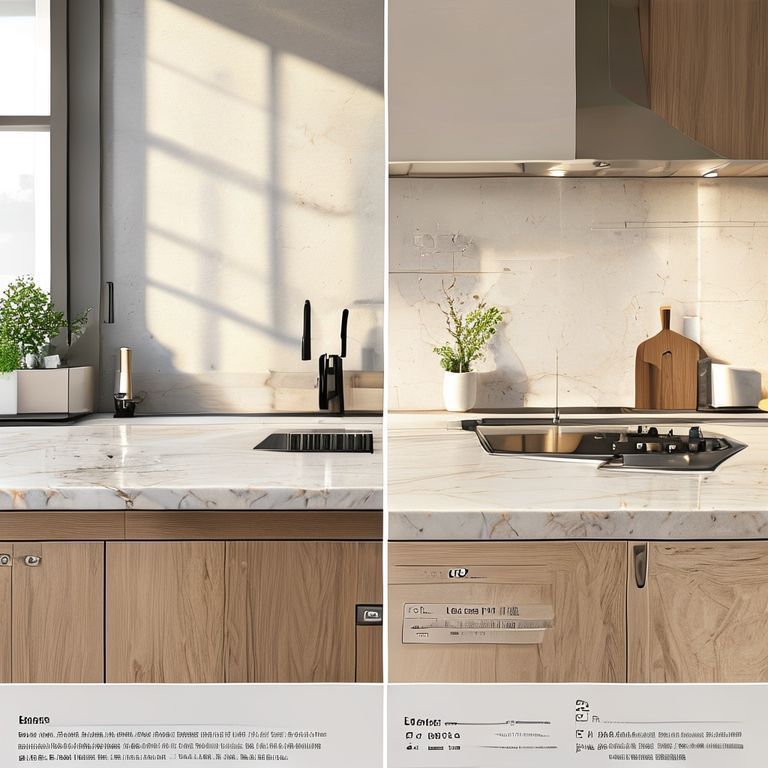
Now, enter the 2.0cm heavyweight. This is the gold standard for high-end residential projects, and for good reason. The 2.0cm slab isn’t just “thicker”; it often represents a different tier of manufacturing density. Because the material is more substantial, it can be polished to a higher, more consistent luster during the fabrication process. When you wipe a 2.0cm surface, there is a certain “gravitas” to the experience. The stone feels colder, denser, and more impervious.
One of the hidden secrets of “easy cleaning” lies in the vacuum-vibration-compression process used to create quartz. High-quality 2.0cm slabs are often subjected to more intense pressure, resulting in a lower porosity. Porosity is the enemy of the clean kitchen. If a stone is even slightly porous, that spilled balsamic vinegar isn’t just sitting on top; it’s trying to move in. Because 2.0cm slabs are inherently more rigid, they maintain their factory-sealed finish longer. There’s less “give” when you lean on the counter to scrub a stubborn spot, meaning the pressure of your hand is more effectively translated into cleaning power.
Furthermore, let’s talk about the edges. The way a countertop is cleaned often depends on the “flow” of the wipe. With 1.5cm slabs, your edge profiles are limited. You might often see a “laminated edge” where a second strip of stone is glued to the front to make it look thicker. This creates a tiny, almost imperceptible seam. Over time, that seam can become a magnet for grime. Every time you wipe the counter, a tiny bit of residue gets caught in that transition. With a 2.0cm slab, you have enough “meat” in the stone to create beautiful, seamless edges—bullnose, ogee, or beveled—without needing to glue on extra pieces. This means your sponge can travel from the top of the counter, over the edge, and down the front in one fluid, hygienic motion. No seams, no traps, no headache.
So, if we are purely talking about the physical act of cleaning, the 2.0cm quartz offers a more reliable, smoother, and “trap-free” environment. It provides a sense of security that allows you to cook with abandon, knowing that the cleanup won’t be a secondary chore of digging gunk out of laminations or worrying about micro-cracks. But the journey of the 2.0cm slab doesn’t end with just a smooth surface; it extends into the very longevity of the kitchen’s “new” feeling, which we will explore in the next segment.
As we dive deeper into the daily reality of kitchen maintenance, we have to address the “psychology of the wipe.” When you have a 1.5cm countertop, there is a subconscious hesitation. You know it’s a bit more delicate. You’re careful about where you place the heavy cast-iron skillet, and you’re cautious about how much pressure you apply when scrubbing a dried-on honey spill. This hesitation actually makes cleaning more of a chore. Contrast this with the 2.0cm quartz experience. It’s the “SUV” of countertops—rugged, dependable, and built to handle the bumps. When you aren’t afraid of your countertop, you tend to clean it more effectively.
Let’s get into the nitty-gritty of stains. We’ve all been there: the “ring of doom” left by a coffee mug or a leaking bottle of olive oil. Quartz is marketed as stain-resistant, but “resistant” does not mean “proof.” The quality of the resin and the density of the quartz particles are what determine how long a liquid can sit before it leaves a shadow. Because 2.0cm slabs are the premium choice, manufacturers often reserve their best resin formulas and highest quartz-to-resin ratios for these thicknesses. This higher density means that the surface tension is superior. When you drop a bead of water on a high-quality 2.0cm slab, it beads up like rain on a freshly waxed car. This surface tension is the secret weapon for anyone who hates cleaning. It means the mess stays “up,” making it incredibly easy to whisk away with a microfiber cloth.
On the other hand, 1.5cm slabs, being the more budget-friendly alternative, sometimes come from production lines where the compression isn’t quite as extreme. While still excellent compared to natural marble, they may lack that “impenetrable” feel. If you’ve ever felt like your countertop “absorbed” a stain even though you wiped it within ten minutes, you were likely dealing with a slab that had higher porosity. In the 1.5 vs 2.0 showdown, the 2.0cm slab almost always wins on the density front, making the “wipe-down” feel more like a victory than a struggle.
Then there is the issue of heat. While we are told never to put a hot pan directly on quartz, accidents happen. The resin in quartz can be scorched or “yellowed” by extreme heat. A 1.5cm slab has less mass to dissipate that heat. If a hot pot touches it, the thermal shock is concentrated in a very thin area, which can lead to surface damage that ruins the smooth finish. Once the finish is compromised and becomes rough or pitted, “wiping” becomes a nightmare. Dust and grease cling to damaged areas like magnets. The 2.0cm slab, with its greater thermal mass, is slightly more forgiving. It’s not invincible, but it maintains its polished integrity much better over years of “oops” moments. A polished surface is a cleanable surface; a damaged surface is a constant source of frustration.
We also have to consider the long-term “dullness” factor. Many people complain that after five years, their quartz doesn’t “pop” anymore. This is usually due to microscopic scratches from abrasive cleaners or the friction of sliding pots. 2.0cm slabs tend to hold their factory polish longer because they are more dimensionally stable. They don’t flex or bow under the weight of your kitchen appliances (like that heavy stand mixer), which keeps the surface perfectly flat. A perfectly flat surface reflects light evenly and, more importantly, allows a squeegee or a cloth to make 100% contact with the stone. On a 1.5cm slab that might have developed subtle, microscopic dips over time, your cloth might skip over certain spots, leaving behind a film of cleaning solution or grease.
Is the 1.5cm slab “bad”? Absolutely not. It is a fantastic material that beats out laminate and cheap tile any day of the week. If you are a light cook, or if you are staging a home for sale, 1.5cm is a smart, stylish choice. But if you are the kind of person who lives in their kitchen—the kind who makes flour-dusted pasta from scratch, who hosts big family dinners, and who wants to be able to spray, wipe, and walk away—the 2.0cm quartz is the undisputed champion.
In the end, the “best to wipe” is the 2.0cm quartz. It’s not just about the extra 0.5cm of stone; it’s about the peace of mind that comes with a denser, more rigid, and more seamlessly finished product. It’s the difference between “cleaning the kitchen” and “maintaining a masterpiece.” When you choose 2.0cm, you aren’t just buying thickness; you’re buying a lifetime of one-swipe cleanups. You’re investing in those extra ten minutes of relaxation after dinner, rather than ten minutes spent hovering over a stubborn spot with a specialized cleaner. For the homeowner who values their time as much as their aesthetic, the 2.0cm slab is the only way to go. It’s thick, it’s tough, and it wipes clean like a dream.









