
The kitchen is no longer just a place where meals are prepared; it has evolved into the emotional heart of the home. It’s the social hub where morning coffees turn into deep conversations, where homework is tackled on the island, and where the “good” wine is poured for friends. When you’re standing in the middle of a renovation or a new build, every decision feels monumental, but few carry as much weight—literally and figuratively—as your choice of countertop. Among the sea of marble, granite, and butcher block, quartz has emerged as the undisputed king of the modern home. But once you’ve settled on the color and the vein pattern, you’re hit with a question that catches many homeowners off guard: “Do you want 1.5cm or 2.0cm?”

At first glance, a half-centimeter difference seems negligible. In the grand scheme of a house spanning thousands of square feet, what could five millimeters possibly do? As it turns out, quite a lot. The choice between 1.5cm (roughly 5/8 inch) and 2.0cm (3/4 inch) quartz is the intersection where engineering meets artistry. It dictates the profile of your kitchen, the structural requirements of your cabinetry, and the overall “heft” of your living space.
Let’s start with the 1.5cm slab—the sleek, minimalist darling of contemporary design. For a long time, 1.5cm was the standard in many markets, particularly in regions where “built-up” edges were the norm. When you see a countertop that looks incredibly thick—perhaps three or four inches—it’s often a 1.5cm slab with a mitered edge glued onto the front. This creates an illusion of a massive, heavy block of stone without the actual weight or cost of a solid four-inch piece.
The 1.5cm quartz slab appeals to the pragmatist. It’s lighter, making it easier for installers to maneuver through tight hallways or up narrow staircases. Because there is less raw material, it often comes with a more palatable price tag, which can be a godsend when you’re trying to stretch a budget across high-end appliances and custom tiling. In a modern, European-style kitchen characterized by flat-panel cabinets and “less is more” philosophy, the 1.5cm thickness offers a low-profile elegance that doesn’t overwhelm the space. It feels nimble and intentional.
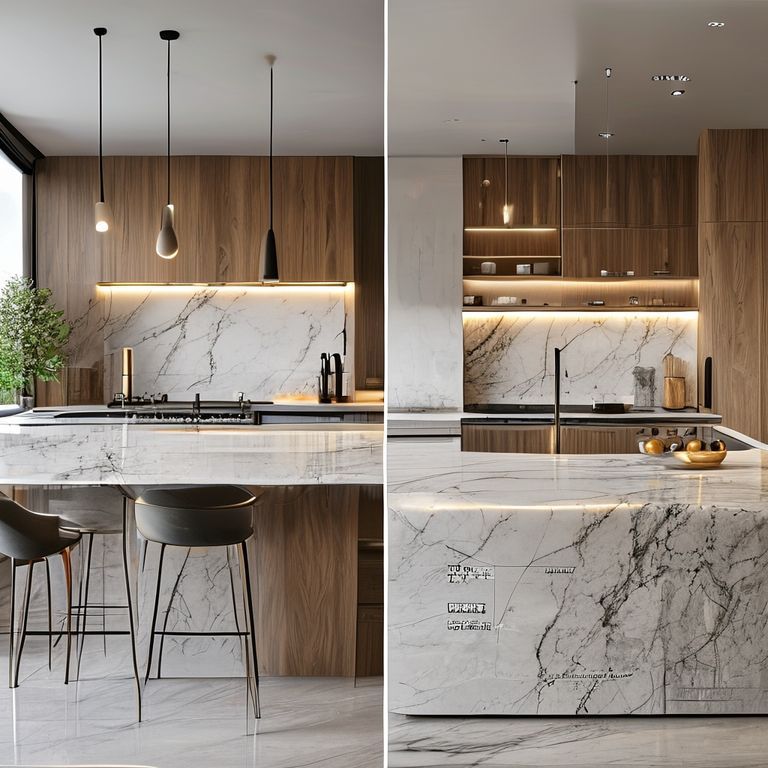
However, there is a catch. Because 1.5cm slabs are thinner, they lack the inherent structural rigidity of their 2.0cm counterparts. If you are planning a massive island with a significant overhang—the kind where you envision three or four barstools tucked underneath for breakfast—a 1.5cm slab generally cannot support itself. It requires a substrate, usually a layer of plywood, to sit on. This plywood provides the strength to prevent cracking under the pressure of someone leaning on the edge or a heavy grocery haul being dropped in the center. While the plywood is hidden by the decorative edge of the stone, it’s an extra step in the installation process and a factor to consider in the total “sandwich” thickness of your counters.
Then, we have the 2.0cm slab. In the world of premium interior design, 2.0cm is often viewed as the “gold standard.” It is the point where the material begins to feel like a permanent architectural element rather than just a surface finish. There is a psychological comfort in the 2.0cm slab. It feels substantial. When you rap your knuckles against it, the sound is deep and solid.
The beauty of the 2.0cm quartz lies in its autonomy. Unlike the 1.5cm version, a 2.0cm slab is generally strong enough to be installed directly onto your cabinets without a full plywood underlay. This “solid-set” installation is cleaner and more straightforward. Furthermore, the 2.0cm thickness is the threshold for the “natural” look. Many homeowners choose 2.0cm because they want to show off the raw thickness of the stone on the edges without adding a mitered apron. It provides a look that is both classic and sturdy, reminiscent of the traditional stone blocks used in old-world European bakeries.
But the choice isn’t just about strength; it’s about the visual language of your home. Imagine a high-end luxury hotel. You rarely see thin, spindly surfaces. Everything is thick, grounded, and tactile. That is the 2.0cm experience. It carries an aura of permanence. If your kitchen features heavy, traditional cabinetry with intricate molding and dark wood stains, a 1.5cm countertop might look a bit “thin” or out of proportion. The 2.0cm slab provides the visual weight necessary to balance those bolder architectural elements.
As we dive deeper into the technicalities, it’s also worth noting how these thicknesses interact with the material’s composition. Quartz is a man-made miracle—a combination of crushed natural stone and polymer resins. The density of a 2.0cm slab allows for a slightly better distribution of these resins during the vibratory-compression vacuum process. This doesn’t mean 1.5cm is “weak,” but rather that 2.0cm is “over-engineered” for the typical demands of a domestic kitchen. It’s the difference between a high-quality sedan and a heavy-duty SUV; both will get you to the grocery store, but one is built to handle a lot more stress without breaking a sweat.
Continuing our journey into the heart of the stone, we must address the practicalities of the fabrication shop. This is where the magic—and the dust—happens. When you select a 2.0cm slab, you are opening up a much wider world of edge profiles. The edge is the “finishing touch” that defines the style of your countertop. With a 1.5cm slab, you are somewhat limited unless you opt for a mitered edge. If you try to do a complex Ogee or a deep Bullnose on a 1.5cm surface, the result can look a bit “stinted” because there simply isn’t enough vertical real estate to execute the curve gracefully.
With 2.0cm, however, the fabricator has enough room to play. You can achieve a beautiful “Eased” edge that looks thick and modern, or a “Bevel” that catches the light and adds a geometric sophistication to the room. For those who want the “Farmhouse” or “Transitional” look, the 2.0cm thickness allows for a “Half-Bullnose” that feels soft to the touch and incredibly durable against the inevitable chips and dings of a busy family life. The extra 5mm provides a “buffer zone.” In a high-traffic area, that extra thickness translates to better impact resistance. If a heavy cast-iron skillet slips from your hand and hits the edge of a 2.0cm countertop, the stone is much more likely to absorb the energy of the impact than its 1.5cm sibling.
Let’s talk about the “Overhang Factor.” The kitchen island has become the new dining table. We want deep overhangs where guests can sit comfortably without their knees hitting the cabinets. If you are dreaming of a 12-inch or 15-inch overhang, 2.0cm is almost always the smarter path. While even 2.0cm quartz requires metal brackets or “corbels” for very deep spans, the inherent flexural strength of the 2.0cm material is significantly higher. Using 1.5cm for a long overhang is a risky game of physics; without an extensive (and often unsightly) support system, you’re looking at a much higher risk of stress fractures over time.
Cost, of course, is the elephant in the room. You might expect 2.0cm to be significantly more expensive than 1.5cm. In terms of raw material cost, yes, it is. You’re paying for more quartz, more resin, and more shipping weight. However, the “total installed cost” tells a more nuanced story. Because 1.5cm often requires a plywood substrate and more labor-intensive “mitered” edging to make it look substantial, the labor costs can sometimes close the gap between the two. In some markets, fabricators actually prefer working with 2.0cm because it’s a “one and done” installation—no plywood, no complex gluing of edge strips. When you’re looking at your quotes, don’t just look at the price per square foot of the stone; look at the labor and the support structures required for each.
There is also the matter of resale value. We live in an era of “Instagrammable” homes. Potential buyers have been conditioned by HGTV and interior design magazines to look for “solid” surfaces. When a prospective buyer walks into a kitchen and sees the thick, meaty profile of a 2.0cm or 3.0cm countertop, they subconsciously register “luxury” and “quality.” A 1.5cm countertop, while perfectly functional and often very stylish, can sometimes be perceived as a “builder-grade” shortcut if not executed with a high-end mitered edge. If you are renovating with an eye toward selling in the next five years, the 2.0cm slab is a safer bet for maximizing your return on investment.
But what if you love the thin look? There is a growing trend in ultra-modern design—think high-end Italian or German kitchen brands like Boffi or Bulthaup—that celebrates the “razor-thin” countertop. In these hyper-minimalist spaces, a 1.5cm (or even 1.2cm) slab is used specifically for its lack of bulk. It’s paired with handle-less cabinets and hidden appliances to create a look that is more “art gallery” than “homestead.” If this is your aesthetic, 1.5cm isn’t a compromise; it’s a stylistic triumph. It allows the countertop to disappear into the design, letting the cabinetry or the backsplash take center stage.
So, how do you choose? It comes down to a few “vibe” checks. Ask yourself: What is the scale of my room? A massive, open-concept kitchen with vaulted ceilings can easily swallow up a 1.5cm countertop, making it look like an afterthought. In that scenario, 2.0cm (or even the heavier 3.0cm) provides the necessary visual grounding. Conversely, in a tiny city apartment or a compact galley kitchen, 2.0cm might feel too “heavy” and bulky, making the space feel smaller than it actually is.
Consider your lifestyle, too. Are you a “gentle” cook who keeps things pristine, or is your kitchen a combat zone of heavy pots, sourdough kneading, and kids’ science projects? The 2.0cm slab offers that extra peace of mind for the high-impact household. It’s the “buy it once, buy it right” philosophy.
Ultimately, the difference between 1.5 and 2.0 quartz isn’t just about a measurement on a ruler. It’s about how you want your home to feel when you run your hand across the surface in the morning. It’s about the silhouette of your kitchen against the afternoon sun. Whether you choose the agile, modern 1.5cm or the commanding, classic 2.0cm, you are choosing the stage upon which your life will happen. Quartz is a material built to last decades; take the time to feel the slabs, talk to your fabricator about the edge profiles, and choose the thickness that carries the weight of your dreams. Your kitchen deserves nothing less than a foundation that feels as solid as your life within it.









