
When you step into a high-end showroom, the air smells faintly of freshly cut stone and ambition. Your eyes wander over the polished surfaces, the intricate veining, and the shimmering flecks of quartz that promise to turn your kitchen into a sanctuary. But then, the salesperson drops a technicality that stalls your momentum: “Do you want the 2cm or the 1.5cm slab?” On paper, five millimeters seems like a triviality—the thickness of a few credit cards stacked together. In reality, that half-centimeter is the difference between a kitchen that merely looks good and a kitchen that performs like a champion for the next twenty years.
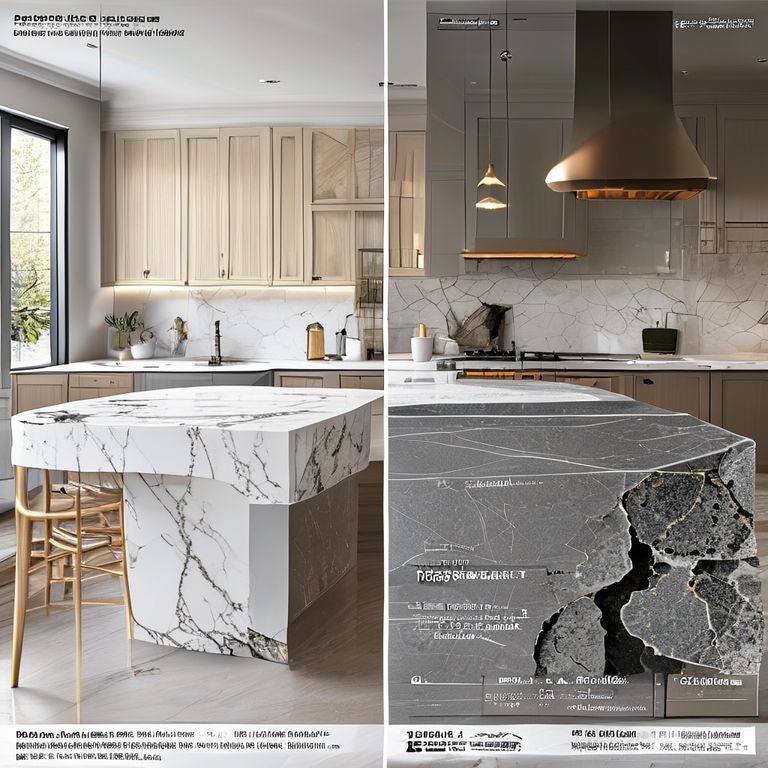
The debate between 2cm and 1.5cm quartz isn’t just about aesthetics; it’s about the physics of daily life. Think about your kitchen. It isn’t a museum; it’s a high-traffic workshop. It’s where heavy cast-iron pans are slid across surfaces, where groceries are dropped in a hurry, and where the occasional lean against the counter happens during a long conversation. This is where the structural “soul” of the stone comes into play. Quartz is an engineered marvel—roughly 90-93% crushed natural quartz bound with polymer resins—but even a superhero material has its limits when it’s thinned out.
Let’s talk about visual presence first. The 2cm thickness (roughly 3/4 of an inch) is the gold standard in many luxury markets, particularly across North America and premium European designs. It carries a certain “heft” that speaks to permanence. When you look at a 2cm edge, there is a perceived value that feels substantial. It doesn’t need tricks or extra fabrication to look like a solid piece of stone. If you’re going for a classic, timeless aesthetic where the countertop looks like it was carved out of a mountain, 2cm is your baseline. It offers enough “meat” for a variety of edge profiles—beveled, bullnose, or ogee—without the need for laminating an extra strip of stone onto the front.
In contrast, the 1.5cm slab is the sleek, modern cousin. It’s thinner, lighter, and often associated with the minimalist “Euro-style” cabinetry that dominated the early 2010s. For a while, the 1.5cm (and even 1.2cm) slabs were touted as the future of sustainable, lightweight design. However, there’s a catch. Because 1.5cm stone lacks the inherent rigidity of its thicker counterpart, it often requires a plywood sub-top for support. You can’t simply lay 1.5cm quartz over your cabinet carcasses and call it a day; the risk of cracking under the weight of a heavy appliance or a person sitting on the counter is significantly higher. By the time you add the plywood and the labor to hide that plywood with a mitered edge, the “thinner” look often becomes a more complex engineering project.

Strength is where the 2cm slab truly pulls ahead. Imagine the “overhang” on your kitchen island—that beautiful space where you tuck in your barstools. If you’re using 2cm quartz, you can typically have a 10 to 12-inch overhang without needing additional steel supports or bulky corbels. It is structurally sound enough to support its own weight over that distance. With 1.5cm, that same overhang is a liability. It’s prone to “flexing,” and in the world of stone, flex leads to fractures. If you’ve ever seen a hairline crack radiating from a sink cutout or a cooktop corner, there’s a high chance the stone was either too thin for the span or lacked the proper structural backing.
Then there’s the psychological element of the “thud.” There is a specific acoustic quality to 2cm quartz. When you set a coffee mug down, the sound is deep and muffled. On a 1.5cm surface, especially one poorly supported, the sound can be “tinny” or hollow. It’s a subtle sensory detail, but for anyone who values the “feel” of a luxury home, the density of the 2cm slab provides a sense of security that 1.5cm struggles to replicate.
Furthermore, the manufacturing process for these two thicknesses often dictates their quality. 2cm slabs are the “sweet spot” for most industrial vacuum-vibration presses. They allow for a consistent distribution of resin and pressure throughout the slab. While 1.5cm slabs are certainly high-quality, they are often produced for specific price-sensitive markets or for vertical applications like wall cladding and backsplashes where weight is the primary enemy. When you bring that thinner material down to the horizontal plane—the workhorse plane—you are essentially asking it to do a job it wasn’t originally optimized for.
Continuing our deep dive, we have to look at the “hidden” economics of your renovation. Many homeowners gravitate toward 1.5cm quartz because the raw slab price is lower. On the surface, this makes sense: less material equals less money. But this is where the “soft” part of the article becomes a hard lesson in logistics. Quartz is heavy. A 2cm slab weighs approximately 10 to 12 pounds per square foot, while a 1.5cm slab is noticeably lighter. You’d think the lighter slab would save you money on installation, but the opposite is often true.
Because 1.5cm stone is more fragile during transport and fabrication, the risk of breakage is higher. Fabricators have to handle it with extreme care, often reinforcing the sink cutouts with fiberglass rods or extra bracing just to get it from the shop to your house in one piece. Once it arrives, the labor-intensive process of creating a “mitered edge” begins. To make a 1.5cm countertop look thick and premium, fabricators cut the edges at a 45-degree angle and glue them together to create a hollow “box” look. This requires a master craftsman. If the miter isn’t perfect, you’ll see a dark line or a chipped seam right at the eye level. When you add up the cost of the extra labor for mitering and the necessary plywood sub-tops, the “cheaper” 1.5cm slab often ends up costing nearly as much—or more—than the 2cm slab.
The 2cm slab, however, is the fabricator’s best friend. It’s sturdy enough to be handled with confidence. It doesn’t require a plywood sub-top in most standard installations, which means you have more vertical space in your drawers and a cleaner look under the cabinet lip. The edges can be polished directly on the stone, resulting in a monolithic, seamless appearance that 1.5cm can only mimic through glue and precision. If you’re looking for a waterfall edge—where the quartz drops down the side of the island to the floor—2cm provides a much more robust “joint” that can withstand the occasional kick from a shoe or a vacuum cleaner.
We should also consider the “re-sale” factor. If you’re designing your “forever home,” you choose what makes you happy. But if you’re looking at your kitchen as an investment, the 2cm thickness is the industry standard for “quality.” Potential buyers, even if they aren’t stone experts, can feel the difference. They see the thick, solid edges and subconsciously associate them with a higher-end build. 1.5cm can sometimes look “builder-grade” if it isn’t executed with expensive mitered edges, and in a competitive real estate market, those subtle cues of quality matter.
What about the bathroom? This is the one arena where 1.5cm quartz might actually hold its own. In a bathroom vanity, the spans are shorter, the loads are lighter, and the “work” being done is far less intense than in a kitchen. A 1.5cm quartz vanity top can look incredibly chic and modern, especially in a floating vanity design where every pound of weight saved helps the wall brackets breathe a little easier. It’s also a fantastic choice for shower walls and backsplashes. Using 2cm quartz on a vertical wall is often overkill; it’s heavy, difficult to install, and eats into your square footage. Here, the 1.5cm slab (or even thinner) is the elegant solution, providing the same waterproof, easy-clean benefits without the unnecessary bulk.
However, back in the kitchen—the heart of the home—the 2cm slab remains the undisputed king. Think about the heat. While quartz is heat-resistant, it is not heat-proof. The resin in the stone can be damaged by extreme thermal shock. A thicker 2cm slab has a higher thermal mass, meaning it can dissipate heat slightly better than a thin 1.5cm slab. While you should never put a hot pot directly on any quartz, the 2cm slab gives you that extra “buffer” of safety.
So, how do you decide? It comes down to your design language. If you are going for a ultra-thin, razor-sharp modern look where the countertop appears as a thin sheet of paper floating over the cabinets, 1.5cm is your tool—provided you hire a world-class fabricator to handle the structural requirements. But for 90% of homeowners, the 2cm slab is the smarter, more resilient, and ultimately more cost-effective choice. It’s a “set it and forget it” thickness. It’s the thickness that allows you to chop vegetables, host parties, and live your life without worrying if a heavy grocery bag is going to be the undoing of your beautiful investment.
In the end, those five millimeters represent a philosophy of home building. Do you want something that is optimized for the lowest shipping weight, or do you want something that is optimized for the highest living standard? The 2cm quartz slab isn’t just a piece of stone; it’s a foundation for the busiest room in your house. It’s the difference between a surface that you use and a surface that you trust. When you’re standing in that showroom, don’t just look at the colors. Feel the edge. Sense the weight. Choose the thickness that matches the weight of the memories you’re planning to build on top of it.









