
When embarking on a home renovation or designing a new space, the choices for surfaces can feel overwhelming. Among the most popular contenders for countertops, islands, and even wall cladding are acrylic and what is commonly referred to as “artificial stone” or “solid surface.” At first glance, these materials might seem interchangeable, often appearing in sleek, modern designs with a seamless finish. But are their advantages and disadvantages truly the same? The answer, as with most things in design, is a nuanced “not quite.” While they share some surface-level similarities, a deeper dive reveals distinct characteristics that can significantly impact your decision, your aesthetic vision, and the long-term performance of your chosen material.

Let’s begin by demystifying what we mean by “artificial stone.” This term is often used broadly, but in the context of countertops, it most frequently refers to solid surface materials. These are non-porous, homogeneous sheets made from a blend of acrylic polymers and natural minerals like bauxite trihydrate. Brands like Corian, Swanstone, and LG HausysHI-MACS fall under this umbrella. They are engineered to mimic the look of natural stone, like marble or granite, but with a more predictable and consistent appearance. Acrylic, on the other hand, when used in this context, typically refers to pure acrylic solid surface materials. While they are also non-porous and homogeneous, the emphasis is on a higher percentage of acrylic resin, which contributes to its unique properties. It’s important to note that some manufacturers might use “acrylic” loosely to describe any solid surface material containing acrylic, which can lead to confusion. For clarity in this discussion, we’ll consider “artificial stone” as the broader category of solid surface, which includes both acrylic-heavy formulations and those with a more balanced mineral-to-polymer ratio.
Visually, both acrylic and solid surface materials offer a vast spectrum of colors, patterns, and finishes. This is one of their most compelling shared advantages. You can find them in anything from pure, stark whites that exude minimalist elegance to deep, rich blacks that add a touch of drama. They can replicate the veining of marble, the speckled texture of granite, or offer entirely unique, avant-garde designs. The seamless integration is another major draw for both. Unlike natural stone or laminate, solid surface materials can be joined with special adhesives to create invisible seams. This means you can have expansive countertops without unsightly grout lines or visible breaks, contributing to a clean, modern aesthetic and making cleaning significantly easier. This uniformity is a huge plus for designers and homeowners alike, offering a level of customization and visual cohesion that’s hard to achieve with other materials.
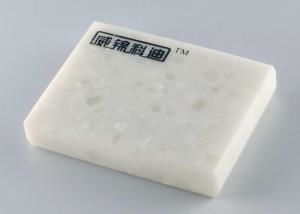
However, this is where the similarities start to diverge, particularly when we consider their inherent properties and how they perform over time. The differing compositions mean their strengths and weaknesses manifest in subtly different ways. For instance, while both are non-porous, the exact ratio of acrylic to mineral filler can influence their hardness and resistance to scratching. Materials with a higher mineral content tend to be slightly harder and more resistant to minor abrasions, though neither is entirely impervious to scratches. This is a key area where prospective buyers often seek visual and practical comparisons. Imagine a busy kitchen environment where knives are occasionally used directly on the surface, or where pots and pans are slid rather than lifted. In such scenarios, the subtle differences in scratch resistance can become quite significant over the years.
Heat resistance is another crucial differentiator. While both solid surface materials have a degree of heat tolerance, they are not indestructible. Direct contact with extremely hot pots and pans can cause discoloration, scorching, or even cracking. Generally, pure acrylic formulations might be slightly more susceptible to heat damage than those with a higher mineral content. This is because the polymer matrix can soften and deform at lower temperatures than the mineral fillers. This is a critical point for anyone who enjoys cooking and frequently places hot items on their countertops. While trivets and hot pads are always recommended for both materials, the margin for error might be smaller with certain acrylic-heavy solid surfaces. Understanding this difference is vital for making an informed choice that aligns with your lifestyle and cooking habits.
The repairability of these materials is often cited as a major advantage for both. However, the ease and effectiveness of repair can vary. Both can typically be repaired relatively easily, especially for minor scratches, chips, or stains. For solid surfaces, a skilled fabricator can often sand down the affected area and re-finish it to blend seamlessly with the surrounding material. This is a significant benefit compared to other materials like laminate, where a scratch is usually permanent, or natural stone, which can be more challenging and costly to repair. The question of “same or different” here leans towards “different in degree.” While both are repairable, the specific techniques and the degree of flawless restoration might differ depending on the precise composition of the solid surface material. For instance, a deeper scratch on a heavily mineral-filled material might require a different sanding grit and technique compared to a pure acrylic.
The cost factor is also a consideration, though it’s less about inherent material properties and more about market positioning and manufacturing processes. Generally, both solid surface and pure acrylic countertops fall into a mid-to-high price range, often positioned as a more accessible alternative to high-end natural stones like granite or quartz. However, within the solid surface category, there can be price variations based on brand, color complexity, and the specific formulation. Pure acrylic options might sometimes be at the higher end of the solid surface spectrum due to the cost of the acrylic resin. When comparing them to other materials, they offer a compelling blend of aesthetics and functionality that justifies their price point for many. But the initial investment can still be substantial, making the decision to choose one over the other a financial one as well as a stylistic one. This is where detailed cost breakdowns, perhaps accompanied by visual examples and video demonstrations of installation and repair, become invaluable for potential buyers trying to weigh the pros and cons. The initial outlay, the long-term maintenance costs, and the potential repair expenses all contribute to the overall value proposition of each material.

In essence, while both acrylic and artificial stone (solid surface) share a common lineage as engineered, non-porous materials offering seamless aesthetics and repairability, their differing compositions lead to distinct advantages and disadvantages. The nuance lies not in whether they are the same, but in the degree to which they possess certain qualities. Future discussions will delve deeper into specific aspects like stain resistance, hygienic properties, and the visual impact of different finishes, all crucial for making an informed choice that truly suits your needs and preferences. Understanding these subtle yet significant differences is the key to unlocking the full potential of your chosen surface.
Continuing our exploration into the world of acrylic and artificial stone (solid surface), we’ve established that while they share a common ground in terms of seamless aesthetics and repairability, their differences are significant and often dictate their suitability for various applications and lifestyles. We’ve touched upon visual appeal, scratch resistance, heat tolerance, and cost. Now, let’s delve deeper into other critical aspects that can sway your decision: stain resistance, hygienic properties, environmental considerations, and the all-important practicalities of installation and long-term maintenance.
Stain resistance is a hallmark benefit of both materials, stemming from their non-porous nature. Unlike natural stone or wood, which can absorb liquids and become stained over time, both acrylic and solid surface materials present a formidable barrier against most common household spills. Think red wine, coffee, curry, or even harsh cleaning agents. The homogeneous composition means that even if a spill does sit for a while, it’s unlikely to penetrate the surface and cause permanent discoloration. This shared advantage makes them excellent choices for kitchens and bathrooms, areas prone to spills and frequent cleaning. However, a subtle distinction can arise from the type of pigments used in the coloration process. Some darker or more vibrant colors, regardless of whether they are pure acrylic or a mineral-filled solid surface, might show lighter stains more readily if the pigment itself is susceptible to fading from prolonged UV exposure, although this is a less common issue with quality products. Generally, though, their stain-fighting capabilities are a major selling point that places them in a similar category of performance in this regard.
When it comes to hygiene, both materials truly shine, and this is a significant advantage that often resonates with families and anyone prioritizing a healthy living environment. Their non-porous surfaces mean that bacteria, mold, and mildew have no place to take root or multiply. This inherent resistance to microbial growth is a substantial benefit over porous materials like unsealed natural stone or grout lines in tile. This seamless, hygienic surface is why solid surface materials are frequently specified for healthcare settings, laboratories, and food preparation areas, not just in homes. The ease of cleaning and sanitizing is unparalleled. A simple wipe-down with soap and water or a mild disinfectant is usually all that’s needed to maintain a pristine and germ-free surface. While both materials excel here, the inherent properties of acrylic as a naturally antimicrobial material can be seen as a slight, albeit often negligible, edge in certain extreme hygiene-focused applications.
Environmental considerations are becoming increasingly important for homeowners, and here, the picture becomes more complex. Both acrylic and solid surface materials are engineered products, meaning their production involves chemical processes and resource extraction. However, many manufacturers are actively working towards more sustainable practices. This can include using recycled content in their formulations, developing low-VOC (volatile organic compound) products, and offering robust recycling programs for old countertops. Pure acrylic, being derived from petroleum, has a different environmental footprint compared to the mineral fillers in solid surface materials. The extraction of minerals also has environmental impacts. The “greenest” choice often depends on the specific manufacturer’s commitment to sustainability, the lifespan of the product, and its end-of-life disposal or recycling options. Some solid surface formulations may incorporate a higher percentage of post-consumer recycled materials, potentially giving them an edge in eco-friendliness for some consumers. It’s a space where looking at individual product certifications and manufacturer transparency is key, rather than making a blanket generalization.
Installation is another area where practical differences emerge. Both materials are typically fabricated off-site and then installed by professional fabricators. Solid surface sheets are generally lighter and easier to handle on-site than comparable thicknesses of natural stone. Pure acrylic can be particularly lightweight due to its composition. This can translate to potentially lower installation costs, especially for projects with complex layouts or difficult access. However, the method of joining is crucial for both. As mentioned, invisible seams are achieved using specialized adhesives that cure to form a bond as strong as the material itself. The skill of the installer is paramount for achieving these seamless results. While the principles are similar, the specific adhesives and techniques might vary slightly between different formulations, and an experienced installer will know how to work with the nuances of each type of material. Videos demonstrating installation techniques can be incredibly helpful here, showing the precision required to achieve those flawless, integrated looks.
Long-term maintenance is where the shared advantages really come into play. As we’ve discussed, both are non-porous, stain-resistant, and repairable. This translates to a low-maintenance lifestyle for homeowners. Regular cleaning with mild detergents and a soft cloth is usually sufficient. Harsh abrasive cleaners or scouring pads should be avoided for both to prevent dulling the finish. For tougher stains or scratches, the repairability aspect comes to the forefront. For minor issues, a fine-grit sandpaper or a specialized repair kit can often restore the surface to its original glory. For more significant damage, a professional fabricator can often refinish the entire countertop to make it look brand new. This ease of upkeep is a significant factor for busy households and commercial spaces alike, contributing to the material’s enduring popularity.
In conclusion, while acrylic and artificial stone (solid surface) share many desirable traits, including their ability to offer seamless aesthetics, excellent hygiene, and robust stain resistance, they are not identical. The key differences lie in their precise composition, which influences their relative scratch resistance, heat tolerance, and, to some extent, their environmental impact. Pure acrylic might offer superior lightness and perhaps a subtle edge in certain hygienic applications, while mineral-filled solid surfaces might present a slightly harder surface or a different environmental profile depending on the formulation. The choice between them often comes down to a meticulous weighing of these nuanced pros and cons, informed by how you plan to use the space, your aesthetic preferences, and your priorities regarding durability, maintenance, and sustainability. Understanding these distinctions, perhaps through detailed side-by-side comparisons and visual demonstrations, empowers you to make the most informed decision for your home or project, ensuring that your chosen surface not only looks stunning but also performs beautifully for years to come.









