
Beyond the Crack: Bringing Your Artificial Marble Countertops Back to Life
The heart of many homes beats in the kitchen, and countertops are the silent, hardworking stage for countless culinary adventures, family gatherings, and quiet moments of reflection. Among the popular choices for these central surfaces, artificial marble, with its versatility, durability, and aesthetic appeal, has earned its place. However, even the most robust materials can encounter challenges, and a crack in your artificial marble countertop can feel like a significant blow to the sleek perfection you cherish. But before you resign yourself to costly replacements or unsightly patches, understand this: a crack is not an ending, but an opportunity for restoration. This is where the fascinating world of artificial marble countertop repair, often encapsulated by the search term “人造大理石台面破裂修复视频” (artificial marble countertop crack repair video), truly shines.

The beauty of artificial marble lies in its engineered nature. Unlike natural stone, its composition can be controlled, allowing for consistent patterns and colors. It’s typically made from a blend of acrylic or polyester resins, mineral fillers like aluminum trihydrate, and pigments. This composition, while offering advantages like non-porosity and ease of maintenance, can also be susceptible to impact, thermal shock, or installation stresses that lead to cracks. These cracks can range from hairline fissures that are barely noticeable to more significant breaks that compromise the countertop’s integrity and appearance.
The initial reaction to discovering a crack might be a mix of frustration and dismay. Images of professional repair videos might flood your mind, perhaps feeling like an insurmountable task. However, the process itself is a testament to human ingenuity and the power of precise application. At its core, repairing a cracked artificial marble countertop is about skillfully filling and blending the damaged area to a point where it becomes virtually invisible. This involves understanding the material, the type of damage, and the specialized adhesives and fillers designed for this purpose.
The journey of repair typically begins with a thorough assessment of the crack. Is it a clean break with minimal material loss? Is it a chipped edge? Has a piece actually fallen off? The depth and width of the crack will dictate the approach. For shallow surface cracks, a less invasive method might suffice. For deeper, more structural breaks, a more robust repair strategy is necessary.
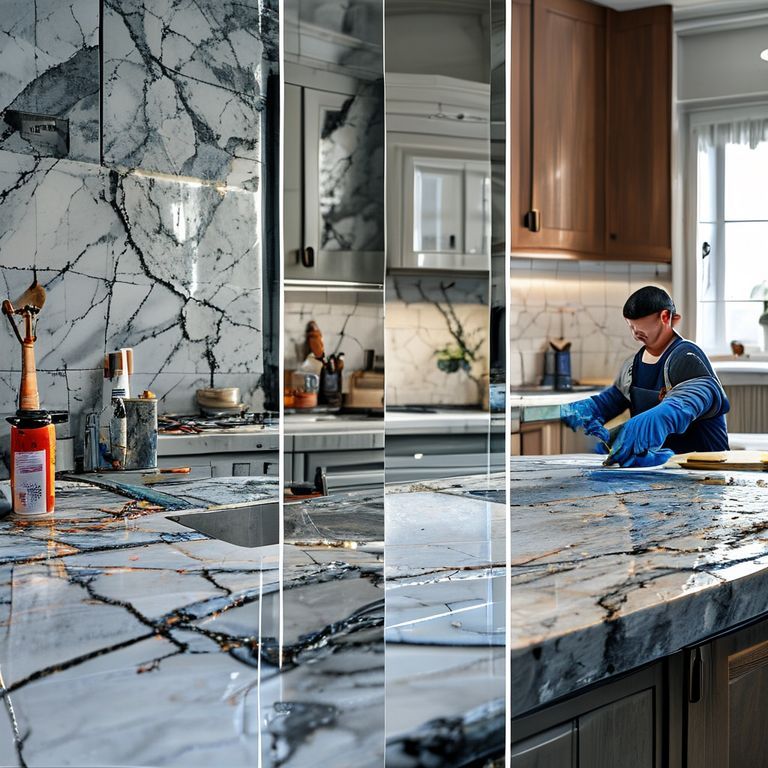
The materials used in artificial marble repair are as critical as the technique. The cornerstone of most repairs is a specialized two-part epoxy resin or acrylic adhesive. These adhesives are formulated to bond with the artificial marble, offering strength and durability. Crucially, they can be tinted and mixed with pigments to match the exact color and pattern of the existing countertop. This color-matching is where much of the artistry comes into play. Just like a painter meticulously mixing hues to achieve a perfect shade, a skilled restorer will carefully blend pigments to ensure the repaired area seamlessly integrates with the surrounding surface.
Beyond the adhesive, various fillers might be employed. These can include finely ground marble dust, specialized polymer powders, or even small chips of artificial marble itself, depending on the nature of the damage. The goal is to create a material that not only fills the void but also replicates the texture and light-reflecting properties of the original countertop.
The “how-to” of these repairs, often sought through “人造大理石台面破裂修复视频,” involves a series of meticulous steps. First, the crack needs to be meticulously cleaned. Any dust, debris, or loose particles must be removed to ensure proper adhesion. Sometimes, the edges of the crack might be slightly widened or beveled to create a better surface for the adhesive to grip. This is a critical step that ensures the repair is not just superficial but truly bonds with the material.
Next, the adhesive is prepared. This usually involves mixing the two components of the epoxy or acrylic system in precise ratios. The tinting process then begins. Pigments are added incrementally, with the restorer constantly comparing the color to the countertop under good lighting conditions. Patience and a keen eye are paramount here. Once the color is deemed a perfect match, the mixed adhesive and filler are carefully injected or applied into the crack. This might involve using specialized syringes for fine cracks or a spatula for larger gaps.
The excess material is then carefully scraped away before it fully cures. This initial removal is important to minimize the amount of sanding and polishing required later. The curing process is vital, and the repair area is often left undisturbed for a specified period, allowing the adhesive to fully harden and achieve its maximum strength. This is not a moment for haste; the integrity of the repair depends on proper curing.
Once cured, the real magic of blending begins. This involves a multi-stage sanding process, starting with coarser grit sandpaper to level the repaired area and gradually moving to finer grits to achieve a smooth, polished finish. The aim is to eliminate any trace of the repair, making it flush with the surrounding countertop. This stage requires a delicate touch to avoid abrading the original material.
Finally, the surface is polished using specialized polishing compounds and pads. This brings back the characteristic sheen of artificial marble, making the repaired area indistinguishable from the rest of the countertop. The result is a surface that has not only been repaired but has been rejuvenated, a testament to the power of skilled hands and the right techniques. The search for “人造大理石台面破裂修复视频” often leads to demonstrations of this transformative process, highlighting the satisfying outcome that is possible. It’s a journey from visible damage to invisible restoration, a story of resilience etched into the very fabric of your kitchen.
Continuing our exploration into the intricate art of artificial marble countertop crack repair, we delve deeper into the nuances that elevate a good repair to an exceptional one. While the foundational steps of cleaning, filling, and sanding are crucial, it’s the subtle considerations and advanced techniques that truly bring your countertops back to their former glory. The effectiveness of a repair, especially when searching for “人造大理石台面破裂修复视频,” hinges on understanding these finer points, turning what might seem like a daunting DIY project into a rewarding endeavor.
One of the most significant challenges in artificial marble repair is replicating the complex patterns and veining that often characterize these surfaces. Unlike a solid color, a countertop with intricate swirls or flecks requires a repair that not only matches the base color but also mimics these decorative elements. This is where the skill of the restorer, often showcased in detailed video tutorials, truly comes into play.
For patterned surfaces, the color-matching process becomes even more sophisticated. Instead of just achieving a single perfect hue, the restorer must analyze the density, color variations, and flow of the existing pattern. When applying the tinted filler, they may use specialized tools, like fine brushes or even airbrushes, to dab, swirl, or feather the material to replicate the natural-looking imperfections of the original design. This meticulous approach ensures that the repair doesn’t just sit on the surface but becomes an integrated part of the pattern. It’s about creating an illusion of continuity, making the crack disappear not just in color but in texture and design.
Furthermore, the type of crack dictates the adhesive and filler combination. For very fine, hairline cracks, a low-viscosity, self-leveling adhesive might be used. This allows the material to flow deep into the fissure, ensuring a complete fill. For wider cracks or chips, a thicker, more viscous filler might be necessary to provide structural support and prevent the repair from sinking or cracking again. Sometimes, a “bridge” technique might be employed, where a piece of material is carefully shaped and bonded across the crack to reinforce it, before being ground down flush with the surface.
The role of light is also a critical factor in successful repair. Artificial marble, like natural stone, interacts with light in specific ways. The way light reflects off the surface, the depth of its sheen, and the subtle translucency of certain materials all contribute to its overall appearance. A good repair must consider these optical properties. The polishing stage, therefore, is not just about achieving a smooth surface; it’s about restoring the correct level of reflectivity. Different grades of polishing compounds and pads are used to gradually build up the shine, ensuring it matches the surrounding area precisely. This can involve using anything from diamond-impregnated pads to specialized buffing compounds, each chosen to achieve a specific level of gloss.
For those considering a DIY approach, the resources available through “人造大理石台面破裂修复视频” can be invaluable. These videos often break down the process into manageable steps, highlighting common pitfalls and offering practical solutions. They emphasize the importance of using the right tools and materials, and they demonstrate the patience and precision required. For instance, a video might show how to properly mask off the surrounding countertop area to protect it from accidental scratches during the sanding and polishing phases. It might also offer tips on how to achieve a consistent blend of colors when working with multi-colored artificial marble.
However, it’s also important to acknowledge when a professional touch is warranted. Deep structural cracks, extensive damage, or countertops with extremely complex patterns might be best left to experienced professionals. These individuals have the specialized equipment, extensive knowledge of different artificial marble formulations, and the trained eye to handle the most challenging repairs. They often have access to a wider range of pigments and fillers, and their experience allows them to troubleshoot unexpected issues that might arise during the repair process.
The decision to repair or replace is often a practical one, influenced by cost, time, and the severity of the damage. However, the satisfaction derived from a successful repair is often immeasurable. It’s about saving a beloved feature of your home, extending its lifespan, and reclaiming its aesthetic appeal. It’s about proving that damage doesn’t have to be permanent. The search for “人造大理石台面破裂修复视频” is more than just a quest for information; it’s a step towards empowering yourself or entrusting your home to skilled hands to bring back the beauty and functionality of your artificial marble countertops. It’s a journey from visible imperfection to a seamless, revitalized surface, a testament to the enduring appeal of well-maintained home environments.









