
Here you go!
The allure of a perfectly designed space lies not just in its aesthetic appeal, but in the thoughtful consideration of every element, down to the very dimensions of its materials. When it comes to creating surfaces that are both strikingly beautiful and remarkably functional, Krion artificial stone emerges as a frontrunner, offering a unique blend of form and flexibility. The concept of “Krion人造石尺寸” – Krion artificial stone dimensions – is far more than a technical specification; it’s a gateway to unlocking a world of design possibilities that can redefine residential and commercial interiors.

At its core, Krion is a solid surface material composed primarily of acrylic resins and alumina trihydrate. This composition grants it a non-porous nature, making it exceptionally hygienic and resistant to stains and bacteria. But what truly sets Krion apart in the realm of design is its remarkable workability and the strategic advantage provided by its standard and custom dimensions. Understanding these dimensions is the first step in envisioning how Krion can elevate a project from ordinary to extraordinary.
The standard dimensions of Krion slabs are designed to offer a balance of efficiency and versatility for fabricators and designers alike. Typically, Krion sheets come in dimensions that allow for large, seamless installations. Think of a waterfall countertop that flows uninterrupted from the surface to the floor, or a vast reception desk that presents a monolithic, sophisticated statement. The ability to achieve such expansive, unblemished surfaces is a direct result of the generous dimensions available. Common lengths can extend to several meters, and widths are often sufficient to minimize or eliminate unsightly seams in many applications. This is crucial for creating that coveted “wow” factor, where the material itself becomes a canvas, unmarred by visual interruptions.
However, the magic of Krion doesn’t stop at its standard offerings. The inherent malleability of the material, particularly when subjected to heat, allows for incredible customization. This means that while standard dimensions are a great starting point, the true artistry emerges when these dimensions are manipulated and adapted to fit unique project requirements. A designer might envision a curved reception desk that elegantly embraces visitors, or a sculpted vanity that perfectly fits a compact bathroom. Krion’s ability to be thermoformed means that these concepts, which might be challenging or impossible with other materials, become a tangible reality. The “dimensions” then, become less about the initial slab and more about the final form, shaped by creative ingenuity.
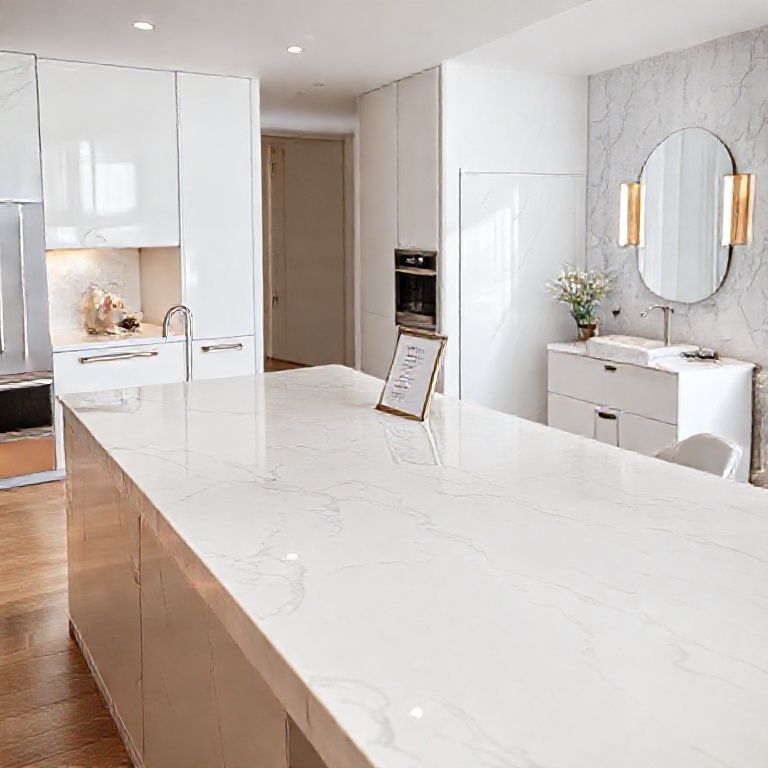
Consider the practical implications of these dimensions. For kitchen countertops, the standard slab sizes often allow for an entire island or a lengthy run of cabinetry to be fabricated from a single piece, thus avoiding grout lines or visible joins that can harbor dirt and bacteria. This not only enhances the aesthetic cleanliness of the kitchen but also simplifies maintenance significantly. For bathrooms, the non-porous nature coupled with the ability to create seamlessly integrated sinks and backsplashes from large sheets translates into an oasis of hygiene and understated luxury. The “Krion人造石尺寸” here dictates the potential for a spa-like retreat where water and cleaning agents can be managed with ease.
Beyond the more common applications, the dimensions of Krion open doors to more ambitious architectural projects. Imagine large-scale wall cladding that creates a continuous visual narrative across an entire facade or interior wall. The ability to cut and shape these large slabs into precise forms, whether for geometric patterns or organic sculptural elements, is a testament to the material’s adaptability. Even for smaller, intricate details like custom-designed signage or decorative inlays, the precision with which Krion can be cut and finished, informed by its dimensional properties, ensures a flawless result.
The process of specifying Krion often begins with understanding the desired outcome and then working with fabricators to determine the most efficient and effective use of the available dimensions. This collaborative approach ensures that material waste is minimized, cost-effectiveness is maintained, and the design vision is realized to its fullest potential. The “dimensions” are not a constraint, but rather a set of parameters that, when expertly navigated, lead to innovative and breathtaking outcomes.
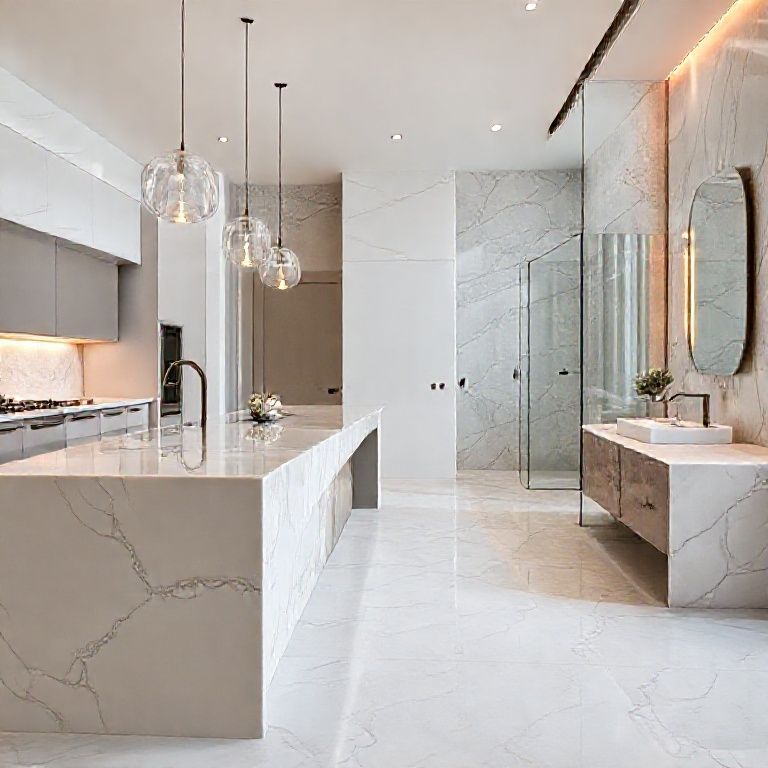
Furthermore, the thickness of Krion slabs is another critical dimensional aspect to consider. Standard thicknesses often range from 6mm to 12mm, with thicker options available for specialized applications. This variation in thickness impacts both the structural integrity and the visual weight of the final piece. A thicker slab might lend a sense of substantiality and durability to a heavy-traffic countertop, while a thinner sheet could be ideal for backsplashes or decorative wall panels where a lighter, more delicate appearance is desired. The interplay between length, width, and thickness allows for a nuanced approach to material selection, ensuring that the chosen Krion dimensions perfectly suit the intended function and aesthetic.
In essence, the conversation around “Krion人造石尺寸” is a conversation about potential. It’s about understanding the raw material’s capabilities and then applying them with creativity and precision to craft spaces that are not only beautiful but also enduring and functional. It’s about the seamless flow of a countertop, the elegant curve of a reception desk, the hygienic integrity of a bathroom surface – all made possible by the intelligent application of Krion’s dimensional properties. This first part has set the stage, highlighting how these dimensions are fundamental to unlocking the material’s inherent versatility and beauty.
Continuing our exploration into the world of Krion artificial stone dimensions, we delve deeper into how these seemingly straightforward measurements translate into tangible design triumphs and practical advantages. The discussion of “Krion人造石尺寸” is not just about the raw sheet sizes; it’s about the sophisticated ways these dimensions are utilized, manipulated, and combined to craft bespoke solutions that elevate interior design to an art form.
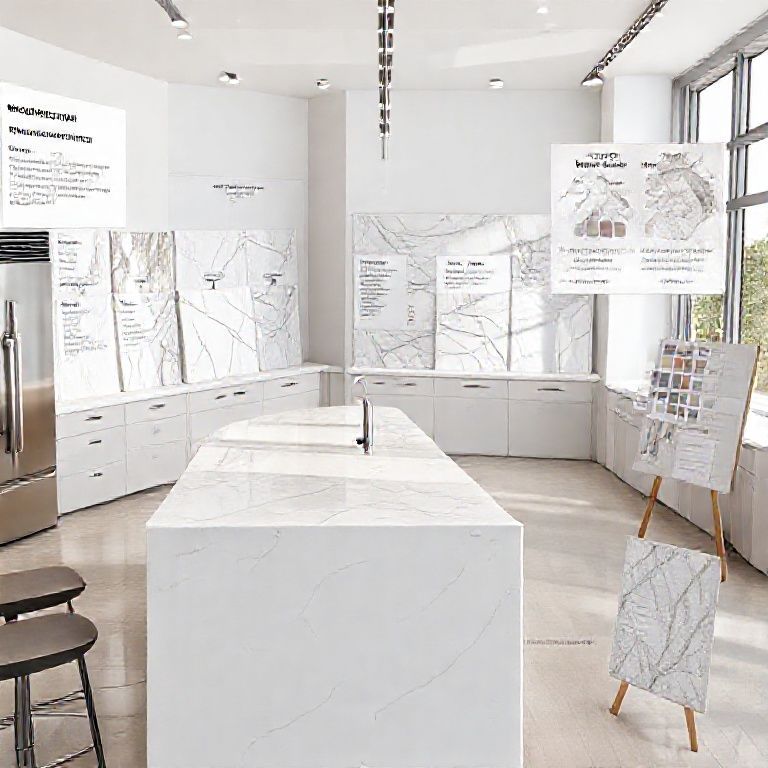
One of the most celebrated aspects of Krion, directly influenced by its dimensional capabilities, is its ability to create seamless surfaces. When a designer specifies Krion for a kitchen island, for instance, the standard slab dimensions often allow for a single, expansive piece to be used. This eliminates the need for joints or seams that would otherwise be visible. The result is a flowing, uninterrupted surface that is not only aesthetically pleasing, exuding a sense of purity and sophistication, but also highly practical. A seamless surface means fewer places for dirt, grime, and bacteria to accumulate, making cleaning and maintenance exceptionally straightforward. This is a significant advantage in busy kitchens and bathrooms where hygiene is paramount. The “Krion人造石尺寸” here directly contributes to a cleaner, more sanitary living environment.
The versatility extends beyond mere flatness. Krion’s inherent thermoformability means that its dimensions can be precisely controlled and manipulated to create complex curves, organic shapes, and intricate designs. This is where the standard slab dimensions become the starting point for truly custom creations. Imagine a reception desk that boasts a gentle, welcoming curve, or a bathroom vanity that is ergonomically sculpted to fit a specific space. These are not limitations of Krion; rather, they are opportunities enabled by its dimensional adaptability. Fabricators can cut and shape large sheets of Krion into virtually any form, allowing designers to push the boundaries of conventional design. The dimensions of the original slab are merely a suggestion, a blueprint for what can ultimately be achieved through skilled craftsmanship and advanced fabrication techniques.
The thickness of Krion slabs is another crucial dimensional consideration. Available in various thicknesses, typically ranging from 6mm to 12mm, the choice of thickness significantly impacts the material’s perceived weight, structural integrity, and aesthetic presence. A 12mm slab, for example, might be chosen for a high-traffic kitchen countertop where durability and a substantial feel are desired. Conversely, a 6mm or 8mm sheet might be perfect for a wall cladding application or a decorative backsplash, offering a lighter visual impact while still retaining Krion’s signature seamless appearance. This thoughtful selection of thickness, in conjunction with the length and width, allows for a nuanced approach to design, ensuring that the material not only looks the part but also performs optimally for its intended use. The “Krion人造石尺寸” thus encompasses not just the surface area but also the depth and solidity of the material.
In commercial settings, the dimensions of Krion play a pivotal role in creating impactful and memorable spaces. Large-scale retail environments often utilize Krion for display units, checkout counters, and feature walls. The ability to fabricate these elements from large, seamless pieces ensures a cohesive and high-end finish that reflects positively on the brand. For hotels and restaurants, Krion’s hygienic properties and ease of maintenance, coupled with its aesthetic versatility, make it an ideal choice for bars, dining tables, and washroom surfaces. The consistent dimensions and the ability to achieve a monolithic appearance contribute to an atmosphere of elegance and cleanliness, enhancing the overall guest experience.
Moreover, the precise cutting and fabrication capabilities, informed by the exact dimensions of Krion sheets, allow for the integration of functional elements. Think of recessed drainboards in a kitchen sink, integrated lighting elements within a countertop, or precisely cut openings for faucets and cooktops. These details are executed with a high degree of accuracy thanks to the predictability of Krion’s dimensional stability and the precision of modern cutting technologies. The “Krion人造石尺寸” here is not just about the overall form but also about the meticulous detailing that enhances both aesthetics and functionality.
The economic aspect of Krion dimensions is also worth noting. By utilizing standard slab sizes efficiently, fabricators can minimize material waste, thereby reducing overall project costs. Furthermore, the longevity and durability of Krion mean that surfaces will retain their beauty and functionality for years, offering a sound long-term investment. The ability to repair and refinish Krion surfaces, a benefit stemming from its solid, homogenous nature, further extends its lifespan, making the initial investment in Krion an even more advantageous decision. The dimensions, in this context, contribute to both initial budget and lifecycle cost considerations.
The collaborative process between designer, fabricator, and client is where the true potential of Krion dimensions is unlocked. Understanding the project’s specific needs – whether it’s a sweeping residential kitchen, a compact boutique hotel bathroom, or an expansive public space – guides the selection and manipulation of Krion’s dimensional offerings. The conversation around “Krion人造石尺寸” becomes a dialogue about possibilities, about transforming raw material into functional art that seamlessly integrates into the fabric of our lives. It’s about creating surfaces that are not just seen, but experienced – surfaces that are hygienic, durable, beautiful, and tailored precisely to their purpose. The dimensions are the silent architects of these transformative spaces.









