
The allure of modern design often lies in its ability to blend form and function seamlessly, creating spaces that are as beautiful as they are practical. At the heart of this innovation are the materials we choose – the silent architects that define our environments. Today, we’re embarking on a journey to explore two fascinating contenders in the realm of composite materials: solid surface, exemplified by brands like Corian, and Sheet Molding Compound (SMC). While both offer compelling advantages over traditional materials, understanding their fundamental differences is key to unlocking their full potential in a vast array of applications, from sleek kitchen countertops to robust automotive components.

Let’s begin by immersing ourselves in the world of solid surface. Think of Corian, the trailblazer that redefined what a countertop could be. Solid surface is, at its core, an engineered stone-like material. Its primary constituents are acrylic polymers and alumina trihydrate (ATH), a mineral derived from bauxite ore. This harmonious blend is then cast into sheets or shapes, resulting in a non-porous, homogenous material that is remarkably versatile. The magic of solid surface lies in its inherent ability to be thermoformed. This means that when heated, it becomes pliable and can be molded into curves, intricate shapes, and even three-dimensional forms that would be impossible with natural stone or laminate. This thermoforming capability grants designers unparalleled freedom, allowing them to create bespoke pieces that flow organically within a space.
The “solid” in solid surface is a crucial descriptor. Unlike materials with a laminate top layer, solid surface is uniform throughout its thickness. This means that scratches, chips, or stains, which can mar the appearance of other materials, can often be sanded out and polished away, restoring the surface to its original pristine condition. This inherent repairability is a significant advantage, contributing to the longevity and enduring beauty of solid surface installations. Furthermore, its non-porous nature is a hygiene powerhouse. It doesn’t harbor bacteria or mold, making it an excellent choice for kitchens, bathrooms, healthcare facilities, and laboratories where cleanliness is paramount. The seamless integration of sinks, backsplashes, and countertops is another hallmark of solid surface. Advanced fabrication techniques allow for inconspicuous seams, creating a sleek, monolithic appearance that is both aesthetically pleasing and easy to clean. No more grout lines or crevices where grime can accumulate!
The manufacturing of solid surface typically involves mixing the acrylic resins, fillers (like ATH), and pigments in precise proportions. This slurry is then poured into molds or cast into sheets, which are subsequently cured under controlled conditions. The resulting sheets can then be cut, routed, and shaped using woodworking tools, with the thermoforming process adding another layer of design potential. The sheer spectrum of colors and patterns available for solid surface materials is breathtaking, ranging from subtle, natural-looking veining to bold, contemporary hues and even translucent options that can be backlit for dramatic effect. This extensive palette allows for a high degree of personalization, enabling designers to match or contrast with any interior scheme.

The tactile experience of solid surface is also noteworthy. It possesses a warm, inviting feel, unlike the cold, hard touch of natural stone. This makes it a comfortable and practical material for everyday use. Its impact resistance is good, though it’s not as hard as granite or quartz. However, its repairability often offsets this slight difference in hardness. When considering durability, solid surface excels in its resistance to stains and chemicals, owing to its non-porous structure. Cleaning is typically a simple matter of wiping with a damp cloth and mild detergent. For tougher stains, a scouring pad can often be used without fear of damaging the material, a testament to its uniform composition.
In essence, solid surface materials like Corian represent a triumph of material engineering, offering a blend of aesthetic flexibility, hygienic properties, and practical durability. They empower designers and homeowners alike to create spaces that are not only visually stunning but also remarkably resilient and easy to maintain, embodying the very spirit of modern, thoughtful design.
Shifting our focus from the acrylic-based elegance of solid surface, we now turn our attention to Sheet Molding Compound (SMC). While both are composite materials, SMC charts a different course in its composition, manufacturing, and application landscape. SMC is a thermosetting plastic composite, primarily consisting of unsaturated polyester resin, glass fibers, fillers, and various additives. The “sheet” in its name refers to its production method: the resin, reinforcements, and other components are mixed and then spread onto a film carrier, forming a sheet or mat of uncured material. This “sheet” is then ready for molding.

The key distinguishing factor of SMC lies in its thermosetting nature and the incorporation of glass fibers. Unlike solid surface, which is a thermoplastic that can be repeatedly softened by heat, SMC undergoes an irreversible chemical change when heated and compressed in a mold. This curing process creates a rigid, robust, and dimensionally stable part. The glass fibers, typically chopped strands randomly distributed within the resin matrix, provide significant structural integrity, tensile strength, and stiffness. This makes SMC an excellent choice for applications requiring load-bearing capabilities and resistance to deformation under stress.
The manufacturing process for SMC involves a specialized machine that precisely meters and dispenses the resin mixture onto a carrier film. Glass fibers are then chopped and fed onto the resin. Another carrier film is applied on top, and the sandwich is passed through rollers to ensure impregnation and to create a uniform sheet. This sheet can be stored for a period before being cut to size and placed into a heated mold. During the molding process, heat and pressure are applied, initiating the curing reaction and forcing the material to fill the mold cavity. Once cured, the part is removed from the mold, typically requiring minimal finishing.
This molding process, known as compression molding or injection molding (for some variations), allows for the production of complex shapes with high accuracy and repeatability. While SMC can be molded into intricate forms, it generally doesn’t possess the same degree of seamless joint capability or the extensive thermoforming potential seen with solid surface. However, its ability to integrate features like mounting bosses, ribs, and textures directly into the molded part is a significant advantage in industrial design.
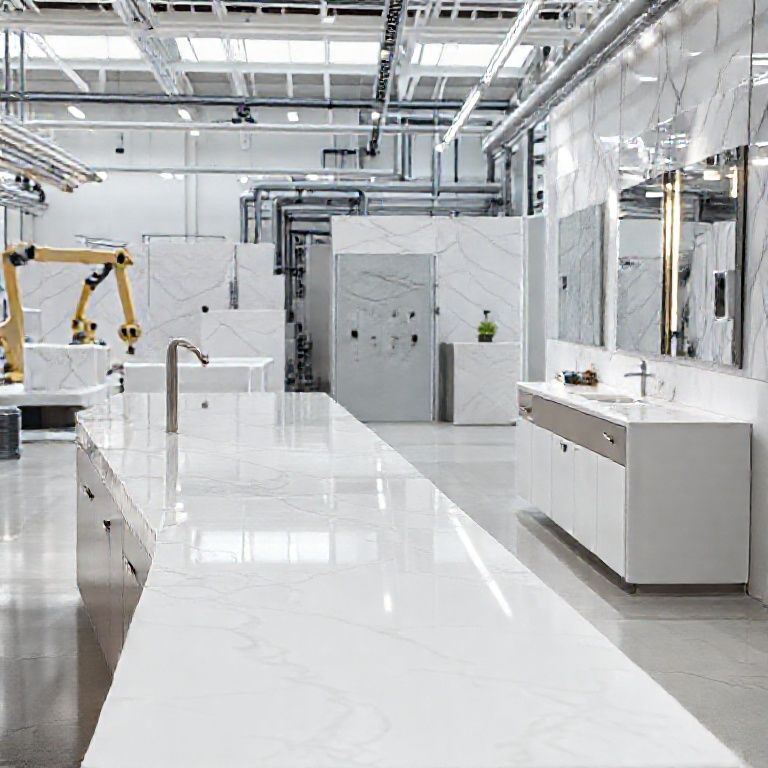
The strength-to-weight ratio of SMC is particularly impressive. The combination of resin and glass fibers results in a material that is both strong and relatively lightweight compared to metals, making it a popular choice in industries where weight reduction is critical, such as automotive and aerospace. Its inherent stiffness means that SMC parts can often be designed with thinner walls while still maintaining structural integrity, leading to further material savings and reduced part weight.
Beyond its structural prowess, SMC offers excellent electrical insulation properties and good resistance to corrosion and chemicals. These characteristics, coupled with its ability to withstand a wide range of temperatures, make it suitable for demanding environments. Think of the exterior panels of recreational vehicles, the housings for electrical equipment, or even components within heavy machinery. The surface finish of SMC parts can vary, from a smooth, paintable surface to textured finishes, depending on the mold design and post-molding treatments. While it can be painted or coated, the seamless, integrated aesthetic of solid surface is generally not its primary design objective.
In terms of durability, SMC excels in its resistance to impact and fatigue. The thermosetting nature means it won’t soften or deform with heat once cured. However, unlike solid surface, deep scratches or significant damage are generally not repairable by sanding; damaged parts typically need to be replaced. The cost-effectiveness of SMC production, especially for high-volume runs, is another major draw. The efficiency of the molding process allows for rapid production cycles, contributing to lower manufacturing costs for end products.
In conclusion, while both solid surface and SMC are versatile composite materials that have revolutionized product design, they cater to different needs and excel in distinct areas. Solid surface offers unparalleled design flexibility through thermoforming and seamless integration, with a focus on aesthetic appeal and hygiene. SMC, on the other hand, champions structural integrity, strength-to-weight ratio, and cost-effective mass production, making it a workhorse in industries demanding robust performance. Understanding these fundamental differences allows us to appreciate the unique contributions of each material and to select the optimal choice for a given application, ensuring both beauty and brawn where they matter most.









