Choosing Between Quartzite and Granite for Your Cabinet Countertops: A Comprehensive Guide
When it comes to selecting a countertop material for your kitchen cabinet, the decision is both exciting and daunting. The market is flooded with options, each boasting unique benefits and characteristics. Among the most popular choices are quartzite and granite. Both materials are known for their durability, beauty, and versatility, making them top contenders for modern kitchen design. However, each has its own set of advantages and disadvantages. This guide will delve into the intricacies of both quartzite and granite to help you make an informed decision.
Understanding Quartzite
Quartzite is a type of engineered stone, created by combining 90% quartz with a resin binder. This material is renowned for its impressive durability and resistance to heat, stains, and scratches. Here are some key features of quartzite:
Durability: Quartzite is one of the hardest countertop materials available, boasting a Mohs hardness rating of 7. This makes it highly resistant to scratches, making it ideal for high-traffic areas like kitchens.
Heat Resistance: Quartzite can withstand high temperatures, making it perfect for cooking surfaces. Unlike granite, it won’t etch or discolor when hot pots and pans are placed on it.
Low Maintenance: Quartzite countertops require minimal maintenance. They are easy to clean with simple soap and water, and they are resistant to staining from everyday spills and stains.
Aesthetic Appeal: Quartzite comes in a wide range of colors and patterns, allowing for a high degree of customization to fit any kitchen design. Whether you prefer a natural stone look or a more modern finish, quartzite can be tailored to suit your aesthetic needs.
Cost-Effective: While quartzite is a premium material, it is often more affordable than natural stone alternatives like granite, making it a cost-effective choice without compromising on quality.
Understanding Granite
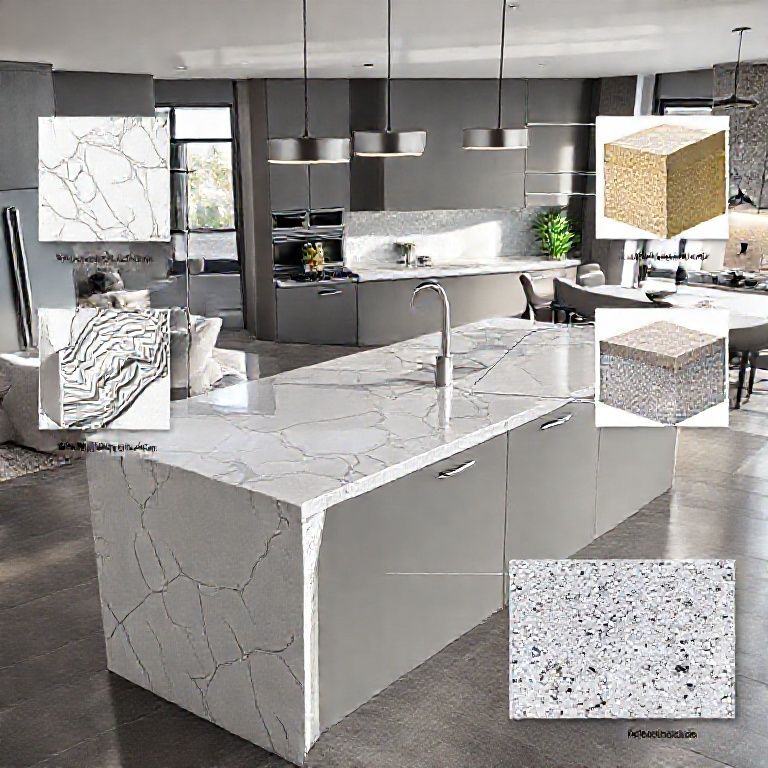
Granite is a natural stone that has been used for centuries in various construction and design applications. Known for its stunning beauty and durability, granite offers several unique benefits:
Aesthetics: Granite comes in a vast array of colors and patterns, providing a natural, luxurious look that enhances any kitchen. Its unique veining and color variations make each piece one-of-a-kind, adding character to your space.
Durability: Granite is highly durable and resistant to scratches and stains. It has a Mohs hardness rating of 6 to 7, making it suitable for high-traffic areas. However, it can be prone to etching from high heat and certain acids.
Low Maintenance: Granite countertops require minimal maintenance. They can be easily cleaned with a mild soap and water solution, and professional sealing is recommended every 6 to 12 months to maintain their stain resistance.
Natural Look: The natural veining and color variations in granite provide a timeless, elegant look that is difficult to replicate with other materials. This makes granite a popular choice for those seeking a classic, natural aesthetic.
High Cost: While granite offers excellent value in terms of durability and appearance, it can be more expensive than quartzite. The cost varies depending on the type and quality of the stone chosen.
Comparing Quartzite and Granite
When comparing quartzite and granite, it’s important to consider several factors, including durability, maintenance, cost, and aesthetic appeal.
Durability: Both quartzite and granite are highly durable materials, but quartzite often edges out granite in terms of scratch and stain resistance. Quartzite’s high hardness makes it less prone to damage, while granite, though durable, can be more susceptible to etching from high heat and certain acidic substances.
Maintenance: In terms of maintenance, both materials are relatively low-maintenance. Quartzite, being an engineered stone, is slightly easier to clean and requires less frequent sealing compared to granite. Granite countertops need regular sealing to maintain their stain resistance, which can be a bit more time-consuming.
Cost: Quartzite tends to be more affordable than granite, especially when considering high-end varieties. While granite offers a natural, luxurious look, its higher price point can be a deterrent for some. Quartzite provides a cost-effective alternative without sacrificing quality.
Aesthetic Appeal: Both materials offer stunning aesthetic options, but they cater to different design preferences. Quartzite provides a wide range of colors and patterns, allowing for customization to match any kitchen design. Granite’s natural veining and color variations offer a timeless, elegant look that is difficult to replicate with other materials.
Conclusion
When choosing between quartzite and granite for your cabinet countertops, both materials have their own set of advantages and disadvantages. Quartzite offers superior durability, low maintenance, and a wide range of aesthetic options at a more affordable price. Granite, on the other hand, provides a natural, luxurious look with excellent durability, though it comes at a higher cost and requires more maintenance.
Ultimately, the choice between quartzite and granite will depend on your specific needs, preferences, and budget. By understanding the unique benefits of each material, you can make an informed decision that will enhance the beauty and functionality of your kitchen.
In the next part of this guide, we will delve deeper into the installation process, maintenance tips, and long-term care for both quartzite and granite countertops to help you ensure the longevity and beauty of your choice.
Choosing Between Quartzite and Granite for Your Cabinet Countertops: A Comprehensive Guide
In the previous part, we explored the features, benefits, and basic comparisons of quartzite and granite countertops. Now, let’s delve deeper into the installation process, maintenance tips, and long-term care for both materials. Understanding these aspects will help you make the most of your choice and ensure the longevity and beauty of your countertop.
Installation Process
Quartzite Installation
Preparation: Before installing quartzite countertops, ensure that the surface beneath is clean and level. Any unevenness can cause issues during installation, so it’s crucial to prepare the surface properly.
Cutting: Quartzite countertops are typically cut to size using a tile saw. Precision is key to ensure a seamless fit. It’s also important to use appropriate cutting techniques to avoid damaging the material.
Adhesive Application: A strong adhesive is used to secure the quartzite countertop to the cabinet. High-quality adhesives are essential to ensure a durable bond.
Installation: The countertop is then carefully placed on the adhesive and pressed down firmly. Excess adhesive is wiped away, and the countertop is allowed to set according to the manufacturer’s instructions.
Sealing: After installation, a sealant is applied to protect the quartzite surface from stains and spills. This step is crucial for maintaining the countertop’s appearance and longevity.
Granite Installation
Preparation: Similar to quartzite, granite countertops require a clean and level surface. Proper preparation is essential to avoid installation issues.
Cutting: Granite countertops are cut using a wet saw, which helps to minimize chipping and damage. Precision is vital to ensure a perfect fit.
Adhesive Application: A strong adhesive is used to secure the granite countertop. It’s important to use a high-quality adhesive to ensure a durable bond.
Installation: The granite countertop is carefully placed on the adhesive and pressed down firmly. Excess adhesive is wiped away, and the countertop is allowed to set according to the manufacturer’s instructions.
Sealing: After installation, the granite countertop should be sealed to protect against stains and spills. Regular sealing is recommended to maintain its stain resistance.
Maintenance Tips
Quartzite Maintenance
Cleaning: Quartzite countertops are easy to clean. Use a mild soap and water solution to clean the surface regularly. Avoid using harsh chemicals that can damage the material.
Stain Prevention: While quartzite is resistant to stains, it’s important to clean up spills immediately to prevent any potential damage. Use a soft cloth or sponge to wipe up spills promptly.
Regular Cleaning: To maintain the appearance of your quartzite countertop, clean it regularly with a gentle cleaner. Avoid abrasive cleaners that can scratch the surface.
Avoiding Heat: Although quartzite is heat-resistant, it’s best to avoid placing hot pots and pans directly on the surface to prevent any potential damage.
Granite Maintenance
Cleaning: Granite countertops should be cleaned with a mild soap and water solution. Avoid using acidic cleaners, as they can etch the surface.
Stain Prevention: To prevent stains, clean up spills immediately. Use a soft cloth or sponge to wipe up spills promptly.
Regular Cleaning: To maintain the appearance of your granite countertop, clean it regularly with a gentle cleaner. Avoid abrasive cleaners that can scratch the surface.
长期护理和保养
Quartzite
定期清洁:使用中性清洁剂和温水进行清洁,定期进行维护以确保表面的光洁度和耐用性。
专业保养:定期请专业人员进行检查和保养,尤其是对于高频使用的区域,这样可以延长使用寿命。
避免使用钢丝球:钢丝球和其他磨损工具会对石材表面造成刮擦,应避免使用。
紧急处理:出现擦伤或污渍时,应尽快清理,并使用专用清洁剂进行处理。
Granite
定期清洁:使用温和的清洁剂和水进行清洁,避免使用酸性或碱性清洁剂。
专业保养:建议每6到12个月请专业人员进行一次密封处理,以保持其抗污性。
避免使用钢丝球:钢丝球和其他磨损工具会对石材表面造成刮擦,应避免使用。
紧急处理:出现污渍或擦伤时,应尽快清理,并使用专用清洁剂进行处理。对于酸性液体污渍,需要特别小心处理。
环境和使用建议
Quartzite
耐热性:由于其高硬度,Quartzite可以承受高温,但仍建议避免直接将极热的物品放在上面。
适用场所:适合用于厨房、浴室等高频使用的区域。
Granite
耐热性:Granite对高温有一定的抵抗力,但长时间高温会导致表面损伤,应避免直接将极热的物品放在上面。
适用场所:适用于厨房、浴室等高频使用的区域,同时也可以用于装饰性的家具和壁炉等。
环境适应性
Quartzite
耐湿性:Quartzite具有良好的耐湿性,适合用于潮湿环境,如浴室。
抗菌性:由于其材质,Quartzite具有天然的抗菌性,适合用于需要高卫生标准的区域。
Granite
耐湿性:Granite也具有一定的耐湿性,但不如Quartzite那样理想。浴室使用时需注意防潮。
美观性:Granite的自然纹理和色彩使其在装饰性方面具有独特的魅力,适合高端家居和公共建筑。
总结
无论选择Quartzite还是Granite,每种材料都有其独特的优点和适用场所。Quartzite以其耐用、耐热、低维护而受到欢迎,而Granite则以其自然美观和耐久性著称。根据个人需求和使用环境,选择最适合的材料将有助于获得理想的家居效果。
希望这些信息能帮助你做出更明智的选择。如果你有更多具体问题或需要进一步的建议,请随时告知!