
The allure of a perfectly smooth, unbroken surface has captivated designers and homeowners for decades. It’s a whisper of modern elegance, a promise of effortless maintenance, and a canvas for unparalleled creativity. In this realm of sophisticated surfaces, one name stands out: Corian. More than just a countertop material, Corian is a testament to human ingenuity, a fusion of art and science that has redefined what’s possible in interior design. But what exactly is Corian, and how does it achieve its signature seamless beauty and remarkable versatility? Let’s embark on a journey to unravel the composition and creation of this remarkable material.

At its core, Corian is a brand of solid surface material developed by DuPont in the late 1960s. Its composition is a carefully orchestrated blend, a proprietary recipe that gives it its distinctive characteristics. The primary ingredients are acrylic polymer and alumina trihydrate (ATH). The acrylic polymer, often methyl methacrylate (MMA), provides the material’s strength, flexibility, and thermoformability, allowing it to be shaped into curves and intricate forms. Think of it as the binder, holding everything together and giving it its structural integrity.
The other key player, alumina trihydrate, is a mineral filler derived from bauxite ore. ATH is a white, powdery substance that not only lends Corian its solid, stone-like feel but also contributes significantly to its fire-retardant properties. It’s this unique combination that allows Corian to mimic the appearance of natural stone, like marble or granite, while offering a host of practical advantages. The specific ratios of these components are a closely guarded trade secret, a testament to the innovation that DuPont brought to the materials market.
Beyond these main constituents, Corian also contains pigments to achieve its vast array of colors and patterns, and other additives that enhance its performance, such as UV stabilizers to prevent fading and processing aids to ensure a smooth manufacturing flow. The result is a non-porous, homogeneous material that runs through its entire thickness. This means that if you were to slice into a piece of Corian, you would find the same composition and color throughout, unlike laminate which has a printed layer on top of a different substrate.
The manufacturing process itself is as fascinating as the material’s composition. It typically involves mixing the acrylic polymer resin with ATH and pigments in large industrial mixers. This slurry is then poured into molds or spread onto a conveyor belt, where it undergoes a controlled curing process. This curing, often involving heat and sometimes UV light, causes the acrylic resin to polymerize, hardening into a solid sheet. The process is meticulously monitored to ensure consistency in color, thickness, and structural integrity.
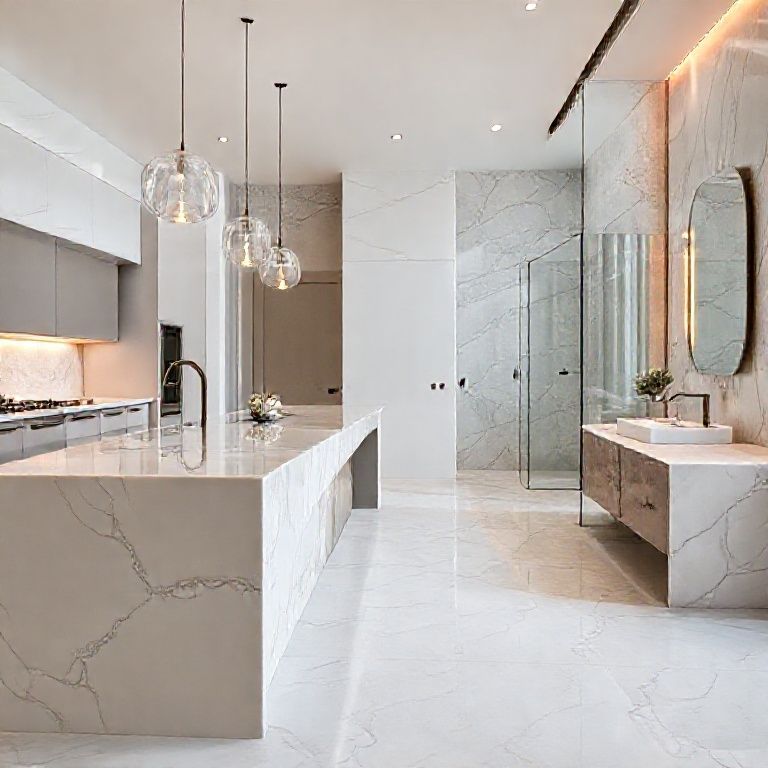
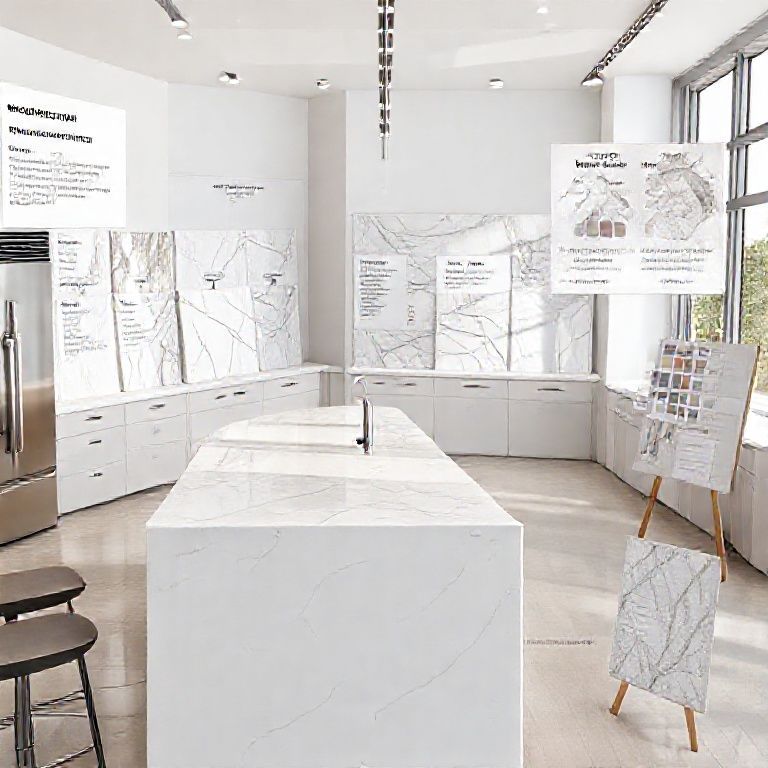
Once the sheets are cured, they are cut to size, sanded, and polished to achieve the desired finish. It’s during the finishing stages that the true beauty of Corian begins to emerge. The wide spectrum of colors, from pure whites and subtle neutrals to bold hues and intricate veining patterns that mimic natural stone, allows for incredible design freedom. The matte, semi-gloss, or high-gloss finishes can further customize the look and feel of the final product.
One of Corian’s most celebrated attributes is its ability to be seamlessly joined. Using a specialized adhesive that is chemically identical to the Corian itself, seams can be virtually eliminated. When fabricated by skilled professionals, these seams become invisible to the naked eye and imperceptible to the touch. This creates a continuous, unbroken surface that is not only aesthetically pleasing but also highly hygienic, as there are no grout lines or crevices for dirt and bacteria to accumulate. This characteristic is particularly invaluable in applications where cleanliness is paramount, such as kitchens, bathrooms, healthcare facilities, and food service areas.
The thermoformability of Corian is another game-changer. The material can be heated and bent into curves, waves, and complex shapes that would be impossible with traditional stone or solid materials. This opens up a world of design possibilities, allowing for custom countertops with integrated sinks, flowing vanity units, bespoke reception desks, and even sculptural architectural elements. Imagine a countertop that effortlessly wraps around a corner, or a sink that appears to be organically molded from the very surface it sits within. This is the magic of Corian’s thermoforming capabilities.
Furthermore, Corian is remarkably durable. While it can be scratched, as can most surfaces, these scratches can often be easily buffed out or repaired by a professional, restoring the surface to its original pristine condition. It’s also resistant to stains and impacts, making it a practical choice for high-traffic areas. Its non-porous nature means it doesn’t absorb liquids, preventing staining from common culprits like wine, coffee, or grease. This inherent resilience contributes to its longevity and enduring appeal in demanding environments.
The journey from raw materials to a finished Corian installation is a complex interplay of chemistry, engineering, and craftsmanship. It’s a process that transforms mineral fillers and polymers into a surface that is as beautiful as it is functional, a material that empowers designers to dream bigger and create spaces that are not only aesthetically captivating but also remarkably practical for everyday life. The science behind Corian is about creating a material that is more than the sum of its parts, a material that offers a unique blend of form and function.
Having delved into the foundational elements and the intricate manufacturing process of Corian, we now turn our attention to the practical magic it weaves into our environments. The intrinsic qualities born from its acrylic polymer and alumina trihydrate composition translate into a suite of benefits that make it a preferred choice for a vast spectrum of applications, from the intimate spaces of our homes to the bustling arteries of commercial establishments.
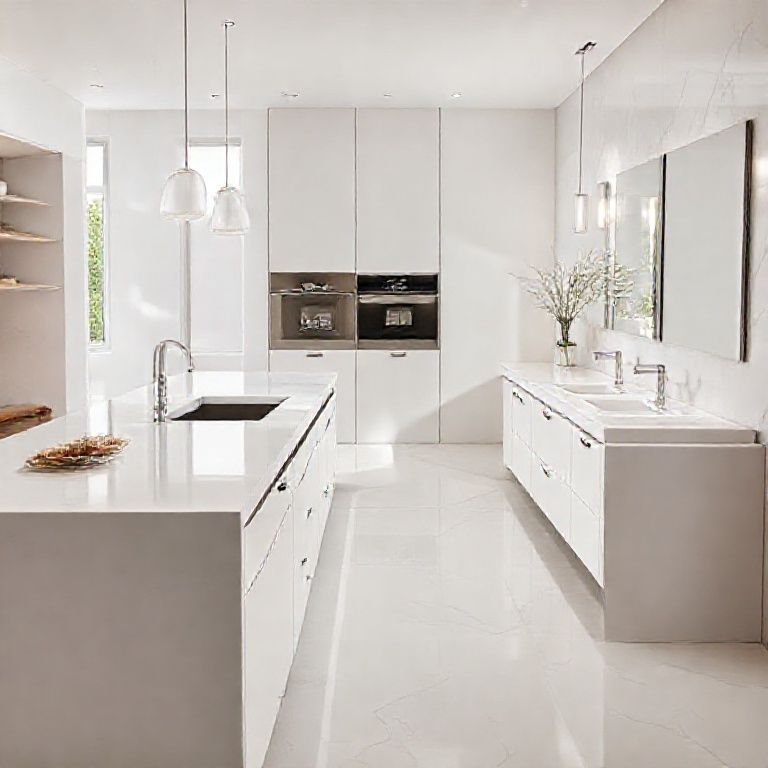
The seamless aspect of Corian is perhaps its most iconic feature, and its implications for hygiene are profound. In kitchens, where food preparation demands the utmost cleanliness, the absence of grout lines around sinks or between countertop sections means there are no hidden havens for bacteria, mold, or mildew. Spills can be wiped away effortlessly, leaving behind no trace and no breeding ground for unwanted microbes. This translates to a healthier living environment, a peace of mind that is invaluable in today’s health-conscious world. This non-porous characteristic extends beyond just hygiene; it also means Corian is highly resistant to staining. Many materials can be compromised by a spilled glass of red wine or a careless drip of coffee, leaving unsightly marks that are difficult or impossible to remove. Corian, however, repels these substances, making it an exceptionally forgiving material for the inevitable accidents of daily life.
The versatility in design that Corian offers is truly remarkable. Its ability to be fabricated into virtually any shape imaginable, combined with an extensive palette of colors and patterns, means that designers are not bound by conventional limitations. Whether one desires the crisp, clean lines of a modern minimalist kitchen, the organic curves of a spa-like bathroom, or a vibrant, eye-catching reception desk that serves as a statement piece, Corian can bring that vision to life. The integration of sinks and backsplashes into a single, continuous surface is a prime example of this design freedom. This creates a cohesive aesthetic and further enhances the hygienic benefits by eliminating the typical junctions where dirt and grime can accumulate.
Beyond the visual and hygienic advantages, Corian is also appreciated for its tactile qualities. While it possesses the solidity and heft reminiscent of natural stone, it can also be manipulated to achieve softer, more inviting finishes. The ability to be thermoformed allows for ergonomic designs, such as rounded edges or curved seating, that enhance comfort and user experience. In commercial settings, this can translate to more inviting and accessible public spaces.
The repairability of Corian is another significant advantage that contributes to its long-term value. While it is a durable material, if damage does occur, such as a deep scratch or a chip, it can often be repaired relatively easily. Minor scratches can be buffed out, and deeper damage can be filled and resurfaced by a trained professional, restoring the material to a like-new condition. This contrasts sharply with many other solid surface materials, where damage might necessitate a complete replacement. This repairability not only extends the lifespan of the product but also represents a more sustainable approach to material use, reducing waste and the need for frequent replacements.
The applications of Corian extend far beyond the kitchen and bathroom. In healthcare settings, its non-porous and hygienic properties make it ideal for laboratory countertops, surgical prep areas, and patient room surfaces, where sterility is paramount. In commercial spaces, it’s frequently used for reception desks, bar tops, retail displays, and wall cladding, adding a touch of modern sophistication and offering durability for high-traffic areas. Architectural applications are also a testament to its capabilities, with designers using it for feature walls, decorative panels, and even exterior cladding in some instances, showcasing its adaptability to various environmental conditions and design briefs.
The development of Corian was not merely about creating a new material; it was about reimagining the possibilities of surfaces. It was about providing designers and builders with a tool that offered both aesthetic freedom and practical superiority. The blend of acrylic polymer and alumina trihydrate is a carefully balanced equation, a testament to material science that delivers on its promises of beauty, durability, and functionality. It’s a material that has earned its place as a cornerstone of contemporary design, consistently proving its worth through its performance and its ability to inspire creative expression.
When considering the full spectrum of what Corian offers – its seamless beauty, its hygienic properties, its design flexibility, its repairability, and its sheer durability – it becomes clear why it has remained a leading choice for so many years. It’s a material that doesn’t just occupy space; it enhances it, providing a surface that is as enjoyable to live with as it is beautiful to behold. The ongoing innovation from DuPont and the skilled craftsmanship of fabricators continue to push the boundaries of what’s possible with this extraordinary solid surface.









