
Restoring Brilliance: Your Guide to Repairing Artificial Marble Countertops
The allure of artificial marble countertops is undeniable. Their seamless beauty, durability, and the illusion of natural stone at a more accessible price point have made them a popular choice for kitchens and bathrooms worldwide. However, even the most resilient materials can suffer wear and tear. Accidents happen, daily use takes its toll, and soon you might find yourself staring at a less-than-perfect surface – perhaps a minor scratch, a small chip, or a dulling of that once-brilliant sheen. The good news is, you don’t have to live with it, nor does it necessarily mean a costly replacement. With the right approach, many common issues with artificial marble countertops can be effectively repaired, restoring their aesthetic appeal and extending their lifespan.

Understanding Your Countertop Material is Key
Before diving into repairs, it’s important to identify the specific type of artificial marble you have. The term “artificial marble” is broad and can encompass several materials, most commonly quartz surfaces and solid surface materials (like Corian, for example). While they share some similarities, their composition can dictate the best repair methods.
Quartz countertops are engineered from a high percentage of natural quartz crystals bound together with resins and pigments. This makes them incredibly hard, non-porous, and highly resistant to stains and scratches. However, the resin component can be susceptible to heat damage and some chemicals. Repairing chips or deep scratches on quartz often involves specialized epoxy fillers that match the countertop’s color and pattern.
Solid surface countertops, on the other hand, are a composite material made from acrylic polymers and alumina trihydrate. They are known for their seamless appearance, ability to be thermoformed into curves, and excellent repairability. Minor scratches and scuffs can often be buffed out, and deeper damage can be filled and sanded to blend in seamlessly.
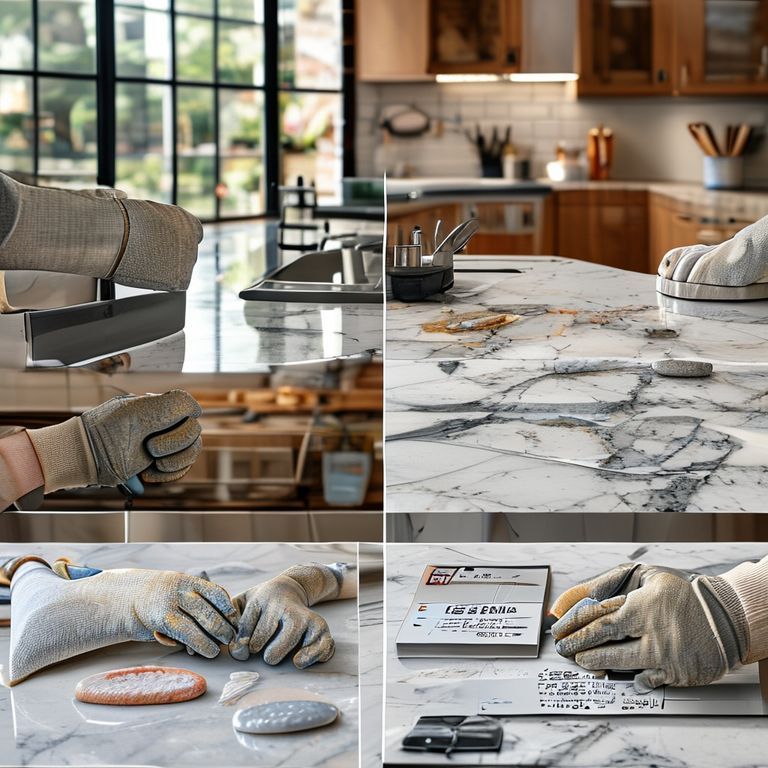
Identifying the problem area will guide your repair strategy. Are we dealing with a superficial scratch that only affects the top layer, a deeper gouge that penetrates the material, or a chipped edge that has broken off? Each scenario requires a slightly different approach.
The Arsenal of Repair: Tools and Materials
For most DIY countertop repairs, you’ll need a few essential items. Think of this as assembling your countertop first-aid kit:
Cleaning Supplies: Mild dish soap, water, a soft cloth or sponge, and potentially a specialized countertop cleaner. Repair Kits: For quartz and solid surface, look for repair kits specifically designed for these materials. These often contain color-matching agents, fillers, and applicators. Epoxy or Resin Fillers: High-quality, clear or color-matched epoxy fillers are crucial for filling chips and deeper scratches. Applicators: Small spatulas, putty knives, or even toothpicks for applying fillers precisely. Sanding Materials: Fine-grit sandpaper (220, 400, 600, 800 grit, and even finer for polishing) and a sanding block. Polishing Compounds: For bringing back the shine after sanding. Protective Gear: Gloves and eye protection are always recommended when working with chemicals and sanding. Heat Gun (optional, for solid surface): Can be useful for softening the material to aid in minor scratch removal on some solid surfaces.
Addressing Superficial Scratches: The Art of Buffing
Superficial scratches are those that don’t catch your fingernail when you run it over them. They are often the result of light abrasion from everyday use. For solid surface countertops, these can sometimes be buffed out.
Start by thoroughly cleaning the scratched area to remove any debris that could cause further scratching during the buffing process. For minor scuffs on solid surfaces, a non-abrasive cleaner and a soft cloth might be enough. If that doesn’t work, you can move to a slightly more aggressive approach.
Many solid surface manufacturers offer specific repair kits that include fine-grit abrasive pads. These are designed to gently abrade the surface and remove the scratch. You would typically start with a slightly coarser pad and work your way up to finer grits, always moving in a consistent direction or circular motion as recommended by the kit’s instructions. The key here is to blend the abraded area into the surrounding surface.
For quartz, superficial scratches are more challenging to buff out due to the material’s hardness. While a very light scratch might be improved with a specialized quartz cleaner and a microfiber cloth, deeper abrasions often require filling.
If you’re using a repair kit for your quartz countertop, follow the manufacturer’s instructions meticulously. These kits often involve applying a color-matched filler, allowing it to cure, and then sanding and polishing. The goal is to make the repair as invisible as possible.
When dealing with scratches, patience is your best friend. Work slowly, check your progress frequently, and remember that it’s easier to remove more material than to put it back.
Dealing with Deeper Scratches and Gouges: The Filler Approach
When a scratch is deep enough to catch your fingernail, or if you have a small gouge, you’ll need to use a filler. This is where epoxy or resin-based repair kits come into play.
Preparation is Paramount: Clean the damaged area thoroughly. For a deeper scratch or gouge, you might need to gently widen the opening slightly with a utility knife or fine-grit sandpaper to ensure the filler has good adhesion. Be very careful not to damage the surrounding area. Remove any loose particles.
Color Matching: This is perhaps the most critical step, especially for artificial marble, which can have intricate patterns and color variations. Many repair kits come with a range of pigments that you can mix to achieve the closest possible match to your countertop. This can take some trial and error, so test your mixed color on a scrap piece of material or an inconspicuous area if possible. If your countertop has a speckled or veined pattern, try to replicate that with small amounts of different colored pigments.
Mixing the Filler: Follow the instructions provided with your epoxy or resin filler precisely. Over-mixing or under-mixing can affect the curing process and the final strength and appearance of the repair.
Application: Using a small spatula or applicator, carefully fill the scratch or gouge. You want to apply slightly more filler than needed, creating a small “dome” over the damaged area. This is because the filler will likely shrink slightly as it cures. Ensure the filler is pushed deep into the scratch to create a solid bond.
Curing: Allow the filler to cure completely according to the manufacturer’s instructions. This can take anywhere from a few hours to 24 hours, depending on the product and ambient temperature. Rushing this step will compromise the repair.
Sanding and Shaping: Once fully cured, it’s time to bring the surface back to flush. Start with a fine-grit sandpaper (e.g., 220 grit) attached to a sanding block. Gently sand the excess filler down until it is flush with the surrounding countertop surface. Be careful not to sand the original countertop material. As you get closer to the original surface, switch to progressively finer grits (400, 600, 800, and even higher). This process removes the sanding marks from the coarser grits and smooths the repair.
Polishing: After you’ve achieved a smooth, flush surface with fine-grit sandpaper, it’s time to restore the shine. Use a polishing compound specifically designed for countertops or a general-purpose polishing compound. Apply a small amount to a clean cloth and rub it over the repaired area. You may need to buff vigorously to achieve a high gloss that matches the rest of your countertop.
This multi-step process requires patience and a steady hand, but the results can be incredibly rewarding, making the damage virtually disappear.
Beyond scratches, chips represent a more significant challenge, particularly on the edges and corners of countertops where they are most vulnerable. A chipped artificial marble countertop can be an eyesore and a potential snagging hazard. Fortunately, with the right materials and techniques, these can also be effectively repaired.
Repairing Chips: Rebuilding the Edge
The process for repairing chips is similar to filling deeper scratches, but it requires a bit more finesse to rebuild the missing material and recreate the sharp edge or curved profile.
Clean and Prepare the Chip: Thoroughly clean the chipped area. You’ll want to ensure there are no loose fragments. If the chip is sharp or ragged, you might need to carefully clean up the edges with fine-grit sandpaper or a small file to create a smoother surface for the filler to adhere to. This also helps in achieving a cleaner final shape.
Masking (Optional but Recommended): For a cleaner repair, especially on edges, you might consider masking off the surrounding countertop area with painter’s tape. This protects the pristine surface from accidental filler application or sanding marks.
Color Matching: As with scratches, color matching is paramount for a seamless repair. If your countertop has a distinct pattern or color, take your time mixing pigments to get as close a match as possible.
Applying the Filler: For chips, it’s often best to use a thicker, more viscous filler or a two-part epoxy designed for structural repairs. You’ll need to build up the material in layers, allowing each layer to partially cure before applying the next. This prevents the filler from sagging or falling out, especially on vertical edges. Use a small spatula or putty knife to carefully pack the filler into the void. For edges, aim to slightly overfill, creating a small mound that you can later sand down to the correct profile.
Shaping and Curing: Once the chip is filled to slightly overfilled, let the filler cure completely. The curing time will depend on the product used.
Sanding and Recreating the Edge: This is where patience and precision are key. Once the filler is fully cured, begin sanding with fine-grit sandpaper. Start by carefully sanding the excess filler down until it’s flush with the surrounding countertop. For edges, you’ll need to recreate that crisp line or rounded profile. Use a sanding block to maintain straight edges and work gently to avoid creating rounded or uneven surfaces where there should be a sharp corner. As you get closer to the desired shape, switch to increasingly finer grits of sandpaper. The goal is to blend the repaired area seamlessly with the original material.
Polishing: After sanding with the finest grits, the repaired area will likely be dull. Use a polishing compound and a clean cloth to buff the area until it matches the original shine of your countertop.
Dealing with Stains: Prevention and Removal
While artificial marble is generally resistant to stains, some substances can still leave their mark, especially if left to sit for an extended period.
Prevention is Key: The best approach is to wipe up spills immediately. Use coasters for drinks, especially those containing acidic components like wine or citrus juice. Be mindful of highly staining substances like turmeric, curry, or certain dyes.
Mild Stains: For most common stains, a simple solution of mild dish soap and warm water, along with a soft cloth, should do the trick. Avoid abrasive cleaners or scouring pads, as these can dull the surface.
Stubborn Stains: If water and soap don’t work, you can try a specialized artificial marble cleaner. For more persistent organic stains, a paste made from baking soda and water can be effective. Apply the paste to the stain, let it sit for a few minutes (but don’t let it dry out completely), and then gently wipe it away. Rinse thoroughly.
Heat Stains/Discoloration: On some artificial marble, particularly solid surfaces, heat can cause discoloration. If this is the case, a paste of baking soda and water applied as a poultice and left for a few hours might help lift the discoloration. For more severe heat damage, professional help might be necessary.
For Quartz Specifics: Quartz is highly stain-resistant due to its non-porous nature. However, if a stain does occur, it’s usually on the surface and can be removed with a specialized quartz cleaner or a glass cleaner. Avoid harsh chemicals like oven cleaners or drain cleaners, which can damage the resin binders.
Reviving a Dull Surface: The Power of Polish
Over time, even with careful cleaning, artificial marble countertops can lose some of their luster. Daily wear and tear, abrasive cleaning products, or even hard water can contribute to a dull film.
Thorough Cleaning: Start by giving your countertops a deep clean to remove any surface grime or residue that might be contributing to the dullness. Use a mild, pH-neutral cleaner and a microfiber cloth.
Specialized Polish: Invest in a good quality artificial marble polish or a quartz polish, depending on your material. These products are designed to enhance the shine and provide a protective layer.
Application: Apply a small amount of polish to a clean, soft cloth or microfiber applicator pad. Work in small sections, applying the polish in a circular motion or as directed by the product.
Buffing: Once you’ve applied the polish to a section, use a separate clean, dry cloth or microfiber pad to buff the area to a high shine. You’ll notice the difference as the gloss returns. Continue this process across the entire countertop.
Regular Maintenance: To maintain the shine, incorporate polishing into your regular cleaning routine. A quick polish once a month can make a significant difference in keeping your countertops looking their best.
When to Call the Professionals
While many common issues with artificial marble countertops can be tackled as DIY projects, there are instances where professional intervention is the wiser choice.
Large or Complex Damage: If you have extensive cracking, large chips that affect structural integrity, or significant discoloration across a large area, professional restorers have specialized equipment and expertise to handle such issues.
Color Matching Challenges: If your countertop has a very complex or unique veining pattern, achieving a perfect color match for repairs can be extremely difficult for a DIYer. A professional fabricator or restorer will have access to a wider range of pigments and experience in custom color matching.
Heat Damage: Significant heat damage, such as melted or warped areas, often requires specialized techniques and equipment that are beyond the scope of typical DIY repair.
Lack of Confidence: If you’re not comfortable with the repair process, or if you’re worried about making the problem worse, it’s always better to consult a professional. The cost of professional repair is often less than the cost of replacing the entire countertop.
Restoring the beauty and functionality of your artificial marble countertops is achievable. By understanding your material, equipping yourself with the right tools, and approaching repairs with patience and precision, you can extend the life of your surfaces and keep your kitchen or bathroom looking as stunning as the day it was installed. Remember, a little care and attention can go a long way in preserving the brilliance of these elegant surfaces.









