
The 2.2-meter kitchen countertop. For some, these dimensions might conjure images of cramped quarters and compromised functionality. But what if we told you that this seemingly modest length is actually a canvas for ingenious design, a testament to the fact that beauty and efficiency can indeed thrive in smaller footprints? In the world of interior design, particularly in urban living where space is at a premium, the 2.2-meter kitchen countertop is not a limitation; it’s an opportunity. It’s an invitation to think smarter, to embrace creativity, and to curate a culinary space that is as visually appealing as it is practical. Forget the notion that a grand, sprawling kitchen is the only path to a desirable cooking environment. The truth is, a well-designed compact kitchen can often surpass its larger counterparts in terms of workflow, intimacy, and sheer charm.

The genesis of a successful 2.2-meter kitchen design lies in a deep understanding of your needs and how you interact with your kitchen. Before a single design sketch is drawn, introspection is key. Are you a gourmet chef who whips up elaborate multi-course meals, or do you prefer quick, simple dishes? How many people typically use the kitchen at once? What are your essential appliances, and where do they logically need to be positioned? Understanding these daily rituals will inform every design decision, ensuring that the limited counter space is optimized for your specific lifestyle. The magic of a compact kitchen is its inherent efficiency. Every element must serve a purpose, and its placement must be considered for seamless movement. Think of it as a well-choreographed dance, where each appliance, utensil, and surface plays a vital role in the smooth execution of culinary tasks.
One of the most impactful strategies for maximizing a 2.2-meter countertop is smart storage integration. This isn’t just about having enough cabinets; it’s about having the right kind of storage in the right places. Consider pull-out pantries that offer easy access to ingredients without consuming precious horizontal space. Vertical storage solutions are your best friend. Think about open shelving for frequently used items, allowing them to be both accessible and decorative. Above the countertop, wall-mounted magnetic knife strips or utensil rails can keep essential tools within easy reach, freeing up the limited counter surface. Within the cabinets, drawer organizers, tiered shelves, and lazy Susans can transform deep, awkward spaces into highly efficient storage zones. The key is to make every cubic inch count.
Material selection plays a pivotal role in both the aesthetic appeal and the practicality of your 2.2-meter kitchen. For countertops, durability and ease of maintenance are paramount. Quartz is an excellent choice, offering a non-porous surface that is resistant to stains, scratches, and heat. It also comes in a vast array of colors and patterns, allowing you to achieve a high-end look. Granite, another popular natural stone, provides a unique and timeless beauty, though it requires sealing to prevent staining. For a more budget-friendly option that still offers good durability, consider solid surface materials like Corian, which can be seamlessly integrated, creating a sleek, monolithic look. If you’re aiming for a more organic and warm feel, butcher block countertops can be a beautiful choice, but they do require regular oiling and are more susceptible to scratches and water damage. The color and pattern of your countertop can also influence the perception of space. Lighter, more uniform colors tend to make a kitchen feel larger and brighter, while darker or heavily patterned surfaces can sometimes make a compact space feel smaller.
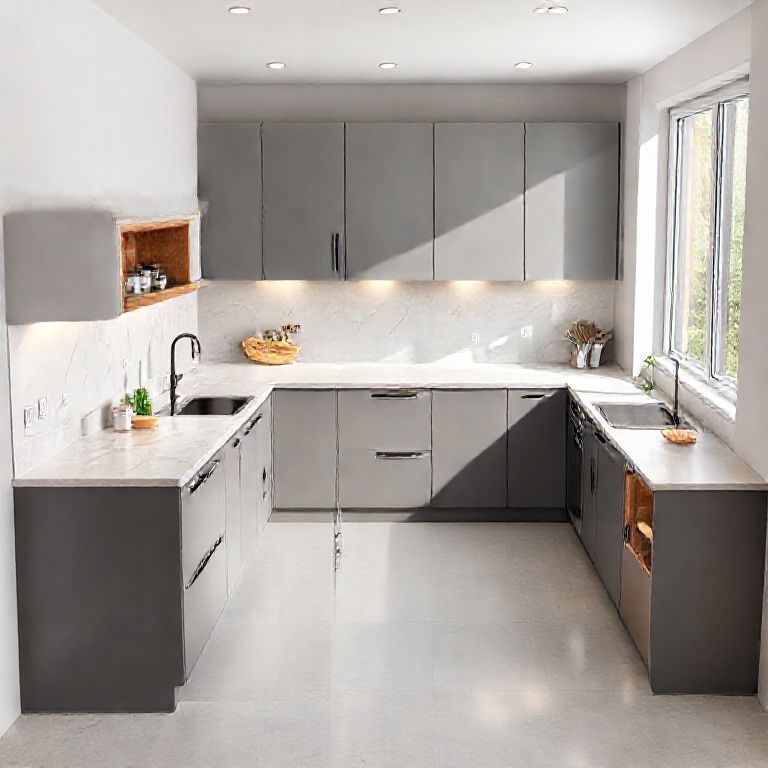
Lighting is another often-underestimated element in compact kitchen design. A well-lit kitchen not only looks more inviting but also enhances functionality. Under-cabinet lighting is a game-changer, illuminating your work surfaces directly, reducing shadows, and making intricate tasks like chopping vegetables much easier. Recessed ceiling lights provide general ambient illumination, ensuring the entire space feels bright and airy. Consider adding a statement pendant light above a small island or dining nook to add a touch of personality and define the space. Natural light is, of course, your most valuable asset. Maximize it by keeping window treatments minimal and ensuring nothing obstructs the flow of light into the kitchen.
When it comes to the layout of a 2.2-meter kitchen, the “work triangle” – the imaginary lines connecting the sink, refrigerator, and stovetop – remains a fundamental principle. Even in a compact space, adhering to this concept ensures an efficient workflow. However, in a 2.2-meter kitchen, this triangle might be compressed, or you might opt for a more linear or L-shaped layout. For instance, a single-wall kitchen, where all elements are arranged along one wall, is a common and effective solution for very narrow spaces. Alternatively, an L-shaped layout can utilize two adjacent walls, offering more counter space and distinct zones for prep, cooking, and cleaning. The goal is to create a logical flow that minimizes unnecessary steps and allows for comfortable movement, even when multiple people are in the kitchen.
Let’s delve deeper into the concept of multi-functional elements. In a 2.2-meter kitchen, every item should ideally pull double or even triple duty. A small kitchen island, for example, can serve as an extension of your countertop, a breakfast bar, and a storage unit, all in one. Look for islands on wheels that can be moved out of the way when not in use, further enhancing flexibility. Even a narrow peninsula can offer these benefits. Consider a pull-out or fold-down table that can be extended for meal prep or dining and then neatly tucked away. Integrated appliances are also a smart investment. A slimline dishwasher that fits discreetly under the counter, or a compact oven and hob, can maintain a sleek, uncluttered look. The visual continuity achieved by integrated appliances can make a small kitchen feel more cohesive and expansive.
The color palette you choose for your 2.2-meter kitchen can dramatically influence its perceived size and atmosphere. Light, neutral colors like whites, creams, soft grays, and pale blues tend to reflect light, making the space feel more open and airy. Consider using a monochromatic scheme, where variations of a single color are used throughout the kitchen, creating a sense of flow and visual unity. This can extend to your cabinets, walls, and even your countertop. If you prefer bolder colors, use them strategically as accents. A colorful backsplash or a few vibrant accessories can add personality without overwhelming the space. The finish of your cabinets also matters. High-gloss finishes can reflect light, similar to mirrors, contributing to a sense of spaciousness. Matte finishes, on the other hand, can absorb light and might be better suited for larger kitchens or specific design aesthetics.
Ultimately, designing a 2.2-meter kitchen countertop is about embracing constraints as opportunities for innovation. It’s about thoughtful planning, intelligent material choices, and a keen eye for detail. It’s about proving that a smaller kitchen doesn’t mean a less enjoyable or less stylish one. The journey begins with understanding your needs, and the destination is a beautifully functional and deeply personal culinary sanctuary, perfectly scaled to your life.
Continuing our exploration into the art of designing with a 2.2-meter kitchen countertop, we delve deeper into the nuanced strategies that transform compact culinary spaces into havens of style and efficiency. Having established the foundational principles of smart storage, judicious material selection, strategic lighting, and thoughtful layout, we now turn our attention to the finer details and innovative solutions that truly elevate a small kitchen’s potential. The 2.2-meter constraint, when approached with creativity, becomes a catalyst for bespoke solutions and a testament to the elegance of minimalism.
The concept of a “working island” or a compact peninsula can be a revelation in a 2.2-meter kitchen. While a full-sized island might be out of the question, a narrow, strategically placed island or peninsula can serve multiple purposes. It can act as an extension of the countertop, providing much-needed extra prep space. It can also incorporate a breakfast bar, offering a casual spot for quick meals or coffee. The underside of the island can be fitted with open shelving for cookbooks or decorative items, or with cabinets for additional storage. If space is exceptionally tight, consider a rolling island or a fold-down counter that can be deployed when needed and stored away when not, preserving precious floor space. The key is to ensure that any island or peninsula doesn’t obstruct the primary traffic flow within the kitchen, maintaining a sense of openness and ease of movement.
The backsplash is another area where creativity can truly shine in a compact kitchen. Far from being just a protective layer, a well-chosen backsplash can add significant visual interest and depth. For a 2.2-meter countertop, consider a full-height backsplash that extends all the way to the ceiling. This creates a continuous visual line, making the wall appear taller and the kitchen feel more expansive. Materials like large-format tiles can minimize grout lines, contributing to a cleaner, less cluttered look. Mirrored backsplashes can also be a clever trick to reflect light and create the illusion of more space. For a touch of luxury, consider a sleek slab of quartz or natural stone that matches your countertop, creating a seamless and sophisticated appearance. Even a simple subway tile, laid in a classic pattern, can add texture and character without overwhelming the space.
When it comes to appliances, scale and integration are crucial. Opt for compact or slimline versions of essential appliances. A 45cm-wide dishwasher, for instance, can be a lifesaver in a small kitchen. Consider a combination microwave-oven unit to save space. For stovetops, a two-burner induction hob can be perfectly adequate for most daily cooking needs and takes up significantly less counter space than a four-burner model. Integrated appliances, where the appliance is hidden behind a cabinet front, contribute to a minimalist aesthetic and make the kitchen appear more streamlined. This visual continuity is paramount in a small space. Don’t forget to consider the refrigerator. A counter-depth model will sit flush with your cabinets, creating a more cohesive look and preventing it from protruding into the kitchen’s main thoroughfare.
The accessories and décor in your 2.2-meter kitchen are not merely ornamental; they are integral to its functionality and overall charm. Think about a curated selection of high-quality, aesthetically pleasing utensils and cookware that you don’t mind displaying. A beautiful wooden cutting board can double as a serving platter. Stylish canisters for storing dry goods can add a pop of color or texture. Opt for smaller-scale versions of everyday items, such as a compact toaster or a sleek kettle. Wall-mounted spice racks or magnetic strips for knives not only save counter space but also bring a sense of professional organization to your kitchen. Even the sink can be a design feature. A deep, single-bowl sink is often more practical for washing larger pots and pans than a double-bowl sink in a compact kitchen, and it presents a cleaner visual line. Consider adding a stylish tap that complements your chosen aesthetic.
The concept of “zone” creation is particularly effective in a 2.2-meter kitchen. Even within this limited length, you can designate distinct areas for specific tasks. For example, one end of the counter might be your primary prep zone, with easy access to knives and cutting boards. The middle section could be your cooking zone, with the hob and perhaps a small spice rack nearby. The other end could be your cleaning zone, adjacent to the sink and dishwasher. This organization minimizes movement and streamlines workflow, making the kitchen feel more efficient and less chaotic.
Embrace the power of verticality. In a small kitchen, your walls are valuable real estate. Utilize them to their fullest potential. Install open shelving above your countertop for frequently used items like your favorite mugs or a decorative plant. Wall-mounted pot racks or magnetic strips can hold pots, pans, and utensils, keeping them out of the way. Consider a pegboard system that can be customized to hold various kitchen tools, offering both function and a unique visual element. Even the space above your cabinets can be utilized for storing less frequently used items in attractive baskets or containers.
Color psychology plays a significant role in how we perceive space. As mentioned previously, light and neutral colors are generally recommended for small kitchens as they reflect light and create an airy feel. However, don’t be afraid to introduce pops of color. A vibrant backsplash, colorful kitchen accessories, or even a statement appliance can add personality and prevent the kitchen from feeling sterile. If you’re using bold colors, use them strategically to draw the eye and create focal points. Consider the interplay of colors between your countertop, cabinets, walls, and flooring. A cohesive color scheme will make the space feel more harmonious and intentionally designed.
When it comes to finishing touches, think about texture and materiality. A sleek, polished countertop might be paired with matte cabinet fronts for a sophisticated contrast. Natural wood elements, such as a butcher block accent or wooden accessories, can add warmth and a touch of organic beauty. Even the hardware on your cabinets can make a difference. Consider minimalist handles or sleek, integrated pulls to maintain a clean and uncluttered look. The overall goal is to create a cohesive and visually appealing environment that feels both functional and inviting.
In conclusion, the 2.2-meter kitchen countertop is not a symbol of compromise, but rather a testament to the power of smart design. By embracing innovative storage solutions, judicious material choices, strategic lighting, efficient appliance selection, and a keen understanding of visual perception, even the most compact of kitchens can be transformed into a highly functional, stylish, and enjoyable space. The “2.2米厨房台面设计图” is not just a set of dimensions; it’s a blueprint for maximizing potential, proving that with a little ingenuity, a smaller kitchen can offer an unparalleled sense of comfort, efficiency, and personal style. It’s about creating a space that is perfectly scaled to your life, where every element serves a purpose and every corner is celebrated.









