
The allure of natural stone – the veining of marble, the speckled grandeur of granite, the earthy tones of travertine – has captivated humanity for millennia. It adorns our most prestigious buildings, lends an air of timeless elegance to our homes, and whispers stories of geological epochs. Yet, the extraction of natural stone, while breathtaking, comes with its own set of challenges: environmental impact, variability in quality and appearance, and limitations in terms of size and shape. Enter the realm of artificial stone technology, a field where human ingenuity meets the raw power of chemistry to create surfaces that not only mimic the beauty of their natural counterparts but often surpass them in functionality and consistency. At the heart of this revolution lies the “人造石技术配方” – the secret sauce, the alchemist’s blend, that dictates the very essence of these engineered materials.

To truly appreciate the magic of artificial stone, we must first demystify its creation. It’s not simply a matter of crushing rocks and pressing them together. Instead, it’s a sophisticated process of chemical synthesis and precise engineering, guided by carefully developed formulations. These formulations are intricate blueprints, detailing the exact ratios and types of ingredients, the processing conditions, and the curing methods required to achieve specific aesthetic and performance characteristics. Think of it as a culinary masterpiece, where the chef meticulously selects and combines ingredients to create a dish that tantalizes the senses. In the case of artificial stone, the “ingredients” are a carefully curated mix of mineral fillers, polymer binders, pigments, and additives, each playing a crucial role in the final product’s identity.
One of the most prominent categories of artificial stone is engineered quartz. Its rise to prominence is no accident, stemming directly from the brilliance of its formulation. The primary component, typically making up 90-95% of the material, is crushed quartz, a naturally occurring mineral prized for its hardness and durability. This isn’t just any quartz; it’s precisely sized and graded to ensure optimal packing density and a smooth, homogenous surface. Bound together by a thermosetting resin, most commonly a polyester or vinyl ester resin, these particles are transformed from loose aggregate into a solid, monolithic slab. The resin acts as the “glue,” holding the quartz crystals in place, providing flexibility, and contributing to the stone’s non-porous nature.
The “人造石技术配方” for engineered quartz is where the true artistry lies. The choice of resin, its viscosity, and the curing agents are critical. These determine the time it takes for the mixture to solidify, the energy required for the curing process, and ultimately, the mechanical properties of the final slab. Furthermore, the formulation dictates the level of pigmentation. Pigments, often metallic oxides, are incorporated to replicate the vast spectrum of natural stone colors and patterns. Here, skilled chemists and designers work in tandem. They develop complex pigment recipes to mimic the subtle variations in natural marble, the depth of granite, or even to create entirely novel, avant-garde designs. The dispersion of these pigments within the quartz-resin matrix is paramount; uneven distribution can lead to streaks or blotches, detracting from the aesthetic appeal.
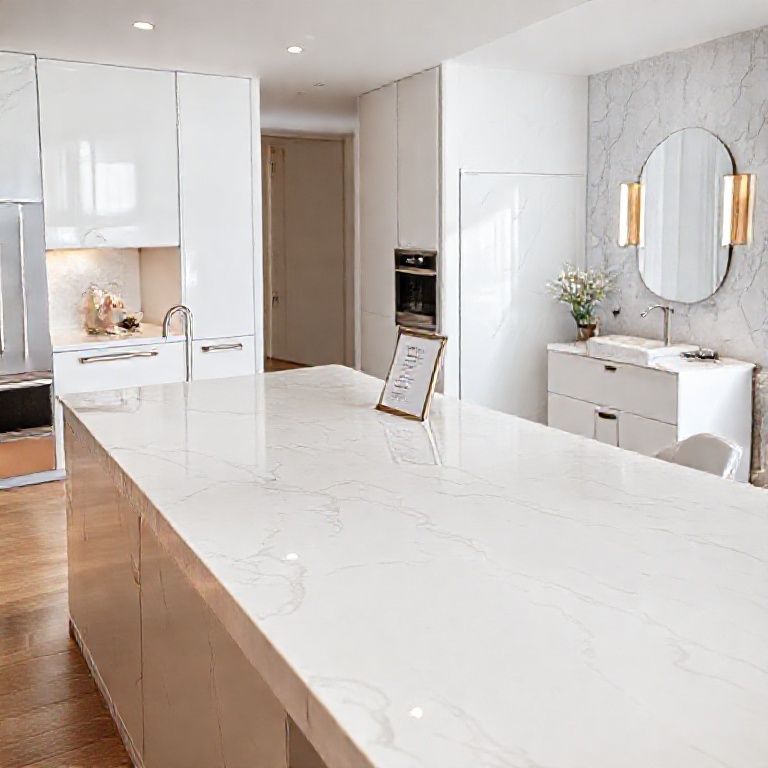
Beyond the core components, a sophisticated “人造石技术配方” will also incorporate a range of additives, each serving a specific purpose. For instance, UV stabilizers are crucial for preventing color degradation when the stone is exposed to sunlight, a common concern with many natural materials. Release agents are used during the manufacturing process to facilitate the removal of the cured slabs from the molds. Even tiny amounts of agents to control viscosity or enhance flow can significantly impact the ease of manufacturing and the uniformity of the final product. The precise engineering of these formulations allows manufacturers to achieve remarkable consistency, ensuring that every slab produced adheres to the same high standards of quality and appearance – a feat often impossible with naturally quarried stone, where each block carries its own unique fingerprint.
The manufacturing process itself is intrinsically linked to the formulation. Engineered quartz, for example, is typically produced using a process called vibrocompression molding. The meticulously mixed aggregate and resin are poured into molds, and then subjected to high-frequency vibration and vacuum. This process compacts the material, eliminates air voids, and promotes uniform distribution of the resin, ensuring a dense and strong final product. The temperature and duration of the curing process are also dictated by the resin system and other components outlined in the “人造石技术配方.” Following curing, the slabs are then precisely cut, polished, and finished to a desired sheen, ready to grace countertops, backsplashes, flooring, and wall cladding. The mastery of this interplay between formulation and process is what elevates artificial stone from a mere imitation to a high-performance material in its own right.
While engineered quartz commands a significant portion of the artificial stone market, the “人造石技术配方” extends to a diverse array of other materials, each offering distinct advantages and aesthetic possibilities. Solid surfaces, for instance, represent another significant category, and their formulations differ considerably, leading to unique properties. Unlike engineered quartz, solid surfaces typically utilize acrylic or polyester resins as the primary binder, often in higher concentrations relative to the mineral filler. The filler is usually aluminum trihydrate (ATH), a naturally occurring mineral derived from bauxite ore. ATH not only provides bulk and structural integrity but also imparts fire-retardant properties to the material.
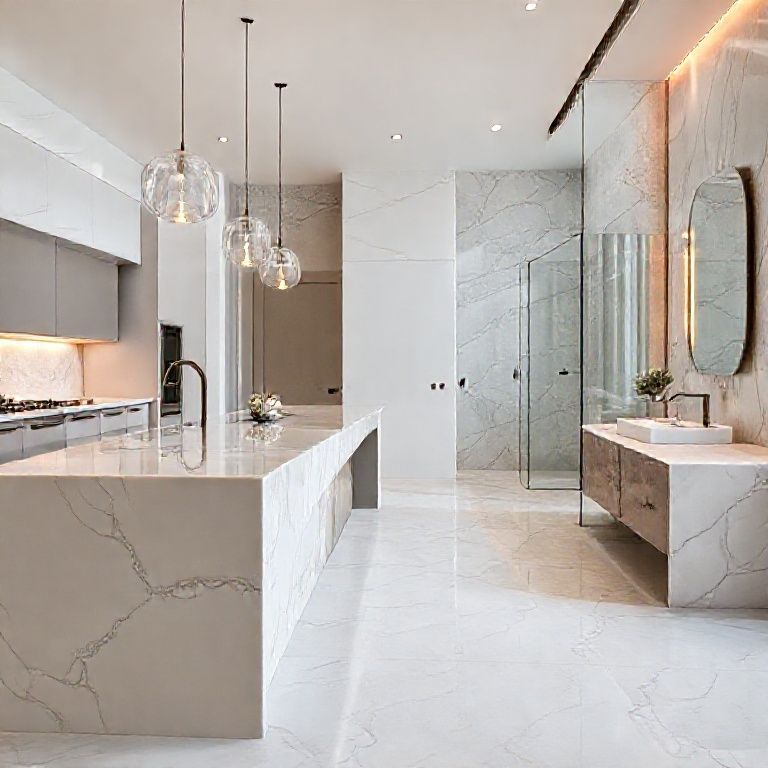
The “人造石技术配方” for solid surfaces is geared towards creating a material that is non-porous, seamless, and repairable. The acrylic resin, in particular, offers exceptional translucency and is easily thermoformed, allowing for the creation of intricate shapes and designs. This makes solid surfaces a popular choice for bespoke applications, where curves, integrated sinks, and complex architectural features are desired. The formulation must carefully balance the resin content with the filler to achieve the right balance of workability, durability, and aesthetic finish. Pigments and special effects, such as metallic flecks or veining, are incorporated into the mix, often applied in layers during the casting process to achieve depth and realism.
The manufacturing of solid surfaces often involves casting the mixture into large sheets or molds, followed by a curing process. The absence of high-pressure vibrocompression, as seen with quartz, means solid surfaces can achieve a truly seamless appearance when fabricated. Seams are typically joined using a specialized adhesive that chemically bonds with the material, creating a joint that is virtually invisible and as durable as the rest of the surface. This seamless quality is a significant advantage in applications where hygiene is paramount, such as healthcare settings or laboratories, as it eliminates grout lines where bacteria can accumulate. The “人造石技术配方” for solid surfaces also considers the ease of repair. Minor scratches or damage can often be buffed out or repaired by a trained technician, restoring the surface to its original condition – a testament to the formulation’s inherent resilience and repairability.
Beyond engineered quartz and solid surfaces, the umbrella of artificial stone technology encompasses materials like sintered stone and advanced composites. Sintered stone, a more recent innovation, pushes the boundaries of material science. Its “人造石技术配方” involves a blend of natural minerals – feldspar, quartz, and clays – subjected to extremely high temperatures and pressures using a process known as sintering. This process effectively fuses the raw materials together at a molecular level, creating a slab that is exceptionally hard, heat-resistant, and resistant to stains and UV radiation. The formulation for sintered stone focuses on achieving a specific particle size distribution and mineral composition that will sinter effectively, resulting in a dense, non-porous structure with minimal resin binder, if any. This often means very little “recipe” in the traditional polymer-binding sense, but a precise mineralogical composition and controlled firing process.
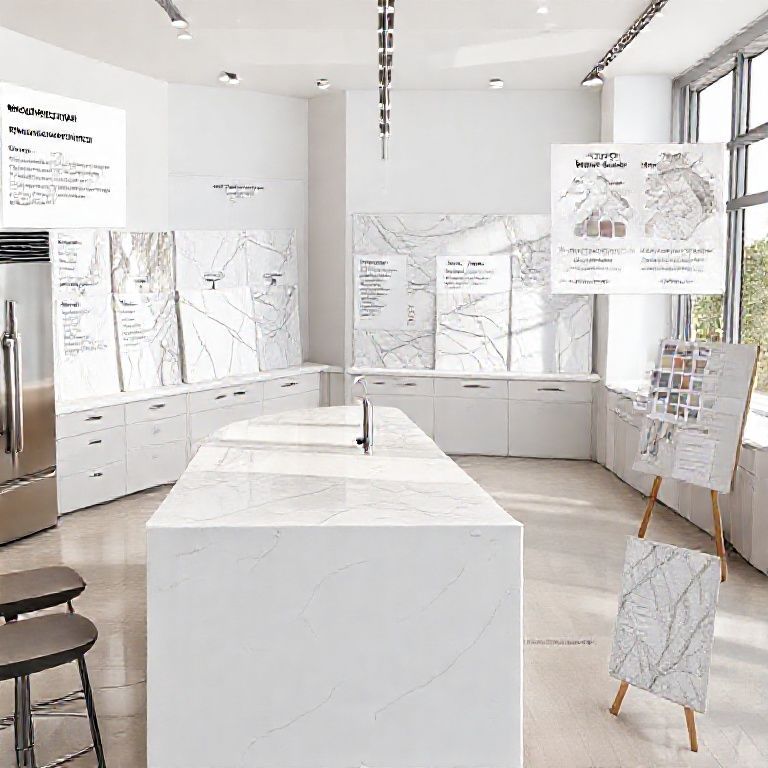
The development of advanced composites also falls under the broad category of artificial stone technology. These formulations might incorporate a higher percentage of advanced polymers, sometimes combined with fibers like fiberglass or carbon fiber, to create materials with exceptional strength-to-weight ratios and unique aesthetic possibilities. The “人造石技术配方” here is highly proprietary and can be tailored for very specific performance requirements, such as extreme durability, chemical resistance, or specialized optical properties. These materials are often found in high-performance architectural applications or specialized industrial settings.
The beauty of “人造石技术配方” lies not only in its ability to replicate nature but also in its capacity to innovate and create entirely new material experiences. Designers and architects are no longer limited by the constraints of quarrying. They can specify surfaces with unparalleled consistency, custom colors, intricate patterns, and performance characteristics tailored to their exact needs. From the subtle elegance of a marble-look countertop in your kitchen to the striking, avant-garde designs in a commercial space, artificial stone technology, driven by its meticulously crafted formulations, is silently transforming our built environment, offering a perfect marriage of form, function, and enduring beauty. The alchemist’s touch, once confined to ancient labs, now shapes the surfaces we interact with every day, a testament to the power of human ingenuity and chemical science.









