
The allure of natural stone has captivated humanity for millennia. From the majestic marble of ancient temples to the rugged granite of modern landscapes, stone possesses an inherent beauty and durability that speaks to our primal connection with the earth. Yet, the pursuit of aesthetic perfection and functional excellence has led to an ingenious evolution: the creation of artificial stone. More than just a substitute, artificial stone represents a triumph of human ingenuity, a testament to our ability to harness raw materials and transform them into surfaces of unparalleled beauty and performance. At the heart of this transformation lies a crucial, often unseen, element: the artificial stone raw material supplier. These are the alchemists of the modern age, meticulously sourcing, processing, and delivering the foundational components that breathe life into the stunning slabs we admire.

Imagine a world where the perfect shade of white marble is consistently achievable, where the intricate veining of a rare agate can be replicated with precision, and where the durability of granite is enhanced with a touch of modern science. This is the realm of artificial stone, and its genesis lies in the careful selection and blending of fundamental ingredients. Primarily, the dominant force in the artificial stone market is quartz. This ubiquitous mineral, known for its hardness and crystalline structure, forms the backbone of most engineered quartz surfaces. The journey begins with the extraction of high-purity quartz sand. Suppliers play a pivotal role here, ensuring the quality and consistency of this primary aggregate. It’s not merely about digging up rock; it’s about understanding the geological formations, the purity of the deposits, and the most efficient and responsible methods of extraction.
Once quarried, the quartz undergoes a rigorous purification process. Impurities are meticulously removed to achieve the desired clarity and color, forming the base for a vast spectrum of potential designs. This purity is paramount, as even microscopic contaminants can affect the final color, strength, and overall integrity of the artificial stone. Following purification, the quartz is ground into fine particles, ready to be mixed with other essential components.
The binding agents are the silent heroes in this narrative. While quartz provides the structure and hardness, it’s the carefully formulated resins that hold everything together, creating a cohesive and durable material. Typically, polyester or epoxy resins are employed, chosen for their adhesive properties, resistance to chemicals, and ability to be pigmented. The selection of these resins is a critical decision for raw material suppliers. They must offer formulations that provide optimal strength, flexibility, and UV resistance, ensuring the finished product withstands the rigors of daily use and maintains its aesthetic appeal over time. This involves a deep understanding of polymer chemistry and the specific demands of the surfacing industry.
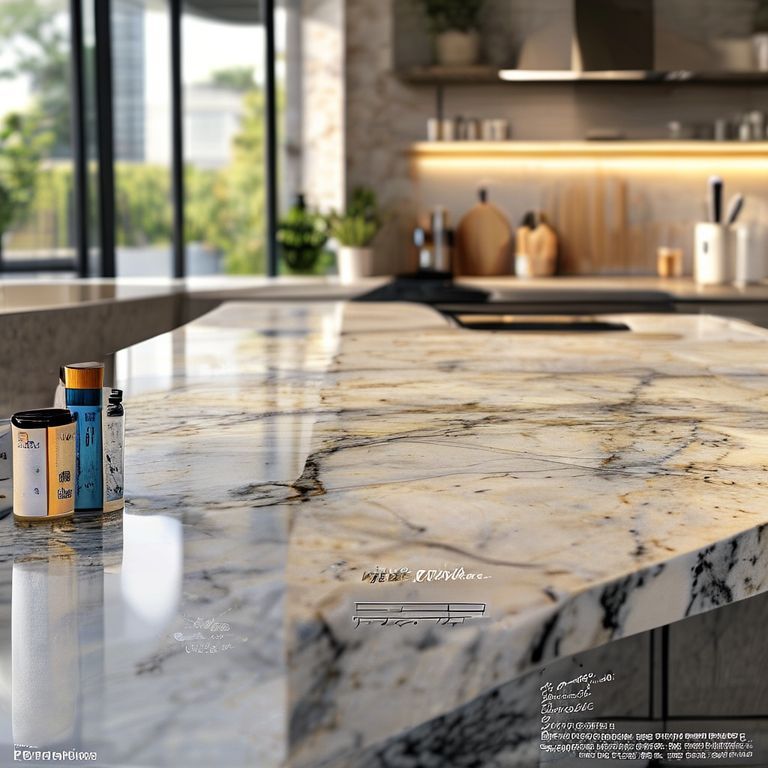
Beyond the structural elements, color and pattern are brought to life through pigments and additives. This is where the artistry truly begins to manifest. Pigments, carefully chosen for their lightfastness and color intensity, are blended with the quartz and resin mixture to achieve an astonishing array of hues. From the subtle elegance of a muted grey to the vibrant intensity of a deep sapphire, the possibilities are virtually endless. Furthermore, specialized additives can be incorporated to enhance specific properties. These might include UV stabilizers to prevent fading in direct sunlight, flame retardants for increased safety, or even antimicrobial agents for enhanced hygiene in kitchen and bathroom applications.
The role of the artificial stone raw material supplier extends far beyond simply delivering bags of powder and drums of liquid. They are integral partners in the manufacturing process, often collaborating with fabricators and designers to develop bespoke formulations. This collaborative spirit is what drives innovation in the industry. A supplier might work with a manufacturer to create a new shade of white that perfectly complements a Scandinavian-inspired kitchen design, or they might develop a resin system that allows for larger, more dramatic slab sizes without compromising structural integrity.
The quality control at this foundational stage is non-negotiable. Reputable suppliers implement stringent testing protocols at every step. This includes analyzing the particle size distribution of the quartz, verifying the chemical composition of the resins, and conducting color consistency tests for pigments. The goal is to ensure that every batch of raw material meets the exact specifications required by the manufacturer. Any deviation, no matter how small, can have a cascading effect on the final product, leading to aesthetic inconsistencies or compromised performance.
The global nature of manufacturing means that raw material suppliers often operate on an international scale. Sourcing quartz from diverse geological regions, or procuring specialized resins from manufacturers around the world, requires a sophisticated logistical network and a keen understanding of international trade regulations. Furthermore, an increasing emphasis on sustainability is shaping the practices of these suppliers. Responsibly sourced raw materials, environmentally friendly processing methods, and the development of bio-based or recycled components are becoming hallmarks of forward-thinking companies in this sector.
In essence, the artificial stone raw material supplier is the unseen architect of our living spaces. They provide the fundamental building blocks, the carefully orchestrated blend of science and artistry, that enables the creation of surfaces that are not only beautiful but also exceptionally durable and functional. Their dedication to quality, innovation, and increasingly, sustainability, underpins the entire artificial stone industry, transforming humble raw materials into the exquisite surfaces that define our homes, our workplaces, and our public spaces.
The journey from raw materials to the stunning surfaces that grace our kitchens, bathrooms, and commercial spaces is a complex ballet of science, engineering, and artistry. While the fabricators and manufacturers often receive the spotlight for their craftsmanship, the bedrock of their success lies with the artificial stone raw material suppliers. These are the indispensable partners, the unsung heroes who meticulously curate, refine, and deliver the very essence of what makes artificial stone so remarkable. Their contribution is not merely transactional; it is foundational, shaping the aesthetic possibilities, the performance characteristics, and the very sustainability of the products we use daily.
Consider the primary component: quartz. The quality of the raw quartz sand directly dictates the final appearance and durability of engineered quartz surfaces. Suppliers in this arena are not just miners; they are geological connoisseurs. They identify deposits of high-purity quartz, understanding the nuances of its crystalline structure and mineral composition. The extraction process itself is a careful operation, often employing advanced technologies to minimize environmental impact and maximize yield. Once extracted, the quartz undergoes a series of purification steps. This is far from a simple washing; it involves sophisticated techniques to remove any trace of impurities – be it iron oxides that can cause discoloration, or other minerals that might compromise the structural integrity of the final product. The result is a pristine, often translucent white base material, ready to be transformed. The precision at this stage is astounding, ensuring consistency batch after batch, a critical factor for manufacturers who rely on predictable outcomes.
The magic truly begins when this refined quartz is combined with binders and pigments. The choice of resin is paramount. Typically, thermosetting resins, such as polyester or epoxy, are employed. These resins are not just glues; they are engineered polymers designed to create a strong, non-porous matrix that encapsulates the quartz particles. Artificial stone raw material suppliers often work with specialized chemical manufacturers to develop proprietary resin formulations. These formulations are tailored to achieve specific properties: enhanced UV resistance for outdoor applications, superior chemical resistance for high-traffic areas, or even a specific flexural strength that allows for thinner, more dramatic slab designs. The careful balance of resin to quartz ratio is a closely guarded secret, a fine-tuned equation that determines the material’s hardness, flexibility, and resistance to staining and heat.
Pigments are the artists’ palette in this process. The range of colors achievable with artificial stone is almost limitless, a testament to the sophisticated pigment systems available. Suppliers provide a spectrum of inorganic pigments, chosen for their stability, lightfastness, and ability to withstand the high temperatures involved in the manufacturing process. Beyond solid colors, the art of creating realistic veining and patterns, mimicking natural stone like marble or granite, involves intricate layering and the use of specialized additives. These might include metallic flakes for a subtle shimmer, or precisely sized mineral particles to replicate the granular texture of granite. The development of these unique patterns requires a deep understanding of color theory and material science, allowing suppliers to offer bespoke solutions that cater to evolving design trends.
The manufacturing process itself, often employing vacuum vibration technology, compacts the mixture into dense, homogeneous slabs. This process is crucial for eliminating air voids, which can compromise strength and lead to susceptibility to staining. The raw material supplier’s role extends to ensuring the consistency of particle sizes and the reactivity of the resin system, both of which directly influence the effectiveness of this compaction and curing stage. A poorly graded aggregate or a resin with inconsistent curing properties can lead to an inferior final product, despite the best efforts of the manufacturer.
Beyond the fundamental ingredients, the industry is increasingly driven by innovation and sustainability. Raw material suppliers are at the forefront of this evolution. They are actively exploring and developing new composite materials. This includes incorporating recycled glass, porcelain, or even post-consumer plastics into the mix, offering manufacturers more environmentally conscious options. The development of bio-based resins, derived from renewable resources rather than petroleum, is another significant area of research and development. These initiatives not only reduce the environmental footprint of artificial stone but also open up new avenues for product differentiation and market appeal.
Quality assurance is an absolute cornerstone of the artificial stone raw material supply chain. Reputable suppliers invest heavily in state-of-the-art testing laboratories. This involves rigorous analysis of incoming raw materials, monitoring of production processes, and comprehensive testing of the final blended materials. Physical properties such as compressive strength, flexural strength, water absorption, and stain resistance are meticulously measured. Color consistency is paramount, with sophisticated spectrophotometers used to ensure that each batch matches the established standard. Traceability is also key; suppliers maintain detailed records of their raw material sources and production batches, enabling rapid identification and resolution of any potential issues.
The relationship between the artificial stone raw material supplier and the manufacturer is, therefore, a symbiotic one. It’s a partnership built on trust, technical expertise, and a shared commitment to delivering exceptional products. Suppliers don’t just sell commodities; they provide critical technical support, offering guidance on material selection, processing parameters, and troubleshooting. This collaborative approach allows manufacturers to push the boundaries of what’s possible with artificial stone, creating surfaces that are not only aesthetically pleasing but also highly functional, durable, and increasingly sustainable. In the grand tapestry of interior design and architecture, the artificial stone raw material supplier may operate behind the scenes, but their contribution is undeniably vibrant and essential, shaping the very surfaces that define our modern world.









