
The Alchemy of Artistry: Unveiling the Secrets Behind Artificial Marble
The allure of marble has captivated humanity for millennia. Its veined beauty, inherent strength, and cool, elegant touch have graced palaces, temples, and the homes of the discerning. Yet, the extraction of natural marble comes with a significant environmental footprint and can be prohibitively expensive. Enter artificial marble, a marvel of modern material science and manufacturing, offering a compelling alternative that doesn’t compromise on aesthetics or performance. But how exactly is this exquisite material brought to life? The journey from raw components to the stunning surfaces we admire is a testament to human ingenuity, a fascinating blend of chemistry, engineering, and artistic vision. It’s a process that, in many ways, mirrors the patient sculpting of nature itself, albeit on a much accelerated timeline.
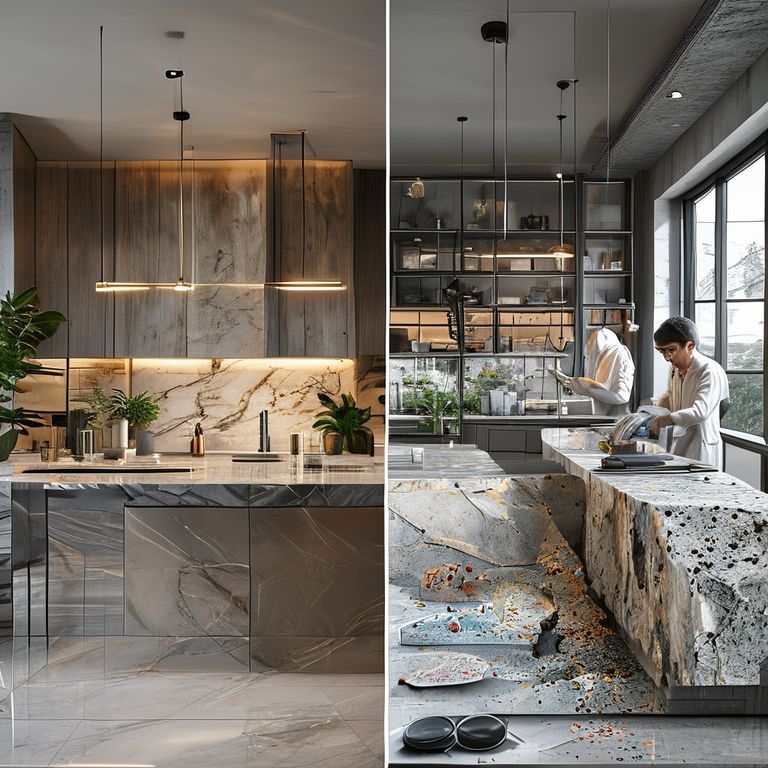
At its core, artificial marble, often referred to as engineered stone or solid surface, is a composite material. Think of it as a carefully curated blend of natural minerals and synthetic binders, meticulously mixed and then solidified into durable, beautiful slabs. The primary ingredient, providing the bulk and structural integrity, is typically quartz. However, not just any quartz will do. Manufacturers employ finely ground quartz, often in powder or granular form, meticulously processed to ensure consistency and purity. This quartz dust is the foundation, the raw clay from which the artisan will sculpt. The choice of quartz content can significantly influence the final product’s properties, from its hardness and durability to its resistance to heat and staining. Higher quartz content generally translates to a more robust and resilient material.
Intertwined with this mineral backbone is a sophisticated resin system, the binding agent that holds everything together and gives artificial marble its characteristic sheen and workability. This resin is usually an acrylic or polyester-based polymer, chosen for its excellent adhesion, flexibility, and resistance to chemical agents. The resin acts like the mortar in a brick wall, bonding the quartz particles into a cohesive whole. The precise formulation of this resin is a closely guarded secret for many manufacturers. It’s a delicate dance between achieving optimal strength, ensuring a non-porous surface, and allowing for the incorporation of vibrant colors and intricate patterns. The viscosity of the resin, its curing time, and its interaction with the quartz particles are all critical factors that determine the final quality and appearance of the artificial marble.
Then comes the magic of color and pattern – the very elements that allow artificial marble to mimic or even surpass the beauty of its natural counterpart. Pigments, usually inorganic and highly stable, are introduced into the resin and quartz mixture. These aren’t just any paints; they are carefully selected to withstand UV exposure, heat, and the rigors of everyday use without fading or degrading. The artistry here lies in the precise metering and blending of these pigments. To achieve the iconic veining of Calacatta or the deep, rich hues of Nero Marquina, manufacturers employ sophisticated techniques. This can involve injecting different colored resins into the mixture at specific points, creating swirls and lines that mimic natural geological formations. Sometimes, different sizes and types of mineral aggregates are also introduced, adding subtle depth and texture, much like the inclusions found in natural stone.
The actual manufacturing process begins with the meticulous weighing and blending of these key ingredients: quartz, resin, and pigments. This is a highly controlled operation, where precise ratios are paramount. Too much resin, and the material might become too flexible or prone to scratching; too little, and it may be brittle. The mixture is then poured into molds, often large, flat forms that will eventually become the slabs. This is where the transformation truly takes shape. The mixture is then subjected to a series of processes designed to consolidate it and eliminate any air bubbles, which could compromise the material’s integrity.
Vibration is a crucial element in this stage. The molds are often placed on vibrating tables, which gently shake the mixture, allowing the heavier quartz particles to settle and the lighter resin to flow, filling in any voids and creating a dense, uniform composition. This process is akin to settling sand to create a smooth surface. After this initial consolidation, the mixture is typically subjected to vacuum pressing. This powerful suction removes any remaining trapped air, ensuring a completely solid and non-porous structure. This step is vital for achieving the high performance characteristics of artificial marble, particularly its resistance to stains and bacteria. The absence of pores means that liquids cannot penetrate the surface, making it incredibly hygienic and easy to clean.
Following consolidation, the slabs are ready for curing. This is where the resin undergoes a chemical reaction, hardening and solidifying the entire structure. The curing process can be achieved through various methods, including heat application. Ovens are commonly used, where the slabs are gently baked to accelerate the polymerization of the resin. The temperature and duration of this curing phase are carefully calibrated to ensure complete hardening without causing thermal shock or degradation of the materials. The result is a robust, monolithic slab that is ready for the next stages of refinement. This intricate dance of blending, vibrating, pressing, and curing transforms a collection of disparate elements into a material that is both aesthetically pleasing and exceptionally functional, setting the stage for the final touches that bring out its inherent beauty.
Once the initial curing process is complete, the raw slabs of artificial marble, while solid and stable, are still a far cry from the polished, ready-to-install surfaces we encounter in kitchens and bathrooms. The next phase is all about refinement, bringing out the material’s inherent luster and ensuring its dimensional accuracy. This is where the artistry and precision of manufacturing truly shine, transforming a functional slab into a visually stunning product. The initial steps involve trimming and calibrating the slabs to precise dimensions. Large saws, often equipped with diamond-tipped blades, are used to cut the slabs to standard sizes and thicknesses. This ensures uniformity and allows for efficient use of the material in subsequent fabrication processes.
Following the cutting, the surfaces of the slabs undergo a series of grinding and polishing operations. This is a multi-stage process, starting with coarser grit abrasives to level the surface and remove any imperfections from the molding process. As the process progresses, progressively finer grits are used. This gradual refinement is akin to sanding wood, where each stage removes the scratches left by the previous one, leading to an increasingly smooth and refined finish. The goal is to achieve a mirror-like polish that not only enhances the visual appeal of the colors and patterns but also creates a tactile experience that is smooth and inviting to the touch. Specialized polishing machines, often automated, are employed to ensure consistent pressure and coverage across the entire surface of the slab.
It’s during this polishing stage that the true beauty of the artificial marble begins to emerge. The quartz particles, once embedded within the resin, now reflect light in a way that creates a dazzling depth and brilliance. The veining, carefully engineered during the mixing phase, becomes more pronounced, appearing to flow with a natural, organic quality. The subtle variations in color and pattern, mimicking the idiosyncrasies of natural stone, are brought to the forefront. Manufacturers often employ advanced techniques during the mixing and casting to create specific visual effects. This can include incorporating fine metallic or pearlescent particles to add a subtle shimmer, or using multiple layers of different colored resins to achieve a more complex, multi-dimensional veining pattern. The goal is to create a surface that is not only visually appealing but also possesses a certain “wow” factor, a testament to the careful design and execution.
The final stages of production involve rigorous quality control. Each slab is inspected for any defects, such as chips, scratches, or inconsistencies in color or pattern. Sophisticated lighting setups are used to reveal even the slightest imperfection. Dimensional checks are performed to ensure that the slabs meet the specified tolerances for thickness and flatness. The non-porous nature of artificial marble also means that it’s inherently hygienic. Unlike natural stone, which can have microscopic pores that harbor bacteria and trap stains, engineered stone provides a smooth, impervious surface that is easy to clean and resistant to common household spills like wine, coffee, and oil. This is a significant advantage for applications in kitchens and bathrooms, where hygiene is paramount.
Beyond its aesthetic appeal and hygienic properties, artificial marble offers a level of customization and design flexibility that is difficult to match with natural stone. Manufacturers can create an almost limitless array of colors, patterns, and finishes. Want a countertop that perfectly matches your cabinetry? Need a seamless, integrated sink? Artificial marble can be fabricated to precise specifications, allowing for truly bespoke designs. The material can be thermoformed, meaning it can be heated and bent into curved shapes, opening up a world of design possibilities for architects and interior designers. This ability to be manipulated into various forms, combined with its durability and beauty, makes it a highly sought-after material for a wide range of applications.
From the initial selection and processing of raw quartz and resins to the meticulous blending of pigments and the final polishing, the creation of artificial marble is a sophisticated manufacturing process. It’s a process that honors the timeless beauty of natural stone while leveraging modern technology to create a material that is both exceptionally practical and visually captivating. The result is a surface that can transform any space, offering a durable, beautiful, and highly functional element that stands the test of time and trends. It’s a testament to how human innovation can harness the principles of nature to create something new, something beautiful, and something that enriches our living environments. The next time you admire a sleek, veined countertop or a seamlessly integrated vanity, you’ll know that behind that flawless surface lies a fascinating journey of science, artistry, and meticulous craftsmanship.









