
The quest for the perfect countertop is a journey many homeowners embark on, a crucial step in transforming a house into a cherished home. Among the myriad of choices, solid surface materials, with Corian® often leading the pack in brand recognition, have carved out a significant niche. The question, “可丽耐人造石多少钱一块啊” (How much does a piece of Corian® cost?), is a practical one, hinting at a desire for both aesthetic appeal and financial prudence. But to truly answer this, we must first appreciate what makes these materials so desirable and then dissect the elements that contribute to their price tag.

Solid surfaces, as the name suggests, are non-porous, homogeneous materials that are consistent throughout their thickness. This means that scratches or stains can often be buffed out, restoring the surface to its original glory. Unlike natural stone, which has veins and patterns that are unpredictable, or laminate, which has a printed layer, solid surfaces offer a uniform appearance, allowing for a clean, modern, and minimalist look. This seamlessness extends to their fabrication; edges can be joined invisibly, creating large, flowing surfaces that are both visually striking and highly functional. Think of a waterfall edge cascading down a cabinet, or an integrated sink that appears to melt into the countertop itself – these are hallmarks of solid surface craftsmanship.
Corian®, a DuPont invention, has become almost synonymous with solid surface. Its development in the late 1960s revolutionized the countertop industry, offering an alternative to laminate and stone that was durable, repairable, and surprisingly versatile. It’s composed of acrylic polymer and alumina trihydrate (ATH), derived from bauxite ore. This composition gives it its characteristic properties: it’s resistant to stains, impacts, and mildew, and it can be thermoformed into curved shapes, opening up a world of design possibilities. Beyond kitchens and bathrooms, Corian® is found in hospitals, laboratories, and public spaces where hygiene and durability are paramount.
However, the “piece” of Corian® isn’t a standardized unit like a loaf of bread. The cost is intricately tied to several factors, making a single, definitive price per “piece” an elusive target. Firstly, material type and color play a significant role. While Corian® offers a vast spectrum of colors and patterns, some are more basic and widely produced, thus more economical. Others, featuring intricate veining that mimics natural stone, or specialty finishes, command a higher price. Think of the difference between a crisp, solid white and a speckled, translucent grey designed to emulate marble – the latter will inevitably be more expensive. The manufacturing process for more complex designs or unique colors often involves more specialized pigments and production techniques.
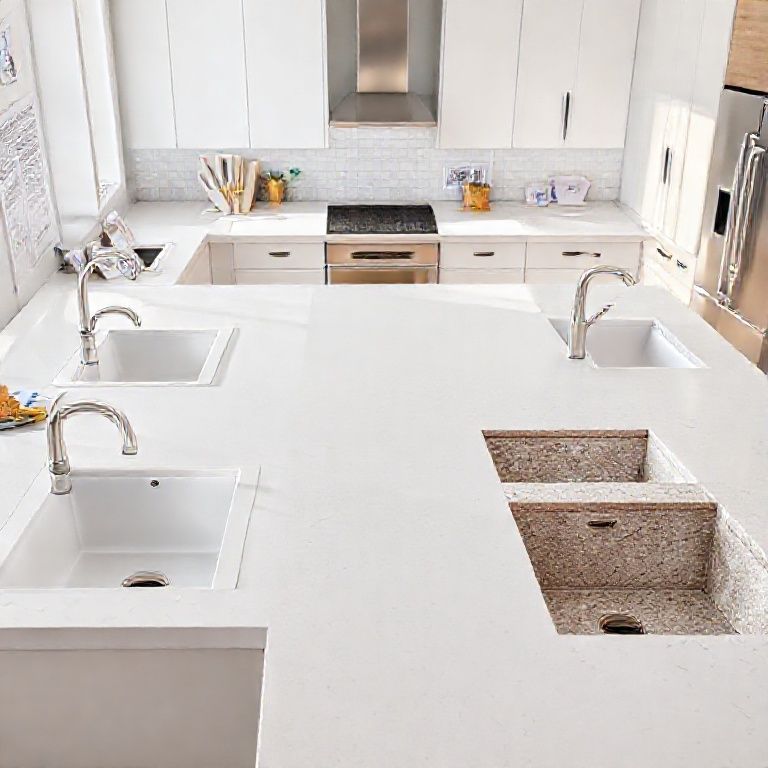
Secondly, thickness is a crucial determinant. Solid surfaces are typically available in standard thicknesses, often 1/2 inch (12mm) or 3/4 inch (19mm). Thicker slabs naturally contain more material and therefore cost more. While a 1/2 inch slab might suffice for a simple vanity top, a substantial kitchen island might benefit from the added weight and visual presence of a 3/4 inch slab, or even a built-up edge to achieve a thicker appearance.
Thirdly, sheet size and complexity of fabrication are paramount. Corian® is sold in large sheets, and pricing is often calculated per square foot or per linear foot, depending on the supplier and the nature of the project. However, the “piece” you end up with is rarely a simple rectangle cut from a sheet. Most countertop installations require multiple cuts, edge profiles, sink cutouts, and potentially intricate joints for seamless assembly. The more complex the desired shape, the more labor and material are involved. A simple rectangular vanity top will be far less costly than a custom-designed kitchen island with a curved edge, a specific sink cutout, and a waterfall edge on one or both sides. The skill and precision required for these custom fabrications add considerably to the overall price.
Finally, installation is a significant component of the total cost. While the material itself has a price, the skilled labor needed to template, cut, fabricate, and install the solid surface countertop is a substantial investment. This includes the expertise to achieve those seamless joints and integrated features that are the hallmark of solid surface design. The installer’s experience, the complexity of the installation site, and the need for specialized tools all contribute to this aspect of the final bill. Therefore, when asking “How much does a piece of Corian® cost?”, it’s vital to understand that this question usually refers to the installed price, not just the raw material.
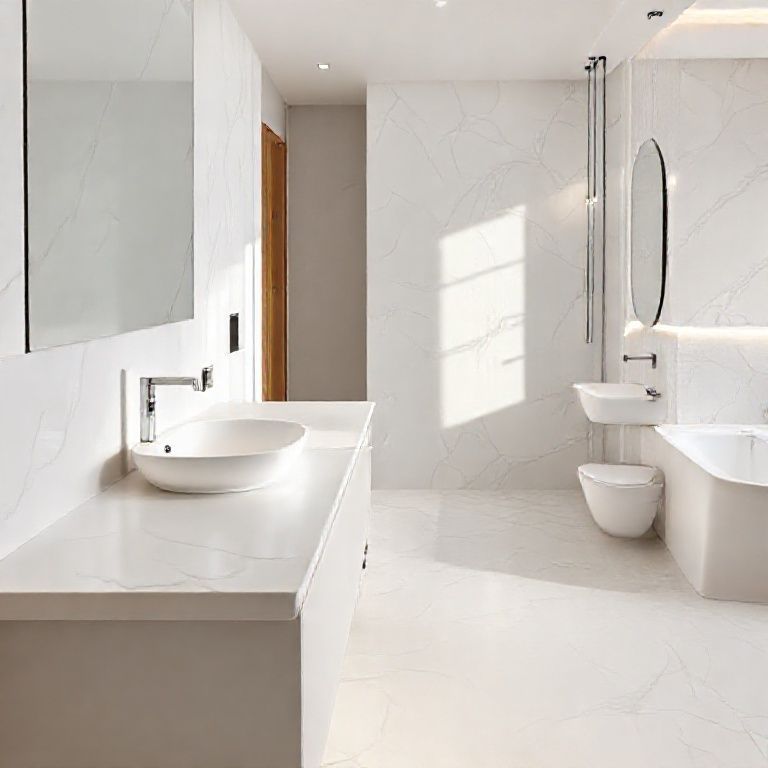
The allure of solid surfaces lies in their ability to offer a blend of practicality and high-end aesthetics. They are a material that speaks of modern living, of clean lines and effortless maintenance. But this sophistication comes with a price, and understanding the components of that price is the first step towards making an informed decision for your home renovation.
Continuing our exploration into the world of solid surfaces and the question of “可丽耐人造石多少钱一块啊” (How much does a piece of Corian® cost?), it’s essential to contextualize its pricing within the broader landscape of countertop materials. While Corian® and similar solid surfaces offer a unique set of advantages, their cost can be a significant consideration for homeowners. Understanding where they sit in relation to other popular options can help clarify their value proposition and guide renovation budgets.
When comparing costs, we often see countertops categorized into tiers. At the entry-level, you’ll find laminate countertops. These are essentially particleboard or MDF cores with a decorative, printed paper layer covered by a protective melamine resin. Laminate is the most budget-friendly option, offering a vast array of colors and patterns, including many that mimic the look of stone or wood. However, its primary drawbacks are its susceptibility to scratches, heat damage, and water infiltration, especially at seams and edges. Repairs are often difficult, and its aesthetic appeal is generally considered less premium than other materials. Therefore, the cost savings with laminate come with a trade-off in durability and perceived luxury.
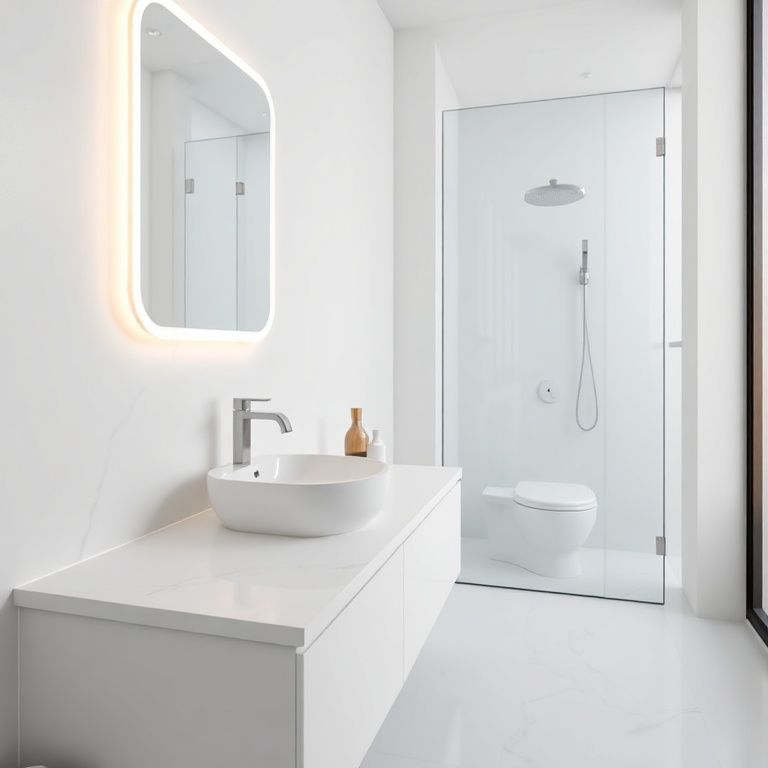
Moving up the price ladder, we encounter solid surface materials like Corian®. As discussed, these offer a significant upgrade in terms of durability, repairability, and design flexibility. Their non-porous nature makes them hygienic and easy to maintain, and their ability to be seamlessly joined and thermoformed allows for unique design expressions. The cost of solid surfaces generally falls in the mid-range of countertop materials. While more expensive than laminate, they are typically less costly than most natural stones and quartz.
Engineered quartz countertops, such as those from brands like Silestone or Caesarstone, are another popular mid-to-high range option. Quartz is a composite material made from crushed quartz stone (about 90-95%) mixed with polymer resins and pigments. This process creates an extremely hard, durable, and non-porous surface. Quartz is highly resistant to scratches, heat, and stains, often surpassing even solid surfaces in these regards. Its main advantage over natural stone is its consistency; patterns and colors are uniform throughout the slab, eliminating the unpredictability of natural veins. However, quartz is generally more expensive than solid surfaces. Its non-porous nature also means it cannot be repaired by sanding or buffing in the same way as solid surfaces, and it is also less amenable to thermoforming into curved shapes.
At the higher end of the spectrum are natural stone countertops, primarily granite and marble. Granite is a natural igneous rock, known for its durability, heat resistance, and unique veining and color patterns. Each slab is one-of-a-kind. Marble, while incredibly beautiful and luxurious, is softer and more porous than granite, making it more susceptible to etching from acidic substances and staining. Both granite and marble require regular sealing to maintain their non-porous qualities and prevent staining. Their pricing can vary widely based on rarity, origin, and complexity of the chosen pattern. Exotic granites and high-grade marbles can be significantly more expensive than solid surfaces.
Considering this hierarchy, the question of “How much does a piece of Corian® cost?” can be answered by placing it firmly in the mid-tier. For a standard 1/2 inch thick slab in a common color, the raw material might range anywhere from $30 to $70 per square foot. However, as we’ve elaborated, the fabricated and installed price is what truly matters, and this can easily range from $50 to $120 per square foot, or even higher for complex designs, premium colors, and specialized finishes. This price point offers a compelling balance for homeowners who desire a sleek, modern, and highly functional countertop that is more durable and repairable than laminate, but perhaps more budget-conscious or design-flexible than engineered quartz or natural stone.
The value of Corian® and similar solid surfaces lies not just in their upfront cost but in their long-term performance and aesthetic longevity. Their repairability can save significant costs down the line, as minor damage can be fixed without needing to replace the entire countertop. The seamless integration capabilities also offer a design advantage that is difficult to achieve with other materials. For instance, an integrated sink made from the same solid surface material as the countertop creates a continuous, easy-to-clean surface that is both visually appealing and highly practical. This eliminates the grime-collecting rim found in many undermount or drop-in sinks.
Ultimately, the “piece” of Corian® that a homeowner purchases is an investment in their kitchen or bathroom’s functionality and style. The price reflects not just the material itself but the advanced manufacturing processes, the design flexibility it offers, and the skilled labor required to transform a raw sheet into a bespoke surface. While the initial outlay might be higher than laminate, the enduring quality, repairability, and seamless aesthetic often provide a superior return on investment for those seeking a sophisticated and practical addition to their home. The allure of solid surfaces, with Corian® at its forefront, is their ability to deliver a high-end look and feel without the often-prohibitive costs or maintenance demands of some premium materials, making them a wise choice for many discerning homeowners.









