
The hum of an angle grinder is, for many, a siren song. It’s the sound of raw power, of metal meeting metal, of transformation. It’s the soundtrack to garages and workshops, evoking images of sparks flying and projects taking shape. But when that song shifts its tune, from the guttural roar of steel to the more subtle, yet still insistent, whine against a material like Corian, things get interesting. The question, “Can an angle grinder be used for cutting an integrated Corian sink?” isn’t just a technical query; it’s an invitation to explore the delicate dance between brute force and refined artistry.

Corian, that marvel of modern material science, is known for its seamless beauty, its non-porous nature, and its ability to be molded into virtually any form. It’s the material of choice for contemporary kitchens and bathrooms, promising durability and a sleek, sophisticated aesthetic. Integrated sinks, in particular, represent the pinnacle of this design philosophy – a fluid extension of the countertop, offering a clean, hygienic, and utterly modern look. But achieving that perfect integration, that flawless curve, that precise edge, requires tools that can handle its unique properties.
Enter the angle grinder. This versatile powerhouse, typically associated with cutting concrete, metal, and tile, is often the go-to for rapid material removal. Its high-speed rotation and abrasive disc can chew through materials with impressive speed. So, the initial thought might be, “Why not the Corian sink?” The allure is undeniable: speed, efficiency, and the satisfaction of using a tool that feels substantial in your hands. Imagine the workflow – a few swift passes with the grinder, and the rough shape of your sink basin is emerging from a sheet of solid surface. It sounds almost too easy, doesn’t it?
However, the devil, as they say, is in the details. Corian, while durable, is not granite. It’s a composite material, a blend of acrylic polymer and alumina trihydrate (ATH). This composition gives it its characteristic warmth, its ability to be thermoformed, and its relative ease of fabrication compared to natural stone. But it also means it has a lower melting point and can be more susceptible to heat damage and chipping if worked with incorrectly. This is where the angle grinder, with its inherent aggressive nature, raises a red flag.
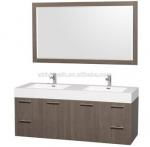
The primary concern with using an angle grinder on Corian is heat. The friction generated by the high-speed disc can quickly elevate the temperature of the material. If this heat isn’t managed meticulously, it can lead to discoloration, melting, or even cracking of the Corian. This is particularly critical when fabricating something as visible and functional as a sink. A hairline crack or a discolored edge can compromise the integrity and the aesthetic appeal of the entire piece.
Furthermore, the aggressive nature of an angle grinder can lead to an uneven cut. While it can certainly remove material quickly, achieving the fine tolerances and smooth finishes required for a seamless Corian sink integration might be challenging. The goal with Corian is often a polished, almost invisible seam when joining pieces or when the sink meets the countertop. An angle grinder, unless used with extreme caution and specific attachments, can leave a rough, uneven edge that requires significant post-processing.
So, is the angle grinder a complete no-go for Corian sinks? Not necessarily, but its role is nuanced and demands a level of expertise and control that might be beyond the scope of a casual DIYer. Think of it less as a primary cutting tool and more as a tool for preliminary shaping or for making rough cuts that will be refined later. If you were to use an angle grinder, it would be with a very specific type of blade – perhaps a diamond blade designed for softer materials or even a specialized abrasive disc. Crucially, you would need a method for continuous cooling. Water is often employed in these situations, turning the operation into a wet cut. This significantly reduces heat buildup and controls the dust.
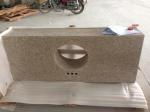
The dust generated by cutting Corian is another consideration. While not as acutely dangerous as silica dust from natural stone, it’s still something to be managed. An angle grinder, especially a dry one, will produce a fine powder that can become airborne. Proper respiratory protection is non-negotiable. If using a wet cutting method, the slurry created needs to be contained and disposed of responsibly.
The ideal scenario for fabricating a Corian integrated sink typically involves tools that offer more control and a finer finish from the outset. Router bits specifically designed for solid surface, with their sharp, specialized geometries, are often the preferred choice for edge profiling and creating the precise curves needed for sink bowls and drainboard channels. Jigs and templates play a vital role in ensuring accuracy and repeatability, allowing for clean, consistent cuts. For straight cuts, a circular saw with a fine-tooth blade, often used with a guide or track, can deliver excellent results.
The “integrated” aspect of the sink is where the angle grinder’s potential utility, however limited, might be considered. If you are fabricating a custom shape that requires removing a significant amount of material to define an outer edge or a complex internal curve before the finer shaping begins, a carefully controlled angle grinder with the right blade and cooling might offer a faster initial material removal. However, this would be a preparatory step, not the final finishing cut. The subsequent steps would almost certainly involve routers, sanders, and polishing tools to achieve the desired seamless finish.

The narrative of the angle grinder and the Corian sink, therefore, is not one of a simple, direct application. It’s a story of understanding the strengths and weaknesses of both the tool and the material. It’s about respecting the precision required for solid surface fabrication and recognizing when a more delicate, controlled approach is necessary. The angle grinder, in this context, becomes a supporting character, capable of dramatic entrances and impactful moments, but not the sole protagonist in the creation of a perfectly integrated Corian sink. Its power needs to be tempered with knowledge, its speed with caution, and its application with a clear understanding of the desired outcome.
Continuing our exploration into the intriguing partnership between the mighty angle grinder and the elegant Corian integrated sink, we delve deeper into the practicalities, the potential pitfalls, and the ultimate verdict on this unconventional pairing. While the previous discussion highlighted the inherent challenges, particularly regarding heat management and precision, understanding how one might attempt this, and under what specific circumstances, is crucial. It’s not about simply saying “yes” or “no,” but about understanding the “how” and the “why” behind any fabrication decision.
The core of the challenge lies in the differing philosophies of the tools. An angle grinder is designed for rapid abrasion and material removal. Its high RPMs mean that even a brief contact with Corian can generate substantial heat. For integrated sinks, the aesthetic is paramount. We’re talking about seamless transitions, smooth curves, and a finish that feels almost liquid. An angle grinder, by its very nature, tends to leave a rougher surface that requires significant subsequent work. Imagine trying to polish a mirror that’s been scratched by coarse sandpaper – it’s a similar principle at play here. The initial cut needs to be as clean and precise as possible to minimize the effort required for finishing.
However, let’s not entirely dismiss the angle grinder’s potential. In the world of fabrication, creative problem-solving often involves pushing the boundaries of tool application. If one were to attempt using an angle grinder on Corian for an integrated sink, several key considerations would be non-negotiable.
Firstly, the blade selection is paramount. A standard metal cutting disc or even a concrete grinding wheel would be far too aggressive and would almost certainly lead to melting, cracking, and a severely damaged workpiece. A diamond-grit blade, specifically designed for cutting stone or solid surfaces, would be the minimum requirement. Even then, the grit size and the type of diamond application would need careful consideration. A finer grit would offer a smoother cut, but might require more passes and generate more heat. The ideal would be a blade that balances cutting speed with a relatively clean edge finish.
Secondly, and perhaps most critically, is the issue of cooling. Dry cutting Corian with an angle grinder is generally ill-advised due to the heat generated. A wet cutting setup is almost a necessity. This could involve a specialized angle grinder with a water feed attachment, or a more rudimentary setup where a continuous stream of water is applied to the cutting area. Water acts as a coolant, drastically reducing the temperature of the blade and the Corian, preventing thermal shock and melting. It also helps to suppress dust, turning the fine powder into a manageable slurry. This slurry, however, needs to be managed, as it can be abrasive and potentially clog the tool if not handled correctly.
Thirdly, the technique itself would need to be exceptionally controlled. Instead of aggressive, rapid passes, the angle grinder would need to be used with light pressure and steady, deliberate movements. The goal would be to let the tool do the work rather than forcing it. This implies a slower workflow, which somewhat negates the perceived speed advantage of the angle grinder. Precision is key, and this often means making multiple shallow passes rather than a single deep cut. For intricate curves, this would be incredibly challenging and would likely require a guide or template to maintain accuracy.
The edges left by an angle grinder, even a wet one with a diamond blade, will almost certainly be rougher than those produced by a dedicated router or a fine-toothed saw. This means that a significant amount of post-processing would be required. Sanding, starting with a coarser grit and progressively moving to finer grits, would be essential to smooth out the cut edge. Then, polishing would be necessary to restore the characteristic sheen of Corian. This polishing process, especially on an integrated sink where the edges need to flow seamlessly into the countertop, can be labor-intensive and demands a high level of skill.
So, when might an angle grinder, used with extreme caution, find a niche in Corian sink fabrication? Perhaps for the initial rough shaping of a very large or complex piece, where a significant amount of material needs to be removed quickly to define an outline before more delicate tools take over. Or in a scenario where the edge being cut is not highly visible or will be subsequently covered by another material, and therefore, a less-than-perfect initial cut is acceptable.
However, for the vast majority of integrated Corian sink fabrications, the use of an angle grinder is likely to be counterproductive. The risks of damaging the material, the extensive post-processing required, and the potential for inconsistent results often outweigh any perceived benefits. The industry standard tools – routers with specialized bits, track saws, and even jigsaws with appropriate blades – offer a level of control, precision, and finish that is far more conducive to achieving the high-quality results expected from Corian.
The “integrated” nature of the sink is the ultimate selling point. It’s about a seamless, fluid transition. Achieving this requires cuts and edges that are not just smooth, but also perfectly aligned and aesthetically pleasing. An angle grinder, in its typical form, is not the ideal tool for this level of refinement. It’s a tool of brute force, and while it can be tamed, its inherent nature is not geared towards the subtle artistry that Corian fabrication demands.
In conclusion, while the question “Can an angle grinder be used for cutting an integrated Corian sink?” has a technical “yes, but…” answer, the practical reality is that it’s rarely the optimal choice. The risks are substantial, and the benefits are often marginal when compared to the precision and ease of use offered by tools specifically designed for solid surface fabrication. The allure of power and speed should be tempered by the understanding of the material’s properties and the desired outcome. For a flawless, seamlessly integrated Corian sink, it’s often best to let the more refined artisans and their specialized tools take the lead, ensuring that the final result is a testament to both material and craftsmanship, rather than a battle between a powerful tool and a delicate surface. The hum of the angle grinder might be attractive, but for the pristine beauty of Corian, a quieter, more precise melody is often the key to success.









