
The allure of natural stone—its inherent beauty, its rich history etched in geological time—has captivated humanity for millennia. From the majestic marble of ancient sculptures to the rugged granite of mountain peaks, stone has been a fundamental building block and a symbol of permanence. Yet, the extraction of natural stone, while beautiful, comes with its own set of environmental considerations and limitations in terms of consistency and availability. Enter the realm of artificial stone, a modern marvel born from human innovation, offering a compelling alternative that blends aesthetic appeal with enhanced performance and remarkable versatility. The question on many minds, then, is: “How is artificial stone made?” This is not a simple query with a single answer, as “artificial stone” encompasses a broad spectrum of materials, each with its unique manufacturing journey. However, at its core, the creation of these engineered surfaces is a sophisticated dance between science and artistry, a meticulous process that transforms humble raw materials into stunning, durable, and highly functional elements for our homes and businesses.

At its most basic, artificial stone refers to any man-made material designed to mimic the appearance and often the performance of natural stone. This category broadly includes materials like engineered quartz, solid surfaces (like Corian), and even some types of concrete composites. While the specific recipes and processes vary, a common thread runs through their creation: the careful selection and combination of raw ingredients, followed by a rigorous manufacturing process that binds them together under controlled conditions.
Perhaps the most ubiquitous and popular form of artificial stone today is engineered quartz. This material, often mistaken for natural quartz due to its striking resemblance and superior performance, is a triumph of material science. The primary ingredient in engineered quartz is natural quartz crystal, typically making up around 90-95% of the final product. This quartz, mined and then crushed into fine particles, provides the exceptional hardness and durability that engineered quartz is renowned for. The remaining 5-10% is a critical blend of resins, polymers, and pigments. These binders are the magic that holds the quartz particles together, providing flexibility and allowing for a vast array of colors and patterns that often surpass the natural color palettes of granite or marble.
The manufacturing process for engineered quartz is a high-tech operation, often referred to as vibrocompression. Imagine a giant, high-speed mixer that churns the crushed quartz, resins, and pigments into a homogenous slurry. This mixture is then poured into molds, which can be of various sizes depending on the intended application, though large slabs are the most common. Once the slurry is in the mold, it undergoes a process of vacuum and vibration. This intense vibration, coupled with the vacuum, serves several crucial purposes. It compacts the material, eliminating air pockets and voids, which is key to achieving the non-porous nature that makes engineered quartz so resistant to stains and bacteria. The vibration also ensures an even distribution of the quartz particles and pigments, leading to consistent color and pattern throughout the slab.
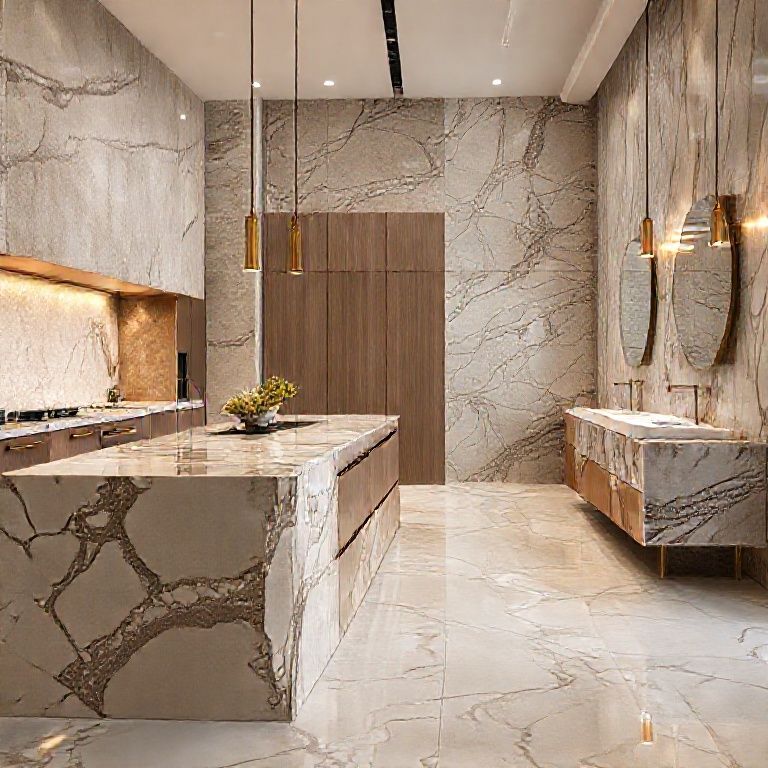
Following the vibrocompression stage, the “raw” slab, now solidified but still somewhat pliable, moves on to the curing process. This typically involves baking the slabs in large kilns at specific temperatures, often exceeding 200 degrees Celsius. The heat accelerates the polymerization of the resins, effectively curing the material and transforming it into a hard, stone-like surface. This thermal treatment is vital for achieving the final strength, heat resistance, and structural integrity of the engineered quartz. After curing, the slabs are cooled and then subjected to a meticulous finishing process. This usually involves polishing them to a high gloss using diamond-tipped tools, cutting them to standard slab dimensions, and then quality control checks to ensure they meet stringent standards for color consistency, flatness, and absence of defects. The result is a material that is not only visually stunning but also boasts exceptional durability, low maintenance, and a level of design flexibility that natural stone simply cannot match.
Another significant category within artificial stone is solid surface materials, famously pioneered by DuPont with Corian. These materials are quite different in composition from engineered quartz. Instead of a high percentage of mineral aggregate, solid surfaces are primarily composed of acrylic polymers and a mineral filler, typically aluminum trihydrate (ATH). ATH is derived from bauxite ore and provides the bulk and fire-retardant properties of the material. The manufacturing process for solid surfaces often involves a casting or extrusion method. In casting, a liquid mixture of acrylic resins, ATH, pigments, and other additives is poured into molds. The molds are designed to create sheets of a specific thickness. This mixture is then allowed to cure, either at room temperature or with the application of heat, to achieve its solid, durable state.
The beauty of solid surfaces lies in their inherent consistency and the ability to create seamless installations. Because they are homogenous throughout, any scratches or damage can often be repaired by sanding and polishing, restoring the surface to its original pristine condition. Furthermore, the acrylic resins allow for thermoforming—the ability to heat and bend the material into curves and complex shapes. This opens up a world of design possibilities, from custom countertops with integrated sinks to unique architectural features. The absence of pores also makes them incredibly hygienic, a key reason for their widespread use in healthcare settings and laboratories. The manufacturing process is carefully controlled to ensure uniform color distribution and the absence of internal stresses within the material. The finishing of solid surfaces typically involves sanding to achieve the desired sheen, ranging from matte to high gloss. While not as hard as engineered quartz, solid surfaces offer a unique combination of repairability, formability, and seamless aesthetics, making them a valuable player in the artificial stone landscape.
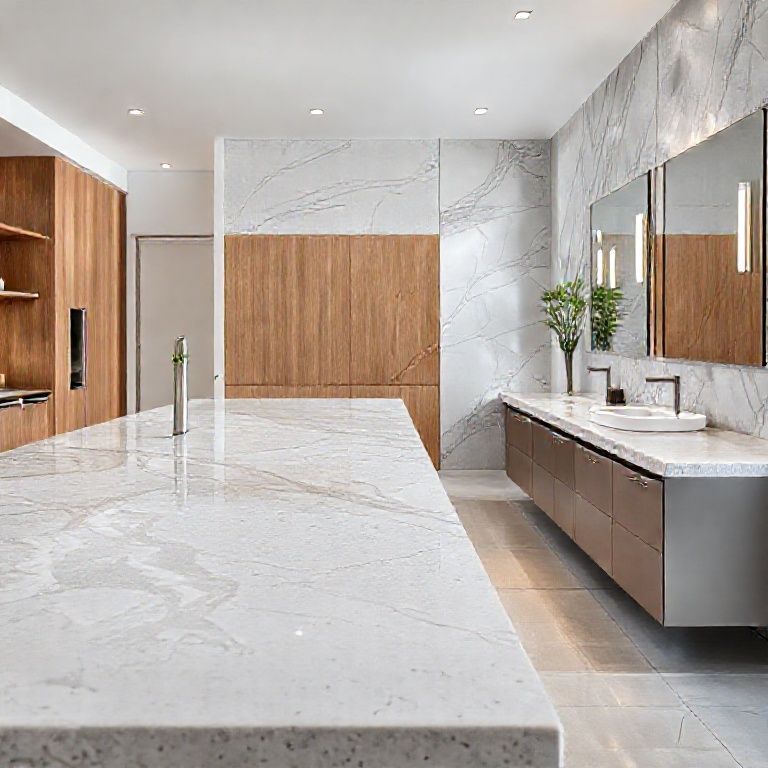
Understanding these foundational processes—the careful blending of minerals and binders, the controlled application of pressure, vibration, and heat—begins to unravel the mystery of how artificial stone is brought to life. It’s a testament to modern manufacturing, where science meets design to create surfaces that are as practical as they are beautiful, paving the way for a future of enduring, adaptable, and aesthetically rich environments.
The creation of artificial stone is far more than just a manufacturing process; it’s an intricate blend of material science, engineering precision, and aesthetic artistry. As we delved into the making of engineered quartz and solid surfaces, we saw how carefully selected raw materials are transformed through controlled processes to yield durable and beautiful surfaces. However, the narrative doesn’t end there. The ongoing evolution of artificial stone technology continues to push boundaries, offering new possibilities in terms of design, performance, and even sustainability.
Consider the vast spectrum of colors and patterns achievable with engineered quartz. This is where the artistry truly shines. The pigments are not merely added for color; they are meticulously formulated to mimic the intricate veining of marble, the granular texture of granite, or to create entirely novel visual effects. Sophisticated techniques are employed to replicate natural imperfections and variations, ensuring that each slab, while consistent in quality, offers a unique visual character. Some manufacturers use advanced digital printing technologies to create highly realistic veining patterns that are applied to the surface of the quartz mixture before it is compacted. Others develop proprietary pigment blends that interact with the quartz particles and resins in specific ways to create depth and luminescence. The goal is always to achieve a look that is not only appealing but also indistinguishable from its natural stone counterpart, or even to surpass it in visual impact. The resins themselves also play a role in the final aesthetic. Different types of resins can impart varying degrees of translucency or a subtle sheen, contributing to the overall visual richness of the material.
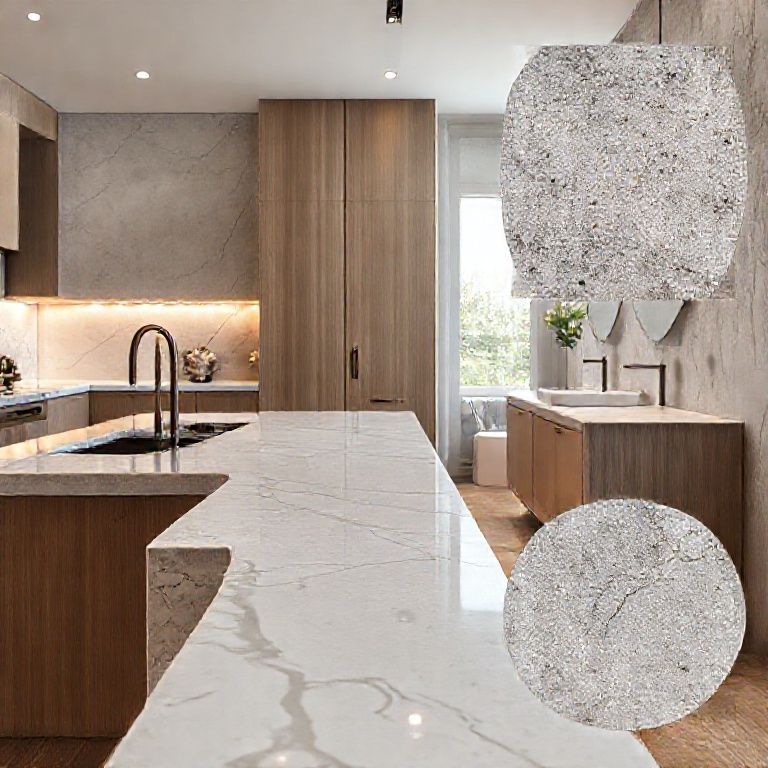
Beyond quartz and solid surfaces, other forms of artificial stone continue to innovate. For instance, some composite materials incorporate recycled glass or other reclaimed materials alongside mineral aggregates and binders. This not only adds unique visual elements, such as shimmering flecks of glass, but also contributes to a more sustainable manufacturing model. The process for these materials often involves crushing and processing the recycled components to a uniform size, then mixing them with binders and fillers. The resulting mixture is then consolidated and cured, similar to engineered quartz. The unique challenge and opportunity here lie in managing the variability of recycled materials and ensuring consistent quality and appearance in the final product. The development of new binding agents and processing techniques is key to unlocking the potential of these more environmentally conscious artificial stones.
The journey of an artificial stone slab from raw materials to a finished product ready for installation is a testament to modern industrial prowess. After the initial curing and polishing, the large slabs are inspected with rigorous quality control measures. Automated systems and trained technicians examine each slab for color consistency, structural integrity, and surface defects. Any slab that doesn’t meet the exacting standards is rejected or repurposed. The slabs are then carefully packaged and transported to fabricators. These skilled artisans then cut, shape, and polish the slabs into the final desired forms—countertops, wall panels, flooring, or custom architectural elements—using specialized tools and techniques. The precision required during fabrication is immense, ensuring that cuts are perfectly straight, edges are finished to perfection, and any necessary cutouts for sinks or cooktops are executed flawlessly.
The choice between different types of artificial stone often comes down to a balance of aesthetics, performance requirements, and budget. Engineered quartz, with its unparalleled hardness and stain resistance, is a perennial favorite for kitchen countertops and high-traffic areas. Solid surfaces, on the other hand, offer unique design flexibility and seamless integration, making them ideal for bathrooms, healthcare facilities, and bespoke furniture. Other composite materials provide options for those seeking unique textures or a commitment to sustainability.
The environmental impact of artificial stone is an increasingly important consideration. While the extraction of raw materials for engineered quartz and solid surfaces has its own footprint, manufacturers are continuously working to minimize this. The use of recycled content, energy-efficient manufacturing processes, and responsible sourcing of raw materials are becoming standard practices. Furthermore, the longevity and low maintenance requirements of artificial stone mean that it often has a lower lifecycle environmental cost compared to materials that require frequent replacement or extensive upkeep. The durability of these materials also means they contribute to waste reduction in the long run.
In essence, the creation of artificial stone is a sophisticated process that harmonizes nature’s elements with human ingenuity. It begins with a deep understanding of mineralogy and polymer science, leading to the precise formulation of components. This is followed by advanced engineering techniques that apply controlled pressure, heat, and vibration to create a unified, robust material. The final stages involve meticulous finishing and quality control, ensuring that each piece meets the highest standards of beauty and performance. As technology advances, we can expect artificial stone to become even more sophisticated, offering an ever-expanding palette of designs, enhanced functionalities, and a growing commitment to sustainability. It is a material that not only graces our spaces with beauty but also represents the cutting edge of material innovation, promising a future where our built environments are as resilient, adaptable, and inspiring as the minds that conceive them.









