
The allure of marble has captivated humanity for millennia. Its veined elegance, cool touch, and timeless beauty have graced palaces, temples, and homes, signifying luxury and sophistication. Yet, the natural world’s bounty, while magnificent, comes with limitations. Quarrying natural marble is an energy-intensive and often destructive process, and its inherent porosity makes it susceptible to staining and etching. Enter the realm of artificial marble, a testament to human ingenuity, where science and artistry converge to recreate and even enhance the aesthetic appeal of its natural counterpart. Artificial marble, often referred to as engineered stone or quartz surfaces, isn’t a mere imitation; it’s a sophisticated composite material that offers a compelling blend of beauty, durability, and practicality.
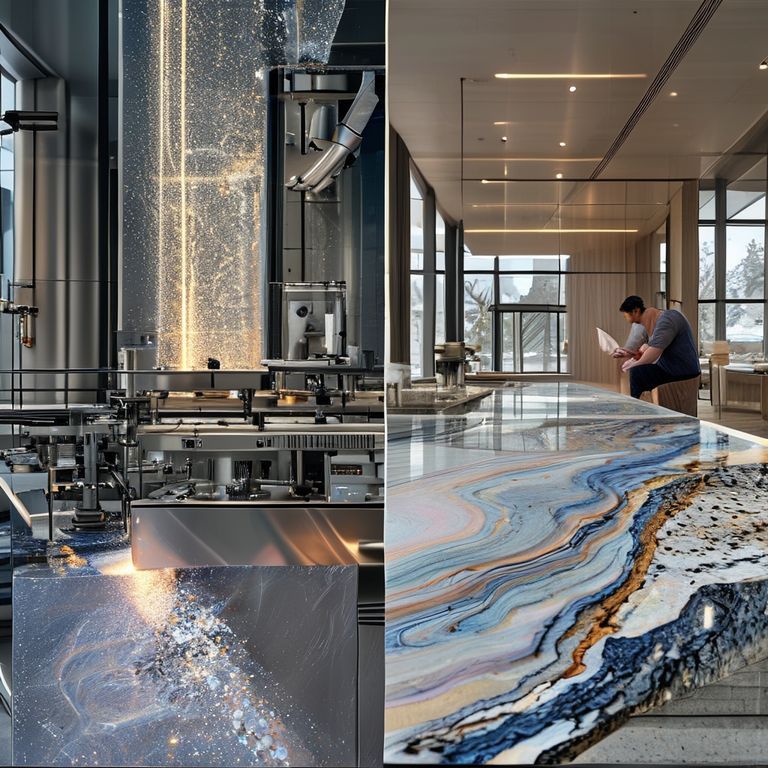
At its core, the creation of artificial marble is a meticulously controlled industrial process that begins with carefully selected raw materials. The primary ingredient, accounting for a significant majority of the finished product, is quartz. Not just any quartz, mind you, but high-purity, finely ground quartz crystals. These crystals are typically sourced from mining operations and then undergo a rigorous purification process to remove impurities that could affect the final color or integrity of the material. The size and consistency of these quartz granules are crucial; they determine the texture and the way light interacts with the surface, mimicking the subtle depth and variations found in natural stone.
Beyond quartz, the magic truly begins with the binding agents. These are typically high-performance polymer resins, most commonly polyesters or epoxies. These resins act as the glue, holding the quartz particles together and giving the artificial marble its remarkable strength and non-porous nature. The choice of resin is critical, influencing the material’s flexibility, resistance to chemicals, and UV stability. The resins are not just functional; they are also the canvas for color. A vast spectrum of pigments, meticulously blended to achieve specific hues and patterns, are introduced at this stage. This is where the artistry truly shines. Unlike natural marble, where patterns are dictated by geological history, artificial marble’s veins, swirls, and speckles are intentionally designed. Skilled technicians and designers carefully control the addition and distribution of pigments to replicate the intricate veining of Calacatta or Carrara marble, the dramatic contrasts of Nero Marquina, or even to create entirely new, imaginative designs that transcend the limitations of nature.
The process of combining these elements is a marvel of modern manufacturing. The carefully measured quartz aggregate and pigments are mixed thoroughly with the liquid resin. This mixture is then poured into molds, often large, flat sheets, or sometimes pre-shaped forms for specific applications like sinks. Once the mixture is in the mold, the true transformation begins. This is typically achieved through a process of vacuum vibration and heat. The vibration helps to eliminate any trapped air bubbles, ensuring a dense, homogenous structure. Simultaneously, controlled heat is applied, initiating the curing process of the resin. This causes the resins to polymerize, hardening and permanently bonding with the quartz particles. This thermo-mechanical consolidation is key to achieving the material’s exceptional strength and density, far surpassing that of natural stone in many respects.
The scale of production can be impressive, with large slabs of artificial marble emerging from these processes, ready for the next stages of refinement. The surface at this point might be slightly textured from the mold. To achieve the signature smooth, polished finish that is so highly prized, the slabs undergo a series of grinding and polishing steps. Industrial-grade abrasive pads, progressively finer, are used to buff the surface to a mirror-like sheen. This not only enhances the aesthetic appeal but also further compacts the surface, contributing to its stain resistance. The result is a material that is visually stunning, incredibly durable, and remarkably consistent in its quality and appearance, offering a compelling alternative for designers and homeowners alike.
The journey of artificial marble from raw materials to a finished product is fascinating, but its true value lies in its remarkable properties and the boundless possibilities it unlocks in design and application. The meticulous manufacturing process, which imbues the material with its inherent characteristics, translates into a host of benefits that make it a preferred choice for a wide array of uses. One of the most significant advantages of artificial marble is its unparalleled durability. The high concentration of quartz, a mineral second only to diamond in hardness, combined with the robust resin matrix, results in a surface that is exceptionally resistant to scratching, chipping, and cracking. This makes it an ideal material for high-traffic areas in kitchens and bathrooms, where countertops are subjected to constant use, knives, pots, and pans.
Furthermore, the non-porous nature of artificial marble is a game-changer, especially in environments where hygiene is paramount. Unlike natural stone, which has microscopic pores that can absorb liquids, oils, and bacteria, engineered stone presents a seamless, impenetrable surface. This means that spills, whether they are coffee, wine, or cooking oils, do not penetrate the material, significantly reducing the risk of staining. This inherent resistance to stains simplifies maintenance and ensures that the surface remains pristine and hygienic over time. Cleaning is typically as simple as wiping with a damp cloth and mild soap, eliminating the need for harsh chemical cleaners or sealants that are often required for natural stone.
The aesthetic versatility of artificial marble is another major draw. The ability to precisely control the color, pattern, and texture during the manufacturing process opens up a world of design possibilities. Manufacturers can meticulously replicate the veining and color variations of popular natural marbles like Calacatta, Carrara, or Statuario, offering a more accessible and consistent alternative. However, the innovation doesn’t stop at imitation. Designers can also create entirely unique looks, from subtle, minimalist solid colors to dramatic, abstract patterns, and even surfaces that mimic the appearance of concrete, wood, or other natural materials. This flexibility allows architects and interior designers to achieve a cohesive aesthetic across a project, without being limited by the natural variations or availability of specific stone types.
Beyond countertops, the applications for artificial marble are incredibly diverse. Its strength and beauty make it suitable for a wide range of architectural and interior design elements. Think of stunning wall cladding that adds a touch of modern elegance to a lobby or a bathroom. Consider sleek vanity tops that combine form and function in a luxurious bathroom setting. It’s also used for flooring, creating seamless, durable, and visually appealing surfaces in residential and commercial spaces. In kitchens, beyond the ubiquitous countertops, it can be used for backsplashes, integrated sinks, and even as decorative accents.
The fabrication of artificial marble is also a significant advantage. While it shares some similarities with fabricating natural stone, its consistent density and predictable properties often make it easier to cut, shape, and polish. This can lead to more efficient fabrication processes and potentially reduced installation costs. Specialized tools and techniques are used to cut slabs into desired shapes, fabricate edges with various profiles, and create cutouts for sinks and cooktops. The ability to achieve precise seams, often nearly invisible, further enhances the seamless and high-end look of installed artificial marble surfaces.
In essence, artificial marble represents a triumph of material science and design. It harnesses the inherent beauty and desirable qualities of natural stone while overcoming its limitations. It offers a durable, hygienic, aesthetically flexible, and versatile material that empowers designers to create stunning, long-lasting spaces. As technology continues to advance, the possibilities for artificial marble will only expand, solidifying its place as a cornerstone of modern interior design and architecture.









