
The allure of natural stone – granite’s robust elegance, marble’s timeless sophistication, quartzite’s breathtaking patterns – has long graced our homes and spaces. Yet, the pursuit of these qualities, coupled with a desire for enhanced durability, consistency, and a broader spectrum of design possibilities, has paved the way for a remarkable innovation: artificial stone. Often referred to as engineered stone or solid surface, this material is not a lesser substitute, but a testament to human ingenuity, a carefully orchestrated blend of nature’s finest elements and cutting-edge science. The “人造石制作流程” or the artificial stone production process, is a fascinating journey from humble raw materials to the stunning surfaces that adorn our kitchens, bathrooms, and beyond. It’s a process that marries the robustness of mineral aggregates with the binding power of polymers, all meticulously controlled to achieve predictable, high-performance results.

At its core, the creation of artificial stone begins with the selection and preparation of its primary components. The dominant ingredient, often accounting for 90-95% of the final product, is a mineral aggregate. For quartz-based engineered stone, this is typically crushed quartz – a hard, crystalline mineral known for its exceptional strength and resistance to scratching and heat. Other formulations might utilize different aggregates, such as marble or granite chips, or even specialized mineral fillers, depending on the desired aesthetic and performance characteristics. The aggregate is meticulously processed, often crushed, screened, and washed to ensure uniform particle size and purity. This uniformity is crucial; it dictates the flow of the mixture during production and contributes significantly to the homogeneity and strength of the finished slab. Impurities can lead to weaknesses, inconsistencies in color, or surface defects, so rigorous quality control at this stage is paramount.
The binder, the alchemical agent that holds the aggregate together, is the second critical component. For quartz and many other engineered stones, this is usually a high-performance thermosetting resin, most commonly polyester or epoxy resin. This resin not only binds the mineral particles but also contributes to the material’s non-porous nature, making it highly resistant to staining and bacterial growth – a significant advantage over many natural stones. The choice of resin impacts the stone’s flexibility, its thermal resistance, and its ability to be shaped during fabrication. The resin is carefully formulated with specific properties to ensure optimal curing and a strong, durable bond with the aggregate.
Color and visual appeal are introduced through pigments. These are not merely surface dyes; they are integral to the composition, ensuring that the color is consistent throughout the slab, right down to its core. Pigments are selected for their UV stability and resistance to fading, ensuring that the beauty of the artificial stone endures over time, even when exposed to sunlight. The art of color creation lies in the precise blending of these pigments. Manufacturers can achieve an astonishing array of colors, from pure whites and deep blacks to vibrant hues and intricate veining patterns that mimic natural stone. This ability to precisely control color is a hallmark of engineered stone, offering designers and homeowners unparalleled creative freedom. The creation of complex veining, for instance, often involves sophisticated techniques where different colored resins and aggregates are strategically introduced during the mixing and molding process, mimicking the organic flow of natural geological formations.
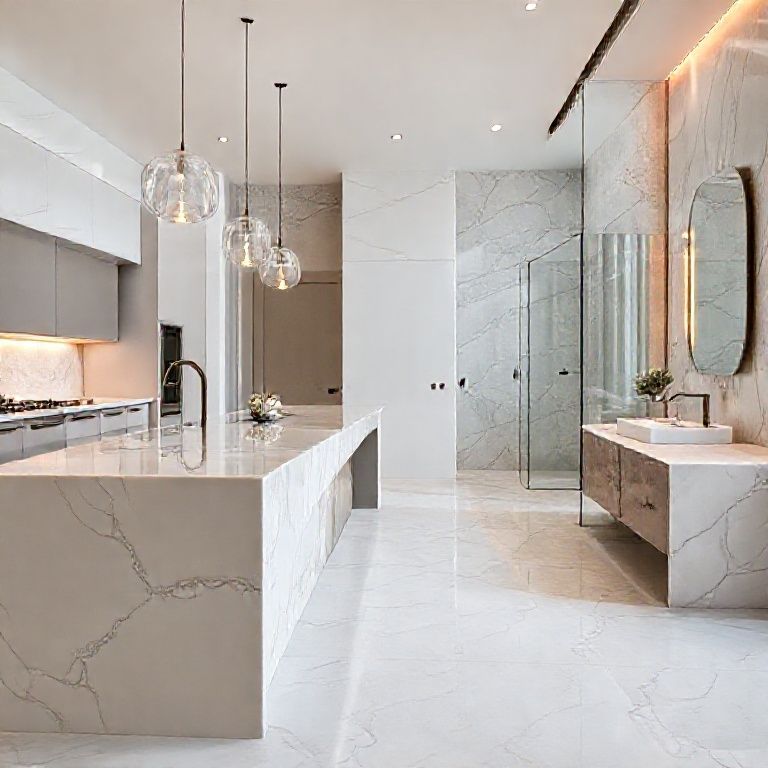
The production process itself is a marvel of modern manufacturing. Once the aggregate, resin, and pigments are precisely measured and mixed, the slurry is transferred to a mold. The most common and efficient method for producing large slabs is vibration molding under vacuum. The mixture is poured into a large, open-faced mold, often lined with a film that will become the surface finish of the slab. The mold is then placed within a vacuum chamber. Here, intense vibration and a powerful vacuum work in tandem. The vibration helps to evenly distribute the aggregate particles and eliminate air pockets, ensuring a dense, void-free structure. The vacuum draws out any remaining trapped air, further compacting the mixture and preventing porosity. This dual action is fundamental to achieving the high density and structural integrity that define quality artificial stone. The absence of voids is key to its stain resistance and durability.
Following the vibration and vacuum stage, the partially formed slab, still in its mold, undergoes a curing process. This typically involves heating the mold in a large industrial oven. The heat triggers the chemical reaction within the resin, causing it to cure and harden, permanently binding the aggregate particles together. The temperature and duration of this curing cycle are meticulously controlled, as they directly influence the final properties of the stone, such as its hardness, tensile strength, and thermal resistance. This is where the liquid mixture transforms into a solid, resilient material. The sophistication of this process lies in its repeatability. Unlike the geological forces that form natural stone over millennia, engineered stone production can be precisely replicated, ensuring that each slab meets stringent quality standards and exhibits uniform characteristics.
After curing, the slabs are demolded and then undergo a series of finishing processes. These can include calibrating the thickness to ensure uniformity, a process that often involves automated grinding. This is followed by polishing, where the surface is progressively abraded with increasingly finer grits of abrasive material. This meticulous polishing transforms the raw slab into the smooth, lustrous surface we associate with high-end countertops and surfaces. The quality of the polish is a direct indicator of the material’s density and the care taken during manufacturing. A perfectly polished surface not only looks beautiful but also contributes to the material’s resistance to staining and ease of cleaning. This entire sequence, from the careful selection of raw materials to the final polish, represents a sophisticated industrial ballet, a testament to how science and engineering can replicate and even enhance the beauty and performance of nature’s own creations.
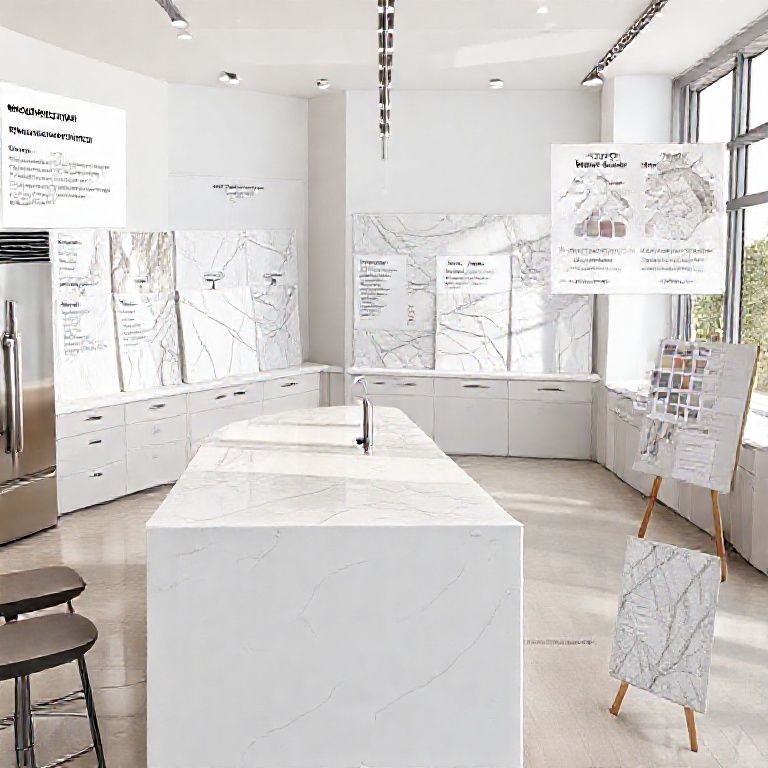
The journey of artificial stone from its raw constituents to a finished, installed surface is a captivating blend of precise manufacturing and skilled craftsmanship. Once the large slabs emerge from the production line, gleaming and perfectly formed, their transformation into functional and aesthetically pleasing components for our homes and businesses truly begins. This next phase, encompassing fabrication and installation, is where the true potential of artificial stone is realized, allowing for the creation of intricate designs and seamless finishes that are often challenging to achieve with natural materials. The “人造石制作流程,” therefore, extends far beyond the initial molding and curing, delving into the practical application and artistic shaping of this engineered marvel.
Fabrication is the critical stage where the raw slabs are cut, shaped, and refined to meet specific project requirements. This is a highly technical process that relies on specialized equipment and skilled technicians. The first step is typically templating. For custom projects, a precise template of the desired shape and dimensions is created, often using digital scanning technology or traditional cardboard templates. This ensures an exact fit for countertops, backsplashes, islands, and other architectural elements. Once the template is ready, it is transferred to the slab, and the cutting process begins. Modern fabrication shops utilize advanced CNC (Computer Numerical Control) routers and bridge saws, often equipped with diamond-tipped blades. These machines allow for extremely precise cuts, including intricate curves, sink cutouts, and edge profiles. The precision of these cuts is paramount, especially for applications where seams need to be minimized or made virtually invisible.
Beyond simple cutting, fabrication involves a range of shaping and detailing techniques. Edge profiles are a key element of aesthetic design. From a simple eased edge to more elaborate bullnose or ogee profiles, the edge treatment adds a finishing touch that complements the overall design scheme. These profiles are typically created using specialized router bits and grinding machines. Similarly, sink cutouts, whether for undermount, drop-in, or farmhouse sinks, are precisely cut to ensure a perfect fit and a clean, professional finish. The seamless integration of sinks is a significant advantage of artificial stone, contributing to its hygienic properties by eliminating gaps where dirt and bacteria can accumulate.
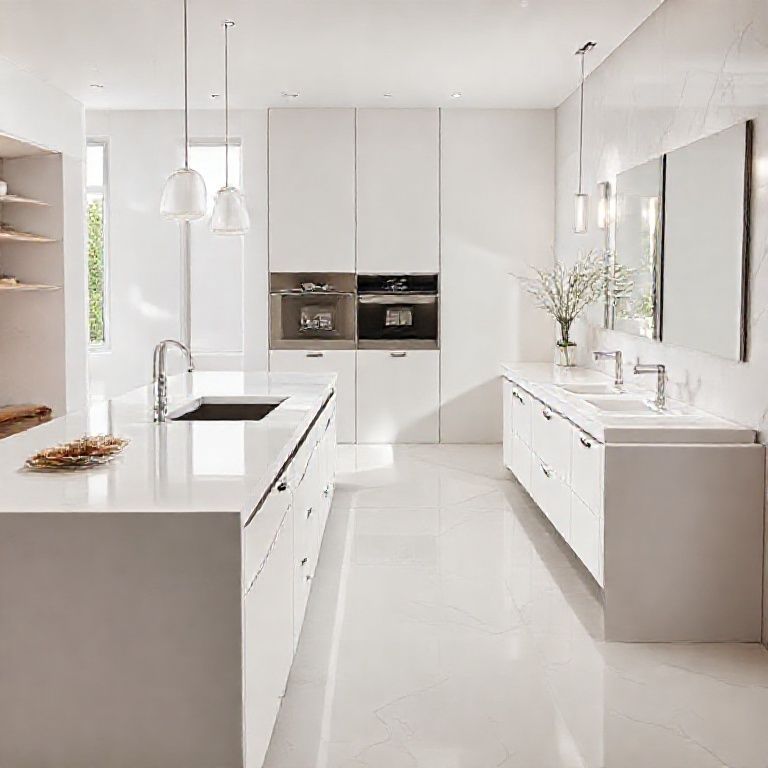
The assembly and bonding of different pieces of artificial stone are also crucial aspects of fabrication. For larger installations or complex shapes, multiple pieces may need to be joined together. This is achieved using specialized adhesives, often epoxy or acrylic-based, that are color-matched to the stone. The bonding process is meticulously executed to create seams that are not only strong and durable but also visually unobtrusive, often appearing as fine lines or being virtually invisible. This ability to create large, seamless surfaces is a major selling point for artificial stone, particularly in kitchens and bathrooms where functionality and hygiene are paramount. The precision required in these bonding operations ensures that the finished product looks like a single, continuous piece, enhancing its aesthetic appeal and simplifying maintenance.
Once fabricated, the artificial stone components are transported to the installation site. Installation is the final act, where the expertly crafted pieces are put into place. This requires a skilled team capable of handling large, heavy slabs and ensuring a perfect fit and finish. The installation process often involves precise fitting around cabinets, walls, and appliances. Any minor adjustments needed on-site are carried out with care to avoid damaging the material. Adhesives are used to secure the stone in place, and if necessary, caulk or sealants are applied to fill any small gaps between the stone and surrounding structures, ensuring a clean and professional look.
The properties of artificial stone lend themselves exceptionally well to these fabrication and installation processes. Its consistent density and lack of natural fissures mean that it is less prone to chipping or breaking during cutting and handling compared to some natural stones. The inherent non-porosity of the material also means that it doesn’t require sealing after installation, unlike many natural stones which need regular sealing to prevent staining. This inherent low maintenance is a significant benefit for homeowners and commercial clients alike. The material’s predictability – its uniform color, pattern, and physical properties – allows fabricators and installers to work with a high degree of confidence, knowing that what they see in the slab is what they will get in the finished product.
The “人造石制作流程” culminates in a product that offers a compelling combination of beauty, durability, and practicality. The ability to engineer specific performance characteristics, coupled with the vast design possibilities afforded by precise color and pattern control, has positioned artificial stone as a leading material in modern interior design. From the initial blending of raw materials to the final polished surface and expert installation, each step in the production and fabrication process is a testament to the power of innovation. It is a story of how human ingenuity can harness the best of nature and science to create surfaces that are not only stunning to behold but also built to last, enriching our living and working spaces for years to come.









