
The heart of any home often beats strongest in its kitchen and bathrooms. These are spaces of creation, of rejuvenation, and of daily ritual. And when it comes to defining the character and functionality of these vital areas, few elements play as significant a role as the countertops. For years, natural stones like granite and marble reigned supreme, commanding attention with their inherent beauty and premium price tags. However, a quiet revolution has been underway, one that marries aesthetic sophistication with practical affordability: the rise of artificial stone.

The term “artificial stone” itself can conjure a spectrum of images, from the utilitarian to the outright imitation. But in the context of modern surfacing materials, it refers to a sophisticated engineered product, most commonly quartz or solid surface materials, meticulously crafted to mimic the allure of natural stone while offering a host of superior benefits. It’s a testament to human ingenuity, a triumph of science and design that allows us to achieve the luxurious look we desire without the associated astronomical costs and maintenance headaches.
Imagine a countertop that can capture the veining of Calacatta marble, the speckled grandeur of granite, or the understated elegance of slate, all while being non-porous, stain-resistant, and incredibly durable. This is the promise of artificial stone. It’s not merely a cheaper alternative; it’s a strategic choice that offers enhanced performance and a broader palette of design possibilities. The technology behind it allows for precise control over color, pattern, and texture, meaning you can find a surface that perfectly complements your existing décor or inspires a completely new vision for your space.
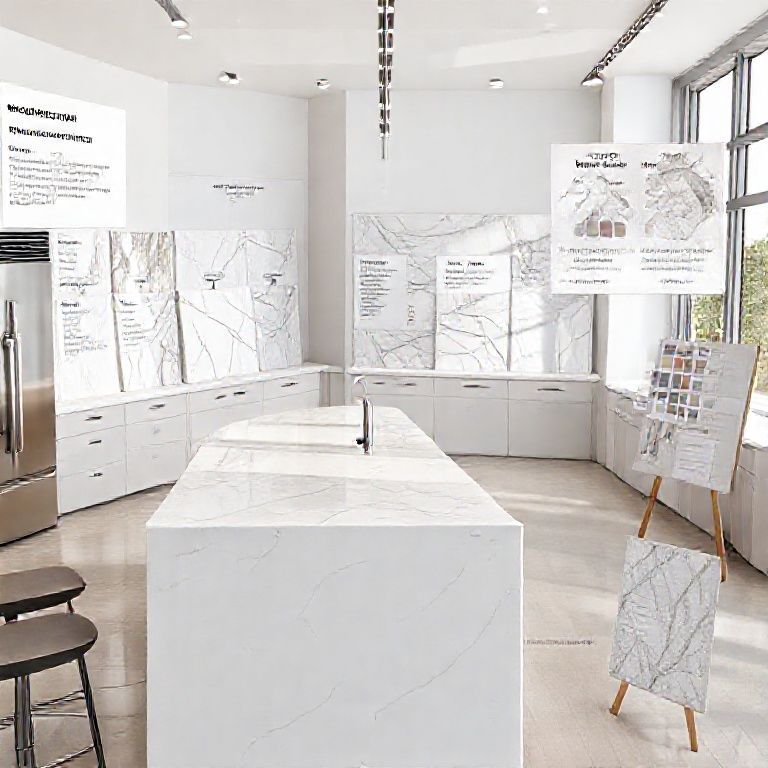
The appeal of artificial stone lies in its multifaceted nature. For the design-conscious homeowner, it’s an opportunity to achieve a high-end look that was once out of reach. The ability to replicate intricate natural patterns means you’re not sacrificing beauty for practicality. Think of the drama of a deep, dark countertop with subtle crystalline flecks, reminiscent of cosmic dust, or the serene flow of soft, creamy hues with delicate grey veining, perfect for a spa-like bathroom retreat. The consistency of engineered stone also means that what you see in the showroom is precisely what you’ll get in your home, eliminating the unpredictability that can sometimes accompany natural stone selections.
Beyond aesthetics, the functional advantages are undeniable. Unlike natural stone, which can be porous and susceptible to staining from spills like wine, oil, or coffee, most artificial stones, particularly quartz, are engineered to be non-porous. This inherent characteristic makes them highly resistant to stains, bacteria, and mold growth. For busy kitchens where culinary adventures are a daily occurrence, or for bathrooms that see frequent use, this ease of maintenance is a game-changer. A simple wipe with soap and water is often all that’s needed to keep these surfaces looking pristine. This translates to less time spent on tedious cleaning and more time enjoying your home.
Durability is another cornerstone of artificial stone’s appeal. Quartz countertops, in particular, are renowned for their exceptional hardness, making them highly resistant to scratches and chips. This means you can chop vegetables directly on the surface (though a cutting board is still recommended to preserve knife edges!), place hot pans down briefly without immediate concern (though trivets are always a wise precaution), and generally live your life without the constant worry of damaging your investment. This robust nature ensures that your countertops will maintain their beauty and integrity for years to come, a crucial factor when considering a long-term home improvement project.
The “what’s the price” question, “人造石大概什么价位” (rénzào shí dàgài shénme jiàwèi), is naturally at the forefront of any homeowner’s mind. And the answer, as with most things in life, is not a simple one. The price of artificial stone countertops is influenced by a confluence of factors, each playing a role in the final figure. It’s a landscape where quality, brand, complexity of design, and even geographical location can sway the cost.
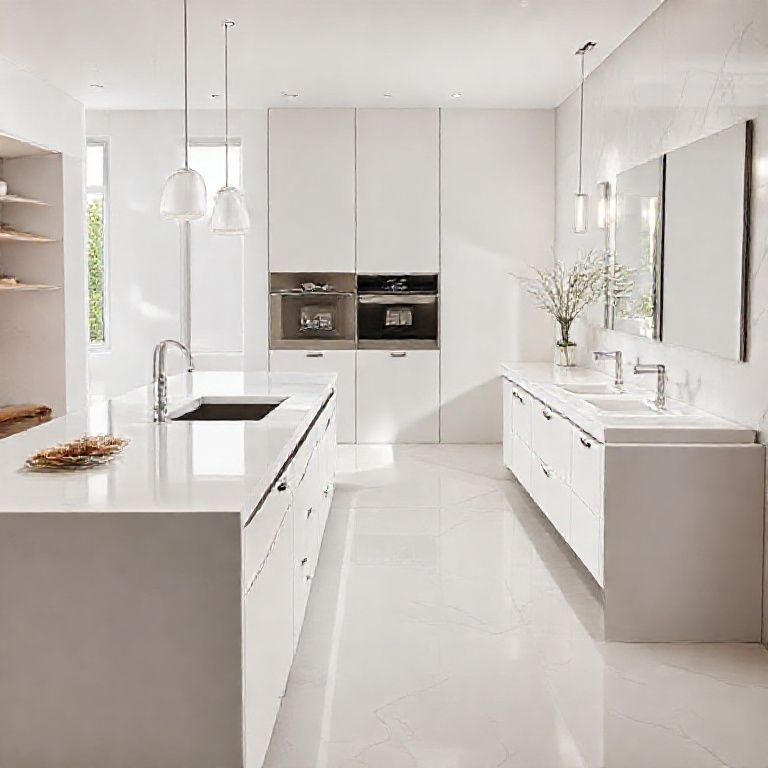
To begin to understand the pricing, we first need to categorize the primary types of artificial stone that are commonly available. The most prevalent is quartz (also known as engineered quartz). This material is composed of approximately 90-95% natural quartz crystals, bound together with polymers and pigments. It’s this high concentration of natural quartz that gives it its exceptional strength and its ability to mimic natural stone so convincingly. The price range for quartz countertops can vary significantly, typically starting from around $50 per square foot for more basic colors and patterns, and extending upwards to $150-$200 per square foot, or even more, for premium brands, intricate veining, or specialty finishes.
Another significant category falls under solid surface materials. These are typically made from acrylic or polyester resins, often blended with mineral fillers. While they don’t possess the same hardness as quartz and can be more susceptible to scratching, they offer seamless installation, the ability to be repaired easily, and a vast array of colors, including many vibrant and opaque options not found in natural stone. Solid surface countertops are generally more budget-friendly, with prices often starting around $40 per square foot and going up to $100 per square foot for more complex designs or those with integrated features.
Then there are porcelain slabs and sintered stone. These are newer contenders in the countertop market and represent a high-performance option. Porcelain is fired at extremely high temperatures, creating a material that is exceptionally hard, heat-resistant, and non-porous. Sintered stone is a similar concept, involving a process that mimics the natural geological formation of metamorphic rocks. These materials can be quite expensive, often starting around $80-$100 per square foot and reaching $200-$300 per square foot or higher, due to their advanced manufacturing process and superior performance characteristics.
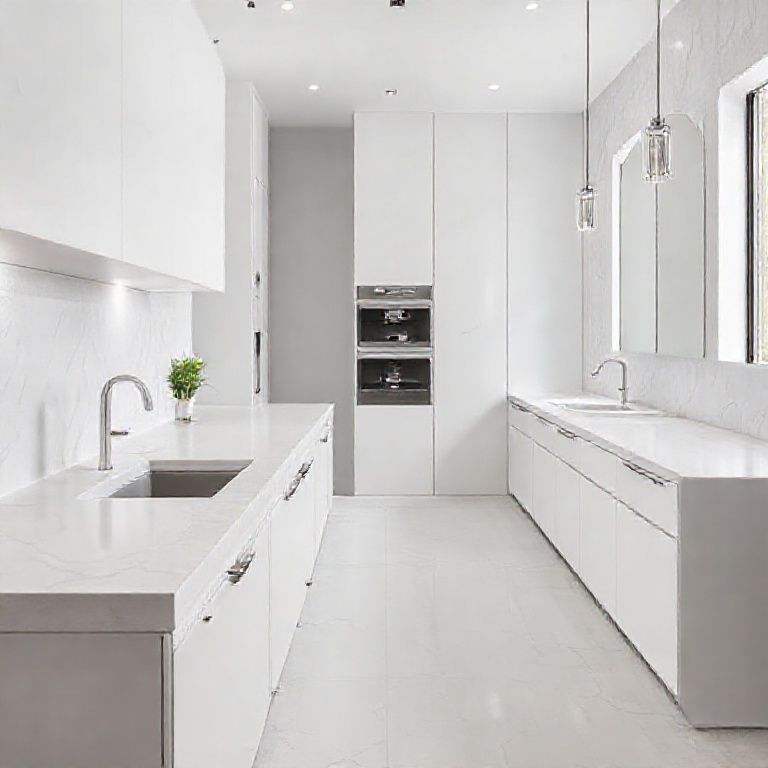
So, when you ask “人造石大概什么价位”, you’re embarking on a journey through a tiered pricing structure. It’s not just about the raw material; it’s about the entire package that transforms a slab into a functional and beautiful countertop. The aesthetic appeal you choose is a major determinant. A solid, uniform color will almost always be less expensive than a complex pattern that requires careful matching of veins and intricate designs. Brands also play a significant role. Well-established, reputable manufacturers of quartz, for example, often command higher prices due to their guaranteed quality, extensive testing, and brand recognition. These brands have invested heavily in research and development, ensuring consistency and durability, and their pricing reflects that commitment.
The thickness of the slab also factors into the cost. Standard countertop thickness is typically 3cm (about 1.2 inches), but thicker slabs can be more visually imposing and, naturally, more expensive. Edge profiles – the finish applied to the exposed edges of the countertop – can also add to the price. A simple eased edge is generally included, but more elaborate options like a bullnose, ogee, or mitered edge will incur additional labor and material costs. Finally, the complexity of the installation plays a role. A simple straight run of countertop is less costly than a kitchen with multiple corners, intricate cutouts for sinks or cooktops, or a large island that requires a single, seamless piece of material. These elements all contribute to the overall “人造石大概什么价位” equation, making it a dynamic and personalized calculation for each project.
Continuing our exploration of “人造石大概什么价位” (rénzào shí dàgài shénme jiàwèi), it’s crucial to delve deeper into the specific factors that influence the cost beyond the basic material type and aesthetic. While the initial price per square foot gives a general idea, the actual investment can shift based on a variety of interconnected elements. Think of it as building a beautiful structure – the foundation, the walls, and the intricate details all contribute to the final masterpiece and its associated value.
One of the most significant price drivers, as alluded to earlier, is the brand and quality of the manufacturer. For quartz countertops, established brands like Caesarstone, Silestone, Cambria, and Corian (which also produces solid surface) have invested heavily in proprietary manufacturing processes, quality control, and extensive research and development. This results in a product that is highly consistent in color, pattern, and durability. These premium brands often come with longer warranties and a reputation for excellence, and their pricing reflects this. You’re paying for the assurance of quality, the advanced engineering, and the peace of mind that comes with a trusted name. On the other hand, there are numerous other reputable manufacturers producing excellent quartz at more competitive price points, often offering a wider range of colors and patterns that can still meet stringent quality standards. Understanding the nuances between these brands and their respective certifications can help homeowners make informed decisions.
The complexity of the design and pattern is another pivotal factor. Imagine two slabs of quartz: one a uniform, solid white, and the other a dramatic, veined masterpiece mimicking Carrara marble with intricate, flowing patterns. The solid white quartz will typically be at the lower end of the price spectrum. This is because its production is more straightforward, requiring less specialized machinery and less precise pattern matching during manufacturing. The veined “super-natural” designs, on the other hand, require advanced manufacturing techniques to create realistic and aesthetically pleasing patterns that often involve multiple steps and higher concentrations of natural quartz or specialized pigments. The alignment of these patterns across multiple slabs for a large kitchen or island also requires meticulous planning and execution, which adds to the overall cost. Similarly, unique finishes beyond the standard polished surface, such as a honed (matte) or leathered (textured) finish, can sometimes incur a slight premium due to the additional processing required.
Installation costs are often a substantial portion of the total budget, and they are far from uniform. The “人造石大概什么价位” question often doesn’t fully account for this hidden, yet critical, expense. The complexity of your kitchen or bathroom layout plays a huge role. A simple, rectangular kitchen island with minimal seams will be less expensive to install than a U-shaped kitchen with multiple corners, tight turns, and intricate cutouts for sinks, faucets, and cooktops. The need for precise templating (creating a precise template of your existing cabinets and layout), transportation of heavy slabs, careful cutting and fitting on-site, and professional sealing (though often unnecessary for quartz) all contribute to labor costs. The ease of access to your home also factors in; if the installers have to navigate narrow staircases or tight doorways, this can increase the time and effort required, and thus the cost.
Edge profiles offer another avenue for customization and, consequently, price variation. The most basic edge profile, often referred to as an “eased” or “straight” edge, is typically included in the base price of the material. However, homeowners often opt for more decorative and sophisticated edge treatments. Popular choices include the “bullnose” (a rounded edge), the “ogee” (an elegant S-shaped curve), or a “waterfall” edge, where the material extends vertically down the side of a cabinet or island, creating a seamless, flowing look. Each of these more intricate profiles requires additional labor and specialized tooling, leading to a higher price. The “double bevel” or “mitred” edge, where two pieces are cut at an angle and joined to create a thicker-looking edge, also adds to the cost.
The thickness of the slab can also influence the price. While 3cm (approximately 1.2 inches) is the standard and most common thickness for quartz countertops, thicker slabs (e.g., 4cm or 2 inches) can offer a more substantial and luxurious appearance, especially for islands. These thicker slabs require more raw material and can be more challenging to transport and install, thus commanding a higher price. In some applications, thinner slabs (e.g., 2cm or 0.75 inches) might be used, especially for certain types of solid surface or porcelain, and these might be slightly more affordable, though often require a supporting substrate.
Finally, location and the chosen fabricator can introduce variability. Prices for materials and labor can differ significantly between regions, with metropolitan areas or regions with higher costs of living generally seeing higher prices for both materials and installation services. The reputation and overhead of the specific fabricator you choose will also impact the final quote. A smaller, independent fabricator might offer more competitive pricing, while a larger, more established company with a showroom and a large team might have higher overheads that are reflected in their prices. It’s always advisable to obtain multiple quotes from different reputable fabricators in your area to compare pricing and services.
When considering “人造石大概什么价位”, it’s not just about the sticker price per square foot. It’s a holistic view that encompasses the brand reputation, the chosen design’s complexity, the intricate details of the edge profiles, the thickness of the slab, and the essential labor involved in templating and installation. By understanding these contributing factors, homeowners can navigate the diverse landscape of artificial stone countertops with confidence, making informed decisions that align with their aesthetic aspirations, functional needs, and budget. The beauty of artificial stone lies not only in its stunning appearance and practical benefits but also in its ability to offer a luxurious and durable surfacing solution that can be tailored to a wide spectrum of financial considerations, making the dream kitchen or bathroom a tangible reality.









